

A Homeowner’s Guide to Modern Lighting Fixtures for Home

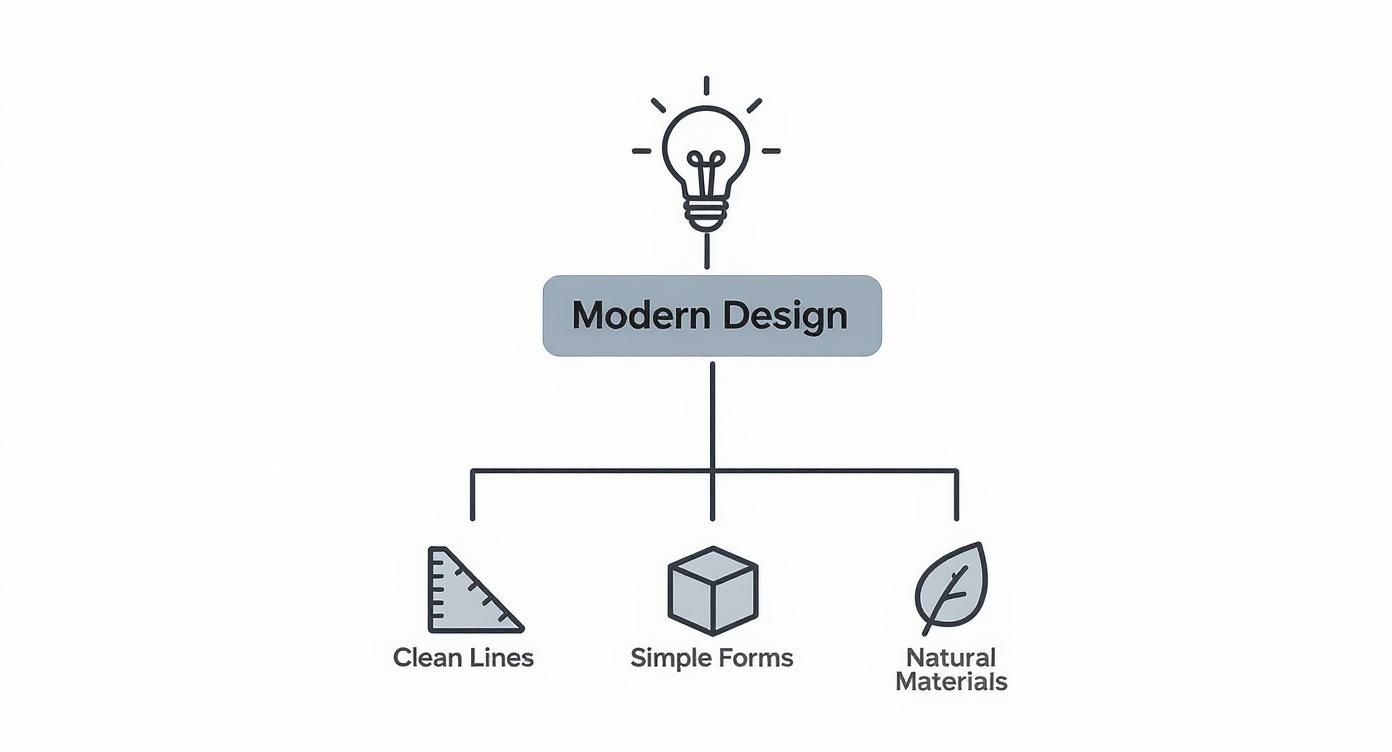
When you hear "modern lighting," what comes to mind? For a lot of people, it’s something cold, maybe even a little sterile. But that's not what it's about at all. The real heart of modern lighting is a “less is more” approach, where every fixture is chosen for its clean lines, simple shapes, and honest, natural materials.
Think of these fixtures less like jewelry for your home and more like integral parts of the architecture itself. They're designed to blend sleek, minimalist style with a very real, everyday purpose—creating a space that feels warm, intentional, and inviting.
What Makes a Lighting Fixture Modern
Modern design isn't about looking like a spaceship. It's about getting rid of all the extra fluff and ornamentation to let the beauty of the form and function shine through. It’s like a perfectly tailored suit; every line and every stitch is there for a reason, creating a look that's both elegant and timeless.
To really get a feel for modern lighting, it helps to understand the bigger picture of what makes up the elements of a modern home. The same ideas—uncluttered spaces, intentional design, and a focus on natural light—are the foundation for your lighting choices, too.
The Core Principles
So, what are the key ingredients that give a light fixture that distinctly modern vibe? It really just boils down to a few simple ideas.
Clean Lines and Simple Forms: You won't find a lot of fussy, intricate details here. Modern fixtures celebrate geometric shapes—spheres, cylinders, cubes—and smooth, graceful lines. A perfect example is a simple globe pendant hanging over a kitchen sink.
Emphasis on Natural Materials: Look for materials that feel authentic. Finishes like brushed nickel, matte black, and soft gold are common, often paired with glass, wood, or even concrete.
Function Over Frills: Every part of a modern fixture has a job to do. It’s designed to light a space beautifully and effectively, without any distracting, purely decorative bits.
This push toward simplicity and quality is catching on in a big way. In fact, the global residential lighting market is expected to grow to about $32.2 billion by 2032, thanks in large part to the shift toward energy-efficient LEDs and smart home integration.
Picking out these fixtures is one of the most fun parts of making a space your own. When you work with a builder who lets you customize your home in places like White Marsh or Harford County, this is where your personality really shines. My unique visualization tools help you see how different modern lights will pair with your specific cabinet and countertop choices before you commit. It's a fantastic way to get a real feel for the final look as you design your own home online.
Mastering the Three Layers of Light
Ever walk into a room and just feel good in it? You can’t quite put your finger on why, but it’s welcoming and comfortable. Chances are, the secret sauce is expertly layered lighting.
Pros don't just stick a single fixture in the middle of the ceiling and call it a day. They think in layers—three, to be specific. It’s a design trick that’s surprisingly easy to understand and makes any room feel more functional and alive.
Think of it like painting a picture. You start with a broad wash of color for the background, then you paint your main subject, and finally, you add highlights and shadows for depth and drama. Lighting a room works the exact same way.
The First Layer: Ambient Light
First up is ambient light, which is your "background color." This is the general, all-over illumination that fills the space, letting you move around safely and setting the room's foundational mood. It’s the starting point for every well-lit room.
Practical examples include:
Recessed lights (or can lights) spaced evenly across a living room ceiling.
A central flush-mount fixture in a hallway.
A modern chandelier that provides broad light in a dining room or foyer.
The Second Layer: Task Lighting
Next, we add the "main subject"—task lighting. This is a more focused beam of light aimed right where you need it to get things done. Think about all the activities that need a little extra brightness, like chopping vegetables, reading a book, or applying makeup.
"Good lighting design can change how we feel, help us stay comfortable, and even lower energy bills."
Well-placed task lighting is a game-changer. It cuts down on annoying shadows and helps prevent eye strain. For example, in the kitchen, under-cabinet LED strips make food prep a breeze. A sleek floor lamp beside your favorite armchair creates the perfect reading nook, and sconces flanking a bathroom mirror give you clear, flattering light.
The Third Layer: Accent Lighting
Finally, we add the "highlights and shadows" with accent lighting. This is the fun part! This layer adds drama, personality, and visual interest by drawing the eye to things you want to show off.
Accent lights are all about creating focal points—a piece of art, a cool textured wall, an architectural feature, or even a beautiful plant. As a rule of thumb, accent lights should be about three times brighter than the ambient light around them to really make the feature pop.
Examples of accent lighting include:
Track lighting aimed at a gallery wall of family photos.
Picture lights mounted over a favorite painting.
Uplights tucked behind a large fiddle-leaf fig to cast dramatic shadows on the ceiling.
To really dial in the perfect lighting plan, it helps to understand how these layers relate to each other.
Understanding the Three Layers of Light
Lighting Layer | Main Purpose | Common Fixture Examples |
|---|---|---|
Ambient | General, all-over illumination; sets the room's mood. | Chandeliers, recessed lights, flush mounts, pendants |
Task | Focused light for specific activities like reading or cooking. | Under-cabinet strips, desk lamps, vanity lights, floor lamps |
Accent | Highlights specific features and adds visual drama. | Track lights, picture lights, spotlights, uplights |
Getting these three layers to work together in harmony is what elevates a space from simply being lit to being beautifully designed.
When you’re personalizing a new home in a community like White Marsh or Edgewood, Maryland, thinking through these layers from the start is critical. My hands-on service and proprietary visualization tools let you see how your lighting choices will interact with your flooring, cabinets, and finishes, ensuring your new space is perfectly illuminated from the moment you move in.
Choosing Your Perfect Modern Fixture Style
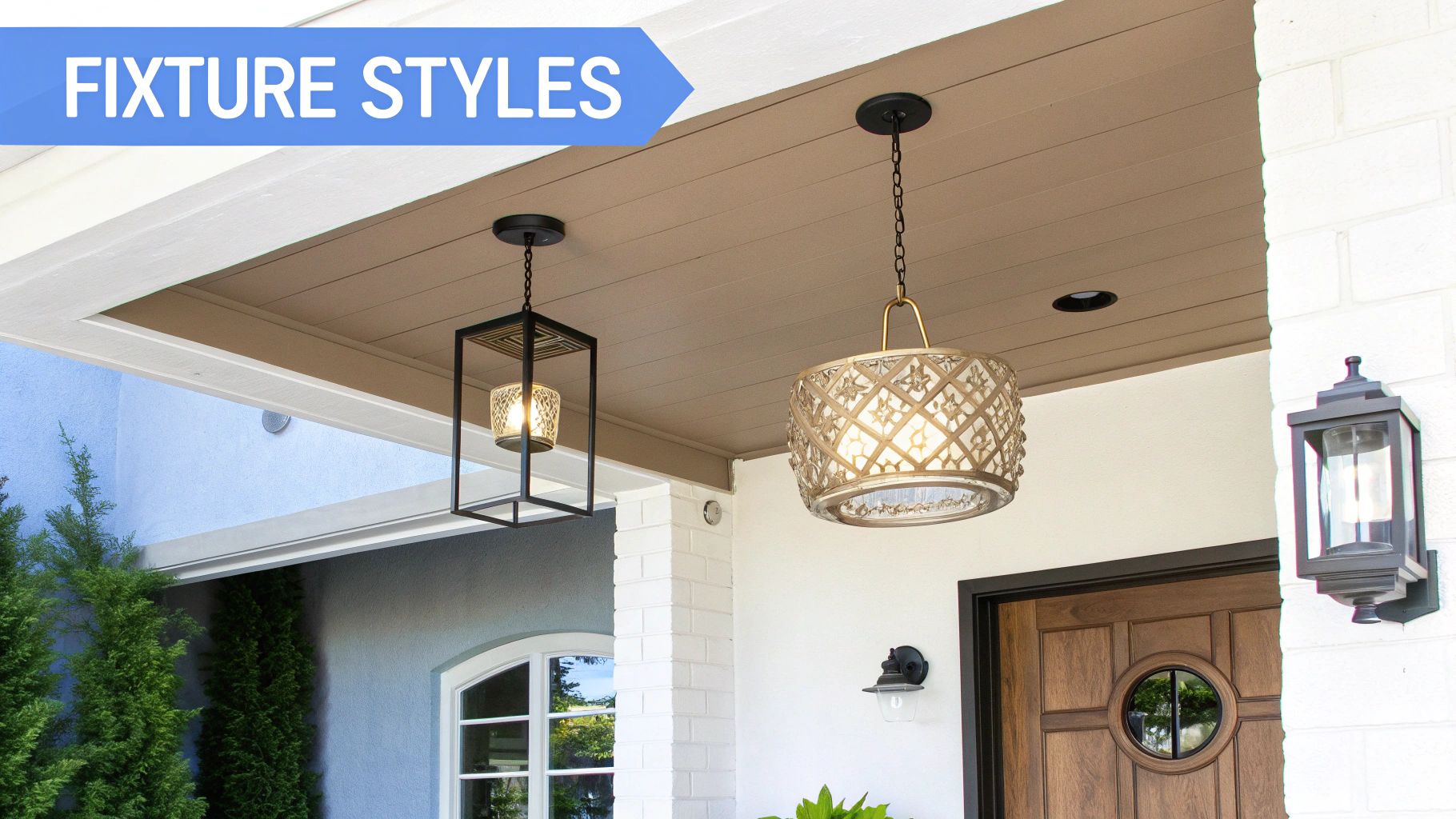
When someone says they want "modern lighting," it's a bit like saying they want "a new car." It's a great starting point, but what kind are we talking about? A sleek sports car or a rugged SUV? Modern design isn't just one look; it's a whole family of related styles, each with its own vibe and personality.
The fun really begins when you start exploring these styles and find the one that makes your home feel like yours. Let's walk through some of the most popular types of modern fixtures so you can get a feel for what might look amazing in your own space.
Pendants: The Versatile Statement Piece
Pendant lights are the real superstars of the modern lighting world. They hang down from the ceiling on a cord or rod and are fantastic for drawing the eye to a specific spot, like a dining table or kitchen island. They pack a huge visual punch.
Minimalist Pendants: These are all about clean lines and simple shapes—think globes, cylinders, or cubes. You’ll often see them in matte black, crisp white, or brushed metallic finishes. A single, elegant pendant is perfect for anchoring a cozy reading nook, while a line of three over an island creates a stunning, rhythmic effect. For a perfect example of this style, take a look at the Cablenova Kyubu Modern LED Pendant Light.
Sculptural Pendants: I like to think of these as functional art. They often have more organic, free-flowing shapes, asymmetrical designs, and play with materials like warm wood or colorful glass. A sculptural pendant can easily become the main focal point of an entire room.
Chandeliers: The Modern Centerpiece
Forget the fussy, crystal-covered chandeliers of the past. Today's modern chandeliers are bold, architectural, and seriously striking. They’re perfect for spaces with higher ceilings, like a two-story entryway or a grand dining room in one of the homes in Baltimore County, where they have the room to breathe and command attention.
A great modern fixture doesn’t just light up a room; it gives it a soul. It’s the difference between a house and a home that reflects your personal style.
Flush Mounts: Sleek and Space-Saving
But what if you don't have towering ceilings? No problem. That's where flush and semi-flush mounts come in. These fixtures sit right up against the ceiling (flush) or hang just a few inches down (semi-flush), making them a lifesaver for rooms with standard ceiling heights, like hallways, bedrooms, and closets.
They cast great ambient light without eating up any vertical space. For a practical example, think of a slim, square LED flush mount in a walk-in closet—it provides excellent light without getting in the way of your shelving. Modern versions have evolved way beyond bland domes; now you can find them in sleek geometric shapes and elegant metallic finishes.
Ultimately, picking the right style is about balancing the room's function with your own personal taste. This is where my proprietary visualization tools are a game-changer. We can virtually "try on" different fixtures right in your customized floor plan to see exactly how they’ll look and feel, taking all the guesswork out of the process.
A Room-by-Room Guide to Modern Lighting
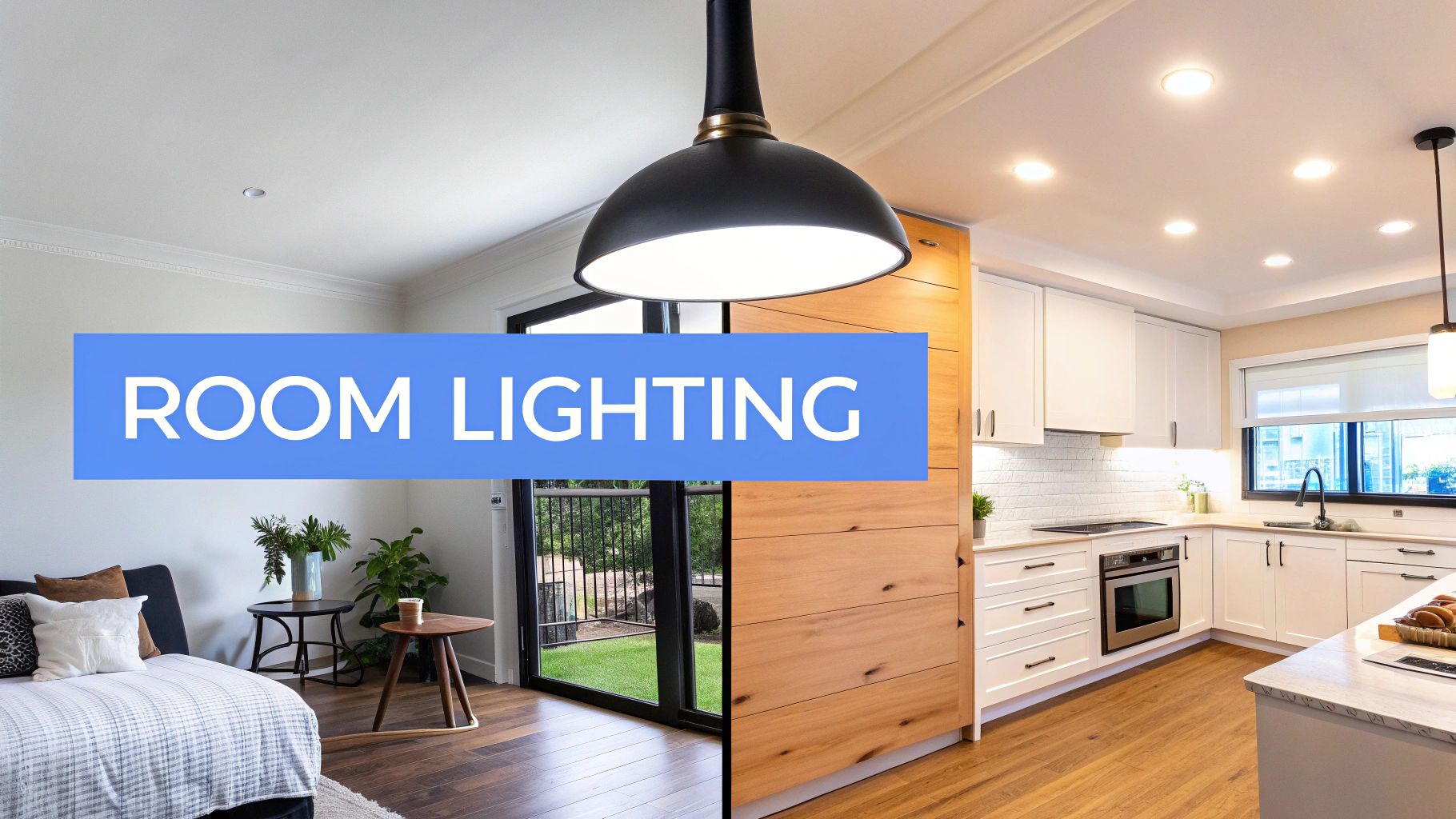
Alright, we've nailed down the "what" and "why" of modern lighting. Now for the fun part: putting it all into practice. The real magic happens when you tailor those three layers—ambient, task, and accent—to how you actually use each room.
Think of every room as having its own unique lighting “recipe.” You’re mixing and matching fixtures not just to make the space look good, but to support everything from cooking a family dinner to curling up with a good book. Here's how to get it right in the key areas of your home.
The Living Room Social Hub
The living room has to be a chameleon, ready for movie nights, quiet conversations, or hosting a party. That means flexibility is your best friend. Start with a solid foundation of ambient light, like dimmable recessed lights, which give you a soft, even glow to build upon.
Then, bring in the personality with a central statement piece. This could be a dramatic modern chandelier that wows your guests or a sleek, oversized pendant that anchors your seating area. Round it out with task lighting where you need it—for example, a cool arc floor lamp that can swing over your favorite reading chair.
The Kitchen Workhorse
Nowhere is lighting more crucial than in the kitchen. This is a true workspace, and bright, clear task lighting isn't a luxury; it's a must-have for safety and efficiency.
Task Lighting: The single best thing you can do is install LED strips under your upper cabinets. This floods your countertops with brilliant, shadow-free light, making all your prep work a breeze.
Ambient Lighting: For general illumination, stick with recessed cans or a clean, modern flush mount that doesn’t get in the way.
Accent & Task Combo: A row of minimalist glass pendants over the kitchen island is a classic for a reason. They provide fantastic focused light for everything from homework to chopping veggies, all while adding a huge dose of style.
This triple-threat approach makes your kitchen ready for anything.
The best lighting plan doesn't just illuminate a room; it anticipates your needs. By layering light, you create a dynamic space that can shift from bright and energetic to calm and intimate with the flick of a switch.
The Bedroom Sanctuary
Your bedroom should be a retreat from the world, and your lighting choice is absolutely critical to creating that peaceful vibe. My biggest tip? Ditch the harsh, central overhead light. Instead, build your lighting around softer, more intimate sources.
A practical example is placing modern wall sconces on either side of the bed, mounted around eye level when you're sitting up (usually 60 to 72 inches off the floor). This gives you perfect, glare-free light for reading that won't blast your partner. For your ambient layer, a simple flush mount on a dimmer is all you need for a gentle, room-filling glow.
Functional Spaces Hallways, Bathrooms, and Offices
Don't let the supporting spaces be an afterthought! In the bathroom, flank the vanity mirror with a pair of vertical sconces. This is the secret to casting even, flattering light for grooming—no more weird shadows under your eyes. For long hallways, a series of matching flush mounts or a track light system can guide the way beautifully.
And your home office lighting is key to productivity and comfort. A poorly lit desk can cause major eye strain. You can learn more about dialing that in with these fresh home office design ideas for 2025.
As you start to plan your new home in one of the communities across Harford County or Baltimore County, think of these recipes as your starting point. Using my proprietary visualization tools, we can actually see how these fixtures will look with your exact flooring and finishes, bringing your entire vision to life before your home is even built.
Understanding Smart Lighting and LEDs
Beyond the look of your light fixtures, the actual technology inside them has totally changed how we light our homes. The two biggest things you need to know about are LEDs and smart home integration. Getting a handle on these is the secret to a home that’s not just stylish, but also incredibly efficient and easy to live in.
LEDs, or Light Emitting Diodes, are the new gold standard, and it's easy to see why. They sip energy compared to old incandescent bulbs and last for what feels like an eternity. The switch has been fast and furious—residential LED use shot up from a mere 4% in 2015 to roughly 47% by 2020. As they get better and cheaper, that number is expected to climb even higher.
Decoding Color Temperature
When you're dealing with LEDs, one of the most important concepts to grasp is color temperature. It’s measured in Kelvins (K), but don't worry, it has nothing to do with how hot the bulb gets. It’s all about the color of the light it gives off.
Think of it like the quality of sunlight throughout the day.
Warm Light (2700K - 3000K): This is that classic, cozy glow you get from an old-school light bulb or a candle. It’s perfect for creating a relaxed, intimate vibe in living rooms and bedrooms.
Neutral/Cool White (3500K - 5000K): This light is much brighter and more energizing, like clear daylight. It’s exactly what you want in kitchens, bathrooms, and home offices where you need to see what you're doing clearly.
Getting this right makes a world of difference. A warm, dim light in the kitchen can make chopping vegetables a chore, while a harsh, bright light in the bedroom can feel clinical and mess with your ability to wind down at night.
The Magic of Smart Lighting
Smart lighting is where things get really fun. By connecting your lights to your home’s Wi-Fi, you can control everything from an app on your phone or with a simple voice command. This is way more than just a neat party trick; it's about making your lighting work for you.
Picture this: you tap a "Movie Night" button on your phone, and the main lights dim while a soft accent light pops on behind the TV. Or you can schedule your entryway lights to turn on a few minutes before you get home, so you never walk into a dark house again. You can even find systems that mimic the sunrise, gently brightening your bedroom to help you wake up naturally.
If you’re thinking about diving in, you can learn more about the best smart devices for home.
Smart lighting transforms your fixtures from simple on/off switches into an intuitive system that adapts to your daily routines, moods, and needs.
When you're personalizing your home with me in one of our communities in White Marsh or Edgewood, we can plan for this kind of tech right from the start. My hands-on service and proprietary visualization tools help you see exactly how these modern lighting features will come together, creating a space that’s perfectly lit and ready for whatever comes next.
Let's Bring Your Lighting Vision to Life
Picking out modern lighting can feel like a huge puzzle, right? You're trying to juggle different styles, figure out that whole "layering" thing, and maybe even dip your toes into smart home tech. It’s easy to fall in love with a gorgeous pendant light online, but it’s a lot harder to know if it'll actually work in your space.
Good news: you don't have to figure it all out by yourself.
My hands-on service changes everything, taking the stress out of the equation and replacing it with pure excitement. Imagine seeing exactly how a set of three sleek pendants will look over your kitchen island, or how that one incredible chandelier will actually feel in your dining room—all before you commit. This isn't just a hypothetical; it's exactly how I help my clients every single day.
See Your Home Before It's Even Built
I go a step further for my clients by offering unique proprietary visualization tools that let us bring your dream space to life on-screen. For buyers customizing their new homes in communities across White Marsh, Maryland and Edgewood, Maryland, this has been a total game-changer. It turns what could be a shot in the dark into a fun, creative partnership.
This is so much more than just pointing at a light in a catalog. It’s about us working together to create a home that is 100% you, right down to the last detail. We can literally swap out different fixtures and see how they look against the exact flooring, countertops, and cabinets you've already picked out.
This way, we know for sure that every piece of the puzzle fits together perfectly. You'll walk away confident that the modern lighting you've chosen not only looks amazing but is also going to function exactly how your family needs it to. We'll make sure your new home in Baltimore County or Harford County is a perfect reflection of you.
This kind of personalized guidance is how I go the extra mile for my clients. Ready to stop guessing and start seeing? Let's chat and start designing a space that’s beautifully, uniquely yours.
Answering Your Lingering Lighting Questions
Still have a few questions about bringing modern lighting into your home? That's completely normal. Let's tackle some of the most common ones I hear from clients.
How Long Should a Modern Fixture Actually Last?
This one almost always comes down to the bulb. The fixture itself—the metal, the glass, the wiring—can easily last for decades with good care. But modern lighting is all about LEDs, and that's where the magic is.
A good quality LED can run for an incredible 25,000 to 50,000 hours. To put that in perspective, if you use a light for a few hours a day, like a bedside lamp, that could be over 20 years before you even have to think about a replacement.
Can I Put Modern Lights in My Traditional Home?
Absolutely! In fact, this is one of my favorite ways to create a high-impact, designer look. The secret is to make the contrast feel intentional and stylish, not accidental.
Imagine a sleek, sculptural chandelier hanging in a dining room with classic crown molding—it's stunning. The clean, simple lines of modern fixtures do a fantastic job of highlighting the rich character and detail of traditional architecture. It's all about creating a beautiful, dynamic balance.
Is Smart Lighting Really Worth the Hype (and the Money)?
For most people I work with, the answer is a definite yes. Once you get used to the convenience of changing your lights with your phone or just your voice, it's hard to go back. It's a small luxury that makes a big difference every single day.
The market is backing this up, too. Global spending on smart lighting is expected to jump from USD 15.7 billion in 2024 to over USD 41.8 billion by 2030. If you want to dive deeper into the data, you can see how smart lighting is shaping homes and get a feel for where the technology is headed.
Ready to stop wondering and start designing? At Customize Your Home, I do more than represent a builder who provides high-quality homes. Using my unique proprietary visualization tools and hands-on service, I help you see exactly how your lighting choices will look in your new space before your home is even built. Let’s bring your vision to life, together. Explore your options at Customize Your Home.
Comments