

A Room-by-Room Guide on How to Childproof Your Home

Childproofing isn't a one-and-done project. It’s about methodically tackling potential dangers room by room, starting with the biggest ones first—like anchoring furniture that could topple, locking up cabinets, and gating off stairs. This isn't just a checklist; it's an ongoing process that changes as your baby goes from a tiny newborn to a crawling infant and then to a surprisingly fast toddler.
A Practical Guide to a Safer Home
When you bring your baby home for the first time, your world changes—and so does the way you see your own house. All of a sudden, that sharp-edged coffee table, those easily accessible outlets, and every unlocked drawer seem to scream "danger!" This guide is here to walk you through how to childproof your home without making you feel completely overwhelmed. We're focused on realistic, practical solutions that real families can actually implement.
The single best piece of advice I can give? Get down on their level. Seriously. Crawl around on your hands and knees and see your home from your child's perspective. It’s amazing what you’ll notice from down there—dangling cords you never saw, forgotten cleaning supplies under the sink, and other hazards you’d never spot from five feet up.
Start With the Biggest Risks
It's a sobering thought, but over a third of all childhood injuries and deaths happen right inside the home. Data from the Consumer Product Safety Commission is eye-opening: for kids under 5, stairs, ramps, and landings led to a jaw-dropping 309,321 emergency room visits in a single year. These aren't just numbers; they're a clear signal to tackle the most significant risks first.
The following quick-glance table can help you focus your efforts on the most important safety measures as your child grows and hits new milestones.
Childproofing Priorities by Age and Milestone
Milestone | Top Hazards to Address | Key Childproofing Actions |
|---|---|---|
Newborn (0-6 Months) | Sleep safety, falls, water temperature | Safe sleep space (firm mattress, no loose bedding), secure changing tables, set water heater to 120°F |
Crawler (6-12 Months) | Electrical outlets, sharp corners, poisons, drowning | Install outlet covers, add corner guards to furniture, lock all low cabinets, secure toilet lids |
Toddler (1-4 Years) | Falls from furniture/windows, burns, heavy objects | Anchor all heavy furniture and TVs, install window guards, use stove knob covers, secure stairways with gates |
Remember, this is just a starting point. Every home and every child is different, so use this as a guide to assess your own unique space.
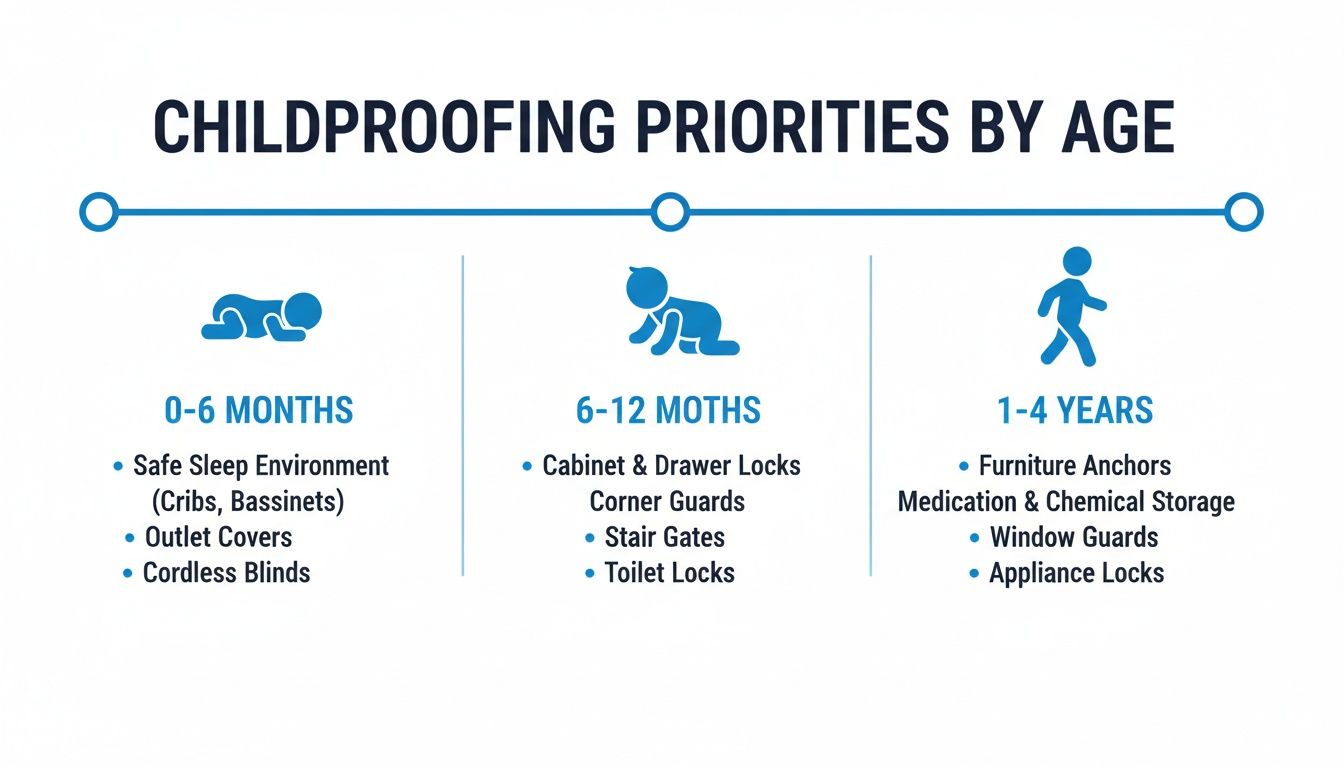
As you can see, your priorities will naturally shift. For newborns, it's all about creating a safe, contained environment. But once they start moving, a whole new world of potential hazards opens up.
When you're looking at https://www.customizeyourhome.com/floor-plans-new-homes-maryland and designing your space in a community like White Marsh or Edgewood, you can seamlessly integrate child-friendly features right from the start. Things like:
Choosing rounded countertop edges in the kitchen
Opting for slip-resistant flooring in bathrooms
Planning for built-in, permanent gates at the top and bottom of stairs
A truly childproofed home isn’t about bubble-wrapping your entire life or stopping your kids from exploring. It's about creating a safe space where their natural curiosity can thrive without you having to worry constantly. Think of it as creating layers of safety.
This approach lets you build a home that is both beautiful and fundamentally safe from day one. My proprietary visualization tools can even show you how these customizations will look in your new home before we ever break ground, giving you total confidence that your dream home will also be your family’s safest haven.
Making the Heart of Your Home Safer
The kitchen and living room are where life happens. It’s where you cook, play, and unwind. But because these are the busiest spots in the house, they come with their own unique childproofing puzzles.
Let’s get real about what works. This isn't about wrapping your home in bubble wrap; it’s about creating smart, overlapping layers of safety. That way, your little one can explore freely, and you can relax just a little bit more.
Lock Down the Kitchen
A toddler can get into a "locked" cabinet faster than you can say their name. Those simple plastic latches? A determined two-year-old often sees them as a fun challenge. This is one place where it really pays to upgrade.
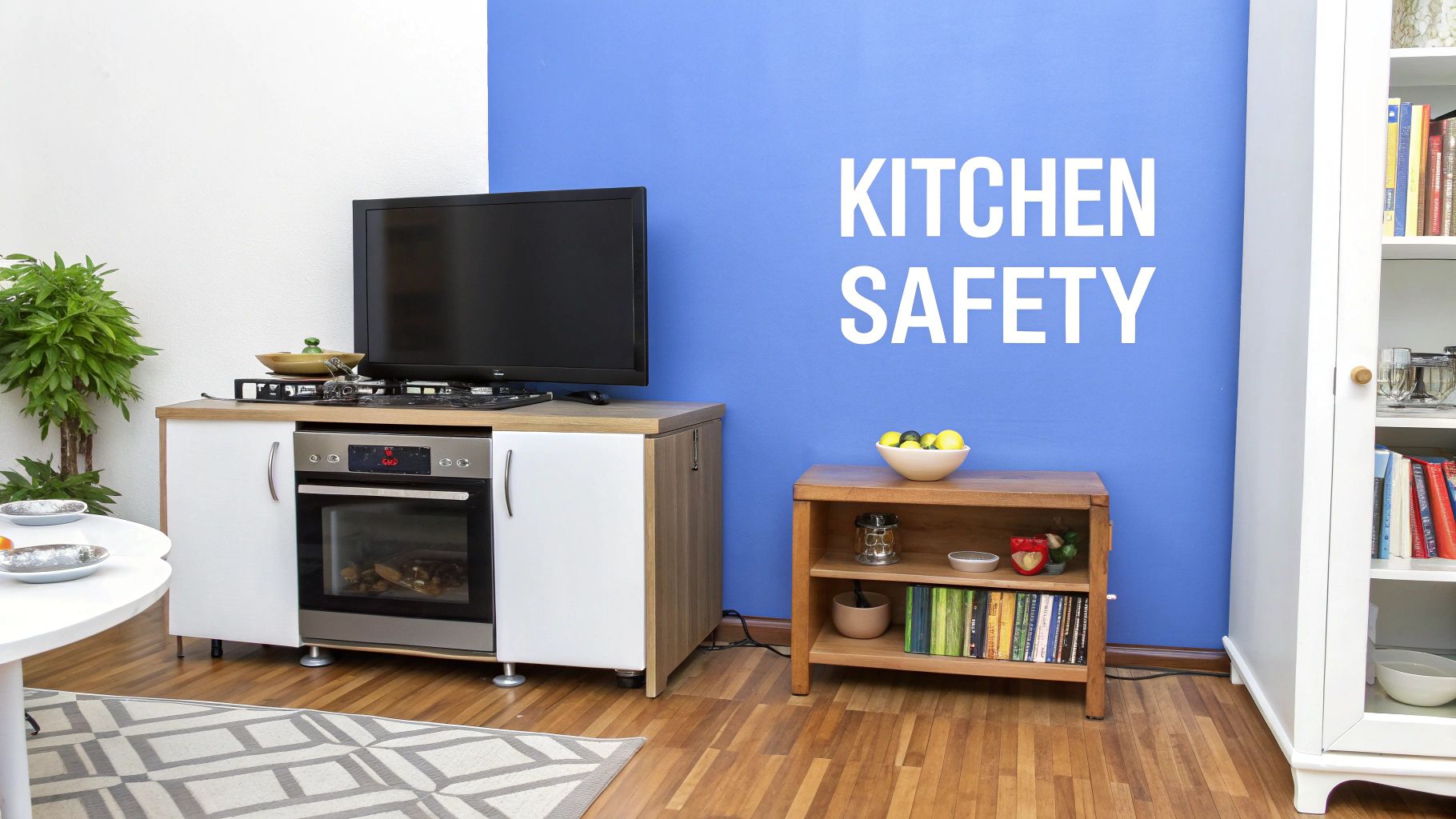
Magnetic Locks are Your Best Friend: I recommend these to every new parent. They're what you want for any cabinet or drawer holding cleaning supplies, sharp objects, or heavy pans. Because they're installed on the inside, your kitchen looks exactly the same, but they're completely toddler-proof. You need the magnetic "key" to get them open.
Stove Knob Covers are Non-Negotiable: Seriously, this is a must-have. These simple plastic covers pop right over your stove knobs, making it impossible for a little one to accidentally turn on a burner. They're cheap, easy to install, and incredibly effective.
Don't Forget the Big Appliances: The dishwasher, fridge, and oven door are all prime targets for curious hands. A simple multi-purpose strap lock will keep them from opening a hot oven or pulling a heavy dish rack onto themselves.
Creating a Safe Living Room Play Zone
The living room might feel like a soft, cozy space, but it’s often home to the biggest tip-over risks in the entire house. Anchoring your furniture isn't just a good idea—it's absolutely critical.
According to the Consumer Product Safety Commission, a child goes to the emergency room about every single hour because a piece of furniture or a TV tipped over on them.
You can prevent a tragedy for less than $10. An anti-tip kit is one of the cheapest and most important safety devices you'll ever buy. It’s a complete no-brainer.
Look around your living room right now. The main culprits are usually bookcases, dressers, and TVs. Those big, beautiful flat-screens are incredibly top-heavy, especially on a stand. A small child can easily pull one over. Use a TV strap or, even better, mount it securely to the wall. For bookcases and other tall furniture, make sure you're anchoring them directly into wall studs.
Soften Those Sharp Edges
The moment your baby starts pulling up and cruising along the furniture, you'll suddenly notice every sharp corner in the room. Coffee tables, TV stands, and fireplace hearths are notorious for causing bumps and bruises.
Luckily, this is an easy fix. You can grab corner and edge guards just about anywhere. They come in soft foam versions or clear silicone ones that blend in a little better. For a really sharp coffee table, I'd suggest getting a continuous foam bumper that wraps around the entire edge, not just the four corners. It creates a much bigger safety cushion for those wobbly first steps.
What if You Could Build Safety In?
These retrofitting tips are great for any home, but what if you could design your space to be safer from the very beginning? That’s the incredible opportunity you have when you customize a new home, and it's something I work on with my clients in communities across Baltimore County and Harford County.
Using my hands-on approach and proprietary visualization tools, we can think through these details before the first wall ever goes up. Imagine:
Choosing beautiful kitchen countertops that already have a rounded or bullnose edge, so there are no sharp corners to worry about.
Picking a stylish, high-traction tile or luxury vinyl plank for the kitchen floor that has better slip resistance.
Designing a custom media center with built-in cord management that keeps every wire and electronic device completely out of sight and out of reach.
This process goes way beyond just picking out paint colors. It's about intentionally creating a home that’s built for your family's real life. From White Marsh to Edgewood, I help my clients make sure their dream home is also their "forever safe" home.
Securing Bedrooms and Bathrooms for Peace of Mind
Bedrooms and bathrooms should be your family's personal sanctuaries, but for a curious toddler, they're full of hidden risks. When you're childproofing your home, these rooms need extra-close attention. It’s about looking beyond the obvious to create spaces that are genuinely safe.
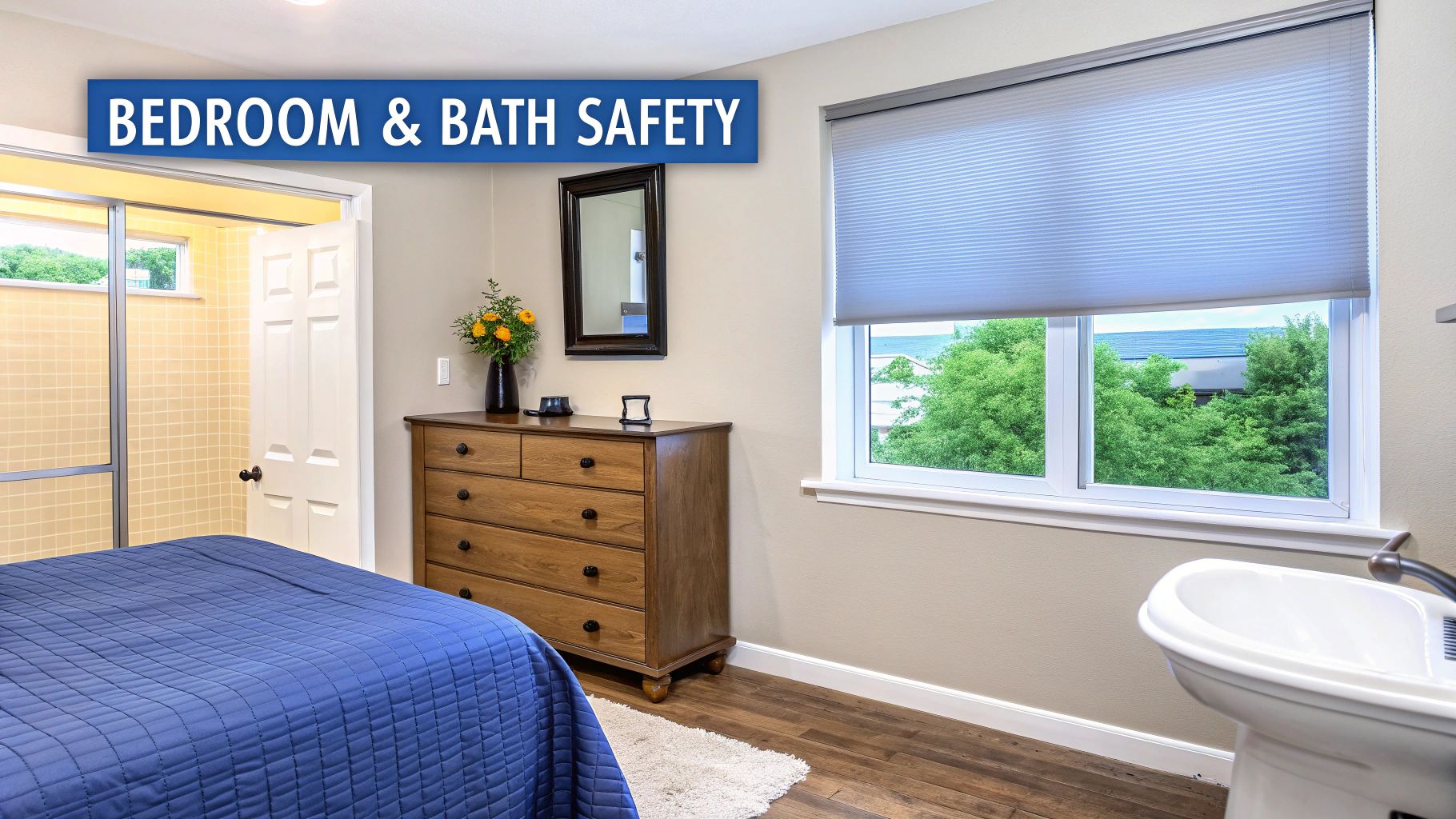
Most of us think of the bedroom as the safest room in the house. In fact, 95% of parents in the U.S. feel that way. But the numbers tell a different story. In 2022 alone, there were a staggering 190,080 injuries related to beds or bedding for children under five. This surprising statistic really drives home why securing furniture and creating a safe sleep environment is so critical. You can dig into more of this child safety research to see how it challenges common assumptions.
Creating a Safe Sleep Sanctuary
The bedroom is where your little one will spend a lot of time unsupervised, so it needs to be a fortress of safety. The single biggest, most immediate danger you can tackle? The windows.
Long, dangling cords on blinds are a serious strangulation hazard—and an irresistible toy for small children. The absolute safest bet is to replace them entirely with cordless blinds or shades. I consider this a non-negotiable for any window in a child's room or main play area.
Next up, let’s talk furniture. Dressers, changing tables, and even small bookcases look like a personal climbing wall to an adventurous toddler.
Anchor Everything: Use anti-tip straps to secure all heavy furniture to the wall. This is key: make sure you’re anchoring directly into a wall stud for maximum stability. A drywall anchor just won't cut it.
Install Drawer Stops: A child can easily pull out a dresser drawer and use it as a step, increasing the risk of the whole unit tipping over. Drawer stops prevent them from being pulled all the way out.
Keep the Crib Clear: A "bare is best" approach is the gold standard for crib safety. That means no heavy blankets, pillows, bumpers, or stuffed animals to reduce suffocation risks.
Taming the Bathroom Dangers
The bathroom is a compact space that packs a triple threat: water, hard surfaces, and a treasure trove of tempting toiletries. It's a trifecta of potential trouble.
First things first: the water temperature. A child's skin is far more sensitive than ours, and serious burns can happen in seconds. An anti-scald device is a small, inexpensive gadget you can install on your faucets and showerheads to prevent the water from ever reaching a dangerous temperature. It's one of the most effective and affordable safety fixes you can make.
Another small investment that pays off big is a toilet lock. It might seem like a minor thing, but it prevents two major risks: a toddler falling in headfirst (a genuine drowning hazard) and them discovering the joy of flushing their favorite toys down the drain.
I had a client in White Marsh who thought all cabinet locks were the same until their two-year-old expertly defeated a simple latch to get into the bathroom vanity. They quickly switched to magnetic locks for peace of mind, proving that the right device makes all the difference.
Smart Customizations for Future Safety
If you're customizing a new home, you have the incredible opportunity to design safety in from the ground up, preventing so many of these worries later on. When I work with families building in communities like Edgewood or across Harford County, we use proprietary visualization tools to plan these details from the very beginning.
Imagine being able to choose:
Beautiful, rounded countertops for the bathroom vanity, so there are no sharp corners to worry about.
Stylish, slip-resistant tile that looks fantastic but provides much-needed grip for wet little feet.
Cabinets with integrated soft-close features to protect tiny fingers from getting pinched.
This is the real advantage of customizing your space from the start. We can bring your dream home to life while ensuring it's a safe and secure environment for your family's next chapter.
Making Your Way Through Stairs, Hallways, and Windows
It’s easy to overlook the spaces we just pass through. The hallways we walk down a dozen times a day, the stairs we climb to bed, the windows we open for a breeze—these are high-traffic zones that can hide some pretty serious risks for a curious little one.
Let’s break down how to secure these transitional spaces. A hallway has its own unique set of challenges compared to a staircase, but both demand our attention to keep a newly mobile child safe.
Mastering Stairway Safety
Stairs are a huge deal for a mobile baby, but they're an even bigger source of stress for parents. The single most important tool in your arsenal is a baby gate, but it's not as simple as just buying one. The type of gate and where you put it makes all the difference.
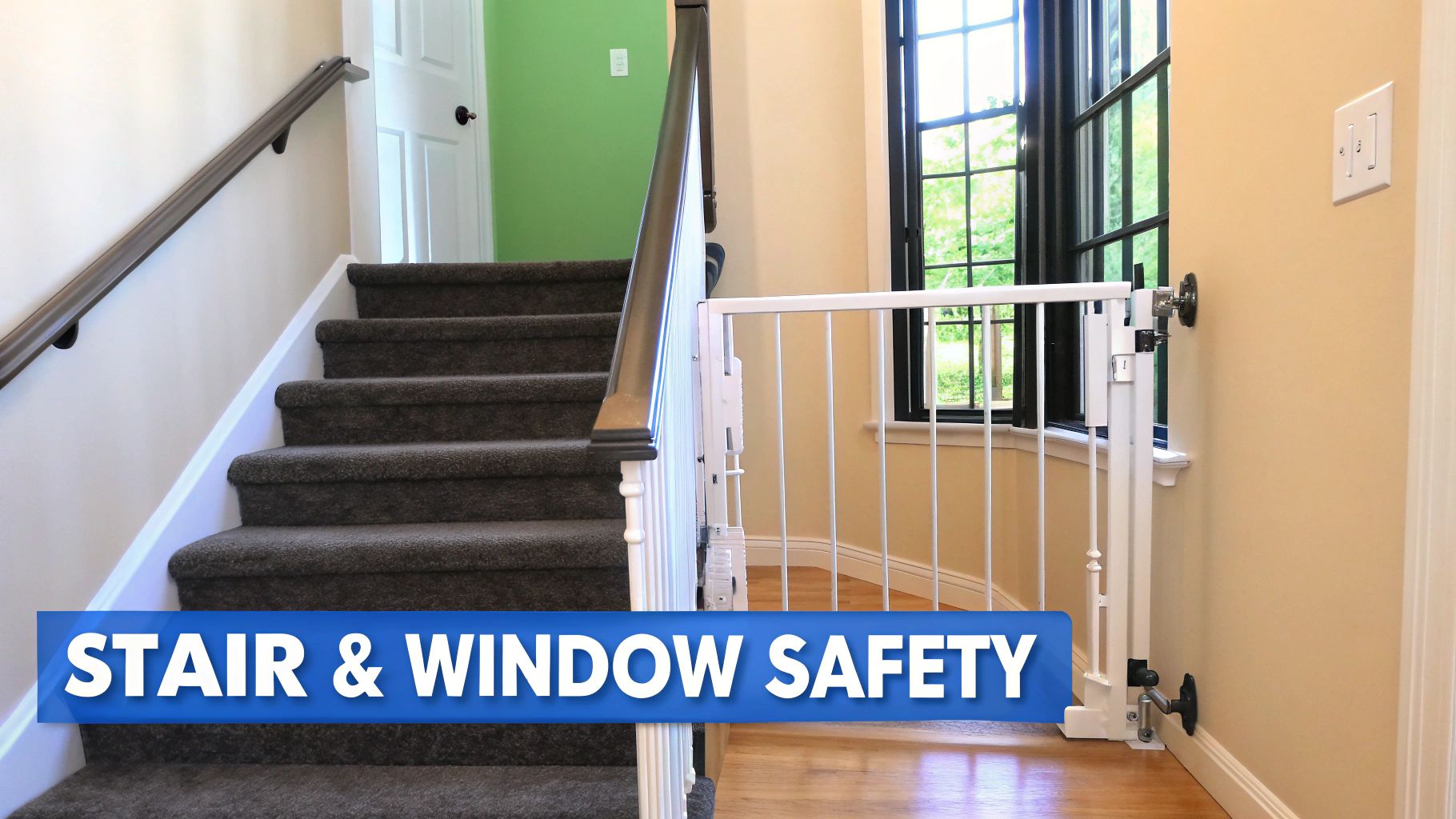
For the top of the stairs, you absolutely need a hardware-mounted gate. No exceptions. This kind of gate screws right into the wall or banister, creating a solid barrier that a determined toddler can’t just push over. A pressure-mounted gate simply isn't safe up there; it can give way, and that's a fall you don't want to even imagine.
Down at the bottom of the stairs, a pressure-mounted gate is usually fine. Its main job is to stop a crawler or new walker from starting an unsupervised expedition upwards.
The rule is simple and non-negotiable: Hardware at the top, pressure at the bottom. Getting this one thing right dramatically cuts the risk of a serious fall. It’s one of the most critical parts of childproofing any home.
But gates aren't the whole story. Don't forget to:
Check Your Banisters: Can you fit a soda can through the slats? If the gaps are wider than three inches, a child’s head or body could get stuck. You can easily fix this with banister guards—they’re usually clear plastic or mesh shields that cover the openings.
Keep the Stairs Clear: This sounds like a no-brainer, but we all know how quickly clutter happens. A single toy or shoe on a step is a huge tripping hazard, especially if you’re carrying your baby. Make it a house rule: nothing lives on the stairs.
Securing Windows for Fresh Air Without Fear
A window, especially on an upper floor, poses a significant fall risk that can catch parents by surprise. The good news is that you can make them safe without turning your house into a fortress.
In communities across Harford County and Baltimore County, where two-story homes are common, window safety is a conversation I have with families all the time. Here are the best tools for the job:
Window Guards: Think of these as sturdy grilles that install inside the window frame. They physically block a child from climbing or falling out but have emergency release buttons that an adult can operate in case of a fire.
Window Stops (or Wedges): These are fantastic, easy-to-install devices that prevent a window from opening more than a few inches. You can still get a nice cross-breeze, but the opening is too small for a child to squeeze through.
Building In Safety From The Start
All these fixes are perfect for an existing home. But when you're customizing a new home, you have the unique opportunity to integrate these safety features right into the design. This is where planning ahead can make your life so much easier and your home so much safer.
Using my proprietary visualization tools, we can walk through different layouts and see exactly how a permanent, built-in gate would look at the top of your stairs, or how different window styles provide more security. You can get a feel for this by exploring the virtual tours of new homes in Maryland we have available.
This approach lets you make smart choices from the get-go. We can design custom banisters built to modern safety standards or place windows strategically so they’re harder for little hands to reach. It’s all about creating a home in a community like White Marsh or Edgewood that isn’t just beautiful, but is intelligently designed for your family’s well-being from day one.
Outdoor Spaces, Garages, and Smart Tech Solutions
It’s tempting to feel like you’re done once the main living areas are locked down. But a truly childproofed home has to extend beyond your four walls. For a curious toddler, the garage and yard are exciting new frontiers, and they come with a whole new set of potential dangers.
It’s so easy to think of these as "outside" areas, but a determined little one can find their way into them in the blink of an eye. Let's dig into the unique hazards that come with these spaces.
Securing the Garage
I think most parents would agree: the garage is one of the scariest rooms in the house. It’s where we store everything from sharp tools to toxic chemicals. Simply putting these things on a high shelf just doesn't cut it once your child is on the move.
I’ve seen it happen—a toddler uses a bike or a storage bin as a makeshift ladder, bringing those "out of reach" items right back into play. This is why every single chemical, paint can, and sharp tool must be stored in a securely locked cabinet or chest. It's a non-negotiable layer of safety.
And while you're in there, take a moment to look for the less obvious dangers:
Automatic Garage Door Sensors: Please, test these regularly. Make sure they reverse immediately when they touch an object. It takes seconds to do.
Unplug Power Tools: Any tool, even a cordless one in its charging station, should be unplugged when you're not actively using it.
Secure Buckets and Bins: This is a big one that people miss. Large buckets, especially those that collect rainwater, can become a drowning hazard for a small child. Just store them upside down.
Creating a Safe Outdoor Play Zone
The backyard is where so many wonderful family memories are made. To ensure they're all happy ones, creating a safe play zone is absolutely essential. The first place to start is with a secure perimeter.
If you have a pool or even a small pond, a four-sided fence with a self-latching gate is critical. This is the best way to prevent a child from wandering out of the house and directly into the pool area unsupervised.
Beyond water safety, you have to consider the landscape itself. Walk the yard and check for any toxic plants that might be within reach, make sure your grill and propane tanks are secured, and double-check that any play equipment is properly assembled and anchored to the ground.
The reality is that accidents can happen anywhere, and falls are incredibly common. Research shows that falls send nearly 2 million children aged 12 and under to the emergency room each year. Comprehensive proofing, both inside and out, is the best way to prevent them. You can learn more about these home safety statistics to understand the full picture.
The Power of Smart Home Technology
This is where modern tech can be an incredible ally, giving you an extra layer of security and some much-needed peace of mind. Imagine getting an instant alert on your smartphone the moment a door to a high-risk area, like the basement or garage, is opened unexpectedly.
Smart home integration isn't science fiction anymore; it’s a genuinely practical tool for everyday family life.
Door and Window Sensors: These are small, inexpensive devices you can stick on doors leading to the garage, basement, or backyard. If the door opens, you get an immediate notification.
Smart Locks: You can program these to automatically lock after a minute or two, so you never have to lie in bed wondering if you remembered to secure the back door.
Video Doorbells and Cameras: These are great for keeping an eye on the front yard or backyard play area right from your phone, even when you’re inside making lunch.
When you're designing a new home from the ground up, you have a golden opportunity to integrate this technology seamlessly from the start. We help our clients explore these options, ensuring their new home is as smart as it is safe. Take a look at some of the standard smart home features we incorporate to see how it all comes together. With my proprietary visualization tools, you can see precisely how these features will function in your new space in communities like White Marsh or Edgewood, Maryland, helping you build a home that's perfectly customized for your family's safety and comfort.
Building Safety In From Day One
Retrofitting a home for child safety is one thing, but what if you could build it right in from the start? When you’re customizing a new home, you have this incredible opportunity to blend top-notch safety features seamlessly into your personal style. It means fewer worries from the moment you move in.
Design It In, Don't Bolt It On
This is where the real fun begins. Instead of slapping on those foam corner guards later, you could choose countertops with elegantly rounded edges from the get-go. Worried about slips and falls? You can pick stunning, durable flooring with a higher slip-resistance rating for your kitchen and bathrooms. It's a total game-changer for how you think about childproofing.
My hands-on service and unique visualization tools let us walk through these choices together. We can figure out the smartest places for outlets to keep cords out of reach, or select beautiful cabinetry that comes with built-in soft-close hinges to save tiny fingers from getting pinched. Imagine creating that kind of family sanctuary in a great Maryland community like White Marsh or Edgewood.
Building new lets you be proactive, not reactive. Safety becomes an invisible, elegant part of your home’s DNA, not just an afterthought.
This approach turns childproofing from a frantic chore into an exciting part of the design process. Best of all, you can see exactly how these features will look and function before a single nail is hammered.
If you’re ready to see what's possible, let’s talk about creating a home that’s as safe as it is beautiful. I can help you visualize and build a space that’s just right for your family. Start by getting some inspiration from our gallery of new homes in Maryland.
Got Questions? Let's Talk Childproofing
Even with the best room-by-room guide, questions always come up once you start the actual work. That's totally normal! I get these questions all the time from parents who are right where you are now, trying to make their homes as safe as possible for their little explorers.
So, When Should I Actually Start Childproofing?
My best advice? Start before you think you need to. The sweet spot is usually around four to six months, just before your baby starts getting mobile. This way, you're ahead of the game instead of scrambling when you see them making a beeline for an electrical outlet.
Start with the basics—outlet covers, cabinet locks—as soon as they show signs of rolling and trying to crawl.
Here’s a pro tip I share with every new parent: get down on your hands and knees and crawl around your house. Seriously. You'll be floored by what you see from their perspective. That lamp cord you never noticed? It’s now a giant, tempting pull toy. The wobbly leg on the end table? It looks like the perfect thing to grab onto when learning to stand.
Do I Really Need to Buy the Expensive Childproofing Gadgets?
Honestly, not always. While it’s smart to look for products with a JPMA (Juvenile Products Manufacturers Association) seal of approval, price doesn't equal safety. What truly matters is correct installation and consistent use.
Think about it: a top-of-the-line, expensive safety gate that's installed incorrectly is way more dangerous than a basic, budget-friendly one that's locked securely into the wall. A fancy magnetic lock won't do much good if the cabinet door itself is flimsy. The goal is to find the right solution for the specific risk in your home, not just the one with the biggest price tag.
Is Childproofing a One-Time Thing?
Definitely not. This is one of the biggest misconceptions. Childproofing is a living, breathing process that evolves right along with your child. I tell families to do a full safety audit of their home at least every six months.
The moment your baby starts walking, countertops that were once out of reach are suddenly fair game. When they discover they can climb, that bookshelf becomes a new and exciting challenge. You have to constantly re-evaluate. Check that gates are still tight, locks are functioning, and no new hazards have emerged. This ongoing vigilance is what truly keeps your home safe for the long haul.
At Customize Your Home, my philosophy is that a safe home and a beautiful one should go hand-in-hand. While the builder I represent provides high-quality homes, I go a step further—offering my clients unique proprietary visualization tools, hands-on service, and access to visualizers that help you bring your dream space to life. We work with families across White Marsh, Edgewood, and the greater Baltimore and Harford Counties to create spaces that are both stunning and secure.
Ready to build a home that's perfectly designed for your family's needs? Let's talk. Visit us at https://www.customizeyourhome.com to see how we do it.
Comments