

Best: best open concept floor plans for modern living

Dreaming of a home where conversations flow as freely as the light? You're not alone. Open concept living has transformed how we connect, entertain, and enjoy our homes, creating bright, airy spaces that bring everyone together. But with so many options, how do you find the perfect layout for your family's lifestyle? That's where I can help.
Here, we specialize in floorplans designed with this modern, connected living in mind, especially in vibrant Maryland communities like White Marsh, Edgewood, and throughout Baltimore and Harford County. I believe your home should be a beautiful backdrop for your life's best moments. This guide is your ultimate resource, exploring the 10 best open concept floor plans and breaking down the unique benefits of each. Before diving into specific designs, understanding the fundamentals of how to plan a room layout can provide a strong foundation for visualizing your future space.
I'll give you practical examples and friendly tips to help you envision a home that’s not just built for you, but designed by you. With my unique proprietary visualization tools, you can see your choices for flooring, countertops, and cabinets come to life. Let's find a floor plan you'll fall in love with.
1. Kitchen-Centric Open Concept
Forget tucking the kitchen away in a back corner. The Kitchen-Centric model is one of the best open concept floor plans because it puts the kitchen front and center, making it the undeniable heart of your home. This layout seamlessly merges the kitchen, dining, and living areas into one cohesive, interactive space. The central island isn't just for chopping vegetables; it’s a homework station, a coffee bar, and the main gathering spot during parties. This design thrives on connectivity, ensuring whoever is cooking remains part of the conversation and can keep an eye on everything happening in the main living area.
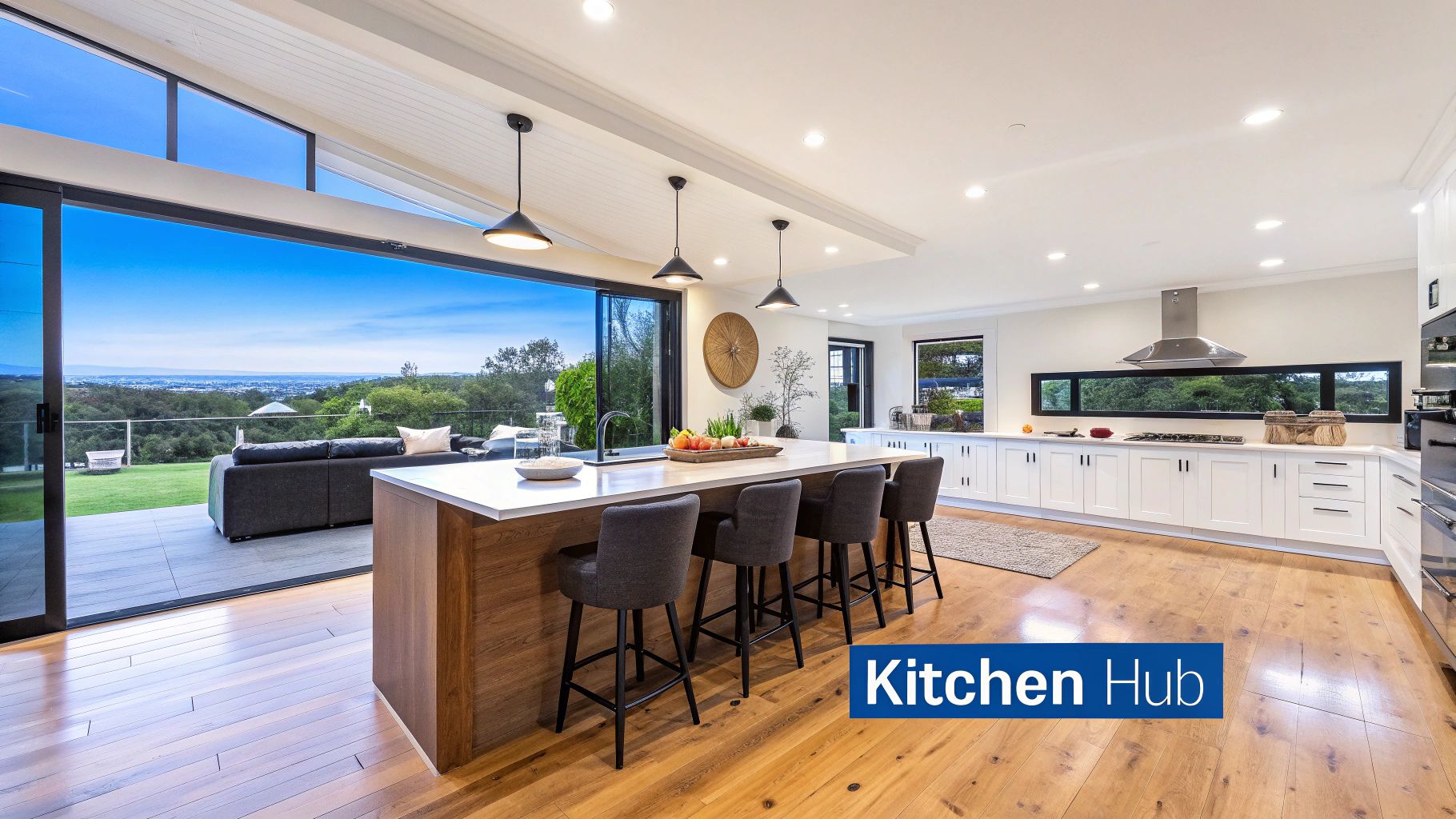
This approach is incredibly popular in modern homes, including many of the new home floor plans we offer in communities across Maryland, like White Marsh and Edgewood. The focus is on creating a social hub that supports daily family life and effortless entertaining.
Making a Kitchen-Centric Layout Work for You
To successfully pull this off, every detail matters. The goal is to create a space that’s both beautiful and functional.
Define Zones with an Island: Use a large kitchen island as a soft boundary. It separates the primary cooking zone from the main living space without walls. Add barstool seating to make it an instant social hub.
Coordinate Your Finishes: Since your kitchen is always on display, you'll get to pick countertops, cabinets, and flooring that complement your living room furniture and decor. Cohesive design choices create a harmonious flow.
Plan Your Lighting: Use a mix of lighting to set the right mood. Install bright task lighting over the prep areas, ambient pendant lights over the island, and dimmable fixtures in the living area.
Manage Noise and Odors: An open kitchen means cooking smells and sounds travel. A high-powered, quiet range hood is a non-negotiable investment to keep the air fresh.
If you're mapping out your ideal space, getting the core components right is key. For more tips, check out our guide on how to plan your kitchen layout for a deeper dive.
2. The Great Room Layout
The Great Room Layout elevates open-concept living by merging the living, dining, and sometimes kitchen areas into a single, expansive space. This is one of the best open concept floor plans for those who crave a sense of grandeur and flexibility. By eliminating interior walls, this design often features dramatic vaulted ceilings and a seamless flow, making the entire home feel larger and more connected. It’s perfect for both everyday family life and large-scale entertaining.
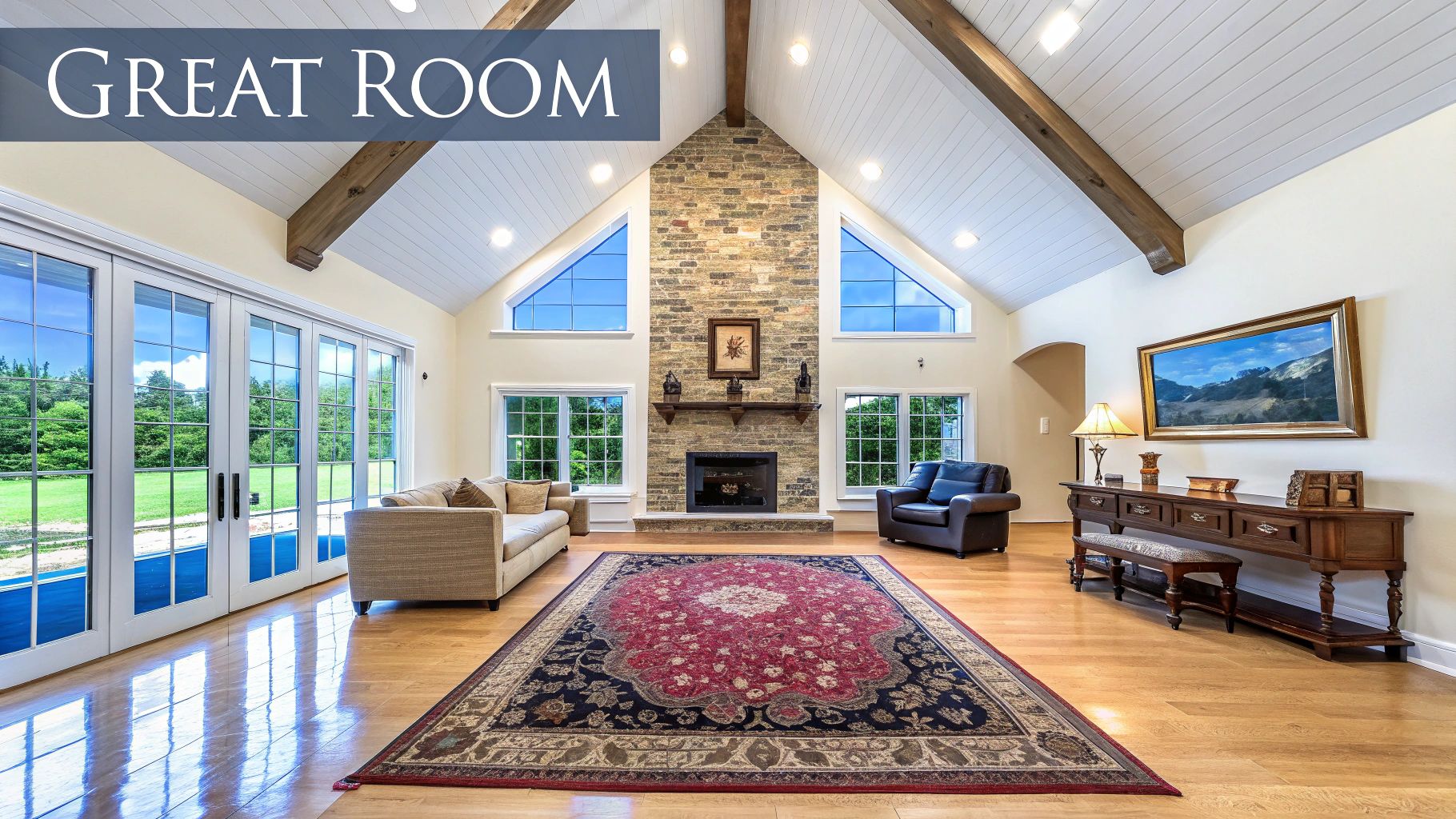
This impressive layout is a signature feature in many of our new home communities in areas like Harford County and Baltimore County. The great room acts as the home's central command, offering an incredible canvas for personalization, from flooring to fixtures, allowing you to create a truly unique gathering space.
Making a Great Room Layout Work for You
A great room’s scale can be intimidating, but a few key strategies will make it feel both grand and inviting.
Define Zones with Rugs: Use large area rugs to visually separate the living area from the dining space. This creates distinct "rooms" without needing walls.
Create a Focal Point: Anchor the room with a strong focal point, such as a statement fireplace, a large piece of art, or a media wall. Arrange furniture around it to encourage conversation.
Use Smart Furniture Groupings: Instead of pushing furniture against the walls, float sofas and chairs in conversational clusters to create a more intimate and functional setting.
Layer Your Lighting: Combine overhead ambient lighting, like a chandelier, with task lighting (lamps) and accent lighting to create warmth and define different activity zones within the large space.
Understanding the fundamentals of how spaces are planned is the first step to creating your dream home. To get a better grasp, you can discover what a floor plan is and how it guides home design on our blog.
3. The Galley-to-Great Room Transition
Not everyone wants a completely wide-open layout. The Galley-to-Great Room Transition is one of the best open concept floor plans for those who appreciate a balance between defined spaces and social connection. This hybrid design keeps the efficient, linear flow of a galley-style kitchen but opens one side up to the main living or great room. It’s the perfect compromise, giving the cook a dedicated zone while still allowing them to chat with family and guests. You get the functionality of a contained kitchen with the airy, connected feel of modern living.
This thoughtful layout is a popular choice in many of the flexible floor plans we offer, especially in communities in Harford and Baltimore County. It provides a structured yet open environment ideal for both daily routines and weekend gatherings.
Making a Galley-to-Great Room Layout Work for You
Success with this design lies in creating a seamless yet distinct transition between the two spaces.
Create a "Soft" Border with a Peninsula: Instead of a full wall, use a peninsula with barstool seating. This acts as a natural divider, offering extra counter space and a casual spot for guests to hang out without getting in the cook's way.
Use Consistent Flooring: Unify the kitchen and great room by using the same flooring material throughout. This simple choice makes the entire area feel larger and more cohesive.
Harmonize Your Color Palette: Select paint colors and finishes that complement each other. Since the kitchen is partially visible, ensuring the cabinetry and countertops work with your living room decor is key to a polished look.
Design a Partial Wall: For more definition, consider a half-wall (around 42 inches high). It hides countertop clutter from the living room view while keeping sightlines open, maintaining that crucial connection.
4. The Living-Dining Merge with Defined Kitchen
If you love the idea of openness but prefer to keep cooking activities slightly contained, this layout offers the perfect compromise. The Living-Dining Merge is one of the best open concept floor plans because it creates a large, unified space for relaxing and entertaining while keeping the kitchen distinct. The kitchen isn't completely walled off; it’s often separated by a peninsula, a wide doorway, or a partial wall, maintaining a connection to the main area without being fully exposed. This design elegantly separates the sights and sounds of meal prep from your primary living space.
This balanced approach is a hallmark of many transitional-style homes, including updated floor plans you’ll find in our communities across Harford and Baltimore County. It provides the spacious feel of an open plan with the practical structure that many families appreciate.
Making a Living-Dining Merge Work for You
Success with this layout lies in creating a smart, seamless transition between the spaces. The goal is connection, not complete separation.
Create a Stylish Boundary: Use a peninsula with bar seating as more than just a divider. Treat it as a beautiful architectural feature that serves as a breakfast bar or a serving station during parties.
Coordinate Your Color Palette: Although the kitchen is separate, it should feel connected. You get to choose a color scheme for your cabinets and backsplash that complements the paint and decor in your living and dining areas.
Use Glass for Visual Flow: If you have a wall, consider adding French doors or a large interior window. This maintains a visual link and allows light to pass between the spaces while still containing kitchen noise.
Maintain Consistent Flooring: Using the same flooring throughout the living room, dining room, and kitchen creates a powerful sense of unity and makes the entire area feel larger and more cohesive.
This layout proves you don’t have to choose between fully open and fully traditional. For more ideas on tailoring a space to your family’s needs, explore our guide on how to customize your new home for inspiration.
5. The Flex Space Open Concept
Life changes, and your home should be able to change with it. The Flex Space model is one of the best open concept floor plans because it’s designed for adaptability. Instead of fixed walls and single-purpose rooms, this layout features a multipurpose open area that can evolve with your family’s needs. One year it might be a playroom, the next a home office, and later a formal dining room for holiday gatherings. The key is using smart design elements like movable partitions or pocket doors to create separation when you need it and an open flow when you don't.
This modern approach is a cornerstone of many new construction homes, including our open floor plans in Maryland communities like Edgewood and White Marsh. It offers the ultimate in lifestyle flexibility, empowering homeowners to personalize their space as their priorities shift over time.
Making a Flex Space Layout Work for You
To make a flexible space truly functional, you need a plan that supports its many potential uses.
Define Zones without Walls: Use large area rugs to visually anchor different zones, like a workspace or a play area. Strategic furniture placement and lighting can also create distinct "rooms" within the larger open space.
Invest in Multi-Functional Furniture: Think ottomans with hidden storage, a sleek desk that can double as a console table, or a modular sofa. These pieces allow you to switch the room's function with minimal effort.
Plan for Tech: Ensure the space has ample electrical outlets and strong Wi-Fi coverage to support everything from a home office setup to a media-heavy entertainment zone.
Embrace Smart Separation: Consider installing high-quality pocket doors. They slide away to completely open up the area but provide privacy and sound dampening when you need to close off the space.
For more inspiration on making every square foot count, see our tips on how to maximize small spaces with clever design ideas.
6. The Scandinavian Minimalist Open Concept
Embracing the Nordic principles of "hygge" (coziness) and functional simplicity, the Scandinavian Minimalist approach is one of the best open concept floor plans for creating a serene and uncluttered environment. It merges clean lines, natural light, and intentional functionality to make a space feel both expansive and calming. This layout isn't about stark emptiness; it’s about thoughtfully curating every element so the home feels breathable, organized, and deeply connected. The focus is on quality over quantity, creating a harmonious flow between living, dining, and kitchen areas.
This design philosophy is gaining traction in modern communities across Maryland, particularly where a connection to nature and sustainable living is valued. Our open floor plans in areas like Harford County often serve as the perfect canvas for this style, emphasizing large windows and an efficient use of space.
Making a Scandinavian Minimalist Layout Work for You
Successfully achieving this look is all about discipline and a focus on natural, functional beauty. It's a deliberate style that prioritizes a peaceful atmosphere.
Maximize Natural Light: Keep window treatments minimal or non-existent. Sheer curtains or simple blinds can provide privacy without blocking precious sunlight, which is a cornerstone of Scandinavian design.
Invest in Multipurpose Furniture: Choose high-quality pieces that offer both style and function, like a coffee table with hidden storage or a sleek sideboard that doubles as a media console.
Embrace a Neutral Palette: Stick to a foundation of whites, light grays, and soft beiges. Accent with natural wood tones, muted blues, and earthy greens to add warmth without overwhelming the space.
Add Warmth with Textiles: To keep the minimalist design from feeling cold, layer in cozy textures. Think wool throws, linen pillows, and soft area rugs to define zones and add comfort.
7. The Farmhouse Open Concept
Blending rustic charm with modern living, the Farmhouse Open Concept is easily one of the best open concept floor plans for creating a warm, inviting atmosphere. This style takes the spacious, connected layout you love and infuses it with cozy character. Think exposed wood beams, shiplap accent walls, and vintage-inspired fixtures, all working together to make a large, open area feel like home. It’s a design that prioritizes both togetherness and comfort, making it a perfect fit for family life.
This aesthetic has become incredibly popular in communities across Maryland, especially in suburban areas like Harford County and Baltimore County where there's a desire for homes with heart and personality. The goal is to create a timeless, welcoming space that feels both stylish and lived-in from day one.
Making a Farmhouse Layout Work for You
Achieving the perfect balance of rustic and contemporary requires a thoughtful approach to materials and decor.
Anchor with a Centerpiece: Use a large, reclaimed-wood farmhouse table as the heart of the dining zone. This piece acts as a natural gathering spot and visually grounds the open space.
Mix Materials and Textures: Combine rustic elements like exposed brick or shiplap with clean, modern lines in your furniture and cabinetry. This contrast prevents the design from feeling cluttered or dated. To complete the look, selecting the right flooring suitable for farmhouse homes will tie the entire space together beautifully.
Incorporate Vintage Lighting: Source antique-style pendant lights or chandeliers to add character and define different areas, such as over the dining table or kitchen island.
Balance with Modern Appliances: Pair classic farmhouse sinks and shaker-style cabinets with sleek, modern stainless-steel appliances. This ensures your kitchen is as functional as it is charming.
8. The Multi-Zone Open Concept with Visual Separation
If you love the airy feel of an open layout but crave a little more structure, this is one of the best open concept floor plans for you. This sophisticated design creates distinct "zones" for living, dining, and cooking without putting up full walls. It uses clever architectural details like varied ceiling heights, decorative columns, or half-walls to signal a transition from one area to the next. This approach gives you the best of both worlds: a bright, connected space that still feels organized and intentional.
This style is often found in high-end homes and is a hallmark of thoughtful design. Many of our open floor plans in communities across Harford and Baltimore Counties incorporate these principles, providing a seamless flow with just the right amount of definition to make each space feel special. It’s perfect for maintaining sightlines while giving each area its own purpose.
Making a Multi-Zone Layout Work for You
Successfully creating visual separation requires a strategic approach to design and decor.
Use Architectural Cues: Incorporate elements like a dropped ceiling over the kitchen or a wide, cased opening between the living and dining areas. These features define zones without closing them off.
Vary Your Flooring (Subtly): Transition from hardwood in the living room to a complementary tile in the kitchen. The key is to choose materials that work together harmoniously to avoid a jarring effect.
Leverage Furniture Groupings: Arrange your furniture into purposeful clusters. A large area rug under your living room seating, for example, creates a clear boundary for that zone.
Unify with Color and Light: Keep a consistent color palette and lighting style throughout the entire space. This ensures that even with defined zones, the entire open area feels cohesive and connected.
9. The Tech-Integrated Smart Open Concept
This contemporary approach takes open-concept living to the next level by weaving smart home technology directly into the floor plan's DNA. The Tech-Integrated Smart Open Concept enhances functionality with automation, connected devices, and integrated systems while keeping the aesthetic clean and uncluttered. It’s one of the best open concept floor plans for modern families because it maintains visual openness while using invisible technology that adapts to your lifestyle, from automated lighting to smart appliances.
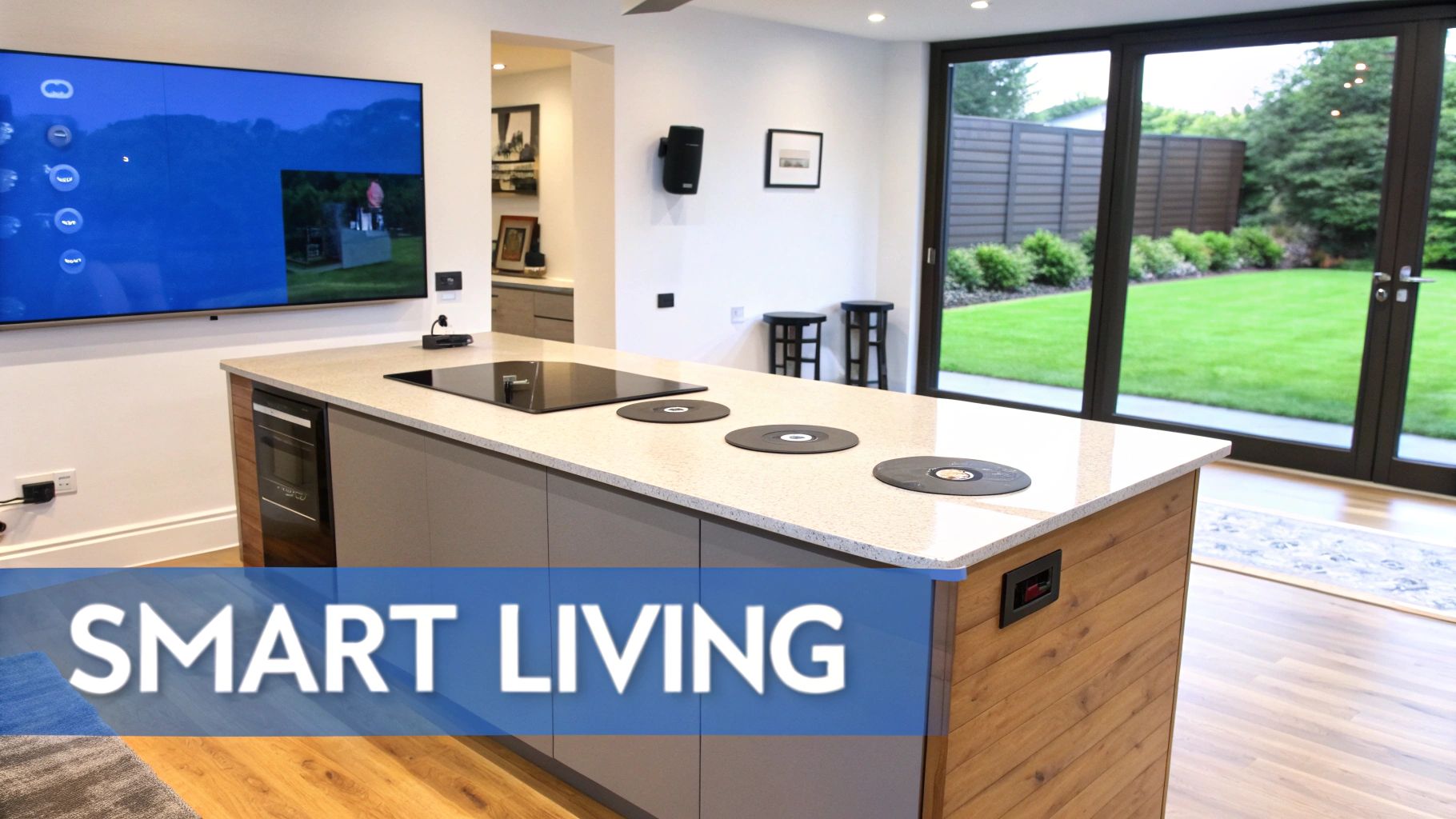
This design is becoming a staple in new construction, especially in tech-forward communities where modern living is a priority. The goal is to create a responsive, intuitive environment that works for you, whether you’re hosting a party or just relaxing with family. Our open floor plans are designed to easily accommodate these modern integrations.
Making a Tech-Integrated Layout Work for You
A truly smart home feels effortless, but it requires thoughtful planning to get the details right.
Plan the Infrastructure Early: For a seamless look, plan your electrical and network infrastructure during the initial design phase. This makes it easier to hide wires and install smart switches, speakers, and security systems.
Create Zones with Smart Lighting: Use automated lighting to define different areas within your open space. Program scenes that adjust brightness and color temperature for cooking, dining, or movie nights.
Integrate Tech into Fixtures: Hide the technology in plain sight. Opt for kitchen islands with built-in wireless charging pads, pop-up outlets, and seamlessly integrated smart appliances that you can control from your phone.
Choose a Central Hub: Select a compatible smart home ecosystem like Amazon Alexa or Google Home. This ensures all your devices can communicate with each other, allowing for simple voice commands and automation routines.
To get started, it's helpful to see what's possible. Explore our guide on the best smart devices for your home for more ideas.
10. The Modified Open Concept with Hidden Separation
Can't decide between a fully open layout and the privacy of a traditional home? This modified approach offers the best of both worlds and is one of the best open concept floor plans for those who crave flexibility. It uses clever partitions like sliding barn doors, pocket doors, or even accordion walls to give you the power to open or close off spaces as needed. You can enjoy a wide-open feel for parties and then slide a wall closed to create a quiet home office or a cozy TV room. This design is perfect for families who need their spaces to serve multiple functions throughout the day.
This adaptable layout is a favorite in new home construction, especially for homebuyers in Maryland suburbs who want a home that can grow with their needs. Many of our open floor plans can be personalized with these features, giving you ultimate control over your living environment.
Making a Modified Layout Work for You
A successful modified plan relies on quality mechanics and smart design choices to feel intentional, not like an afterthought.
Invest in Quality Hardware: The sliding or folding mechanism will be used constantly, so don't skimp. High-quality hardware ensures smooth, quiet operation for years to come.
Match Your Interior Style: Choose a partition that enhances your decor. A rustic barn door adds character to a modern farmhouse design, while sleek glass pocket doors maintain a minimalist aesthetic.
Plan for Sound: If true separation is a priority, look for solid-core doors or partitions designed with sound-dampening qualities to minimize noise transfer between zones.
Create Cohesive Finishes: Ensure the flooring, wall colors, and trim are consistent on both sides of the partition. This creates a seamless look whether the space is open or closed.
Top 10 Open-Concept Floor Plan Comparison
Layout | Implementation Complexity 🔄 | Resource Requirements ⚡ | Expected Outcomes 📊⭐ | Ideal Use Cases | Key Advantages |
|---|---|---|---|---|---|
Kitchen-Centric Open Concept | 🔄 Medium — open-plan rework; ventilation upgrade | ⚡ High — large island, pro appliances, ventilation | 📊 Social hub, increased light; ⭐ High aesthetic & resale appeal | Families who cook & entertain; modern buyers | Social connectivity; generous light; entertaining-friendly |
The Great Room Layout | 🔄 High — structural work for vaults/ceilings | ⚡ High — framing, HVAC, finishes | 📊 Dramatic spaciousness; ⭐ High architectural impact | Large families, frequent entertainers, dramatic-architecture seekers | Impressive scale; flexible seating zones; value-add |
Galley-to-Great Room Transition | 🔄 Medium — partial walls/pass-throughs | ⚡ Medium — modest structural & ventilation needs | 📊 Balanced privacy and connection; ⭐ Efficient work zone | Practical families; renovation projects seeking compromise | Better odor control; hidden mess; cost-effective vs full open |
Living-Dining Merge with Defined Kitchen | 🔄 Low — keep kitchen separate or use pass-through | ⚡ Low–Medium — limited structural changes | 📊 Cleaner entertaining zones; ⭐ Preserved kitchen workflow | Busy households who cook frequently | Odor containment; tidy appearance; efficient workflow |
Flex Space Open Concept | 🔄 Medium — planning for movable partitions | ⚡ Medium–High — pocket doors, modular systems | 📊 Highly adaptable; ⭐ Future-proof and multi-use | Young families, remote workers, multigenerational homes | Maximize usable space; customizable as needs change |
Scandinavian Minimalist Open Concept | 🔄 Medium — built-ins and curated finishes | ⚡ Medium — quality finishes, storage solutions | 📊 Calm, organized environment; ⭐ Timeless aesthetic | Minimalists, design-forward & eco-conscious buyers | Light-filled, uncluttered, energy-efficient design |
Farmhouse Open Concept | 🔄 Medium — exposed beams & rustic detailing | ⚡ Medium–High — authentic materials, finishes | 📊 Warm, inviting atmosphere; ⭐ Strong family appeal | Rural/suburban families, those seeking character | Cozy charm; blends modern function with tradition |
Multi-Zone Open Concept (Visual Separation) | 🔄 High — custom columns, ceiling changes | ⚡ High — custom architecture & finishes | 📊 Defined zones with preserved openness; ⭐ Sophisticated result | Luxury/custom-home buyers | Privacy without walls; architectural interest; better sound control |
Tech-Integrated Smart Open Concept | 🔄 High — integrated systems planning & wiring | ⚡ High — smart devices, professional installation | 📊 High convenience & efficiency; ⭐ Modern, connected living | Tech enthusiasts, remote workers, smart-home buyers | Automation, hidden tech, energy optimization |
Modified Open Concept with Hidden Separation | 🔄 Low — non-structural partitions (doors) | ⚡ Low — sliding doors, hardware, cabinetry | 📊 Flexible privacy on demand; ⭐ Cost-effective adaptability | First-time buyers, budget-conscious families, renovators | Affordable flexibility; easy retrofit; privacy when needed |
Bring Your Vision to Life in Maryland
We’ve explored a fantastic range of the best open concept floor plans, from the entertainer’s dream Kitchen-Centric layout to the versatile Flex Space design and the smartly divided Modified Open Concept. Each offers a unique canvas for your life, proving that an open layout is far more than just a lack of walls; it’s a strategic design choice that shapes how you connect, relax, and live. The key takeaway is that the "perfect" plan isn't a one-size-fits-all solution. It's the one that aligns with your daily routines, your family’s needs, and your personal style.
Whether you were drawn to the cozy, communal vibe of a Farmhouse layout or the sleek efficiency of a Scandinavian design, the real magic happens when you infuse the space with your own personality. The journey doesn't end with picking a blueprint. It truly begins when you start selecting the details that transform a house into your home. This is where your vision takes center stage, turning a great floor plan into an exceptional living experience.
From Blueprint to Your Personal Haven
Making that transition from a floor plan on paper to a tangible, personalized space can feel like a huge leap. But it's also the most exciting part of the process. Remember the power of zoning we discussed? Imagine defining your Great Room not with walls, but with a beautiful area rug you hand-picked, or separating your kitchen and dining areas with a stunning waterfall countertop in your favorite quartz.
This is exactly how we approach home buying in our communities across White Marsh, Edgewood, and throughout Baltimore and Harford Counties. We specialize in open-concept designs because we know they offer the modern, connected lifestyle today’s homeowners want. More importantly, I believe your home should be a direct reflection of you. That’s why we let you choose your own flooring, countertops, cabinets, and tile. I go a step further—offering my clients unique proprietary visualization tools, hands-on service, and access to visualizers that help you bring your dream space to life. You’re not just guessing what it will look like; you’re an active participant in the design, seeing your selections come to life in real-time. This hands-on process ensures the final result is a home that’s been tailored specifically for you, right from the start.
Ready to see how your favorite open-concept layout could look with your unique finishes? With my help, you can use advanced visualizers to mix and match materials and bring your design ideas to life. Let’s start creating the Maryland home you’ve always envisioned today. Customize Your Home
Comments