

Smart Building: Reducing Construction Waste for a Greener Home

When you're dreaming up your perfect new home here in Maryland, the last thing on your mind is probably a dumpster full of scraps. But thinking about construction waste before we even break ground is one of the smartest things we can do. It's not just about being green; it's about being efficient, saving money, and building a home you can be proud of in every single way.
Why We're Obsessed with Less Waste
Building a new home is an incredible journey. You're focused on the big picture—the layout, the kitchen, the view from your bedroom window. My job is to handle the details you don't see, and one of the biggest is managing the materials that go into your home. The leftover pile of scraps is where a lot of builders waste a client's money and a lot of resources.
Honestly, the numbers are staggering. The building industry produces a mountain of waste—globally, we're talking about 2 billion tons of construction and demolition (CDW) waste every year. That accounts for about a third of all solid waste on the planet. If you want to dig into the data, the Global Status Report for Buildings and Construction lays it all out. This is exactly why the builder I represent has made waste reduction a cornerstone of their building philosophy.
It's simple, really. By focusing on minimizing waste from day one, we're not just doing our part for the beautiful Maryland landscape we all love. We're also being smarter with your budget. Less waste means lower disposal fees, and that's a direct saving that goes back into your project.
So, What Exactly Is Construction Waste?
It's everything that doesn't end up as a permanent part of your house. It’s the offcuts, the packaging, the over-ordered materials.
Think about the stuff you’d see in a typical job site dumpster:
Drywall Scraps: The pieces we have to cut out to fit around windows, doors, and outlets.
Lumber Offcuts: Small ends of 2x4s from framing or leftover pieces of trim.
Packaging Overload: All the cardboard, plastic wrap, and shipping pallets that our materials arrive in.
The "Just in Case" Material: The extra box of tile or bundle of shingles that was ordered but never used.
Every one of those items represents a cost—both in dollars and environmental impact. That's why meticulous planning is everything. We can turn what would have been waste into real value and a more sustainable home.
This isn't just a theory; it's how we build better homes in places like Baltimore County and Harford County. For a closer look at our overall approach, you can read our guide on sustainable construction practices for greener homes. My goal is always to provide hands-on service, walking you through every decision so the final home perfectly matches your vision and your values.
How Smart Planning Prevents Waste Before We Build
The best way to slash construction waste is surprisingly simple: don't create it in the first place. This is where a truly hands-on approach makes all the difference. Long before a single shovel breaks ground on your lot in White Marsh or Edgewood, we’re making smart decisions together that pave the way for a more efficient, less wasteful build.
It really kicks off with visualization. I use some unique proprietary visualization tools that let you see your space come to life digitally, allowing you to finalize choices for flooring, cabinets, and tile with total confidence. This simple step helps us avoid those costly, last-minute changes that are notorious for creating piles of discarded materials.
Designing for Efficiency
The builder I represent leans on advanced software to map out every single detail of your new home. Picture this: when we're designing your kitchen, we can arrange every cabinet and appliance with pinpoint precision. This lets us order the exact amount of material we need—no more, no less.
For homebuyers here in Maryland, that level of detail really pays off. In fact, builders who use this kind of planning software can cut material overages by as much as 25%. That's a huge win for your wallet and the environment. If you're curious about the numbers, you can dig into more construction market trends at GMI Insights.
This process isn't just about software; it's about transforming old, wasteful habits into smart, sustainable solutions for a better home.
This visual really captures the spirit of what we do—turning what would have been scrap into a key part of building a more beautiful and efficient home.
Practical Planning in Action
This hands-on guidance isn't just for finishes; it extends right down to the bones of the house. Our builder intentionally designs floor plans that work with standard material sizes, like common lumber lengths or full sheets of drywall. Why? Because it drastically cuts down on the number of cuts our crews have to make on-site.
Fewer cuts mean fewer scraps heading for the dumpster. It's that simple.
For instance, by tweaking a room's dimension by just a few inches, we can often use full 4x8 or 4x12 sheets of drywall, leaving almost nothing behind. It might seem like a small detail, but this kind of thoughtful design is at the heart of how we build smarter in Baltimore and Harford County.
My goal is to make sure your home's design isn't just stunning but also incredibly resource-efficient. Every decision we make together during the planning phase has a positive ripple effect throughout the entire build.
This digital-first approach is a cornerstone of modern, responsible home building. You can learn more about these powerful tools in our article explaining the benefits of building information modeling. At the end of the day, smart planning saves time, money, and materials, making your dream home a reality you can feel truly good about.
Choosing Materials That Are Better for Everyone
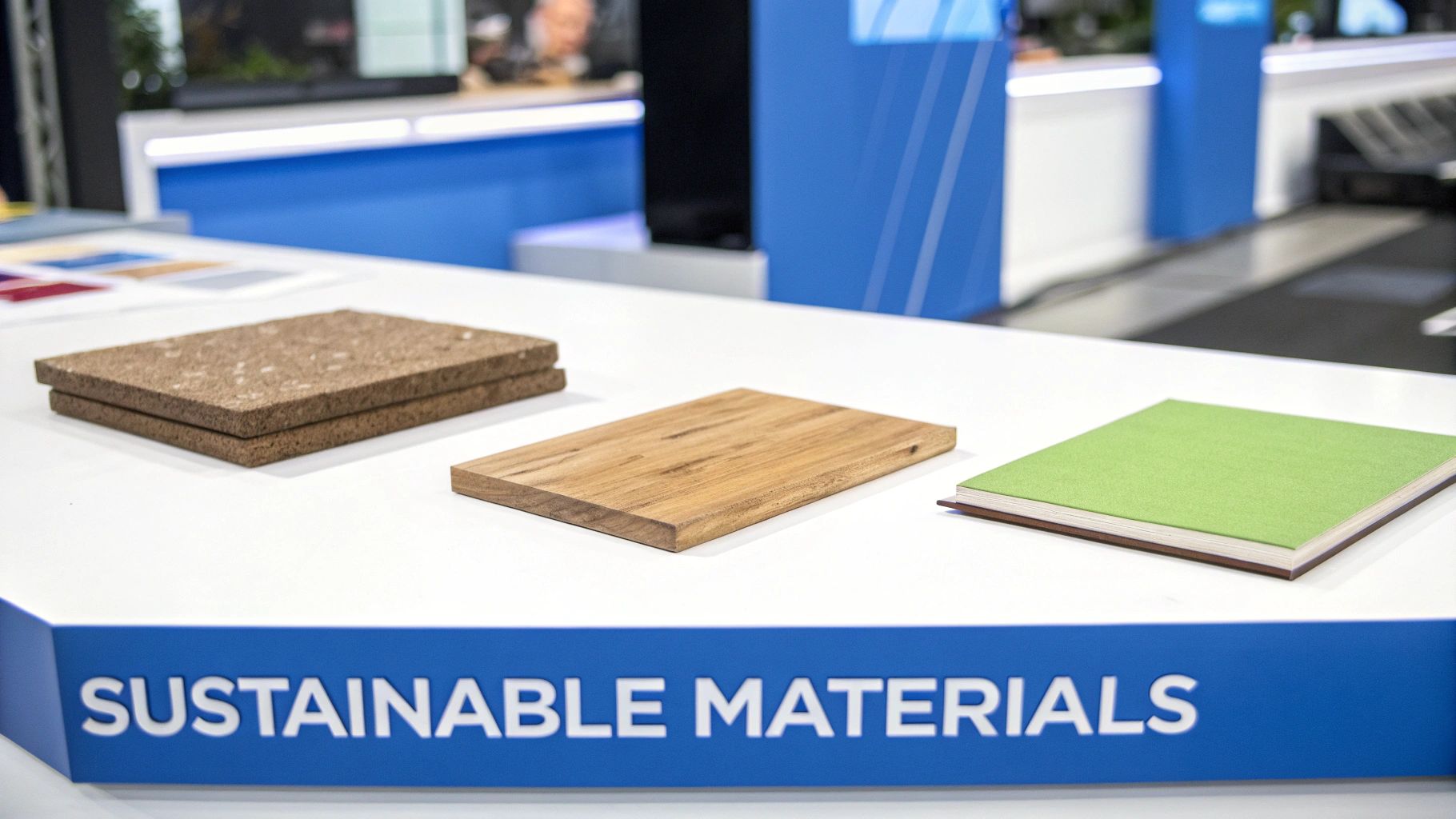
The materials you select do more than just define your home's style; they shape its entire environmental footprint. I love guiding clients through these big decisions, helping them find options that are not only gorgeous but also responsibly made. It’s all about making smart, informed choices that lead to a beautiful, high-quality home you can truly feel good about.
This whole process kicks off by simply thinking differently about what goes into your home. We look at sustainable options that fit your vision without the heavy environmental cost. For instance, instead of traditional solid hardwoods, we might explore engineered hardwoods. They use just a fraction of the virgin timber but deliver incredible durability and style. If you’re building a home for a busy family, you'll want flooring that can handle it all; check out our guide on the best flooring for high-traffic areas.
Smart Selections for Less Waste
Beyond the beautiful finishes you'll see every day, the builder I represent also focuses on materials that make the building process itself more efficient. A perfect example is using pre-fabricated components, like factory-built roof trusses or wall panels. These are manufactured to pinpoint-perfect specs in a controlled environment.
This approach gives us a few massive wins when it comes to cutting down on construction waste:
Precision Cuts: The machinery in a factory produces far less scrap than someone cutting lumber on-site.
Controlled Environment: Materials are kept out of the elements, which prevents weather damage and the need for costly replacements.
Efficient Assembly: These components show up ready to install, which speeds up the build and keeps the job site cleaner.
It’s a proactive way to manage waste. Instead of figuring out how to deal with giant piles of scrap, we stop them from ever being created.
When choosing materials that are better for everyone, it's crucial to explore new approaches. Learning about and implementing effective sustainable design tools and techniques ensures your choices are both environmentally sound and contribute to waste reduction.
The Power of Just-in-Time Deliveries
Another crucial strategy is getting a firm handle on our supply chain. The last thing you want is stacks of drywall or lumber sitting out in the Maryland rain for weeks on end. We meticulously coordinate ‘just-in-time’ deliveries, making sure materials arrive exactly when our crews are ready for them.
This simple step dramatically cuts the risk of damage from weather, moisture, or just from being moved around the site too many times. It's a shocking statistic, but it's estimated that up to 30% of everything delivered to U.S. construction sites ends up in a landfill because of damage, over-ordering, or poor storage.
By pairing thoughtful material choices with precise logistics, we make sure your investment goes directly into the quality of your home—not into a dumpster. Ready to explore beautiful, sustainable options for your new home in White Marsh or Harford County? I provide my clients with unique visualization tools and hands-on service to help bring your dream space to life.
Turning Job Site Scraps into Valuable Resources
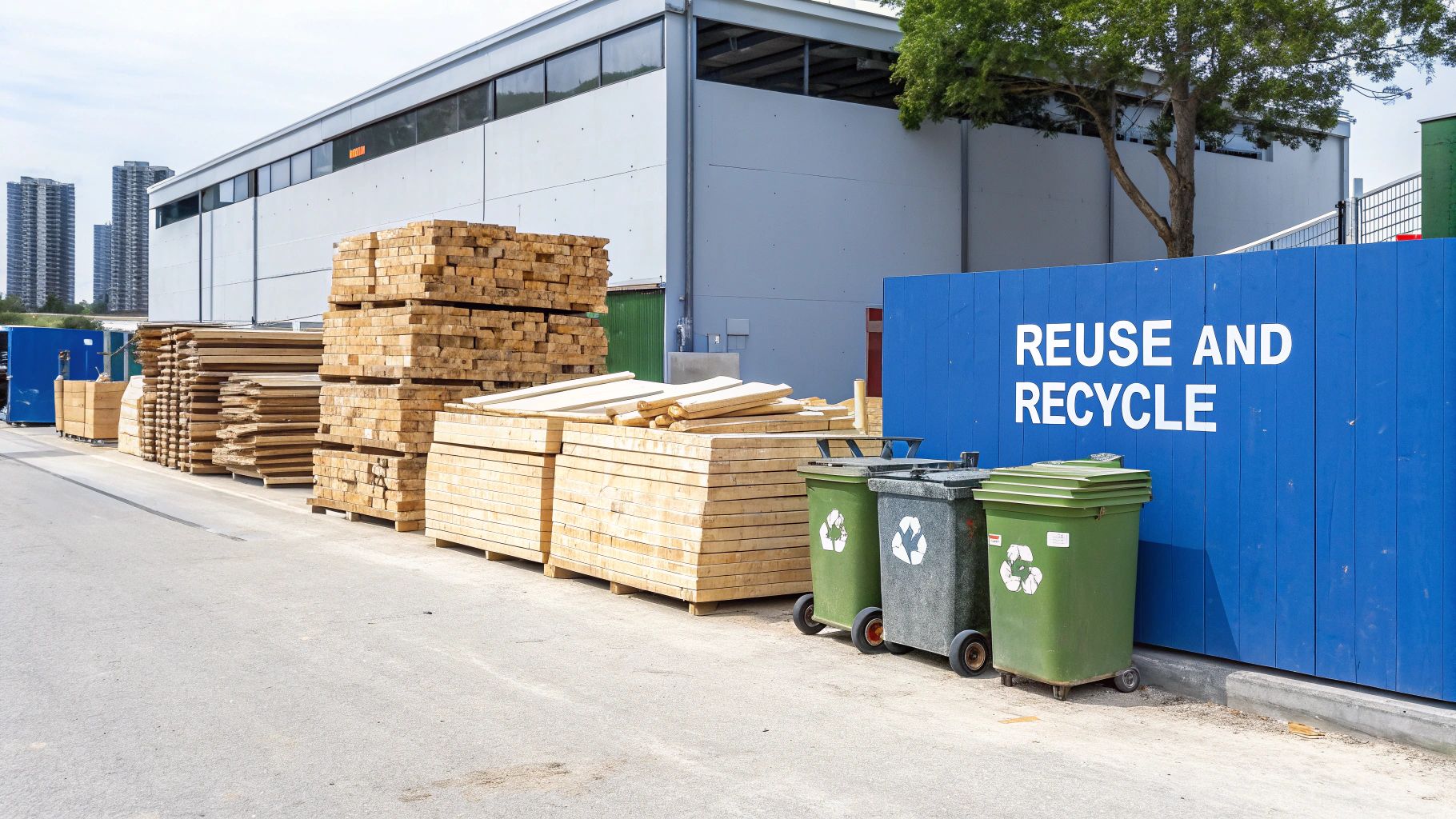
A well-run construction site is a hub of efficiency, not a chaotic mess. A huge part of that comes down to how we handle the materials that don't end up in the finished house. I always enjoy giving my clients a peek behind the curtain at our building sites in places like White Marsh and Edgewood to see how we keep waste to an absolute minimum.
It all starts with a simple but powerful practice called source separation. Instead of one giant dumpster where everything gets tossed together, we set up designated bins for different materials—wood in one, drywall in another, metals here, cardboard there. This single step makes recycling so much more effective and is really the backbone of our builder’s waste reduction strategy.
Giving Scraps a Second Life
By separating materials right on site, we can give them a new purpose instead of just burying them in a landfill. Over the years, our builder has developed fantastic relationships with local Baltimore-area recyclers who specialize in this stuff.
And this isn’t just a feel-good exercise; it has real, tangible results:
Clean Wood Scraps: Untreated lumber offcuts get chipped and turned into landscape mulch or even biomass fuel.
Drywall Cutoffs: Believe it or not, leftover gypsum can be ground down and used as a soil amendment in agriculture.
Metal Pieces: Scraps of steel, aluminum, and copper are incredibly valuable. They get melted down and reformed into new products, which saves a massive amount of energy compared to making them from scratch.
Our trade partners are also pros at cutting techniques that get the most out of every single piece of material, which means we generate less scrap in the first place. It’s these small, daily habits that add up to make a huge difference in the environmental footprint of your new home.
My philosophy is that everything on a job site has potential. By thinking creatively, we transform what others see as waste into a valuable resource, keeping our sites clean and our projects on budget.
The Power of Local Partnerships
Working with local partners in Harford County and Baltimore County isn't just about convenience; it’s a critical piece of the puzzle. Using local recycling facilities means shorter trips, which cuts down on the carbon footprint of managing the waste. Plus, it supports our local economy—a win-win for everyone.
These relationships allow us to divert a huge percentage of our job site materials away from landfills. This hands-on approach to waste management is just one of the ways we build a higher-quality, more responsible home. It’s a process we’ve fine-tuned over years of building, and it’s a key part of our ultimate new home construction checklist.
Ready to see how a thoughtful approach to building can bring your dream space to life? I offer my clients unique visualization tools and hands-on service to create a home that’s as smart as it is beautiful.
The Financial and Environmental Payoff for You
So, after all this talk about planning and recycling, what does it actually mean for your bottom line? This is where the rubber really meets the road. Being smart about reducing construction waste isn't just a feel-good environmental choice—it’s a major win for your wallet.
Every single decision we make to cut down on waste directly trims your budget and contributes to a healthier, more thoughtfully built home.
Think about it: when we throw less away, we pay less in disposal fees. Those landfill charges can be surprisingly hefty, so every cubic yard of material we divert from the dumpster is a real, tangible saving for you. That money doesn't just vanish; it stays in your budget, ready to be put toward the things you’re actually excited about—that beautiful countertop, the perfect flooring, or upgraded fixtures.
More Green in Your Pocket
Let's get specific. On any job site, you're going to have scrap metal from leftover wiring, pipe cutoffs, and pieces of siding. Instead of just paying a crew to haul it to the dump, we make sure it gets separated for recycling. It might not seem like a huge amount of cash back, but those small returns add up and help chip away at other project costs.
Here’s a quick breakdown of how building smart keeps more money in your pocket:
Lower Disposal Costs: Pretty straightforward—less trash means smaller bills from the landfill.
Smarter Material Use: By ordering precisely, you’re not paying for a pile of lumber or drywall that just sits there and eventually gets tossed.
Potential for Recycling Rebates: Things like scrap metal can often be sold, creating a small but welcome revenue stream for the project.
This is an approach the builder I work with takes very seriously. We've found that when you focus on minimizing the environmental footprint of a build, you naturally create a more financially sound investment for the homeowner right from the get-go.
Building green is truly building smart. Every piece of wood we save and every pound of drywall we recycle is a testament to a process that respects both your budget and our beautiful Maryland communities.
Long-Term Value and Peace of Mind
The perks don't end once the last nail is hammered. A home built with sustainable practices is often a more valuable asset in the long run. Homebuyers are getting more and more savvy about things like energy efficiency and responsible construction, which can make your home stand out if you ever decide to sell.
Ultimately, you get the home of your dreams in a wonderful community like White Marsh or Edgewood, and you get something more: the peace of mind that comes from knowing it was built with care and responsibility. My hands-on service and unique proprietary visualization tools are all geared toward helping you bring that vision to life, creating a space you’ll be proud of for years to come.
Building a Home That Aligns With Your Values
Bringing your dream home to life should be one of the most exciting experiences you'll ever have. When you make waste reduction part of the plan from day one, that process becomes smarter and more sustainable, adding a whole new layer of pride to the finished product. The builder I represent bakes this into our process, from using advanced visualization tools that prevent mistakes before they happen to actively recycling materials right on the job site.
This means you can get lost in the joy of choosing your finishes—the perfect flooring, the exact right countertops, that tile you fell in love with—all while knowing we're in the background, making sure your home is built with a conscience. It's just how we do things.
If you're thinking about building a home in White Marsh, Edgewood, or any of the great communities here in Maryland, let's connect. I'd love to show you how our hands-on approach and commitment to building responsibly can make your vision a reality you can truly feel good about.
Got Questions About Cutting Down Construction Waste?
You're not alone. Most people I talk to are curious about how building a low-waste home actually works, especially when it comes to their budget and the final quality. Let's clear up a few of the most common questions I hear.
One of the first things people ask is, "Is this going to cost me more?" It's a fair question, but the answer is almost always no. In fact, it usually saves you money. Sure, some specialty green materials might have a higher price tag, but the savings from reducing construction waste through smart planning and efficient material use nearly always come out on top. Less waste means fewer dumpster fees and a leaner budget. Simple as that.
Does the Home's Design Really Affect How Much Waste We Create?
It makes a massive difference! The choices we make on paper have a huge ripple effect long before we ever break ground in places like White Marsh or Edgewood.
Think about it this way: designing a floor plan around standard material sizes—like 4x8-foot sheets of drywall or plywood—means we're making far fewer cuts on-site. Fewer cuts equal fewer scraps piling up in the dumpster. This is a huge focus for us in the planning phase. I use proprietary visualization tools to get the layout just right from the get-go, designing waste out before it even has a chance to happen.
Every decision, from a room's dimensions to where we place the windows, is a chance to build smarter. This kind of thoughtful, upfront planning is how I make sure we're treading as lightly on the environment as possible.
So, What Actually Happens to All the Recycled Stuff?
Recycled materials don't just vanish—they get a new lease on life. The builder I represent has spent years building solid relationships with recycling partners right here in Baltimore County and Harford County to make sure our scraps are actually put to good use.
Here’s a peek at where some of it goes:
Clean Wood Scraps: These get chipped into mulch for local landscapers or sometimes used as biomass fuel.
Drywall Offcuts: The gypsum from drywall is a fantastic soil amendment. It gets ground up and sent to farms to help improve their soil.
Scrap Metal: Things like leftover copper wire, rebar, and steel framing are melted down to create new metal products. This saves an incredible amount of energy compared to making it from scratch.
By taking the time to separate these materials on the job site, we're turning what would be landfill trash into valuable resources for other local businesses. It's just the right way to build.
Ready to see how a smarter, more sustainable approach can create your perfect home? While the builder I represent provides high-quality homes, I go a step further—offering my clients unique proprietary visualization tools, hands-on service, and access to visualizers that help you bring your dream space to life. Let’s connect at https://www.customizeyourhome.com.
Comments