

Your Ultimate Monthly Home Maintenance List for 2025

Owning a home is an incredible milestone, a space where memories are made and futures begin. But keeping that dream space in perfect condition requires a little proactive care. It's easy to forget the small tasks that prevent big, costly problems down the road. That's where a simple, repeatable plan comes in. Think of this monthly home maintenance list not as a chore, but as an investment in your home's health, safety, and value. By dedicating just a little time each month, you can ensure everything runs smoothly, from your HVAC system to your kitchen sink.
This guide is designed to be your go-to resource for exactly that. We’ll break down the most critical yet easy-to-do checks that every homeowner should perform. Forget vague advice; we’re providing actionable steps, practical examples, and pro tips to make it all a breeze. Whether you're in a brand-new build in White Marsh or a classic home in Harford County, this guide will empower you to be the master of your domain. A well-maintained home isn't just about preventing repairs; it's about creating a comfortable, safe, and enjoyable living environment for you and your family.
While this list covers the essential mechanical and safety checks, a clean home is just as important for your peace of mind. To complement your monthly home maintenance routine, exploring a more comprehensive resource like our ultimate house cleaning checklist can help you keep your space sparkling from top to bottom. By combining regular maintenance with consistent cleaning, you create a holistic approach to home care. Let's get started on protecting your biggest investment and unlocking a truly stress-free home.
1. HVAC Filter Inspection and Replacement
Think of your HVAC system as the lungs of your home, constantly breathing air in and out. The filter is its first line of defense, trapping dust, pollen, and pet dander before they can circulate through your living space or, worse, clog up the sensitive components of your system. Making this a key part of your monthly home maintenance list is a non-negotiable for both your health and your wallet.
A dirty, clogged filter forces your HVAC unit to work much harder to pull air through, leading to higher energy consumption and increased wear and tear. This simple check can dramatically improve your home's air quality, a huge plus for anyone with allergies or pets. For instance, a family in Edgewood with two dogs noticed their seasonal allergies were much less severe after they started swapping their filter every 30 days.
The Financial Upside of Clean Filters
Beyond cleaner air, the most immediate benefit you'll notice is on your utility bill. A clean filter allows for optimal airflow, meaning your system doesn't have to overwork itself to heat or cool your home. This efficiency translates directly into energy savings.
This bar chart illustrates the potential energy savings you can achieve simply by keeping your HVAC filter clean.
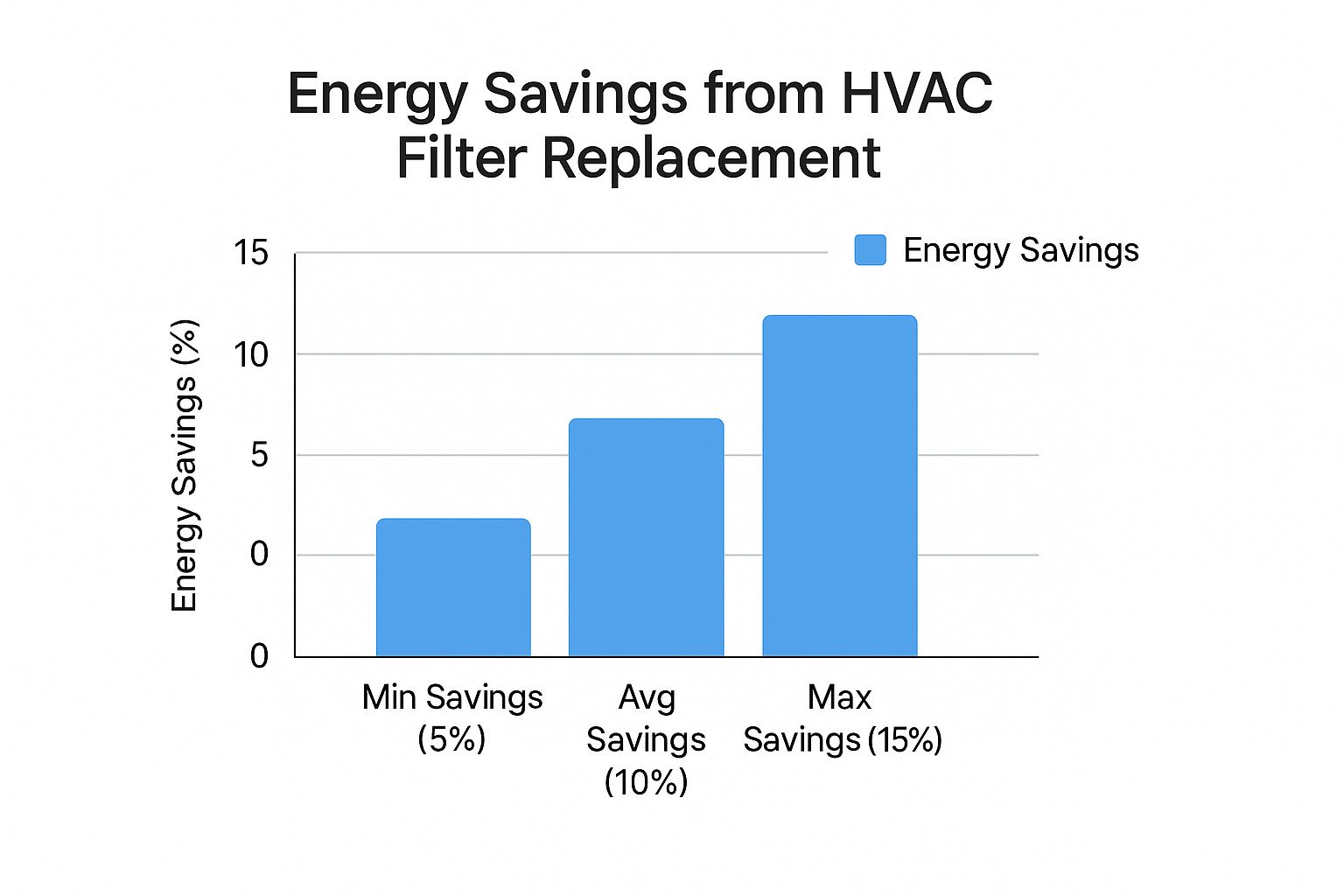
As the chart shows, even minimal effort can result in a 5% reduction, while consistent changes can save you up to 15% on your heating and cooling costs.
Quick Tips for Filter Success
Date It: Use a marker to write the installation date directly on the filter's cardboard frame.
Set Reminders: Create a recurring calendar or phone alert for the first of every month.
Buy in Bulk: Purchase a 6 or 12-pack of filters to save money and ensure you always have one on hand.
Mind the Arrow: Always install the new filter with the airflow arrow pointing toward the furnace/air handler unit.
For a deeper dive into system care beyond just filters, this ultimate HVAC preventive maintenance checklist offers a fantastic, comprehensive guide to keep your system running smoothly year-round.
2. Plumbing Leak Detection and Faucet Inspection
Think of your home's plumbing as its circulatory system, quietly delivering and removing water day and night. A small, unnoticed leak is like a persistent wound, wasting a vital resource and potentially causing catastrophic damage over time. Adding a thorough plumbing check to your monthly home maintenance list is a crucial step in protecting your investment from water damage and high utility bills.
A tiny drip can waste thousands of gallons of water per year, and a slow leak under a sink can silently rot away cabinets and subflooring. This simple inspection can prevent expensive repairs and maintain your home's structural integrity. For example, one homeowner in Baltimore County discovered a slow toilet leak during their monthly check, saving an estimated 200 gallons of water per day and nearly $40 on their next water bill.
The Financial Upside of a Dry Home
Beyond preventing costly water damage restoration, the immediate benefit is a lower water bill. Every drop counts, and sealing leaks ensures you're only paying for the water you actually use. This proactive approach also prevents the need for emergency plumber calls, which can be incredibly expensive. Catching early pipe corrosion under a kitchen sink, for instance, can prevent a major flood that might otherwise cost thousands in repairs to flooring, cabinets, and drywall.
Quick Tips for Leak Detection
Toilet Tank Test: Add a few drops of food coloring to your toilet tank. Wait 15-20 minutes without flushing. If color appears in the bowl, you have a silent leak from the flapper.
Meter Check: Note your water meter reading, then avoid using any water for two hours. If the reading has changed when you check again, you likely have a hidden leak somewhere in your system.
Inspect Hoses: Monthly, check the hoses connected to your washing machine and dishwasher. Look for cracks, bulges, or brittleness, as these are warning signs of an impending burst.
Get Hands-On: Run your hands along pipes under sinks in the kitchen and bathrooms. Feel for any moisture and look for water stains, rust, or mineral deposits on the pipes and cabinet floors.
3. Garbage Disposal Cleaning and Maintenance
Your kitchen garbage disposal is a workhorse, tackling daily food scraps without complaint. But over time, residue, grease, and grime can build up, leading to unpleasant odors, slow drains, and a less efficient grinder. Making a quick cleaning session part of your monthly home maintenance list is a simple way to prevent clogs and keep your kitchen smelling fresh.
Neglecting this task can cause food particles to rot inside the grinding chamber, creating a breeding ground for bacteria and foul smells that can permeate your kitchen. Regular maintenance ensures the blades stay sharp and the system runs smoothly, extending its lifespan significantly. For instance, a homeowner who used the ice cube and rock salt method monthly saw their disposal last 14 years, well beyond the typical 8-year average.
The Financial Upside of a Clean Disposal
Preventing major clogs and operational failure is the biggest financial win here. A well-maintained disposal is less likely to break down, saving you from an expensive plumbing service call or a full replacement. Keeping the grinding components clean also helps it run more efficiently, using slightly less energy and water over time.
Regular, simple cleaning prevents the buildup that leads to serious blockages, which can affect your entire kitchen plumbing system. A five-minute monthly task can save you hundreds of dollars in emergency repair bills.
Quick Tips for Disposal Success
Ice and Salt Scour: Grind a tray of ice cubes along with a half-cup of rock salt. The ice sharpens the blades while the salt scours away stubborn gunk from the grinding chamber.
Citrus Freshness: Toss a few lemon, lime, or orange peels down the disposal and grind them up. The citrus oils act as a powerful, natural deodorizer, leaving your sink smelling great.
Baking Soda and Vinegar Fizz: Pour a half-cup of baking soda into the disposal, followed by a cup of white vinegar. Let it fizz and bubble for about 10 minutes, then flush thoroughly with hot water to clear out any loosened debris.
Cold Water is Key: Always run a strong stream of cold water for about 30 seconds before, during, and after grinding food. Cold water helps keep grease and oils solidified so they can be chopped up and washed away, rather than coating your pipes.
Know What to Avoid: Never put grease, coffee grounds, bones, or fibrous vegetables like celery and corn husks down the disposal, as they are common causes of clogs and motor strain.
Keeping every part of your new home in top shape is key to long-term enjoyment. For more ideas on how to personalize and maintain your space, especially in communities like White Marsh or Edgewood, Maryland, let's connect. I can help you find a home where you can start these great habits from day one.
4. Smoke and Carbon Monoxide Detector Testing
Your smoke and carbon monoxide (CO) detectors are the silent guardians of your home, standing watch 24/7. But like any good sentry, they need a regular check-in to ensure they're ready to alert you at the first sign of danger. Making this test a non-negotiable part of your monthly home maintenance list is one of the single most impactful safety measures you can take for your family.
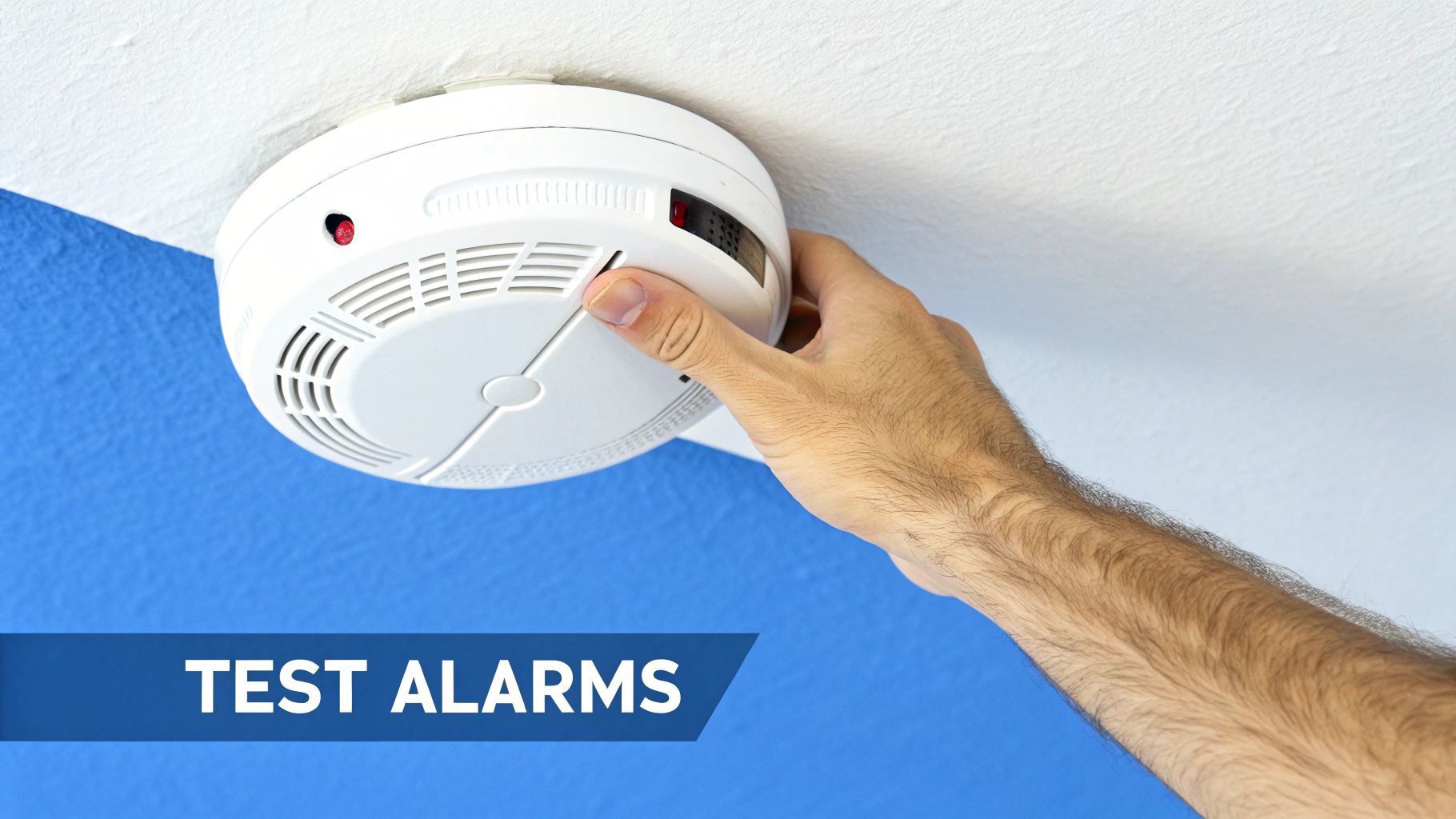
This simple push-of-a-button test confirms the battery, electronics, and alarm are all functional. According to the National Fire Protection Association (NFPA), the risk of dying in a reported home fire is 55 percent lower in homes with working smoke alarms. For instance, a family's routine monthly check identified a malfunctioning CO detector just before their furnace developed a fault, preventing a potential tragedy.
The Life-Saving Logic of Monthly Checks
The most critical benefit is peace of mind, knowing your first line of defense against fire and carbon monoxide poisoning is active. A brief, piercing alarm sound once a month is a small price to pay for this assurance. It verifies that your detectors can alert your entire household, like in a scenario where an interconnected system alerted sleeping residents on an upper floor to a fire in the basement long before smoke reached them.
This habit helps you catch dead batteries or device failures before an emergency occurs. Discovering a detector is non-functional during a real fire is a devastating scenario that monthly testing is designed to prevent entirely.
Quick Tips for Detector Success
Pick a Day: Test on the same day each month, like the day you pay rent or your mortgage.
Annual Battery Swap: Replace batteries at least once a year. Many people use the daylight saving time changes as a reminder.
Write the Date: Use a permanent marker to write the installation date on the back of the detector.
Replace the Unit: All smoke detectors should be replaced every 10 years, regardless of how they test. The sensors degrade over time.
Vacuum Gently: Twice a year, use a soft brush attachment to vacuum your detectors and remove dust that could interfere with the sensors.
Ensuring your home is safe and well-maintained is a top priority. Just as you get to pick flooring and countertops that reflect your style, these fundamental safety checks protect the life you've built within those walls. For more insights on creating a safe and personalized home environment in communities like White Marsh or throughout Baltimore County, reach out to explore our new construction homes.
5. Kitchen and Bathroom Exhaust Fan Cleaning
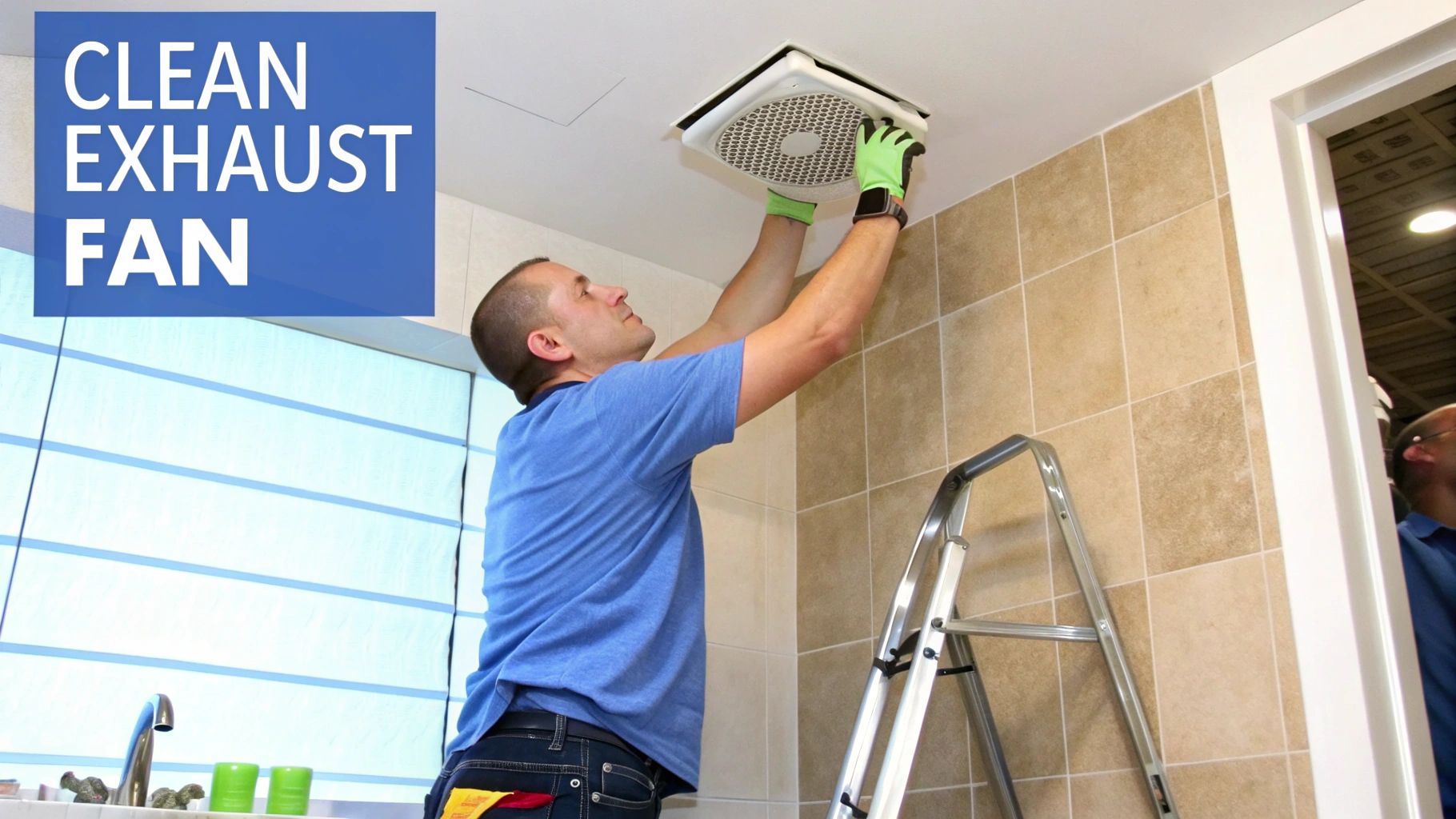
Your kitchen and bathroom exhaust fans are unsung heroes, silently removing moisture, odors, and grease from your home. In the kitchen, the range hood fan pulls greasy, smoke-filled air away from your cooking space, while the bathroom fan battles humidity that can lead to mold and peeling paint. Adding this task to your monthly home maintenance list protects your home from fire hazards, water damage, and poor air quality.
Neglecting these fans can have serious consequences. A fan clogged with grease or dust can lose up to 50% of its effectiveness and become a significant fire risk. In the bathroom, a poorly functioning fan fails to remove steam, creating a perfect breeding ground for mold and mildew. One family even managed to eliminate a recurring mold problem on their ceiling, which had previously cost them $800 to remediate, simply by starting a monthly fan cleaning routine.
The Safety and Savings of Clean Vents
Beyond preventing mold and fire, regular cleaning directly impacts your home's longevity and your finances. A clean fan motor operates without strain, extending its lifespan significantly; some homeowners have reported getting over a decade of use from a fan with a typical five-year life expectancy. It also protects your investment in your home's finishes. By properly venting humidity, you can prevent the paint and drywall damage that often plagues bathrooms in humid climates like ours in Maryland.
This simple monthly task is a perfect example of how small, consistent efforts in home care pay off. It ensures the systems you rely on daily work as intended, safeguarding the beautiful finishes you chose for your home, from the kitchen backsplash to the bathroom paint.
Quick Tips for Fan Maintenance
Soak the Grease Away: Remove kitchen range hood filters and soak them in hot, soapy water with a degreasing dish soap. For tough buildup, use a paste of baking soda and water.
Vacuum First: Use a vacuum with a brush attachment to easily remove loose dust from bathroom fan grilles before wiping them down.
Run It Longer: Let your bathroom fan run for at least 20 minutes after a shower to completely clear out moisture.
Check the Vent: Ensure your bathroom fan vents to the outside, not into your attic where it can cause moisture issues.
Building a solid maintenance routine is key to enjoying your home for years to come. Whether you're settling into a new home in White Marsh or personalizing your space in Baltimore County, these habits protect your investment. For more ideas on creating a home that’s both beautiful and easy to maintain, explore the customizable options and resources we offer to help you design your perfect living space.
6. Water Softener Salt Level Check and Refill
If your home has a water softener, think of its brine tank as the system's fuel tank. This is where the magic starts, using salt to remove the hard minerals like calcium and magnesium that cause stiff laundry, spotted dishes, and damaging scale buildup in your pipes and appliances. Including this check in your monthly home maintenance list protects these big-ticket items from premature failure.
Hard water minerals force your water heater, dishwasher, and washing machine to work harder, leading to inefficiency and costly repairs. By simply keeping the salt at the proper level, you ensure the system can effectively "soften" the water, which in turn helps your soaps and detergents lather better. One family in Prince George's County found they reduced their laundry detergent purchases by over 50% simply by maintaining their softener properly, a small but satisfying monthly saving.
The Financial Upside of Soft Water
Beyond better-performing soaps, the real savings come from protecting your appliances. Scale buildup is a silent killer for water heaters, acting as a layer of insulation that forces the heating element to work overtime. Consistent salt maintenance can have a huge impact over time. For example, some homeowners have seen their water heater's lifespan extend from an average of 8 years to over 13, saving more than $1,200 in premature replacement costs.
Proper maintenance also prevents a common issue known as a "salt bridge," where a hard crust forms in the brine tank and stops the system from working. This simple check can help you avoid a $200 service call to a plumber just to break up the crust.
Quick Tips for Softener Success
Check Monthly: Make it a habit to peek inside the brine tank at the beginning of each month.
The Quarter-Full Rule: Never let the salt level drop below one-quarter full. Once it hits that mark, it's time to refill.
Break Up Bridges: If you notice the salt level isn't dropping, a hard crust or "bridge" may have formed. Gently poke at it with a broom handle to break it up.
Use the Right Salt: Stick to high-purity salt pellets or crystals specifically designed for water softeners to prevent mushing and clogs.
Buy in Bulk: Look for sales on softener salt and buy several bags at once to save money and ensure you're always prepared.
7. Inspect and Clean Door and Window Weather Stripping
Your home's doors and windows are your primary defense against the elements, and their weather stripping is the silent hero in that battle. This simple seal around your frames prevents precious heated or cooled air from leaking out and stops drafts, moisture, and pests from getting in. Adding this check to your monthly home maintenance list is a small task with a huge impact on your home's comfort and energy efficiency.
A tiny gap or crack in the weather stripping can lead to noticeable drafts and a surprising spike in your energy bills. It’s an open invitation for dust, pollen, and even insects to enter your home. One family in Harford County, for example, prevented a potential insect infestation that would have required a $500 exterminator bill simply by catching a deteriorating window seal during their monthly check.
The Financial Upside of a Good Seal
Beyond keeping pests and drafts out, the most significant benefit is the direct savings on your utility costs. According to the U.S. Department of Energy, proper sealing and weather stripping can slash your heating and cooling costs by up to 20% annually. Imagine what you could do with that extra cash.
This simple maintenance task pays for itself almost immediately. For instance, a homeowner in White Marsh replaced worn-out stripping on their front door and saw their heating bill drop by nearly $35 a month during the winter. That's the power of a proper seal.
Quick Tips for Sealing Success
Feel the Draft: On a very hot or cold day, run your hand along the edges of doors and windows to feel for air leaks.
The Incense Test: Safely hold a lit incense stick near the frame's edges. If the smoke wavers or gets blown inward, you have a leak.
Light Check: Close a door on a sunny day and look for any light peeking through the cracks. No light should be visible.
Clean Regularly: Wipe down weather stripping with a damp cloth each month. Dirt and grime can accelerate wear and cause the seal to fail.
Check the Bounce: Press down on the weather stripping. If it's compressed, cracked, or doesn't spring back, it's time for a replacement.
Don't Forget the Garage: Remember to inspect your garage door and any storm doors, as these are common culprits for energy loss.
Creating a comfortable, energy-efficient home is all about the details. If you're looking for a home in Maryland where quality is built-in from the start, I can help you explore new construction options where you get to pick your own finishes and start fresh.
8. Test and Exercise Garage Door Auto-Reverse Safety Feature
Your garage door is likely the largest moving object in your home, and its safety features are crucial for protecting your family and property. The auto-reverse mechanism, a federally mandated safety standard, is designed to prevent tragic accidents. Including this check on your monthly home maintenance list is a simple, five-minute task that can avert disaster and ensure your home is a safe haven.
A malfunctioning safety sensor can turn a routine closing into a dangerous situation. The U.S. Consumer Product Safety Commission reports thousands of injuries each year related to garage doors, many of which are entirely preventable. For example, a homeowner in Baltimore County noticed their photoelectric sensor light was blinking after doing some yard work. A quick monthly test revealed the sensor had been knocked out of alignment, and the door failed to reverse, a simple fix that prevented potential harm to their kids and pets.
The Peace of Mind of a Safe System
Beyond preventing physical injury, ensuring these features work correctly protects your valuables. A properly functioning pressure sensor can prevent thousands of dollars in damage by stopping the door from crushing a car, bicycle, or expensive lawn equipment left in its path. This quick test provides invaluable peace of mind, confirming that your home's largest entry point operates safely and reliably.
Quick Tips for Garage Door Safety
The 2x4 Test: Place a 2x4 board or a sturdy cardboard box flat on the ground in the door's path. When the closing door makes contact, it should immediately reverse.
Photoelectric Eye Check: With the door closing, wave an object (like a broom handle) between the two small sensors located near the bottom of the door tracks. The door should instantly stop and go back up.
Clean the Lenses: Gently wipe the lenses of the photoelectric eyes with a soft, dry cloth to remove any dust or cobwebs that could obstruct the beam.
Check Alignment: Look at the small indicator lights on the sensors. They should both be solid. If one is blinking, it means they are misaligned and need a gentle adjustment.
Manual Release: Make sure you know where the manual release cord (usually a red handle) is and that it's easily accessible in case of a power outage.
9. Clean Kitchen Sink Drain and Disposal Stopper
Think of your kitchen sink as the digestive system of your kitchen; it handles everything you throw at it, from food scraps to grease. Over time, this constant use creates a buildup of bacteria, biofilm, and odor-causing gunk. Making drain cleaning a staple on your monthly home maintenance list is crucial for preventing foul smells, slow drains, and potential plumbing emergencies that always seem to happen at the worst times.
A neglected drain isn't just an inconvenience; it's a breeding ground for bacteria and can attract pests like fruit flies. This simple monthly task keeps your kitchen smelling fresh and ensures water drains quickly and efficiently. For example, one homeowner eliminated a persistent fruit fly problem that no traps could solve simply by adopting a strict monthly drain cleaning schedule.
The Financial Upside of a Clean Drain
Beyond a more hygienic kitchen, the most significant benefit is avoiding costly plumber visits. Regular maintenance prevents the grease and food particle buildup that leads to tough clogs. A preventative approach can save you from a $175 emergency call to a plumber, a fee many have faced for a problem that a little monthly upkeep could have easily avoided. Keeping drains clear also extends the life of your garbage disposal and pipes, preventing corrosive buildup.
This proactive step is especially important in a new home where you're establishing the routines that will protect your investment for years. Maintaining your home's systems, from the major appliances down to the drains in your kitchen in areas like White Marsh or Baltimore County, ensures everything functions as beautifully as the day you moved in.
Quick Tips for Drain Success
Scrub the Stopper: Remove the drain stopper or strainer and give it a thorough scrub with a brush and dish soap to remove any grime.
Boiling Water Flush: Carefully pour a pot of boiling water down the drain to melt away grease and soap scum.
Baking Soda & Vinegar: For a deeper clean, pour half a cup of baking soda down the drain, followed by one cup of white vinegar. Let it foam for 15 minutes, then flush with hot water.
Clean the Overflow: Use a small bottle brush or pipe cleaner to scrub the overflow opening, a often-forgotten spot where gunk collects.
Avoid Harsh Chemicals: Skip the chemical drain cleaners. They can damage your pipes and are harmful to the environment. Opt for enzymatic cleaners for regular maintenance instead.
10. Inspect and Clean Range Hood Grease Filter
Your range hood filter is the unsung hero of your kitchen, silently trapping airborne grease and cooking fumes. But over time, this filter can become saturated, transforming from a helpful tool into a serious fire hazard. Making its cleaning a staple on your monthly home maintenance list is crucial for safety, air quality, and appliance longevity.
A grease-clogged filter is not only ineffective at capturing odors and smoke, but it also becomes highly flammable. The National Fire Protection Association identifies cooking equipment as the leading cause of home fires, with grease buildup being a primary fuel source. One homeowner shared that a neighbor's kitchen fire started in an uncleaned range hood, a stark reminder of how this simple task prevents disaster. Regularly cleaning it ensures your ventilation system works efficiently, protecting your home and family.
The Financial Upside of a Clean Filter
Beyond the critical safety aspect, a clean filter helps your range hood's motor run efficiently. When the filter is clogged, the fan motor has to work much harder to pull air through the blockage, leading to increased energy use and premature burnout. A homeowner who committed to monthly cleanings reported their range hood motor lasted twice as long as the average, saving them hundreds on a replacement.
This small monthly task also protects your cabinets and walls from a sticky film of grease that can be difficult and costly to remove. Keeping the filter clean means the grease is trapped where it belongs, not coating your kitchen surfaces.
Quick Tips for Filter Success
Soak and Scrub: Remove the filters and soak them for 30 minutes in a sink of hot water with a heavy-duty degreasing dish soap.
Dishwasher Safe: Most metal mesh filters can be placed in the dishwasher. Run them on a hot cycle, ideally with a detergent booster for extra cleaning power.
Baking Soda Paste: For stubborn, caked-on grease, create a paste with baking soda and water. Apply it to the filter, let it sit, then scrub with a soft brush.
Track It: Stick a small label on the hood or a nearby cabinet with the date of the last cleaning to stay on schedule.
Clean More Often: If you frequently fry foods or use high-heat cooking methods, consider cleaning the filter every two weeks.
Maintaining the heart of your home goes beyond just the big systems. For more ideas on how to personalize and care for your living spaces, exploring options for flooring, countertops, and finishes can make a huge difference. If you're in areas like White Marsh or throughout Baltimore and Harford County, we can help you visualize and create a space that’s both beautiful and easy to maintain.
Monthly Home Maintenance Tasks Comparison
Task | Implementation Complexity 🔄 | Resource Requirements ⚡ | Expected Outcomes 📊 | Ideal Use Cases 💡 | Key Advantages ⭐ |
|---|---|---|---|---|---|
HVAC Filter Inspection and Replacement | Easy 🔄 | Low ⚡ ($10-40 per filter) | Improved air quality, energy savings (5-15%), longer HVAC life | Homes with pets, allergies, or high pollen | Immediate air quality impact, energy bill reduction |
Plumbing Leak Detection and Faucet Inspection | Easy 🔄 | Very low ⚡ (inspection only) | Prevents water damage, conserves water, reduces bills | All homes with plumbing systems | Saves costly repairs, early leak detection |
Garbage Disposal Cleaning and Maintenance | Easy 🔄 | Low ⚡ ($2-5/month supplies) | Odor elimination, prevents clogs, extends disposal lifespan | Kitchens with garbage disposals | Prevents expensive repairs, uses household products |
Smoke and Carbon Monoxide Detector Testing | Very Easy 🔄 | None ⚡ (battery replacement cost) | Life-saving safety alert, legal compliance | All homes | Saves lives, very quick, no cost for monthly testing |
Kitchen and Bathroom Exhaust Fan Cleaning | Easy to Moderate 🔄 | Low ⚡ ($3-5 cleaning supplies) | Prevents mold/fire hazards, improves ventilation | Homes with kitchen/bath exhaust fans | Reduces fire risk, mold prevention, quieter operation |
Water Softener Salt Level Check and Refill | Easy 🔄 (physical effort) | Moderate ⚡ ($10-20/month salt) | Prevents scale buildup, extends appliance life, improves cleaning | Homes with water softeners | Extends appliance life, reduces soap usage |
Inspect and Clean Door and Window Weather Stripping | Easy 🔄 | Low ⚡ ($20-50 materials) | Reduces energy loss by 10-20%, blocks drafts and pests | All homes | Significant energy savings, improves comfort |
Test and Exercise Garage Door Auto-Reverse Safety Feature | Easy 🔄 | None ⚡ | Prevents injuries/fatalities, federal law compliance | Homes with automatic garage doors | Critical safety feature, very quick and no-cost testing |
Clean Kitchen Sink Drain and Disposal Stopper | Easy 🔄 | Low ⚡ ($5-10/month supplies) | Prevents clogs, odors, bacterial growth | Kitchens | Prevents plumber calls, improves hygiene |
Inspect and Clean Range Hood Grease Filter | Easy to Moderate 🔄 | Low to Moderate ⚡ ($3-30 supplies) | Reduces fire risk, improves air quality, extends fan life | Homes with cooking range hoods | Critical fire prevention, improves kitchen air quality |
Build Your Home's Future, Not Just Its Walls
And there you have it, a comprehensive yet manageable monthly home maintenance list designed to take the guesswork out of home care. We've walked through the small, consistent actions that make a massive difference, from swapping out your HVAC filter to keep your air clean and utility bills down, to testing smoke detectors to ensure your family's safety. Each task, whether it's cleaning a range hood filter or checking for tiny plumbing leaks, is a small investment in your home's longevity, comfort, and value.
Think of this checklist not as a chore list, but as a proactive partnership with your home. You're not just fixing things as they break; you're preventing problems before they start. This approach saves you money, avoids stressful emergency repairs, and builds a deep sense of pride and connection to your living space. A well-maintained home isn't just about the quality of its construction, it’s a direct reflection of the ongoing care and attention you pour into it.
Your Home's Story: From Foundation to Forever
While the builder I represent provides high-quality homes, I go a step further—offering my clients unique customization tools, hands-on service, and access to visualizers that help you bring your dream space to life. We believe a home’s journey begins with an exceptional structure, but the real magic happens when you infuse it with your personality and protect it with consistent upkeep. The same attention to detail you use to inspect weather stripping is the kind of detail we encourage when you're selecting the finishes for your new home.
Our design visualizers are a game-changer, allowing you to see exactly how your chosen flooring, countertops, cabinets, and tiles will look together. This eliminates uncertainty and helps you craft a space that truly reflects your style before the first wall ever goes up. We empower buyers to customize their homes by getting to pick their flooring, countertops, cabinets, tile, and more.
Making Maintenance a Habit, Not a Hassle
Mastering this monthly home maintenance list transforms your relationship with your home. Instead of feeling overwhelmed by a long list of "should-dos," you create a simple, repeatable rhythm. Here’s how to make it stick:
Set Digital Reminders: Use your phone’s calendar or a reminder app to schedule these tasks for the first Saturday of every month. A simple alert can be the nudge you need.
Create a "Maintenance Caddy": Keep essential supplies like a new HVAC filter, drain cleaner, and cleaning cloths in one portable box. When the reminder pops up, you can just grab it and go.
Involve the Family: Turn maintenance into a team effort. Assign age-appropriate tasks to kids, like testing smoke alarms (with supervision) or wiping down fan covers. It teaches them valuable life skills and lightens your load.
Ultimately, a home is the backdrop for your life's most precious moments. By dedicating just a couple of hours each month to its care, you are protecting the setting where memories are made. If you're looking for a new home in vibrant Maryland communities like White Marsh, Edgewood, Baltimore County, Harford County, or Prince George's County, we invite you to explore a building process that values both quality construction and personal expression. Let us show you how you can get a high-quality home that you can personalize to be uniquely yours, right from the start.
Ready to build a home that's perfectly tailored to your tastes before you even think about your first maintenance checklist? With Customize Your Home, you can use our unique visualizer tools to select your finishes and see your dream space come to life. Start designing your future home today at Customize Your Home.
Comments