

Best Garage Organization Systems to Reclaim Your Space

The best garage organization systems aren't a one-size-fits-all solution. They often involve a smart mix of wall-mounted tracks for those bulky items, some sturdy cabinets for secure storage, and overhead racks to really take advantage of all that vertical space. Finding the right combination for you really comes down to your lifestyle, whether you're juggling bikes and sports gear or setting up a serious workshop.
From Chaos to Calm: Finding Your Perfect Garage System
Does stepping into your garage feel like you're navigating an obstacle course? If you find yourself tripping over tools, bikes, and boxes of who-knows-what, you're not alone. For a lot of us, the garage becomes a dumping ground—a place where forgotten items and good intentions go to collect dust.
But what if you looked at that clutter as a massive opportunity instead?
Think about it. Your garage is one of the biggest rooms in your house. Taking back that square footage is like adding a whole new space for hobbies, projects, or just being able to park your car without sucking in your breath. This guide is your friendly roadmap to transforming that mess into a clean, organized, and genuinely useful part of your home. Let's dig into the best garage organization systems out there to help you find that calm, curated space you've been dreaming of.
Starting Your Organization Journey
Whether you're a new homeowner in a community like White Marsh with a beautiful blank canvas, or you're finally tackling a long-overdue project in your Edgewood home, the core ideas are the same. The real goal is to build a system that actually works for you.
This means looking at a few key solutions, which we'll cover in-depth:
Versatile Wall-Mounted Racks: These are perfect for getting garden tools, folding chairs, and bikes up off the floor.
Secure Cabinets: An ideal choice for protecting valuable tools or keeping chemicals safely locked away from kids and pets.
Clever Overhead Storage: This is the ultimate solution for long-term storage items you don't need every day, like holiday decorations or camping gear.
The secret to a successful garage makeover isn’t just buying more bins. It’s about creating a thoughtful system where everything has a specific, easy-to-reach home. This simple shift turns a cluttered space into a functional extension of your living area.
As we dive in, I want you to feel empowered. While the builder I represent provides high-quality homes, I go a step further—offering my clients unique proprietary visualization tools, hands-on service, and access to visualizers that help you bring your dream space to life. Imagine seeing exactly how your new garage will look and function before you even begin, choosing the perfect cabinets and layout. My hands-on service helps you pick the right systems from the start, making the whole process exciting instead of overwhelming.
Let’s get started on finding your perfect fit.
The Top Garage Organization Systems Explained
So, you're ready to tackle the garage? Perfect. Let's walk through the main players in the organization game. Think of this as your personal tour of the best solutions out there, where we'll figure out what works for your space and your stuff.
This simple decision tree can help you pinpoint which system—wall, cabinet, or overhead—will make the biggest impact on your clutter right away.
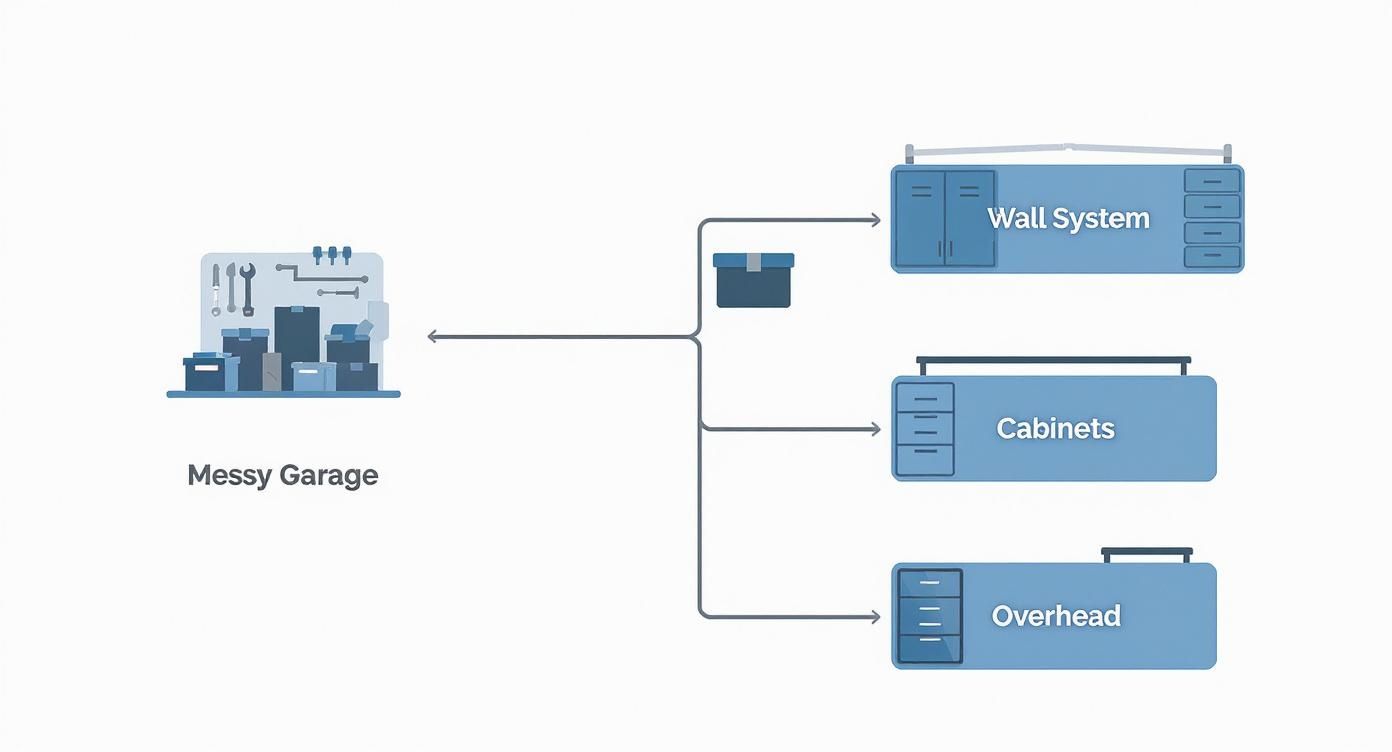
As you can see, it all starts with what’s driving you crazy. Figuring that out points you straight to the most effective fix.
To help you get a bird's-eye view, here's a quick comparison of the most popular systems.
Quick Guide to Garage Organization Systems
System Type | Best For | Pros | Cons |
|---|---|---|---|
Slatwall/Pegboard | Hanging tools, bikes, and bulky items with awkward shapes. | Incredibly flexible and customizable; keeps floor clear. | Can be pricey (Slatwall); pegboard holds less weight. |
Cabinets | Storing items you want to hide or protect from dust and pests. | Creates a clean, finished look; secure and lockable. | Takes up floor/wall space; can be expensive. |
Overhead Racks | Long-term storage of seasonal or rarely used items. | Uses untapped ceiling space; holds very heavy loads. | Harder to access items; requires pro installation. |
Shelving Units | Storing heavy bins, bulk items, and things you need often. | Affordable, easy to set up, and requires no installation. | Can look cluttered; takes up valuable floor space. |
This table gives you a starting point, but let's dive into the details of what makes each system tick.
Modular Wall Systems Slatwall and Pegboard
Picture your garage walls as a blank canvas. Slatwall and pegboard systems are the ultimate tools for turning that empty space into a masterpiece of organization. Slatwall panels have horizontal grooves, while pegboards use a classic grid of holes. Both work with an endless variety of hooks, shelves, and baskets.
Their biggest strength is versatility. One weekend you can have all your gardening tools hanging neatly, and the next you can completely reconfigure it for the kids' bikes and sports gear. Slatwall tends to be stronger with a more modern feel, while pegboard is the go-to, budget-friendly option for lighter-duty storage like hand tools.
Practical Example: A family with two kids could install a Slatwall system along one wall. With the right hooks, they can easily hang two adult bikes, two kids' bikes, a scooter, and all their garden rakes and shovels. Just like that, they've reclaimed over 50 square feet of precious floor space!
Sturdy Garage Cabinets
If your goal is a clean, polished look—or you just need to keep things safe from dust and critters—garage cabinets are the answer. They give your garage a seamless, built-in feel, much like a kitchen, hiding all the chaos behind closed doors. This makes them perfect for storing valuable power tools, messy car-care chemicals, or anything you want to lock up and keep out of reach.
Cabinets come in all sorts of materials, from bomb-proof steel to tough-as-nails resin, and you can get them as freestanding units or mount them directly to the wall. It's no wonder they're so popular. The U.S. garage organization market was valued at $3.46 billion this year and is expected to nearly double to $6.71 billion by 2033. Garage cabinets and tool chests are leading the charge, making up 38.71% of that market.
Smart Overhead Storage Racks
Most of us never even look up, but the ceiling is the most underutilized real estate in the entire garage! Overhead storage racks are heavy-duty metal platforms that bolt securely into the ceiling joists, essentially creating a floating storage loft.
These are, without a doubt, the best way to store bulky things you don't need every day. We're talking holiday decorations, camping gear, bins of seasonal clothes, or those extra boxes of tile from when you customized your new home's bathroom. By getting these items up and out of the way, you free up prime wall and floor space for the stuff you actually use.
Versatile Shelving Units
Sometimes, you don't need to reinvent the wheel. Freestanding shelving units are the undisputed workhorses of garage storage. They're cheap, a breeze to assemble, and don't require drilling a single hole in your walls—a huge plus for renters or anyone who likes to rearrange things often.
Heavy-duty wire or steel shelves are perfect for stacking those big plastic totes, cans of paint, bulk supplies from Costco, and coolers. For a family with a ton of sports gear, a dedicated shelving unit can be a lifesaver, keeping football pads, lacrosse sticks, and cleats contained and easy to grab on the way out the door.
To really maximize your vertical space, don't forget specialized solutions. For example, the ultimate guide to using bike hooks in your garage can show you how to get bicycles off the floor for good. These simple hooks are a fantastic add-on to any of the larger systems we've talked about.
Choosing Materials That Can Handle the Weight
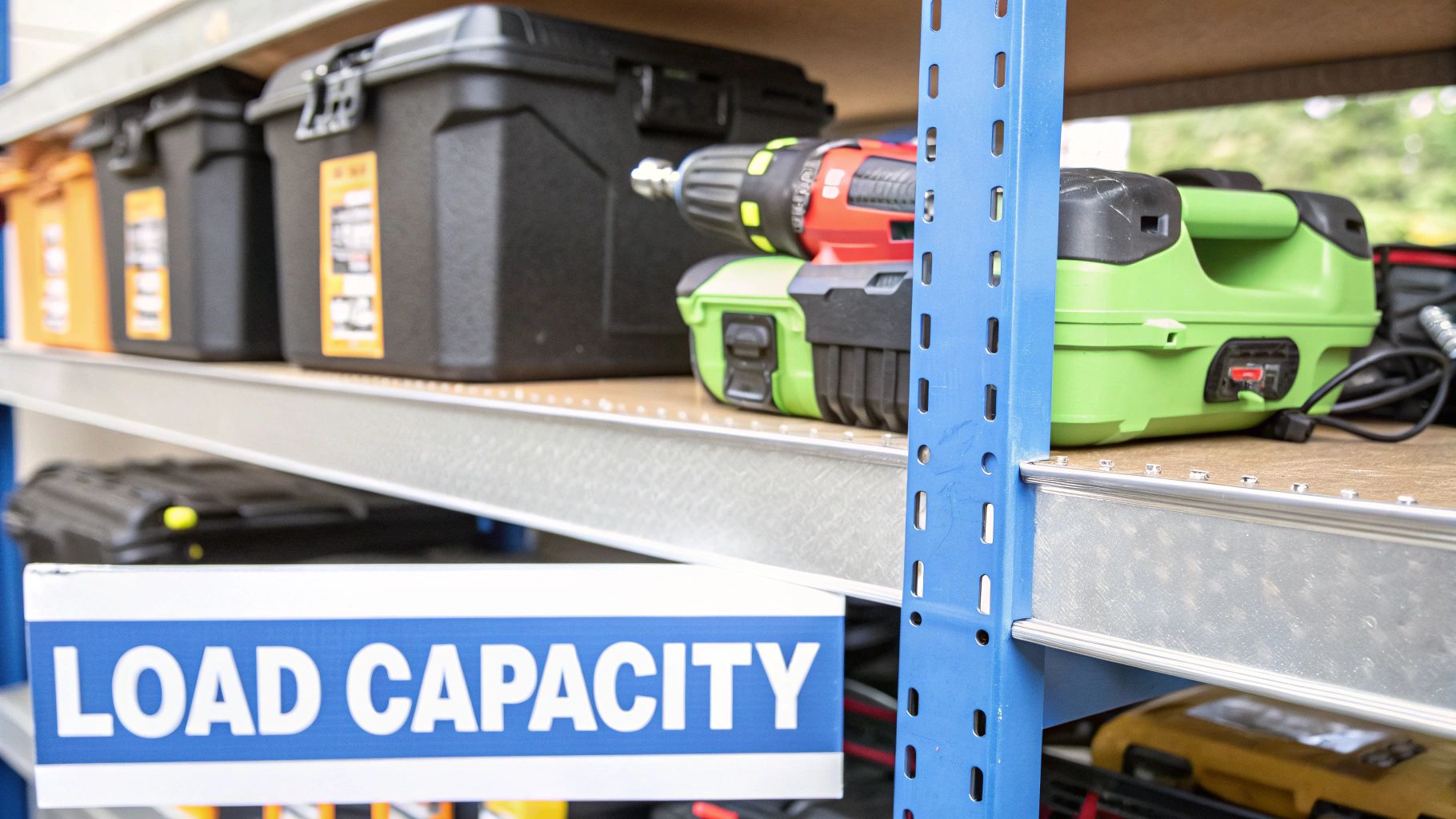
Let's be honest, not all garage organization systems are built the same. The material they're made from is the single biggest factor in their strength, safety, and how long they'll last. It's the difference between a system that serves you for a decade and one that starts sagging after a year.
Think of it like this: you wouldn't use a paper plate to hold a Thanksgiving turkey. The same logic applies here. For the really heavy stuff—I'm talking tool chests, extra bags of concrete, or stacks of paving stones—powder-coated steel is the undisputed champion. It's incredibly strong, shrugs off dings and dents, and can handle serious weight without breaking a sweat.
But for lighter (though still important) items, other materials really shine. Let’s break down the most common options you'll find.
Comparing Common Garage Storage Materials
Every material has its own set of superpowers. Figuring them out helps you build a system that’s both effective and safe for your family and your belongings.
Powder-Coated Steel: This is your heavy-lifter. The powder coating adds a tough, protective skin that resists scratches, chipping, and rust far better than regular paint. It's the go-to for industrial-grade shelving and secure cabinets designed to hold your heaviest gear.
Heavy-Duty Plastic/Resin: Don't sleep on modern plastics. These systems are surprisingly tough, lightweight, a breeze to assemble, and completely rust-proof. This makes them a fantastic choice for damp corners of the garage. They're perfect for corralling sports equipment, gardening supplies, and cleaning products.
Wood Composites (MDF/Particleboard): Often found in budget-friendly cabinet systems, wood composites can give your garage a clean, finished look. The big catch? They are very susceptible to moisture and can swell or sag over time, especially in a humid garage. They’re best suited for lighter items in a dry, climate-controlled space.
The demand for durable solutions is definitely growing. The garage storage cabinets market is a huge part of the industry, valued at around $2.8 billion and projected to climb to $4.2 billion by 2033. Manufacturers are increasingly using advanced materials like steel, aluminum, and heavy-duty composites because they just last longer in tough garage environments.
What Is a Load Rating and Why Does It Matter?
Ever see a sticker on a shelf that says "holds 500 lbs"? That's its load rating, and it’s one of the most critical safety features of any storage system.
A load rating is like the weight limit on a bridge. It’s not a suggestion; it’s the absolute maximum the structure can safely support without risking a catastrophic failure. Pushing that limit is just asking for trouble.
A common mistake is thinking the weight can be concentrated in one spot. A rating of "500 lbs per shelf" means each individual shelf can hold that much, but only if the weight is spread out reasonably well. Piling all 500 pounds in the very center can still cause the shelf to buckle. My rule of thumb? Always stay well below the maximum rating to build in a safety margin.
And don't forget the floor! The condition of your garage floor plays a huge role in the stability of heavy, freestanding units. If you're planning a major overhaul, you'll want to make sure your foundation is as solid as your new storage. When you build with us, buyers get to pick their finishes, like flooring and countertops, ensuring every part of your home is built to last.
Ultimately, the best garage organization systems use materials that are perfectly matched to their purpose. By paying attention to what your storage is made of and respecting its load rating, you’re not just organizing your stuff—you’re creating a safer, more reliable space for everyone.
How to Plan Your Perfect Garage Layout
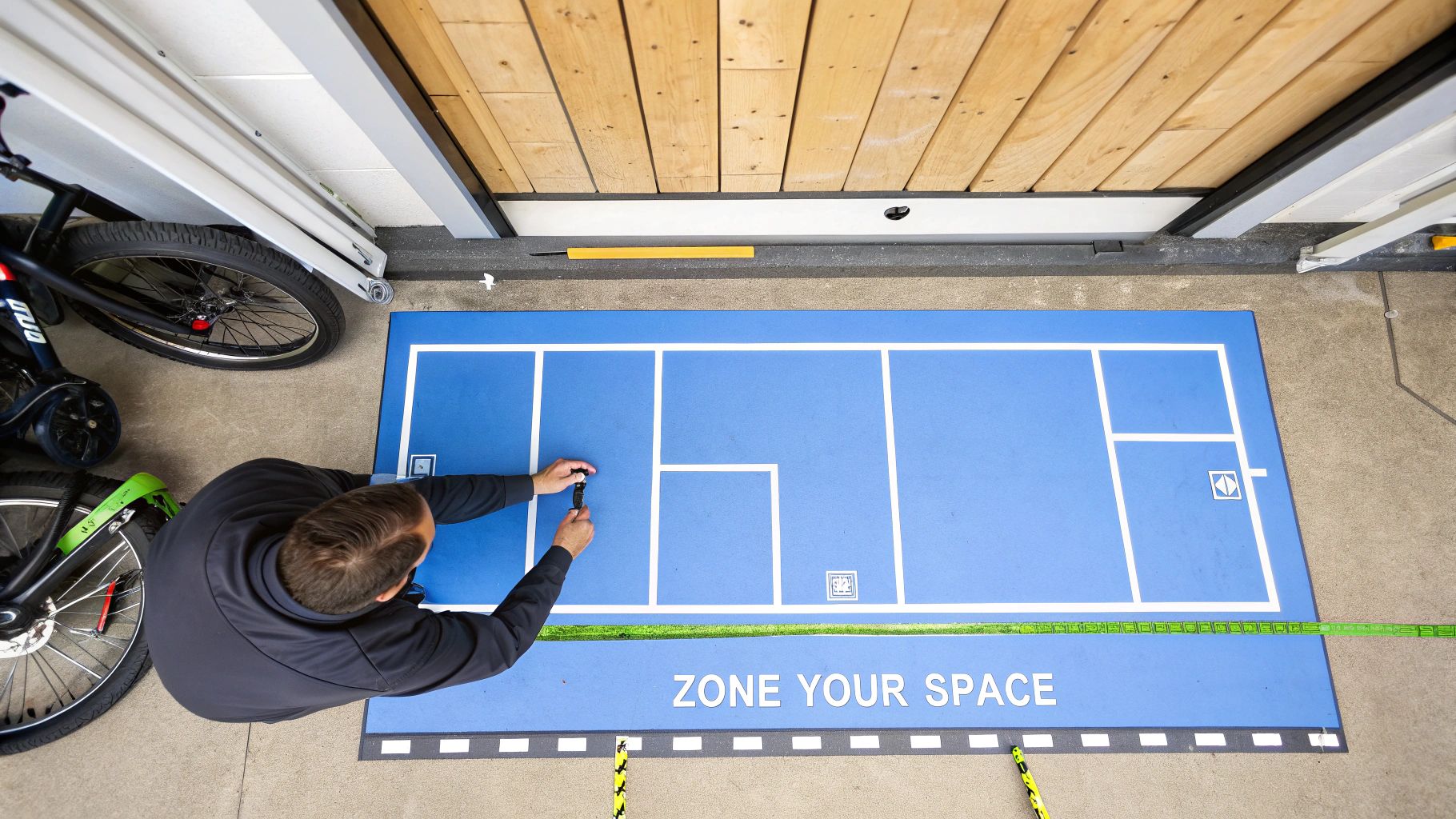
Look, even the world's best storage system will fail you without a solid plan. It's like cooking a gourmet meal—having the best ingredients doesn't matter if you don't have a recipe. Planning your garage layout is that recipe, and it's what turns a cluttered mess into a functional, efficient space that actually fits your life.
This isn't just about stashing your stuff. It's about designing a space that makes your daily routine smoother. Imagine grabbing the kids' soccer gear without an avalanche, or actually having room to work on a project. A little forethought here transforms a chaotic storage unit into a valuable extension of your home.
Measure Twice, Organize Once
Before you even think about buying a single shelf or hook, grab a tape measure. Seriously, this is the most important first step, and skipping it is a recipe for frustration. You need to know exactly what you’re working with, down to the last inch.
Get Your Dimensions: Measure the total length, width, and ceiling height of the garage. That vertical space is gold—don't forget about it!
Map the Obstacles: Note down and measure anything that isn't moving. Think water heaters, electrical panels, outlets, windows, and those pesky garage door tracks.
Sketch It Out: You don't need to be an architect. A simple drawing on a piece of paper with all your measurements is perfect. This little visual map will be your north star for everything that comes next.
This simple exercise prevents that classic mistake of buying a beautiful shelving unit that's two inches too wide to fit next to the door. And if you're starting from scratch, considering options like durable metal garage building kits from the get-go can completely change how you approach your layout and long-term storage potential.
Create Functional Zones for Your Life
The real secret to a garage that works for you instead of against you is zoning. Think of it like a professional kitchen with different stations—everything you need for a specific task is grouped together. This simple trick means you won't have to walk from one end of the garage to the other just to find a hammer and nails.
Here are a few zone ideas to get you started:
Workshop Zone: This is your DIY command center. It needs a workbench, easy-to-reach tool storage, and great lighting. Tuck it into a corner where you'll have room to work without blocking the main path.
Gardening Corner: Keep your pots, soil, gloves, and small tools together on shelves or a potting bench. Placing it near the garage door makes it a breeze to get out into the yard.
Sports Equipment Hub: Dedicate a wall for bikes, helmets, balls, and bats. Wall tracks with specialty hooks are fantastic for corralling all that bulky gear and getting it off the floor.
Auto & Maintenance Area: Stash car-related supplies like oil, washer fluid, and cleaning products together in one cabinet.
Long-Term Storage Zone: That stuff you only need once a year? Holiday decorations, camping gear—that's what overhead racks are for. Up and out of the way!
This zoning strategy is a game-changer for maximizing space, even in a small garage. If you're looking for more tips, our guide on how to maximize small spaces with clever design ideas has some great tricks.
Take Inventory of Everything
Alright, time for the moment of truth. You can't organize what you don't know you have. It's time to go through everything and sort it into three piles: Keep, Donate/Sell, and Trash. Be ruthless! If you haven't touched it in two years, it's probably time for it to go.
Once you have your "Keep" pile, make a quick inventory list. This helps you visualize how much space each category of stuff needs, which will directly tell you what kind of storage systems to buy. This isn't just a niche hobby anymore; the global garage organization market was recently valued at about $1.13 billion, and today, around 78% of homeowners actively use their garages for tool and equipment storage. It’s a full-blown movement.
Visualize Before You Build I get it—this planning stage can feel a bit abstract. It’s hard to truly picture how it will all come together. This is where I bring in my visualization tools for clients, and it's a total game-changer. We can build a digital model of your garage, letting you drag and drop different cabinets, shelves, and racks to see the layout in real-time.
Whether you're customizing a new home in Baltimore County, Harford County, or Price George's County, this hands-on service helps you play around with different setups before committing. You can make sure there’s enough room to swing your car doors wide open and that your most-used items are right where you need them. It’s all about building a space that just works from day one.
Installation and Upkeep for Lasting Order
Alright, you’ve picked out the perfect garage organization system and have a blueprint for your dream layout. Now for the fun part: making it real! Putting it all together might feel like a huge task, especially if you're not a seasoned DIY pro, but don't sweat it. A little planning makes the whole process surprisingly smooth.
The golden rule of any garage installation? Safety first. I can't stress this enough. Almost every system that hangs on a wall—from heavy-duty cabinets to simple shelves—needs to be anchored directly into the wall studs. These are the strong wooden beams inside your walls that can actually support a ton of weight. A cheap stud finder is your best friend here; it’s a must-have tool to make sure your shelves don't come crashing down.
Key Installation Steps
A good installation is all about being precise. Take your time now, and your new setup will be secure and look sharp for years to come.
Find and Mark Your Studs: Grab a stud finder and a pencil. Run it along the wall and mark the location of every stud where you plan to mount something.
Level Everything: A level is non-negotiable. Before you drill a single hole, make sure your mounting tracks, brackets, or cabinets are perfectly straight. A crooked shelf looks bad and isn't safe.
Follow Instructions Carefully: Every system has its own quirks. Read the manufacturer’s instructions all the way through before you even pick up a tool. Trust me, it saves a lot of headaches later.
Know When to Call a Pro: If you’re hanging heavy overhead racks or tackling a complex wall of cabinets and feel out of your depth, just hire a professional. It’s a small price to pay for safety and peace of mind.
Keeping Your System in Top Shape
Getting everything installed is just the first step. The real secret to a garage that stays organized is a little bit of upkeep. Think of it like a quick health check-up for your space a few times a year. A few minutes of simple maintenance can stop small issues from turning into major headaches.
A great organization system is a living part of your home. Just like any other area, it needs a little attention to stay functional and look its best. This isn’t about a massive overhaul; it’s about small, sustainable habits.
A great way to stay on track is to roll these small tasks into your regular home maintenance routine. If you need a good checklist, our guide on Your Ultimate Monthly Home Maintenance List for 2025 can help you build good habits for your entire house.
Just wipe down metal surfaces to keep rust away, check and tighten any bolts or screws that might have loosened up, and do a quick seasonal clean-out. It’s amazing how quickly things can creep out of their designated spots! These little habits are what will keep your garage looking great for the long haul.
Ready to Design Your Dream Garage Space
An organized garage is so much more than a place to park. It’s a true extension of your home, a functional space that gives you both real value and priceless peace of mind. As we've covered, the secret to a great garage isn't just about buying bins—it's about smart, thoughtful planning that creates a space that actually works for you.
My passion is helping people create their dream homes, and I believe in going the extra mile. I offer my clients unique visualization tools that let us map out your vision before we even pick up a hammer. This service lets you see exactly how your tools, bikes, and sports gear will fit into the best garage organization systems on the market.
Bring Your Vision to Life
This process is a game-changer, whether you're building a new home from scratch in communities like White Marsh or Edgewood, or just looking to finally tackle that chaotic garage in Baltimore County, Harford County, or Price George's County. Imagine walking through your new layout virtually, tweaking shelves and moving cabinets around until it’s perfectly suited to your family’s daily life.
Seeing a plan come to life visually removes all the guesswork. It transforms an overwhelming project into an exciting creative process, guaranteeing the final result is a space you’ll love to use every single day.
If you enjoy the planning part of a project, you can even get a head start yourself. To get those creative juices flowing, take a look at our guide on home design software for beginners made simple. It’s a great starting point.
Ready to take your garage from cluttered to curated? Let’s connect and design a space that truly works for you and your family. I'm here to help every step of the way.
Got Questions? Let's Get Them Answered.
We've thrown a lot of information at you, and it’s completely normal if you still have a few questions floating around. Getting the final details ironed out is what turns a good plan into a great one.
Here are some of the most common things people ask when they're on the brink of overhauling their garage. Think of it as a quick chat to clear up any lingering doubts before you get started.
How Can I Get My Garage Organized Without Breaking the Bank?
You absolutely don't need a massive budget to see a massive difference. A smart, budget-friendly garage makeover is all about picking your battles and using clever solutions.
Start with Freestanding Shelves: You can't go wrong with heavy-duty plastic or wire shelving units. They’re affordable, require zero installation, and are perfect for corralling storage bins and those bulk Costco runs.
Embrace the Classic Pegboard: It’s a lot cheaper than Slatwall and works wonders for hanging hand tools, gardening gear, and other lighter items. It's amazing how much clutter one big sheet can get off your workbenches and floor.
Roll Up Your Sleeves and DIY: Building your own simple wooden shelves is easier than you think. A few strong brackets mounted directly into wall studs can hold a ton of weight, giving you custom storage for a fraction of the cost of a pre-built system.
What's the Best Way to Deal With All My Bulky, Awkward Stuff?
Let's be honest, big, clunky items are usually the main culprits behind a messy garage floor. The trick is to get them up and off the ground.
For things you only use a few times a year—like holiday bins, camping equipment, or that giant cooler—overhead ceiling racks are the absolute best solution. For bulky things you use more often, look into wall-mounted track systems with specialized hooks. They can easily hold bikes, ladders, and even wheelbarrows, giving you that valuable floor space back in an instant.
The secret to a truly organized garage is to stop thinking about floor space and start looking up. Your walls and ceiling are prime real estate just waiting to be claimed.
How Do I Keep My Garage from Becoming a Mess Again?
Getting organized is one thing; staying organized is the real challenge. The key is to build a few simple habits. You don't need a rigid cleaning schedule, just a little consistency.
Try doing a quick 15-minute "reset" once a month. Just walk through and put stray tools or items back in their designated spots. It keeps small messes from snowballing.
Then, twice a year, do a seasonal clear-out. When you're swapping the snow shovels for the lawn mower, take an extra hour to get rid of anything you didn't use all season and give your shelves a quick wipe-down. This simple routine is the best defense against clutter creep.
It can be tough to visualize how all these different systems might look and function in your own space. In the homes I represent in communities across White Marsh, Baltimore County, Harford County, and Price George's County, buyers can customize their spaces by choosing their own flooring, cabinets, countertops and more. I take this a step further with my hands-on service and proprietary visualization tools that let you see exactly how your dream garage will look. We can play with different layouts and systems together, making sure the final space is a perfect fit for your family.
Ready to build a home where the garage is just as thoughtfully designed as the kitchen? Visit Customize Your Home at https://www.customizeyourhome.com to see how we do it.
Comments