

Smart Home Devices for Seniors

The term 'smart home' gets thrown around a lot, but what does it really mean? Let's cut through the jargon. It’s really about using simple, helpful tools to make your day-to-day life a bit easier and a whole lot safer.
Think of these devices less like complicated gadgets and more like friendly assistants that help you stick to your routines, giving you more freedom and your family more peace of mind.
Why Smart Technology Is a Game Changer for Independent Living
Let's face it—the ultimate goal is to live in our own homes, comfortably and independently, for as long as we can. Smart technology isn't about adding complexity; it's about providing real-world solutions that help you do just that.
These handy tools can take care of small but important tasks, keep you in touch with family and friends, and give your home an extra layer of security. We're talking about everything from lights you can turn on with your voice to a video doorbell that lets you see who's at the door without getting up. It's all about making your environment work for you, not the other way around.
Integrating Comfort from the Start
Now, imagine being able to weave these helpful features into the very fabric of your new home—at the same time you're picking out your favorite flooring, countertops, and cabinets. That's the hands-on approach I take with my clients. While the builder I represent provides high-quality homes, I go a step further—offering my clients unique proprietary visualization tools that help you bring your dream space to life. We can see exactly how these devices will look and feel in your new space.
This is a huge advantage, especially for those looking for homes in communities across Maryland, like in White Marsh, Maryland; Edgewood, Maryland, Baltimore County, Maryland; Harford County, Maryland. My goal is to make sure your home is perfectly suited to your lifestyle from day one, blending beautiful design with practical, easy-to-use tech. You can read more about how this works in https://www.customizeyourhome.com/post/your-guide-to-a-tech-smart-home.
A truly smart home is one that adapts to your lifestyle, not the other way around. It should simplify tasks, enhance safety, and bring you closer to the people you care about, all while feeling completely natural and intuitive.
Before we dive deeper, let's quickly summarize the main advantages that smart technology brings to the table for seniors.
Key Benefits of Smart Homes for Seniors at a Glance
Benefit Category | Description | Practical Examples |
|---|---|---|
Safety & Security | Provides proactive alerts and monitoring to prevent accidents and deter intruders. | Smart smoke detectors, video doorbells, automatic door locks. |
Health & Wellness | Helps manage health routines and provides quick access to help in emergencies. | Automatic pill dispensers, fall detection sensors, emergency pendants. |
Comfort & Convenience | Automates daily tasks to reduce physical strain and make life easier. | Smart thermostats, automated lighting, voice-controlled assistants. |
Connection & Communication | Simplifies staying in touch with family, friends, and caregivers. | Video calling devices, simplified tablets, digital photo frames. |
This table is just a snapshot, but you can already see how these different pieces come together to create a supportive and comfortable living environment.
A Growing Trend with a Big Opportunity
The interest in these helpful home gadgets is exploding. The global smart home market is expected to shoot past $165 billion by 2025, and it's predicted that nearly 50% of U.S. households will have some kind of smart device.
Here's the interesting part, though: there's a big gap. A recent report showed that 76% of seniors do not currently own any smart home devices. This isn't a failure, it's a massive opportunity to improve a lot of lives with some simple, thoughtful technology.
It's not just about the typical gadgets, either. Things like energy-efficient window coverings for a smart home can make a huge difference in comfort and even lower your utility bills. By focusing on what's genuinely useful, we can make any home a smarter, safer, and more enjoyable place to be.
Four Key Areas Where Smart Devices Can Help
The world of "smart home devices" can feel overwhelming, with countless gadgets and brands all clamoring for your attention. So, let's cut through the noise. The easiest way to think about this technology is to break it down into four main categories. This approach helps you see exactly how these tools can fit into your life and solve real, everyday challenges.
This visual gives you a great snapshot of how it all works together. Safety, Comfort, and Connection aren't just separate benefits; they all contribute to the most important thing: peace of mind.
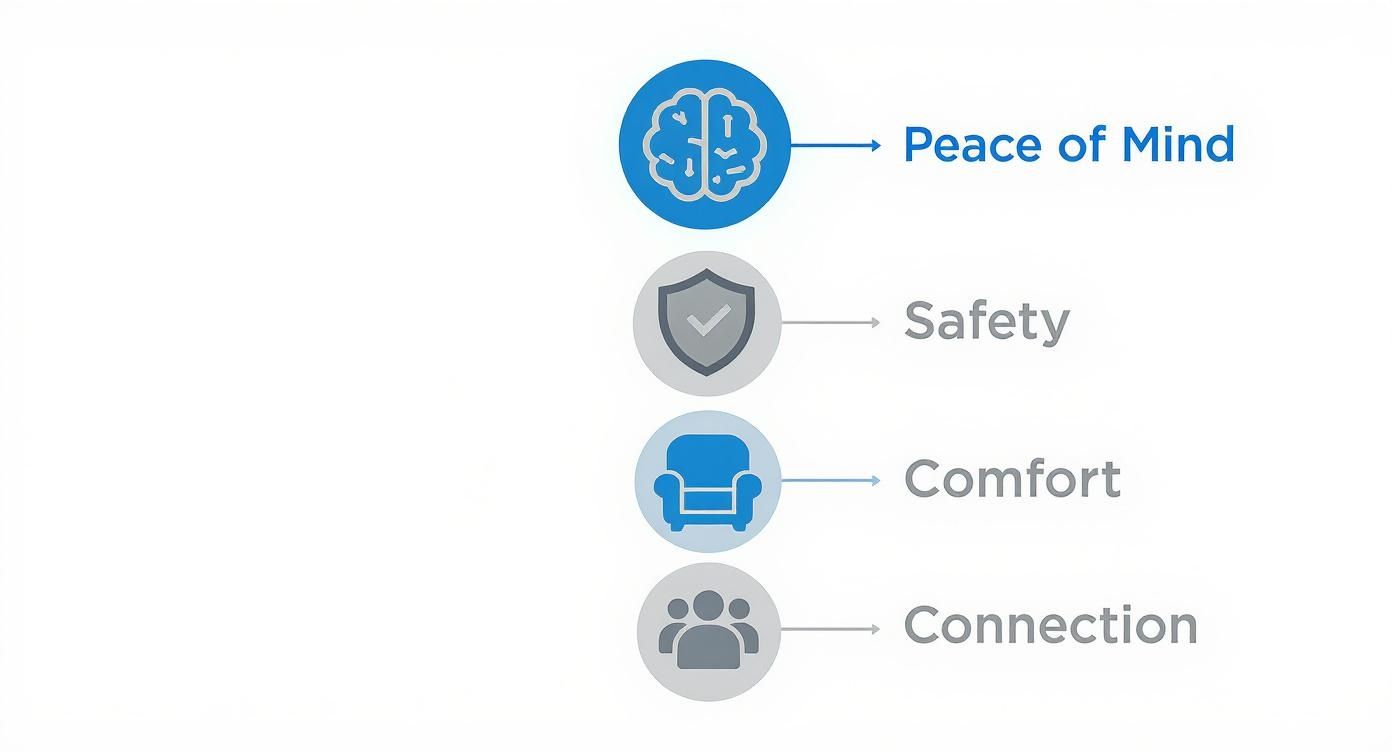
Each area supports the others, creating a complete system that helps you live more independently and confidently. Let’s dive into what each of these categories looks like in a real home.
1. Safety and Security
This is the big one, and usually the first thing that comes to mind. Smart safety devices are like having a friendly, digital neighborhood watch that’s always on duty, giving you a heads-up when something isn’t quite right.
A video doorbell, for example, is a game-changer. It lets you see and talk to whoever is at your door from your TV or a small screen without ever having to get up. It’s perfect for screening visitors or just confirming a package was delivered. Then there are smart door locks, which you can set to lock automatically at bedtime—no more second-guessing yourself. You can even give a family member temporary access without having to hand over a physical key.
The protection doesn't stop at the front door. Here are some practical examples:
Smart Smoke and Carbon Monoxide Detectors: These go way beyond just beeping. They’ll send an instant alert to your phone and to a family member, which is a lifesaver if you're not home or can't hear the alarm.
Leak Detectors: You can stick these tiny sensors under a sink or near the water heater. They'll catch the first sign of moisture and alert you before a tiny drip turns into a massive flood.
Smart Lighting: Imagine your outdoor lights automatically turning on at dusk and off at dawn. It’s a simple way to improve visibility and discourage anyone from snooping around.
For an extra layer of personal protection, especially in case of an emergency, looking into the top emergency alert systems for seniors is a really smart move.
2. Health and Wellness
Beyond just keeping your home secure, smart tech can be a fantastic partner in managing your day-to-day health. These devices help you stay on track with routines, keep an eye on your well-being, and offer a quick way to call for help.
One of the most practical tools is an automatic pill dispenser. You can program it to release the right medication at the right time, using a sound or light to remind you. If you happen to miss a dose, it can even send a notification to a loved one.
Another incredibly valuable device is a fall detection sensor. These can be worn as a discreet pendant or watch, or even installed as non-camera sensors in a room. If a fall occurs, the sensor can automatically contact emergency services or a family member, getting you help even if you can’t reach the phone.
Smart devices take the stress out of simple but critical health tasks. By creating a reliable safety net, they free you up to enjoy life instead of worrying about the "what ifs."
3. Comfort and Convenience
This is the fun stuff—the devices that just make life a little easier and more pleasant. Think of them as small upgrades that shave off the rough edges of daily tasks and reduce physical strain.
A smart thermostat is a perfect example. It learns your habits and adjusts the temperature for you, keeping you perfectly comfortable while trimming your energy bills. Best of all, you can change the temperature with your voice, so there's no more fiddling with tiny buttons in the dark.
Here are a few other practical ideas that make a huge difference:
Voice-Controlled Lights and Plugs: Saying, "Hey Google, turn on the living room lamp," means you never have to stumble through a dark room again. Smart plugs can also turn any regular appliance, like a fan or radio, into a voice-activated one.
Automated Window Blinds: Open or close your blinds with a simple voice command or the push of a button. It’s a lifesaver for managing that bright morning sun or getting a little privacy at night without reaching over furniture.
These are the kinds of modifications that help a house truly support you. For a deeper look at adapting your space, our guide on aging-in-place home modifications done right has plenty of great ideas.
4. Connection and Communication
Feeling isolated can be a real struggle, but smart devices are brilliant at bridging the distance between you and the people you love. They make it incredibly simple to see and talk to family and friends, wherever they are.
A smart display, like an Amazon Echo Show or Google Nest Hub, is the perfect communication station. It has a screen for hands-free video calls, so a grandchild can "drop in" for a quick hello or you can join a family video chat just by asking.
These devices help you feel connected in other ways, too. A digital photo frame can be linked to an account where your kids and grandkids can upload new pictures anytime. You’ll always have fresh photos of your loved ones to enjoy, offering a constant, gentle reminder of the people who care about you.
Picking the Right Smart Devices for Your Home
Walking into the smart home aisle can feel overwhelming, with countless gadgets all promising to make life easier. So, how do you choose? The secret is to ignore the noise and focus on what you'll actually use day-to-day. It’s like outfitting a kitchen—you need the tools that feel right in your hand and get the job done, not some complicated gizmo that ends up collecting dust.
When it comes to smart tech, ease of use is everything. You want devices with big, bright displays, straightforward physical buttons, and voice commands that actually understand you. It's also vital to think about how they'll work together. You're building a team of helpers, not just collecting a bunch of gadgets that refuse to talk to each other.
Key Questions to Ask Before You Buy
To cut through the clutter, run through this simple checklist. Thinking about these points now will save you a world of headaches later and make sure you bring home technology that genuinely makes a difference.
Can I use this without my phone? Lots of devices can be managed with a voice assistant like Alexa or a simple, dedicated remote. This is a game-changer if you’d rather not fuss with tiny app menus.
What's the backup plan if the power goes out? Find out what happens when the Wi-Fi drops or the electricity flickers. Is there a battery backup? Can you still lock your door or turn on a light manually?
How loud are the alerts? For critical devices like smoke alarms or security sensors, you need to hear them, no question. Check if you can adjust the volume to a level that works for you.
Are there hidden monthly fees? Be aware that some products, particularly security cameras and medical alert systems, require a subscription to unlock all their features. Always ask about the total cost of ownership.
Asking these questions helps you look past the slick marketing and zero in on what will genuinely fit into your life.
Matching Features to What You Actually Need
Not all smart gadgets are built the same, especially when it comes to the features that are most important for seniors. What might be a fun extra for a younger person could be an absolute necessity for you.
The best smart device is one you don't have to think about. It should blend into your routine, making life easier and safer without adding any stress or complexity.
To make this clearer, let's break down what to look for in a few common device categories.
Feature Comparison for Senior-Friendly Smart Devices
The table below highlights the features that matter most when you're shopping around. It’s a quick-glance guide to help you distinguish between the essentials and the nice-to-haves.
Device Type | Must-Have Feature | Good-to-Have Feature | Consideration |
|---|---|---|---|
Video Doorbell | Clear audio & wide-angle video | Pre-recorded quick replies | Subscription cost for video storage |
Smart Lighting | Voice & manual switch control | Dimmable & color-changing options | Compatibility with your existing bulbs |
Smart Thermostat | Large, easy-to-read display | Remote sensors for other rooms | Professional installation may be needed |
Health Monitor | Automatic alerts to family | Mobile app for tracking trends | Accuracy and reliability of the device |
Looking at this, you can see how prioritizing certain features helps ensure the technology will serve you well for years to come.
Making It Easy in a New Home
This whole selection process gets a lot simpler when you’re building a new home and can customize your selections. Instead of trying to shoehorn new tech into an old house, you can design the home around your needs from the very start.
This is where my hands-on service really shines for my clients in Baltimore County, Maryland and Harford County, Maryland. Using some pretty cool visualization tools, we can see exactly how a smart thermostat will look on a particular wall or figure out the perfect spot for voice assistants so they always hear you. We make sure the technology you choose works beautifully with your new flooring, countertops, and the entire flow of your home. It’s an integrated approach that creates a living space that’s truly accessible and ready for you from the day you get the keys.
For more ideas on what's possible, you can check out our guide on the best smart devices for your home.
Getting Your Home Ready for Smart Technology
The idea of installing a bunch of smart home gadgets can feel overwhelming, especially when you're trying to fit them into a house you've lived in for decades. While you can absolutely add smart devices to an existing home, it's a whole lot easier to build them right in from the very beginning when buyers can customize their homes.
When you plan from the ground up, you get to be deliberate about every little detail. For instance, we can place smart light switches at just the right height or make sure you have a rock-solid Wi-Fi signal in every corner of the house—from the basement to the back patio. No guesswork, no surprises. Just a system that’s built around your life from day one.
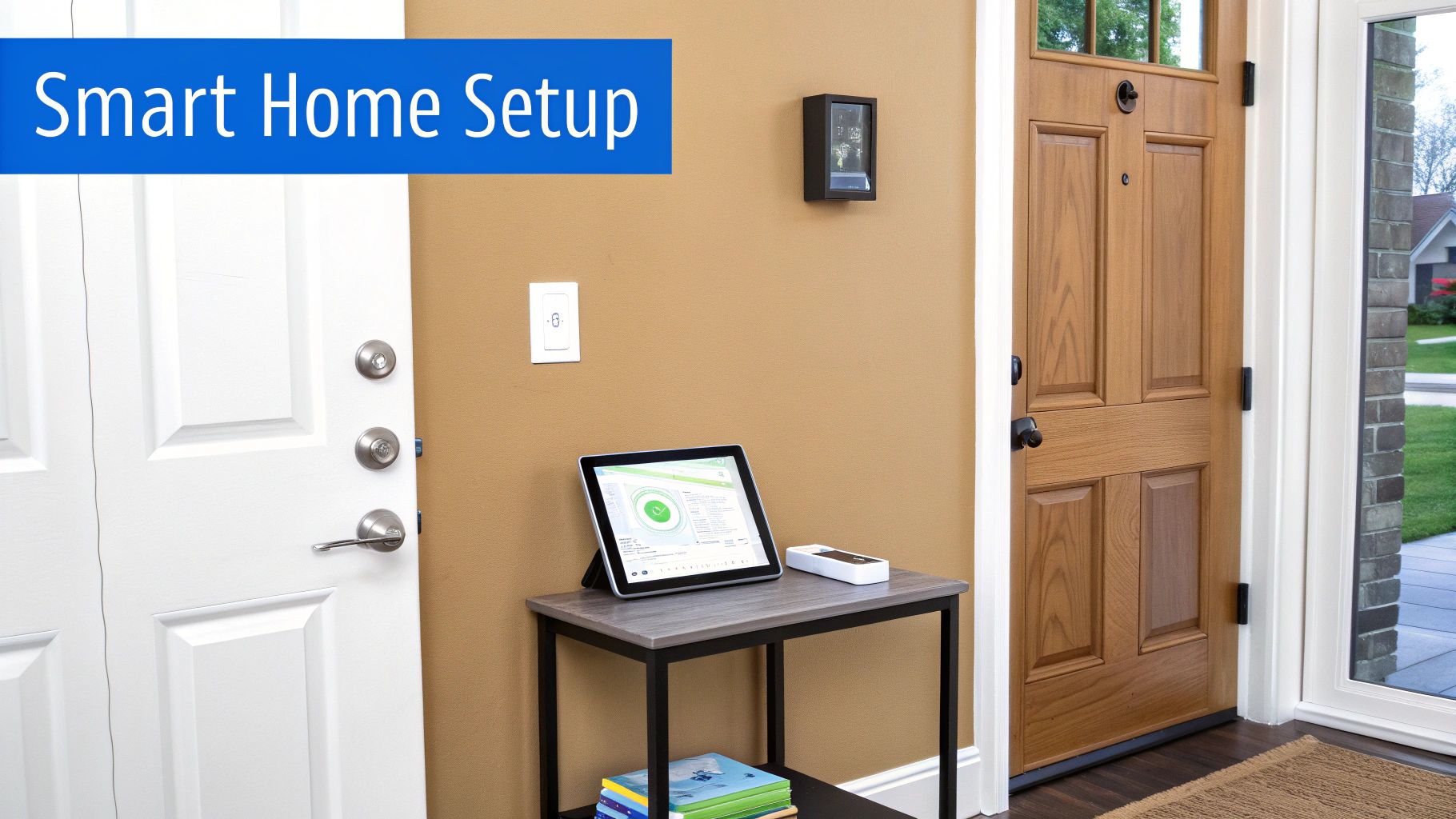
Planning Your Smart Home Foundation
A strong, reliable internet connection is the heart of any smart home. Your Wi-Fi router is basically the command center, and every smart device is a soldier waiting for orders. If that connection is weak or spotty, even the best smart thermostat or security camera becomes little more than a frustrating piece of plastic.
That’s another huge advantage of customizing a new home. We can run network cables right inside the walls and strategically place Wi-Fi boosters to kill any dead zones. This guarantees your video doorbell, voice assistant, and fall detection sensors always have the powerful signal they need to work without a hitch.
The Power of Professional Setup
Let’s be honest—getting all these devices to talk to each other can be tricky. It's no wonder the market for senior tech services is booming, projected to leap from $4.62 billion in 2025 to $13.75 billion by 2035. The most sought-after service? In-home setup and support. It just goes to show that most people want a real person to help them get comfortable with new technology. You can discover more about these market trends and senior preferences.
If you’re the type who likes to tinker, our DIY home automation system installation guide is a great resource for smaller projects. But for a seamless, fully integrated system, letting an expert handle the setup from the start saves a ton of headaches and ensures everything works together perfectly.
Visualizing Your Perfect Space
One of the best parts of building a new home is making it truly yours. To help my clients do just that, I offer a unique service you won't find anywhere else: proprietary visualization tools that let you see your smart home before it's even built. This is a real game-changer for my homebuyers in White Marsh, Maryland; Edgewood, Maryland, and other communities across Baltimore County, Maryland and Harford County, Maryland.
Imagine seeing exactly how your new kitchen will look with smart under-cabinet lighting, all before the first nail is hammered. This process removes the guesswork and turns an abstract idea into a concrete plan you can be confident in.
With these tools, we can play around with the details together.
See a virtual preview of how a video doorbell will look on the entryway you've picked out.
Experiment with the placement of smart speakers and displays to find the most natural spots.
Visualize how automated lighting will enhance the flooring, cabinets, and countertops you've selected.
This approach takes the vague concept of a "smart home" and makes it real and exciting. My job is to handle all the technical stuff behind the scenes so you can focus on the fun part: designing a safe, comfortable, and modern home you’ll absolutely love living in for years to come.
Sorting Out the Costs and Keeping Your Privacy Safe
Let's be honest: two of the biggest questions that always pop up with smart home tech are "How much is this really going to cost me?" and "Is my personal information actually safe?" These are perfectly valid concerns, and I want to tackle them head-on.
Thinking about the cost isn't just about the initial price tag. It's about looking at the bigger picture. Yes, there's an upfront cost for the gadgets, but think of it as an investment in staying independent at home for longer. That investment can often delay or even prevent the much steeper expenses that come with assisted living.
What to Expect on the Financial Side
When it comes to paying for a smart home setup, the costs usually fall into two main categories: one-time purchases and ongoing subscriptions. Most devices, like a smart speaker or a video doorbell, are a one-time thing. But others, especially the ones that include professional monitoring or video storage, might have a monthly fee.
Here's a quick breakdown of what you might see:
One-Time Device Costs: These can be as low as $25 for a smart plug or run into a few hundred dollars for more complex devices like a smart thermostat or a top-notch security camera.
Monthly Subscriptions: If you want services like 24/7 emergency monitoring or cloud storage for your video doorbell clips, you can expect a monthly fee, usually somewhere between $10 and $50.
Installation Fees: A lot of these devices are designed for easy DIY setup. However, for things like smart locks or thermostats, you might want a professional to handle it, which adds a bit to the initial cost.
The great thing about customizing a new home with me in communities like White Marsh, Maryland or Edgewood, Maryland, is that we can roll these installation costs right into the build. We'll have everything professionally installed and ready to go before you even move in, making the whole experience seamless.
Keeping Your Digital Home Locked and Secure
Okay, let's talk about privacy. The thought of having internet-connected devices listening and watching in your home can feel a little strange, but protecting your digital space is a lot like securing your physical home. You lock your front door, right? You can take simple, similar steps to protect your smart home.
The most important thing is creating a strong defense. A unique, hard-to-guess password for your home's Wi-Fi network is your first and most crucial line of defense. Think of it as the master key to your digital world—you definitely don't want it to be "password123."
Your privacy is in your hands. By using strong passwords and taking a few moments to review your device settings, you're taking the most critical steps toward building a secure and trustworthy smart home.
Beyond a solid Wi-Fi password, here are a few other easy but powerful tips:
One Device, One Password: Don't use the same password for your smart lighting app that you use for your online banking. Give each one its own unique key.
Turn On Two-Factor Authentication (2FA): This is a fantastic extra layer of security. It usually works by sending a temporary code to your phone to verify it’s really you trying to log in.
Check the Privacy Settings: When you set up a new device, spend five minutes in the app's settings. You can usually control what information the device collects and shares.
Stick with Brands You Trust: Well-known companies have a reputation to protect. They're more likely to invest heavily in security and release regular software updates to keep their devices safe from new threats.
By taking these simple precautions, you can get all the amazing benefits of a smart home without worrying about your personal information. It's all about being smart with your security from the start.
Your Partner in Creating a Smarter, Safer Home
At the end of the day, smart home technology isn't about filling your house with complicated gadgets. It’s about finding simple, thoughtful solutions to real-world challenges—giving you a greater sense of safety, independence, and priceless peace of mind.
The best way to start is small. Think about one specific thing you'd like to make easier. Maybe you worry about forgetting to lock the door, or perhaps you just want a simpler way to call family. There’s a device for that, and once you see how easy it is, you'll feel more confident exploring other options. This guide is a great starting point, but having a knowledgeable partner can make all the difference, especially when you're making big decisions about a new home.
More Than a Builder—A True Homebuying Partner
While the builder I represent constructs beautiful, high-quality houses, my role goes beyond that. I offer my clients a unique, hands-on service focused on turning your vision for a dream home into a reality, down to the last detail. Using special visualization tools, we can see exactly how different smart devices will look and function in your new space before a single wall goes up.
This process lets you customize with total confidence. We can weave the right technology into the fabric of your home, making sure it works perfectly with the flooring, cabinets, and countertops you’ve already picked out. It takes the abstract idea of a "smart home" and makes it a tangible, exciting part of your future.
The demand for this kind of integrated technology is growing fast. The global smart home healthcare market is set to jump from $6.40 billion in 2025 to $10.71 billion by 2033. Here in the U.S., the market is expected to hit $10.48 billion in 2025 all by itself. These numbers show a clear shift toward using technology to live better and safer at home, and you can read more about these smart home healthcare findings if you're curious.
A house is just a structure. A home is where you feel safe, comfortable, and connected. My goal is to help you build a home that's not only beautiful but also perfectly prepared for whatever comes next.
Let's Build Your Future-Ready Home Together
If you are thinking about buying a new home in White Marsh, Maryland; Edgewood, Maryland, Baltimore County, Maryland; or Harford County, Maryland, I would be honored to be your guide. Let’s sit down and plan a space that isn’t just stunning, but also smart, safe, and built just for you.
Reach out today, and we can start bringing your vision to life.
Your Top Questions Answered
Diving into smart home technology can feel a little overwhelming, and it's natural to have questions. Let's walk through some of the most common ones I hear from clients, so you can feel more comfortable with the whole idea.
Do I Absolutely Need a Smartphone to Use These Gadgets?
Nope, not at all! This is a big misconception. While a smartphone app is often the central hub for advanced settings, it's definitely not the only way to run the show.
Many of the best devices are designed with other controls in mind. You can use your voice with a smart speaker like an Amazon Echo or a Google Nest Hub to manage everything from your lights to the thermostat. Some systems also come with their own dedicated remotes or simple wall-mounted keypads, so you never have to touch a smartphone if you don't want to.
What Happens When the Power or Wi-Fi Goes Out?
That’s a great question and a crucial one to think about. If the power goes out, most smart devices will shut down, just like any other appliance. The exception? Critical systems like health monitors, which often come with a battery backup for exactly this reason.
Now, if it's just the internet that's down, you're not completely out of luck. Many devices can still function on a local level. Your smart light bulb will still work with its physical wall switch, and some security cameras can keep recording to a local storage card. When choosing devices for safety and security, always ask about their offline capabilities.
Is This Stuff Complicated to Set Up?
Honestly, it varies. The setup can be anything from dead simple to something you'll want a professional for.
Something like a smart plug is usually a true "plug-and-play" device. You just plug it into the wall, connect it to your Wi-Fi using an app, and you're done in minutes. On the other hand, anything that ties into your home's wiring—like a smart thermostat or a video doorbell—is best left to the pros.
For my clients buying new homes in areas like Baltimore County, Maryland or Harford County, Maryland, we take care of all the tricky installations during construction. That way, your smart home is built-in and ready to go the moment you get your keys, with none of the technical headaches.
At Customize Your Home, I offer personal, hands-on guidance and visualization tools to seamlessly integrate the right smart home features into your new build. If you're buying in White Marsh, Maryland; Edgewood, Maryland, or the surrounding Maryland communities, let's work together to build a home that’s not just stunning, but smart and supportive, too. Start planning your perfect home at https://www.customizeyourhome.com.
Comments