

Aging in Place Home Modifications Done Right

When you hear the term “aging-in-place modifications,” it might sound a bit clinical. But really, it’s just a friendly way of saying you’re making smart updates so your home continues to be a safe, comfortable, and easy place to live for the long haul.
These aren't jarring, hospital-like changes. We're talking about thoughtful improvements—from simple fixes like swapping out doorknobs to bigger projects like creating a no-step entry—all designed to help you stay independent in the home you love.
What Exactly Are Aging in Place Modifications?
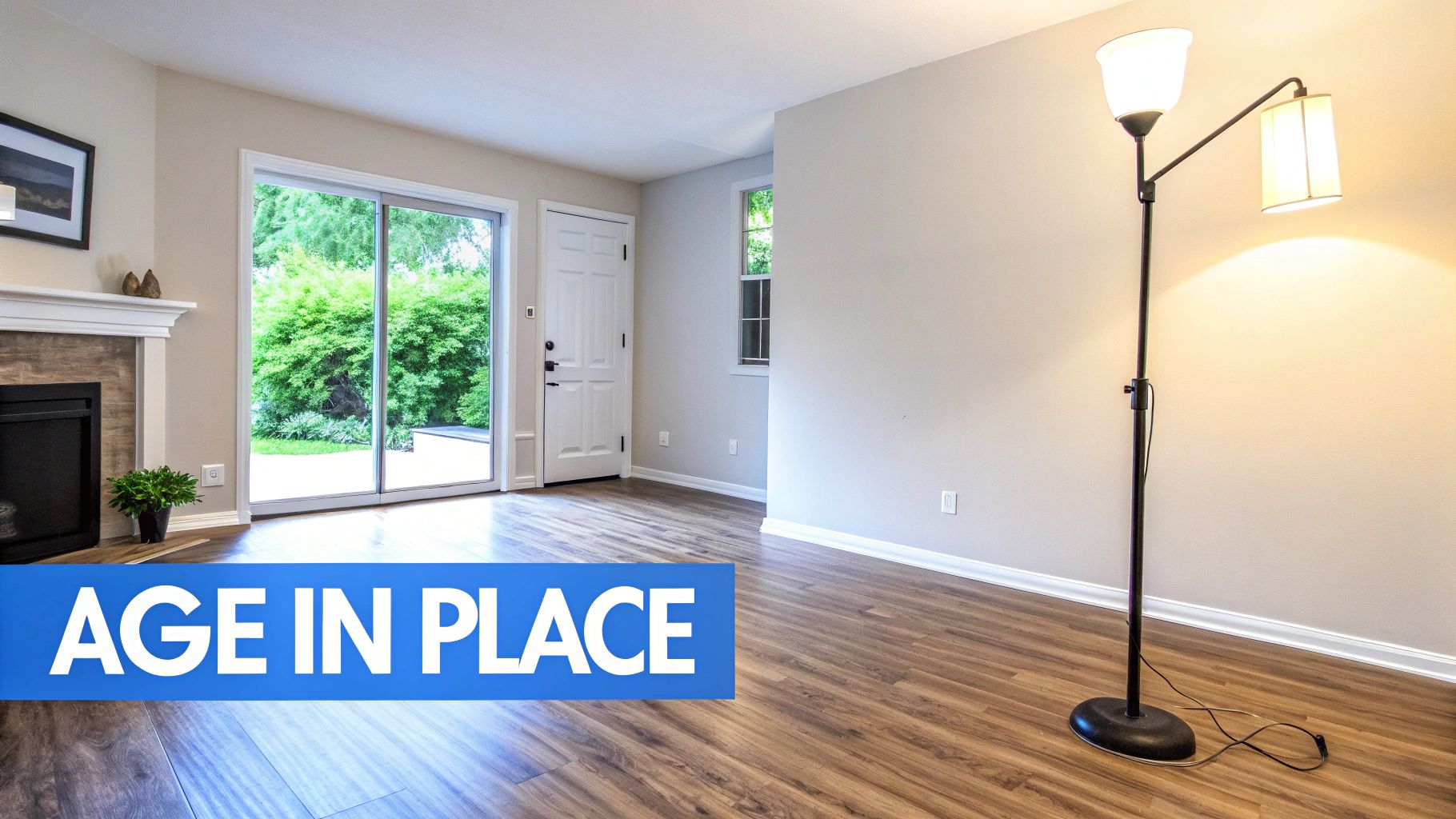
Let’s reframe this: it’s about future-proofing your comfort. The core idea is simple—your home should adapt to you, not the other way around. It’s about making clever, often stylish, updates that blend right into your home’s design while making daily life just a little bit easier and a whole lot safer.
And this isn't a niche idea anymore. The demand for homes that can adapt with us is skyrocketing. By 2050, the number of people aged 65 and over is expected to hit 1.5 billion worldwide. Yet, as of 2020, a staggering 90% of homes in the U.S. weren't considered 'aging-ready.' That gap highlights just how crucial it is to start thinking ahead. If you're interested in the numbers, you can read the full research about these demographic shifts and see what it means for our housing needs.
Making Your Home Work for You, Not Against You
Ultimately, these modifications are all about removing the small, everyday hurdles that can turn into major challenges down the road. Imagine the simple relief of reaching your favorite coffee mug without a wobbly step stool, or the peace of mind you get from a brightly lit hallway when you get up at night. That’s what this is all about.
Most of these changes fall into a few common-sense categories:
Safety and Accessibility: These are the big ones, focused on preventing falls and making it easier to get around. Think walk-in showers, non-slip flooring, and grab bars that look like chic towel racks.
Comfort and Convenience: These are the little things that make a huge difference in daily life. Lever-style door handles that don't require a tight grip or kitchen shelves that pull down to you are perfect examples.
Ease of Maintenance: This is about choosing materials and designs that won’t create extra work, like durable flooring or quartz countertops that are a breeze to clean.
The real secret is shifting your mindset from reactive fixes to proactive, empowering design. Instead of waiting for a problem to force your hand, you make thoughtful changes that improve your home today and prepare it for whatever tomorrow brings.
You don't have to launch a massive renovation to start. The next time you're replacing your flooring, picking out new cabinets, or updating a bathroom faucet, just ask yourself: "Is this option both beautiful and functional for the long run?" It's about making smarter choices every step of the way.
For those of you in communities like White Marsh, Maryland or anywhere in Baltimore County and Harford County, Maryland, I go a step further. I offer my clients unique proprietary visualization tools and hands-on service. We can actually see how different flooring will look or test out various countertop heights virtually, helping you bring your dream space to life and ensuring we find the perfect solution for your home.
Key Home Areas for Aging in Place Modifications
To give you a better idea of where to start, here’s a quick rundown of some of the most impactful modifications you can make, room by room. It shows how even small tweaks can dramatically boost your home's safety and comfort.
Home Area | Common Modification | Primary Benefit |
|---|---|---|
Bathroom | Walk-in shower, grab bars, raised toilet | Reduces the risk of slips and falls |
Kitchen | Pull-out shelves, lever-style faucets | Makes cooking easier and more accessible |
Bedroom | Bedside lighting controls, lower bed height | Enhances safety and convenience at night |
Entryways | No-step entrance or ramp, wider doorways | Allows for easy wheelchair/walker access |
Hallways | Improved lighting, non-slip flooring | Increases visibility and prevents trips |
General | Lever door handles, rocker light switches | Requires less strength and dexterity to use |
As you can see, many of these changes are things that would make a home more comfortable for anyone, at any age. That's the beauty of universal design—it just works better for everyone.
The Most Impactful Modifications for Your Home
Alright, now for the fun part. Let’s talk about the changes that actually make the biggest difference in your day-to-day life. Thinking about aging in place home modifications doesn't mean you have to gut your entire house at once. It's really about focusing on key areas where smart, targeted updates can give you a huge boost in safety and convenience.
We'll walk through the house, room by room, and pinpoint some of the most effective upgrades. And remember, these aren't just about safety—they're about making your home a more comfortable, enjoyable place to be for years to come.
Reimagining the Bathroom for Safety and Style
If you're going to start anywhere, start in the bathroom. It’s consistently the most critical area to address because of the combination of water, hard surfaces, and tight spaces. It’s a prime spot for slips and falls, but with the right tweaks, it can become a safe, relaxing sanctuary.
The trend toward these updates is undeniable. Remodelers report that their most frequent aging-in-place jobs involve installing grab bars (87%), creating curb-less or zero-threshold showers (78%), and adding higher toilets (71%). In fact, a whopping 73% of remodelers have seen a growing demand for these features. It's clear that a lot of people are thinking ahead.
Here are a few of the most impactful bathroom updates we see:
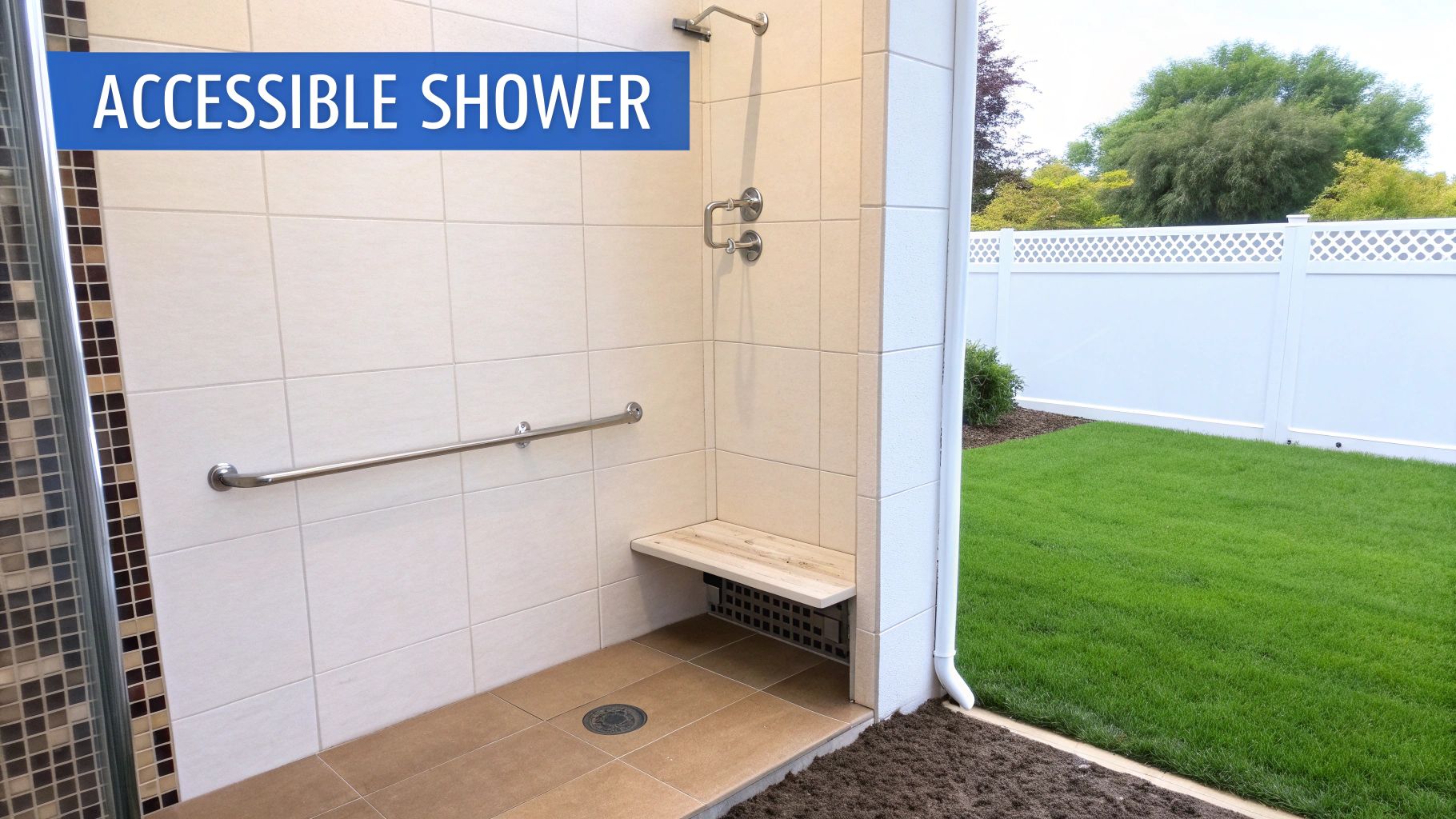
The Zero-Threshold Shower: This is a total game-changer. Getting rid of the curb or step into the shower eliminates a major trip hazard. These walk-in or roll-in showers look incredibly sleek and modern, and they make access a breeze, whether you're using a walker or just don't want to lift your legs over a high tub wall.
A Built-in Shower Bench: Adding a sturdy bench gives you a stable place to sit while showering, which can cut down on fatigue and the risk of slipping. It’s a little touch of spa-like luxury that doubles as a serious safety feature.
Strategically Placed Grab Bars: Forget those sterile, hospital-style bars from the past. Today's grab bars come in all kinds of stylish finishes—like matte black or brushed gold—that can match your faucets and towel racks. They can blend right into your decor while providing crucial support exactly where you need it most.
Comfort-Height Toilets: A toilet that's just a few inches taller than the standard height can make a world of difference. It reduces the strain on your knees and back when you sit down and stand up, a simple change that you'll appreciate every single day.
Of course, another critical element is adapting your bathroom for wheelchair accessibility, which can dramatically improve daily independence. As you plan, you'll need to think about things like turning radiuses and under-sink clearance.
Creating a More Accessible and Ergonomic Kitchen
The kitchen is the heart of the home, no doubt about it. But all the reaching, bending, and standing for long periods can become a real challenge over time. The goal here is to create a workspace that’s more ergonomic and requires a lot less physical effort.
Think of it like setting up a professional chef’s kitchen—everything is designed to be within easy reach to make the process smoother and more efficient. The same principle applies to creating a kitchen that’s easy to use for years to come.
Imagine preparing a meal without having to stretch for a heavy pot or get on your knees to find something in a deep corner cabinet. Here’s how you can make that a reality:
Pull-Down and Pull-Out Shelving: These are absolutely brilliant. Pull-down shelves bring the contents of your upper cabinets right down to you, while pull-out shelves for lower cabinets mean you can stop digging around in the dark for that one specific pan.
Variable Countertop Heights: If you're remodeling, think about creating work surfaces at different heights. A lower section is perfect for seated prep work, making tasks like chopping vegetables or mixing dough much less tiring.
Lever-Style Faucets: A single lever or a touchless faucet is so much easier to operate than a traditional knob, especially for anyone dealing with arthritis or limited hand strength.
Small Changes with Big Impact Throughout the Home
Not all aging-in-place projects are massive undertakings. Some of the most helpful changes are surprisingly simple, affordable, and can be done in an afternoon.
Lever-Style Door Handles: Swapping out round doorknobs for lever-style handles is a small change with a huge payoff. Levers can be opened with an elbow or a gentle push, no tight grip required.
Zero-Step Entries: Getting into your own home shouldn’t be a hurdle. Creating at least one zero-step entry, whether by grading the landscape or adding a tasteful ramp, ensures easy access for everyone—from guests with strollers to residents using mobility aids.
Improved Lighting: Good lighting is one of the most important—and most overlooked—safety features. A practical example is adding task lighting under kitchen cabinets to better see what you're chopping, or installing nightlights in hallways for safer trips to the bathroom at night.
Once you start looking at your home through this lens, you'll see opportunities everywhere to make life just a little bit easier. And for my clients in communities like White Marsh and Edgewood, Maryland, we can bake these thoughtful touches into your new home from the very beginning. By letting you pick your own flooring, countertops, and cabinets, and using my hands-on service and visualizer tools, we can create a dream space that is truly ready for your future.
Smart Tech Can Make Independent Living a Whole Lot Easier
Technology has moved way beyond just being a fun gadget for the tech-savvy. It's now a genuinely helpful assistant that can make daily life safer, more comfortable, and keep you connected to the people you care about.
When we talk about aging in place home modifications, smart tech provides some of the simplest yet most powerful solutions out there—many of which don't require swinging a single hammer. These tools work behind the scenes, giving you and your family incredible peace of mind and helping you stay independent.
Your Voice Is the New Remote Control
The biggest game-changer has been the rise of voice assistants like Amazon Alexa and Google Assistant. For anyone dealing with mobility issues or even just arthritis in their hands, controlling your home with your voice is a massive upgrade.
Think about it. You're settled into your favorite armchair for the night. Instead of having to get up and down to fiddle with switches and dials, you can just say:
"Alexa, turn on the living room lamp."
"Hey Google, set the thermostat to 70 degrees."
"Siri, play my favorite classical music playlist."
This isn't just a cool party trick; it's a practical way to reduce unnecessary movement and lower the risk of a fall. It puts you back in complete control. Our guide on smart tech for the home dives even deeper into how these devices can transform a living space.
Devices That Are Always Looking Out for You
It's not just about voice commands. There’s a whole world of smart devices designed to add a layer of safety and connection to your home. They’re usually simple to set up and offer real-world solutions to common worries.
Honestly, today's technology is a huge reason why aging in place is more possible than ever before. It's no wonder that 93% of Americans aged 55+ say they want to stay in their homes. With most households already having at least one smart device, this goal is well within reach. You can discover more insights about smart home opportunities and how they are changing independent living.
Here are a few of my favorite examples:
Video Doorbells: See and talk to whoever is at your door right from your phone or a tablet. No more rushing to the door, which adds a fantastic layer of security and calm.
Smart Lighting: You can set lights to turn on automatically at sunset or use motion sensors in hallways and bathrooms for safer trips at night. It completely eliminates fumbling for a light switch in the dark.
Smart Pill Dispensers: These can be genuine lifesavers. They dispense the right medication at the right time and can even ping a family member’s phone if a dose is missed.
Smart technology for aging in place is really about building a quiet, helpful safety net. It's a collection of simple, affordable tools working together to help you feel more secure and connected in the home you already love.
Whether you're looking to update a long-time family home in Baltimore County or you're planning a new home in Edgewood or White Marsh, weaving these technologies into your plan has never been easier. When we work together, we can figure out how to integrate these smart features from day one—using my visualization tools to map out the perfect spot for a smart thermostat or plan the ideal lighting setup. It’s all about building a home that’s ready for your future.
Planning and Budgeting Your Home Updates
Let's get right to it and tackle the two biggest questions that always pop up with home projects: "Where do I even start?" and "What's this going to cost me?" Planning for aging in place home modifications can feel like a massive undertaking, but breaking it down into a clear, practical roadmap makes it so much more manageable.
The trick is to start by thoughtfully looking at your needs—both right now and down the road. This isn't about gutting your entire house overnight. It's about being smart and strategic. A fantastic first step is to just walk through your home with a notepad. Where are the little struggles? Is it reaching those high kitchen cabinets, stepping over the bathtub wall, or fumbling through a dark hallway at night? Your own daily experiences are the best roadmap you can ask for.
Prioritizing Your Projects From Now to Later
Once you have a list of pain points, it's time to set some priorities. A really simple and effective way to do this is to sort your list into three different buckets. This helps you focus on the urgent stuff first while still keeping an eye on the future.
Tier 1: Immediate Needs: These are the absolute must-haves that deal with current safety risks or major daily frustrations. A great practical example is putting non-slip mats in the bathtub or shower immediately. Other ideas include getting rid of trip hazards like throw rugs or beefing up the lighting in a dim staircase. These are often low-cost changes that make a huge impact.
Tier 2: Future Comforts: These are the upgrades you don't necessarily need today, but you’ll be glad you have them in the next five to ten years. This might include swapping out doorknobs for easier-to-use lever handles or planning for a zero-threshold shower the next time you update a bathroom.
Tier 3: Long-Term Goals: This tier is for the big-ticket renovations. We're talking about projects like widening doorways to accommodate a walker, creating a main-floor bedroom and bathroom, or adding a ramp to your front door.
Thinking about it this way turns a giant, intimidating to-do list into a series of smaller, achievable steps. You can tackle the most critical safety items right away while you budget and plan for the bigger projects later on.
This simple flowchart can help you decide between adding voice-activated help or more comprehensive automated safety systems in your home.
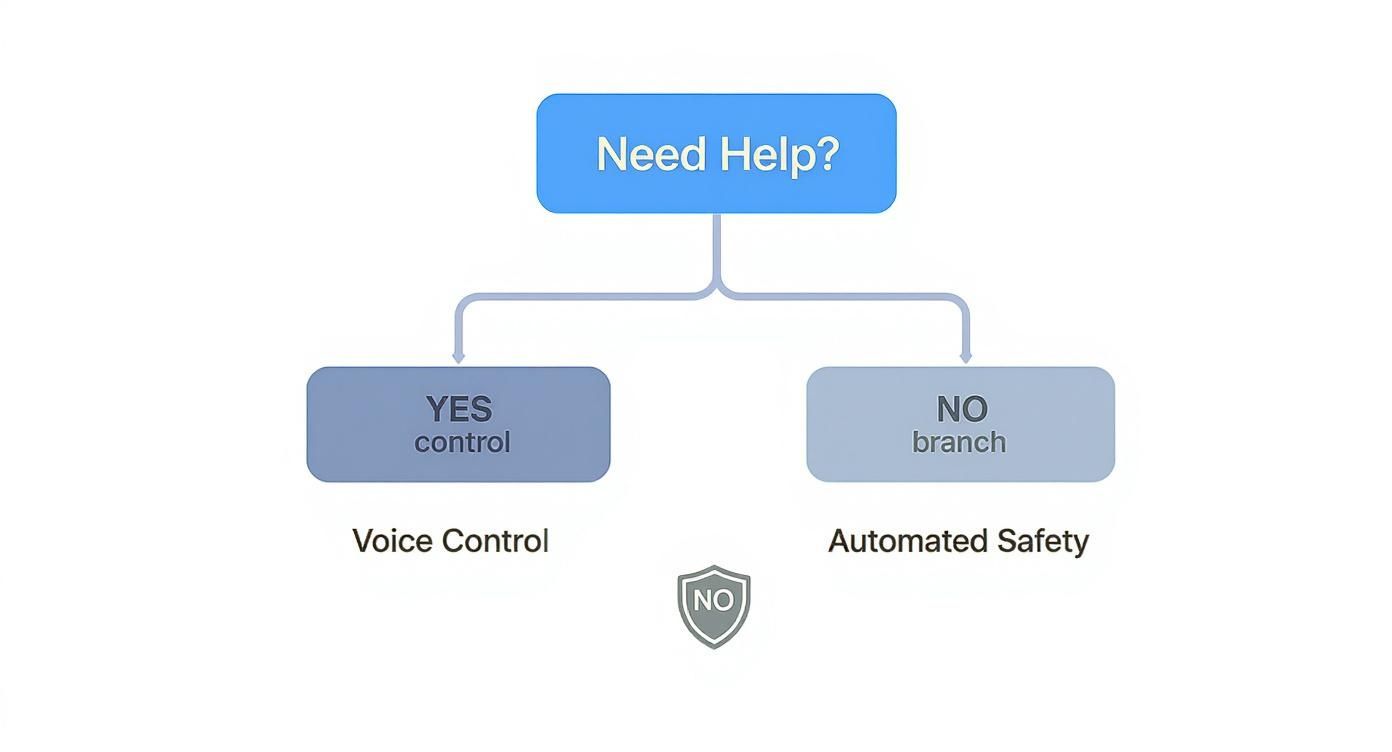
As you can see, figuring out if you need hands-on assistance is a quick way to point you toward the right kind of smart technology to start with.
Setting a Realistic Budget
Okay, let's talk money. The costs for these projects can be all over the map, depending on how big the job is, where you live, and whether you do it yourself or hire a pro. Creating a budget from the get-go helps you make smart decisions and prevents any sticker shock later. A good starting point is to simply research the average costs for the projects on your priority list.
Don't let the numbers scare you off; there are plenty of ways to fund these important updates. Some people use savings, while others might look into a home equity line of credit (HELOC). If that's a new term for you, our guide on what home equity is and how it works breaks it down clearly.
It's also worth looking into government programs and local non-profits, as many offer grants or low-interest loans specifically for aging-in-place modifications.
For my clients here in Maryland communities like White Marsh, Edgewood, and across Baltimore and Harford Counties, we can walk through these options together. When you buy a new home with my team, you get to personalize everything. Using my visualization tools, we can see exactly how different accessible features will look and fit into your budget before we even break ground. It makes the whole process transparent and stress-free.
To give you a rough idea, here are some typical cost ranges for the most common projects.
Estimated Cost Ranges for Common Aging in Place Projects
This table gives you a ballpark idea of what you can expect to spend on various modifications, whether you're tackling them yourself or bringing in a professional.
Modification Type | DIY / Professional | Estimated Cost Range |
|---|---|---|
Install Grab Bars | DIY or Professional | $100 – $300 per bar |
Lever-Style Door Handles | DIY | $30 – $60 per handle |
Improve Interior Lighting | DIY or Professional | $150 – $1,000+ |
Raised-Height Toilet | Professional | $400 – $800 |
Widen a Doorway | Professional | $300 – $2,500 |
Install a Stair Lift | Professional | $3,000 – $7,000 |
Walk-In Shower Conversion | Professional | $5,000 – $15,000+ |
Build an Entry Ramp | Professional | $1,500 – $5,000+ |
Remember, these are just estimates. The most important thing is to start the conversation, figure out your needs, and make a plan that feels right for you and your family. A little planning today can mean years of comfort, safety, and independence in the home you love.
Visualizing Your Perfect Forever Home
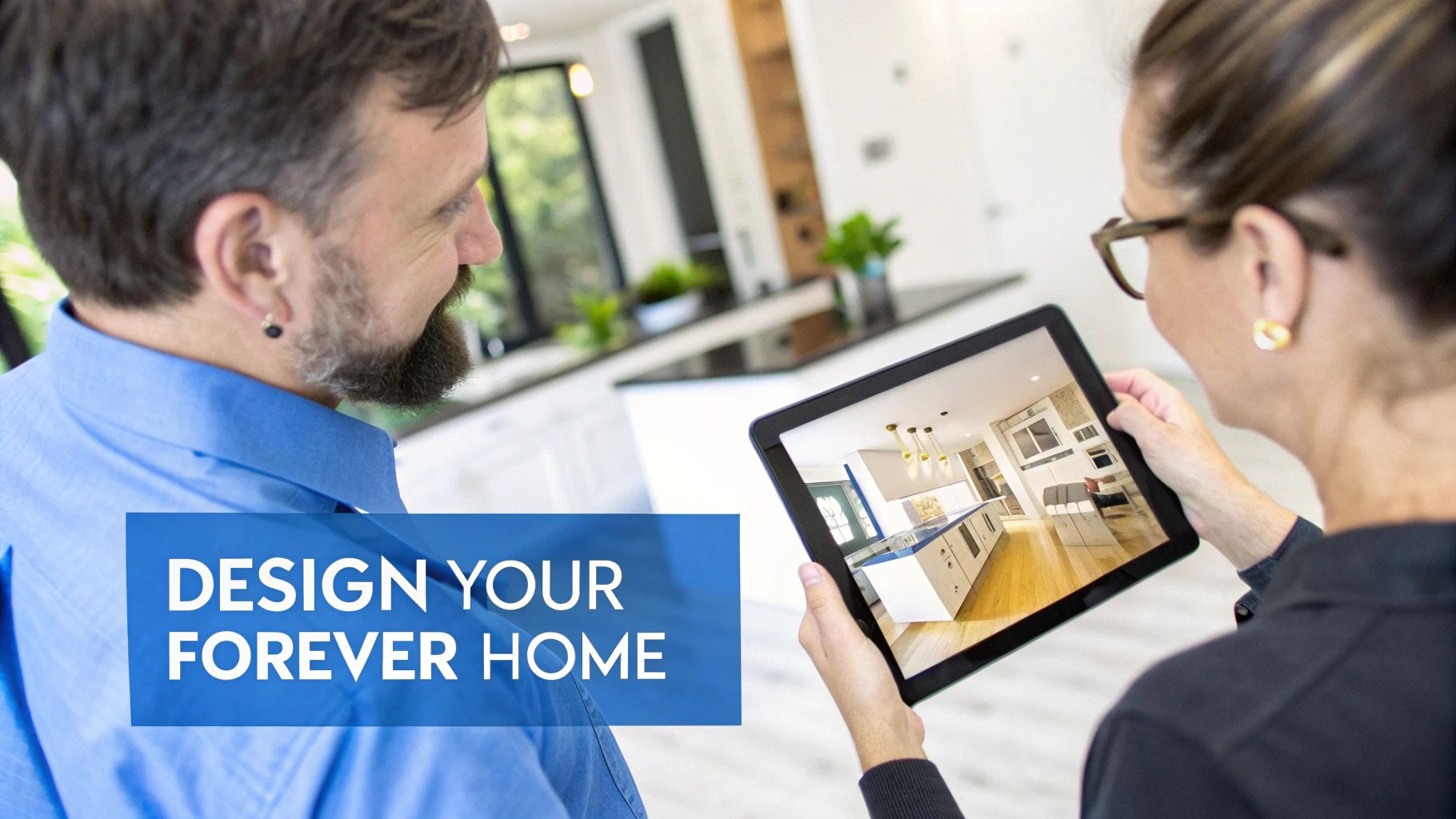
Making smart updates to an existing house is a great way to prepare for the future. But what if you could skip all the retrofitting and build your ideal accessible space from the start? When you choose a new home, you get to make these important decisions upfront.
For my clients in beautiful Maryland communities like White Marsh, Edgewood, and across Baltimore and Harford Counties, this is where the fun really begins. The builder I represent provides high-quality homes, but I go a step further—offering my clients unique proprietary visualization tools and hands-on service. We don't just look at floor plans; my visualizers help you bring your dream space to life right before your eyes.
See Your Choices Before You Commit
Imagine standing in your future kitchen, clicking a button to see how different non-slip flooring options look with the cabinets you love. Or picture yourself designing the perfect zero-threshold shower—built-in bench and all—and knowing exactly how it will feel. That’s the power of customizing your home.
With the tools I use, you can:
Virtually test materials: See how that durable, easy-to-clean quartz countertop actually looks with your cabinet choice.
Design for accessibility: Play around with layouts to get those wider hallways and doorways without ever making it feel clinical.
Select the right finishes: You get to pick your flooring, countertops, cabinets, and tile. We can choose beautiful lever-style door handles and faucets that are also easy to use.
This hands-on process takes all the guesswork out of the picture. It helps us make sure every single detail is nailed down for your long-term comfort, safety, and personal style. As you're visualizing, it’s smart to consider the highest impact investment for your forever home to ensure your choices offer both immediate joy and long-term value.
When you can customize, you get a golden opportunity to weave universal design into the very fabric of your home. Instead of adding accessible features later on, they become a seamless, natural part of its DNA from day one.
The Advantage of a Customizable New Home
While retrofitting is a fantastic option for many, customizing a new home lets you incorporate aging in place home modifications in a way that’s both more cost-effective and looks completely natural. You get to avoid all the little compromises that come from trying to fit new ideas into an old structure.
Everything from where we place the electrical outlets to the height of the windows can be planned with your future self in mind. We can ensure you have a main-floor primary suite, make sure every entrance is a no-step entry, and design a kitchen that’s a joy to use at any stage of life. It’s about being proactive instead of reactive. You can see what I mean by exploring our resources to help you design your own home online—the tools are pretty powerful.
This level of personalization is at the very heart of what I do. My goal is to empower you to make confident decisions that will serve you and your family for decades. If you’re thinking about a new home here in Maryland and want a space that truly supports your future, let's talk. Together, we can use these amazing tools to bring that perfect forever home to life.
Your Top Questions About Home Modifications, Answered
When you start thinking about making aging in place home modifications, it's only natural for a million questions to pop up. This is a big deal, and you want to get it right. Let's tackle some of the most common questions we hear from homeowners, so you can feel confident moving forward.
When Is the Right Time to Start Thinking About This?
Honestly? Yesterday. But today is the next best thing.
The absolute best time to start planning is long before you actually need the modifications. Think of it like this: you don't wait until the day you retire to start saving money. You plan ahead. Doing the same for your home lets you make smart, stylish decisions without the stress and high cost that come with an emergency.
Getting the ball rolling in your 50s or 60s is a brilliant move. It gives you plenty of time to research, budget, and phase in changes naturally. For example, if you're already planning to remodel that dated bathroom, that’s the perfect time to install a gorgeous, zero-threshold shower instead of another tub you have to climb into.
The real goal here is to weave these features into your home's design over time so it evolves with you. Waiting for a fall or a sudden health issue often leads to rushed, clinical-feeling fixes instead of comfortable, integrated solutions.
By planning ahead, you stay in the driver's seat, making sure every update improves your home's look and feel, not just its function.
Will Accessible Features Hurt My Home's Resale Value?
This is a huge myth we need to bust. The truth is, when they’re done right, these kinds of features can actually increase your home's appeal and value.
The key is to think in terms of universal design—creating spaces that work better for everyone. A beautiful, step-free entryway isn't just for someone using a walker; it’s a lifesaver for a parent with a stroller, or for anyone who’s ever tried to haul groceries inside. A sleek, walk-in shower with a built-in bench feels more like a luxury spa than a medical device.
These thoughtful upgrades make a home more functional and comfortable for people of all ages and abilities. In fact, some of the most requested features on the market today are universal design principles:
Wider doorways and hallways: They don't scream "accessibility"—they create a feeling of openness and flow.
Zero-step entries: This is a premium, modern feature that adds convenience and major curb appeal.
A primary suite on the main floor: A first-floor bedroom and full bathroom is a massive selling point for a huge range of buyers.
So, forget the idea that your home will end up looking like a hospital. Good aging-in-place design is simply smart, inclusive design that makes your home more attractive to more people.
How Do I Find a Qualified Contractor for This Work?
Finding the right professional is probably the most important step. You don't just want a builder; you need someone who genuinely gets the nuances of accessible design. Not every contractor has this specific skillset.
Your best bet is to start by looking for a Certified Aging-in-Place Specialist (CAPS). This designation, offered by the National Association of Home Builders (NAHB), means they’ve had specialized training in this exact field.
Beyond that certification, you still need to do your homework:
Ask to see their work. Look at photos of past projects. Do the modifications blend in seamlessly, or do they look like clunky add-ons?
Check their references. Talk to former clients. Ask them how the project went. Was the contractor easy to communicate with? Did they respect the home and the budget?
Gauge their approach. A great contractor will be a partner. They should ask you tons of questions about your daily routines and future goals to truly understand what you need, not just hand you a quote.
What Are Some Simple Changes I Can Make This Weekend?
You don't have to start with a sledgehammer to make a real impact! There are plenty of small, effective changes you can tackle yourself to make your home safer and more comfortable right away.
Here are a few easy wins to get you going:
Change out your cabinet hardware. Swap those tiny, finicky knobs for larger, D-shaped pulls. They’re much easier to grab and make a surprising difference in the kitchen and bathrooms.
Add non-slip strips in the shower. This is a five-minute job that can prevent a serious fall. You can find them at any hardware store.
Brighten things up. Switch out old, dim bulbs for bright LEDs, especially in key areas like hallways, stairwells, and entryways. A few plug-in nightlights can also be a game-changer for navigating at night.
Declutter your pathways. The cheapest safety fix is free! Secure loose rugs with double-sided tape (or get rid of them), tidy up cords, and make sure your main walkways are clear of clutter.
These small steps are a fantastic way to dip your toes in. They prove that a safer, more livable home is achievable without a huge renovation.
At Customize Your Home, we believe your home should support you through every stage of life. Whether you're considering a new home in White Marsh, Edgewood, Maryland, or the surrounding Baltimore County and Harford County areas, or just want to make your current home better, we can help. My unique hands-on service and proprietary visualization tools let you create a home that’s truly ready for your future. Learn more about how I can help you build your forever home.
Comments