

10 Open Floor Plan Design Ideas to Inspire Your 2025 Home

Open floor plans are the heart of modern living, offering a bright, airy feel that brings everyone together. But how do you create cozy, defined spaces without walls? It's all about smart design. Whether you're dreaming of hosting lively get-togethers in White Marsh or creating a functional family hub in Harford County, mastering the art of the open layout is key.
Forget the idea that your options are limited. The magic lies in the details—the finishes and layouts that make a house your home. With the right strategies, you can easily define your kitchen, dining, and living areas while maintaining that coveted spacious flow. In this guide, we'll explore 10 fantastic open floor plan design ideas, packed with practical examples to help you envision and create a space that's both beautiful and perfectly suited to your lifestyle. We’ll show you how to use everything from furniture placement to clever lighting to make your home feel organized and intentional.
As a new home specialist, I go a step further for my clients. I offer unique customization tools, hands-on service, and access to visualizers that help you bring your dream space to life. My goal is to help you see how different flooring, countertops, and cabinet selections come together, crafting a home that truly reflects you. Let’s dive into these actionable ideas that will help you design a stunning and functional open-concept space.
1. Define Your Space with Furniture and Area Rugs
Think of your open floor plan as a blank canvas. One of the simplest yet most powerful open floor plan design ideas is to use furniture and rugs to create visual "rooms" without building a single wall. This isn't just about plopping down a couch; it’s a strategic way to create functional zones that feel distinct yet flow together seamlessly.
This approach works wonders because it establishes clear boundaries while maintaining that airy, spacious feeling you love. By grouping furniture into conversational islands and anchoring them with large area rugs, you’re essentially drawing invisible lines on the floor. For example, a well-placed sofa can separate the living area from the dining space, while a cozy rug can designate a reading nook in a corner. It’s a designer-approved trick that makes any open layout feel intentional.
Actionable Tips for Creating Zones:
Go Big with Rugs: Your area rug should be large enough for at least the front legs of all main furniture pieces to rest on it. This visually grounds the entire grouping. For instance, in a living room zone, both the sofa and accent chairs should have their front feet on the rug.
Create Clear Pathways: Arrange your furniture to create natural traffic lanes around your defined zones, not through them. This prevents the "obstacle course" effect and makes moving through the space feel easy and natural.
Use a Console Table: Place a sleek console table behind a "floating" sofa. It acts as a subtle divider and creates the illusion of an entryway or hallway, adding both function and style.
Key Takeaway: A consistent flooring material throughout the entire open space is crucial. This makes your area rugs stand out as intentional, powerful tools for defining each zone, rather than looking like random afterthoughts.
This technique is incredibly versatile and fundamental to making any open layout feel intentional and organized. For a deeper dive into how foundational elements shape a space, check out this guide to next-gen home floor plans.
2. Half-Wall and Partial Dividers
If you love the open-concept feel but crave a bit more separation, half-walls and partial dividers are your best friend. This is one of the most effective open floor plan design ideas because it strikes the perfect balance between definition and flow. These structures, like a kitchen island that extends into a half-wall or a built-in bookshelf that doesn't reach the ceiling, create distinct zones without sacrificing light or sightlines.
This approach offers the best of both worlds. It maintains the social, connected atmosphere of an open plan while providing a subtle sense of enclosure and purpose for each area. A great practical example is adding a half-wall to separate a kitchen from a living room; it gives just enough structure to hide countertop clutter while still allowing you to chat with guests. It’s a modern solution for creating functional “rooms” that still feel wonderfully connected.
Actionable Tips for Creating Dividers:
Mind Your Sightlines: Keep dividers at or below eye level (typically around 3-4 feet high) to preserve that spacious, open feeling. This ensures you can still see across the room.
Embrace Dual-Purpose Design: Use an open shelving unit as a divider. It separates the space while offering valuable storage and a place to display decor, like family photos or your favorite plants.
Play with Transparency: Consider using panels of frosted or clear glass within a partial divider to maintain maximum light flow while still delineating the space.
Key Takeaway: A half-wall doesn't have to be plain. Capping it with a beautiful wood or stone countertop can transform it into a functional breakfast bar or serving area, adding immense value and a personalized touch to your home.
3. Kitchen Island as Central Hub
Transforming your kitchen island from a simple prep space into the social and functional heart of your home is one of the most impactful open floor plan design ideas you can implement. Instead of being just another piece of kitchen furniture, a large, multi-functional island acts as a central hub that organizes the entire living area. It’s where homework gets done, meals are served, and guests naturally gather.
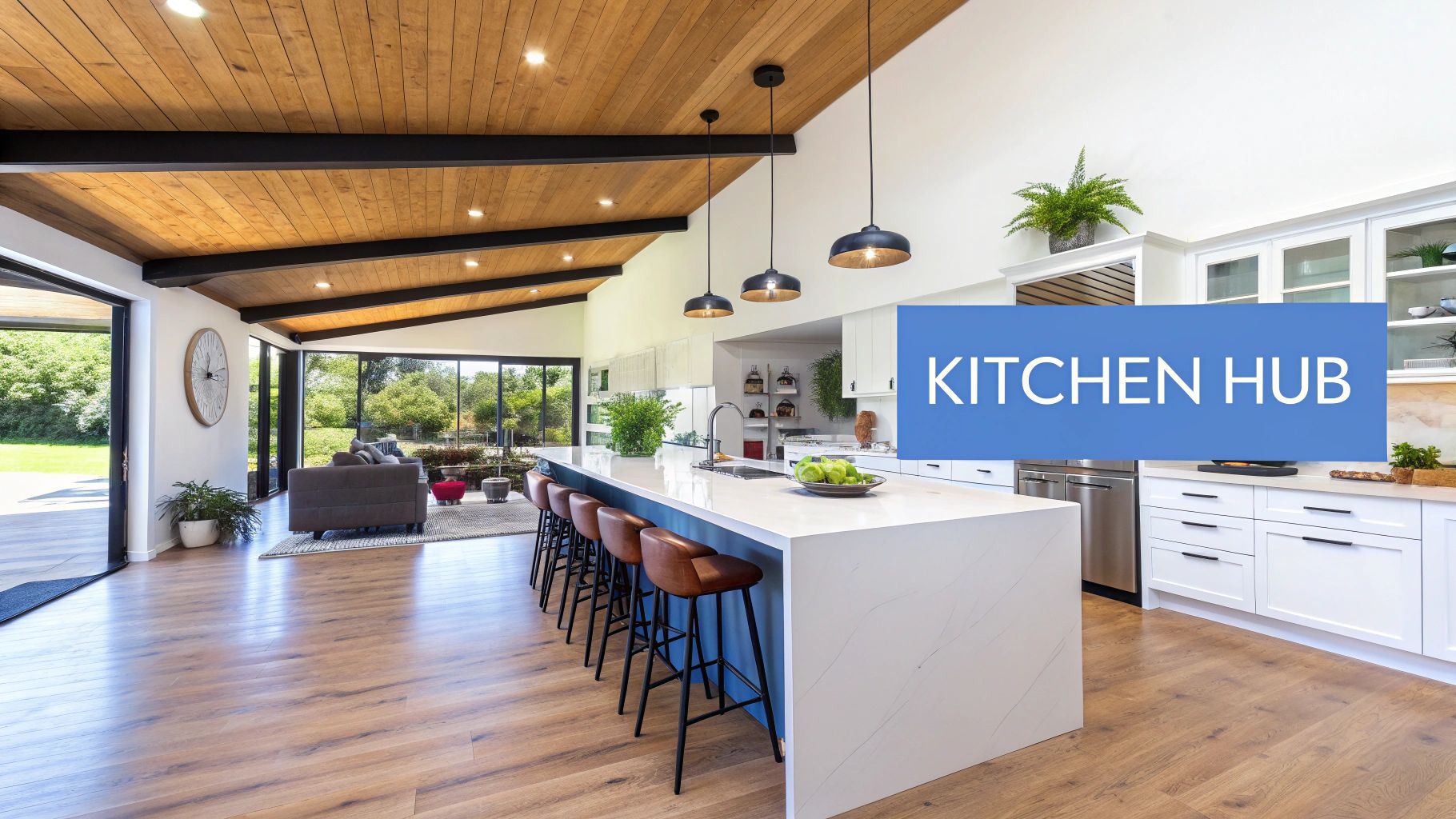
This strategy anchors your open layout, creating a visual and practical divide between the kitchen and living or dining zones without closing them off. It promotes a seamless flow and encourages interaction, making the kitchen the true command center of daily life. This concept is a hallmark of modern design, and for good reason—it’s both beautiful and incredibly practical for everyday living.
Actionable Tips for Creating a Central Hub:
Ensure Proper Clearance: Maintain at least 36 to 48 inches of clear space around all sides of the island to allow for comfortable traffic flow and for appliance doors (like the dishwasher or oven) to open fully.
Incorporate Seating: Designate at least one side for counter-height seating to create a casual dining spot and encourage family and guests to congregate while you cook.
Balance Storage: Combine closed cabinets for clutter-free storage with open shelving to display cookbooks or decorative items, adding personality and visual interest.
Key Takeaway: The island's design should be a cohesive part of your overall aesthetic. By letting you pick your own countertops, cabinets, and finishes, we ensure your island isn't just functional; it's a personalized statement piece that perfectly reflects your style.
To fully integrate your kitchen island into the open space, explore fresh kitchen island lighting ideas that blend style and function. For even more inspiration, discover 10 fresh kitchen island design ideas for 2025 to find the perfect fit for your home.
4. Ceiling Treatments and Height Variation
Look up! Your ceiling is one of the most underutilized surfaces and a secret weapon in your arsenal of open floor plan design ideas. Instead of relying solely on floor-level cues, you can use varied ceiling heights, exposed beams, or other architectural details to create distinct zones from above. This three-dimensional approach adds a layer of architectural sophistication that feels both intentional and high-end.
This strategy works because it manipulates volume and light to define spaces without adding a single physical barrier. For example, a lower, more intimate ceiling with a beautiful tray detail can create a cozy dining nook, while a soaring vaulted ceiling can make the main living area feel grand and expansive. It’s a technique that adds character and clearly separates functions while maintaining an open, connected feel.
Actionable Tips for Using Ceilings:
Vary the Heights: Create intimacy by dropping the ceiling to 8-9 feet in cozy zones like a reading nook, while keeping the main living areas at a more expansive 10-12 feet.
Add Architectural Beams: Install faux wood or painted beams to visually frame your kitchen or living area. This draws a clear boundary in the air without sacrificing floor space.
Use Paint Strategically: Paint a section of the ceiling a darker, complementary color—like in a tray ceiling—to visually lower it and create a cozier, more defined zone for dining or conversation.
Key Takeaway: Combining a ceiling treatment with dedicated lighting is crucial. For instance, a dropped ceiling over a kitchen island should be paired with pendant lights to anchor the zone and enhance its function, making the division feel purposeful.
This is an advanced technique that adds significant character. If you're exploring new construction in areas like White Marsh or Harford County, ask about options for varied ceiling heights or beam installations. It's an upgrade that delivers a major design impact.
5. Strategic Lighting Design and Layers
Lighting is one of the most underrated yet transformative open floor plan design ideas. Instead of relying on a single overhead fixture to illuminate your entire space, a strategic, layered approach uses different types of light to define zones, create ambiance, and add architectural interest. It's the secret weapon designers use to make a large room feel both cohesive and sectioned into intimate, functional areas.
This technique is so effective because it works on a subconscious level, guiding the eye and setting the mood for each part of your open floor. A practical example is using bright, focused pendant lights over a kitchen island to signal a workspace, while placing warm, soft table lamps in the living area to invite relaxation. This is a core part of modern design, sculpting the space after the sun goes down.
Actionable Tips for Creating Zones:
Layer Your Lights: Combine ambient (general overhead), task (focused, like under-cabinet lights), and accent (highlighting art or architectural features) lighting to build depth.
Install Dimmer Switches: Dimmers are non-negotiable in an open floor plan. They give you complete control to adjust the brightness and mood for any occasion, from a bright family game night to a dim, cozy movie marathon.
Use Pendants as Dividers: Hang a row of stylish pendant lights over a kitchen island or dining table. This creates a powerful visual "ceiling" for that zone, clearly separating it from the adjacent living area.
Key Takeaway: Pay close attention to the color temperature (measured in Kelvins) of your bulbs. Using a slightly warmer light (2700K) in relaxation zones and a cooler, more neutral light (3000K-3500K) in work areas like the kitchen can subtly reinforce the function of each space.
Thinking about how lighting will work with your new home in communities around Baltimore County or Prince George's County is a crucial step. When you choose your home's finishes, I can help you visualize how different lighting options will interact with your flooring and countertop selections to create the perfect atmosphere.
6. Material and Flooring Transitions
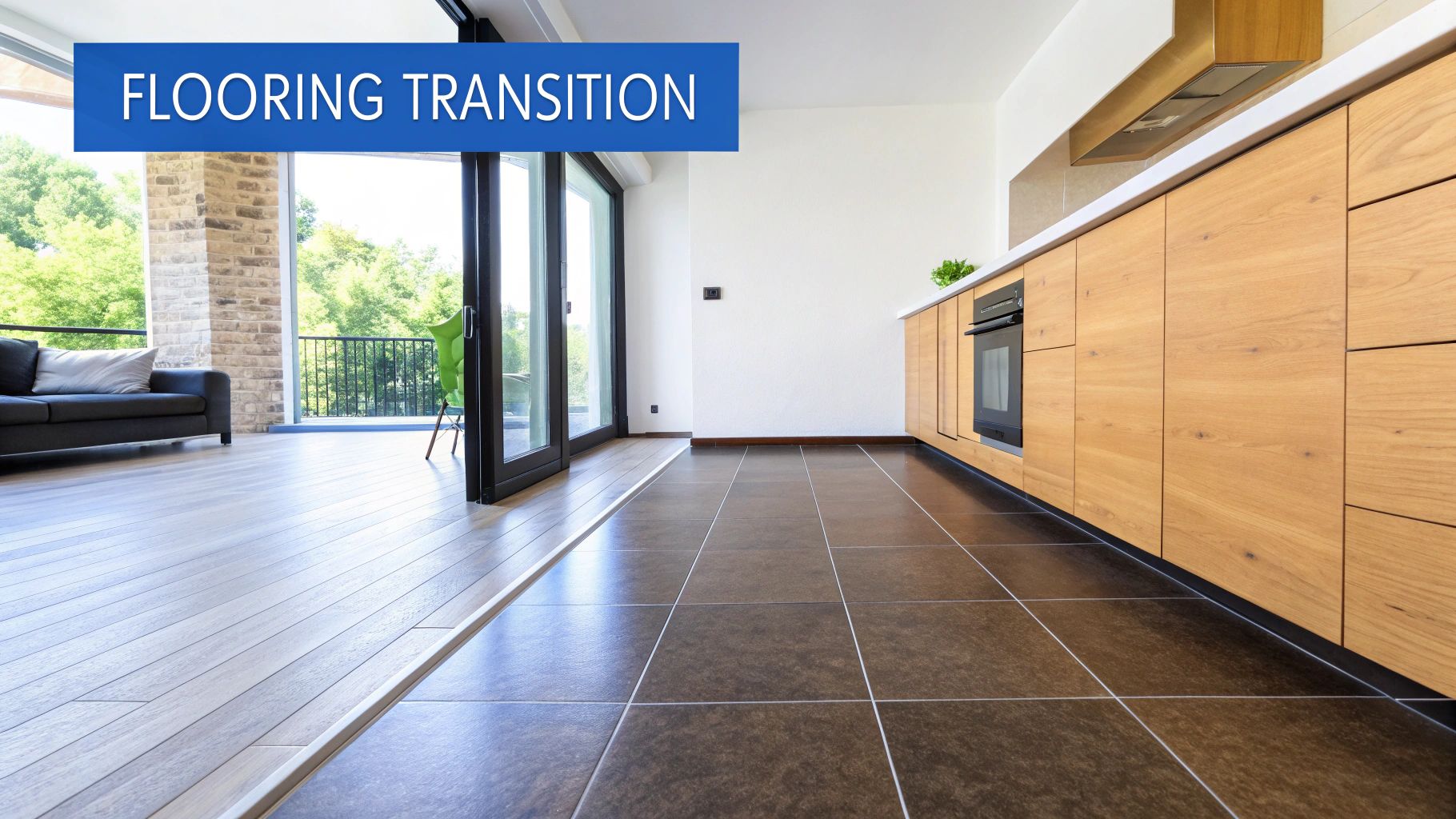
Beyond furniture and rugs, one of the most sophisticated open floor plan design ideas is to use flooring to define your zones. This architectural approach leverages the power of contrasting materials to create clear, built-in distinctions between functional areas. Imagine a seamless flow from warm hardwood in your living area to durable, hexagonal tile in your kitchen; it’s a high-impact strategy that organizes space without a single wall.
This technique is effective because it creates visual and textural shifts that our brains intuitively register as separate "rooms." It adds depth, character, and a personalized feel that’s hard to achieve with furnishings alone. In many new homes, you’ll see durable luxury vinyl plank (LVP) in the main living space transition to a stylish ceramic tile in a mudroom or entryway. The result is a beautifully layered space that feels both cohesive and thoughtfully zoned.
Actionable Tips for Using Flooring Transitions:
Complement, Don't Clash: Select materials with complementary tones. A cool-toned tile next to a warm-toned wood can look jarring, so aim for a harmonious color story.
Create Clean Lines: The transition line itself is a design element. Whether it’s a straight line or an interlocking pattern, ensure it is crisp and intentional.
Plan Ahead: This isn't an easy weekend update. The best time to implement flooring transitions is when you're selecting finishes for a new home, like we offer for our properties in Baltimore County and Harford County.
Key Takeaway: Ensure your transitions are perfectly level to avoid creating a tripping hazard. Professional installation is key to achieving a safe and aesthetically pleasing transition between different materials and thicknesses.
This method provides a permanent and elegant solution for structuring an open concept layout. For more guidance on making the right choices for your space, check out this guide on how to choose flooring for your new home.
7. Sliding Doors and Pocket Doors
What if you could have the best of both worlds? An open, airy space most of the time, with the option for privacy when you need it. This is where clever partitioning enters the scene, and it’s one of the most functional open floor plan design ideas available. Using sliding barn doors, sleek pocket doors, or modern glass dividers allows you to temporarily section off areas like a home office or a messy kitchen without sacrificing the open concept permanently.
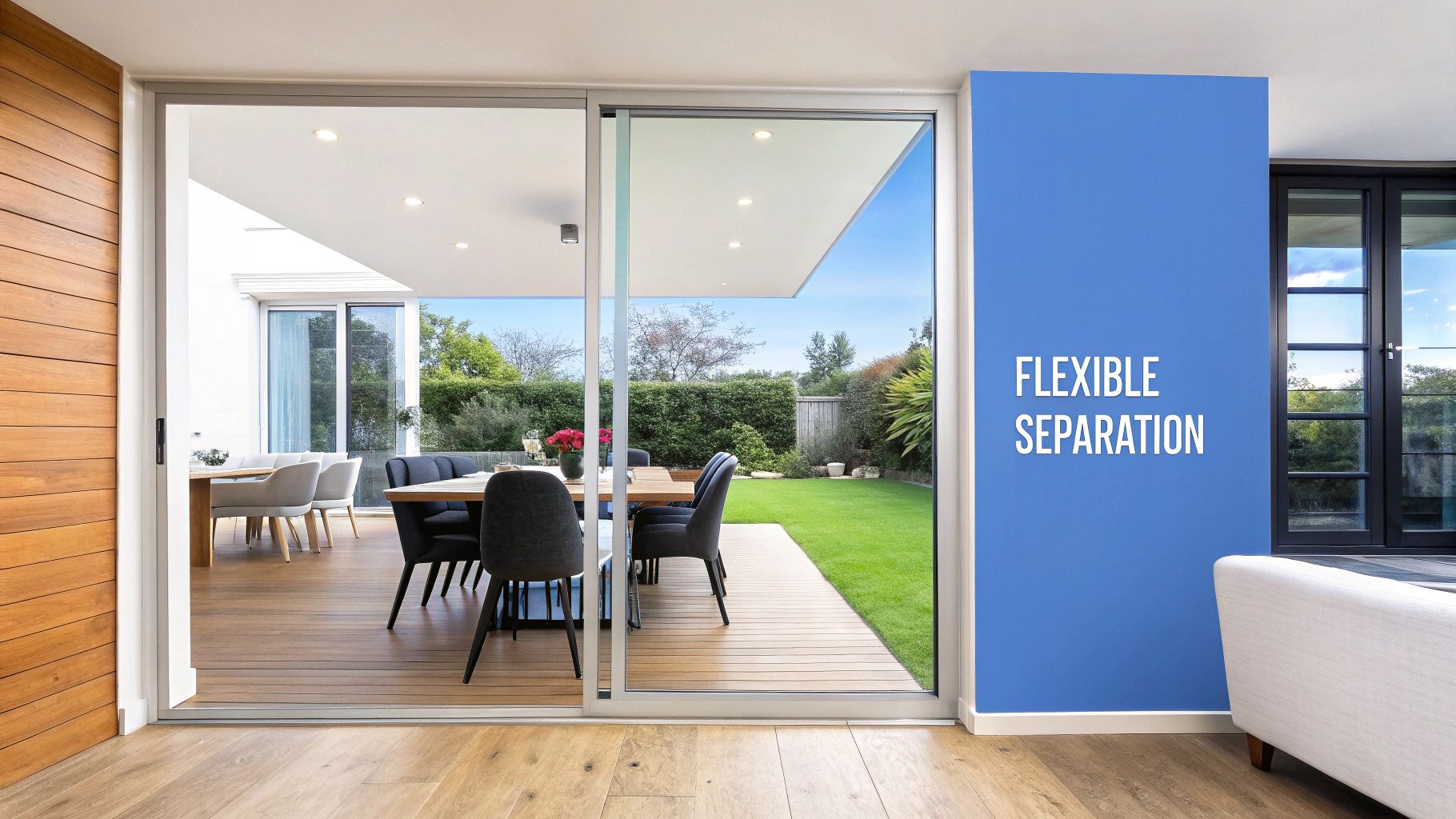
This approach offers unparalleled flexibility. A great practical example is closing off the family room to contain noise during a movie night or hiding kitchen clutter from guests during a dinner party. These doors are as much a style statement as they are a practical solution for everyday life. They save floor space compared to traditional swinging doors and can be a stunning architectural feature in any home, from a contemporary Baltimore County townhome to a cozy Edgewood single-family home.
Actionable Tips for Creating Zones:
Match the Hardware: Choose hardware that complements your home’s aesthetic. A matte black industrial track works for a modern farmhouse look, while a minimalist chrome system fits a contemporary style.
Use Glass to Stay Connected: Frosted or clear glass sliding doors are perfect for home offices, allowing you to maintain a visual connection to the rest of the space while muffling sound.
Plan for Installation: Pocket doors, which disappear into the wall, are best installed during a new build or major renovation, as they require structural framing modifications.
Key Takeaway: The quality of the sliding mechanism is paramount. Investing in high-quality hardware ensures your doors operate smoothly and quietly for years, making them a joy to use rather than a clunky afterthought.
8. Color Blocking and Accent Walls
Think beyond furniture and tap into the psychological power of color. One of the most creative open floor plan design ideas is using paint to create distinct zones through color blocking and accent walls. This technique allows you to visually separate your living room from your dining area or carve out a home office nook without a single physical barrier.
This strategy is incredibly effective because it defines spaces with mood and atmosphere, all while preserving the expansive feel of an open layout. A practical example would be painting a deep, moody blue behind your entertainment center to designate the media zone, while a soft, warm terracotta can define a cozy dining space. It’s a trick used by designers to add personality and structure, turning plain walls into functional and stylish architectural features.
Actionable Tips for Using Color:
Create a Cohesive Palette: Choose a primary neutral color for the entire space, then select two or three complementary accent colors for your different zones to ensure a harmonious flow.
Define with Bold Shapes: Don’t just paint a single wall. Get creative with large painted arches to frame a dining nook or a wide horizontal stripe to visually anchor a long wall that spans multiple "rooms."
Test in All Lights: Paint large swatches on your walls and observe them throughout the day. A color that looks perfect in the morning sun might feel completely different in the evening lamplight.
Key Takeaway: The goal isn't to make the space feel choppy, but to create distinct "moods." Keep flooring and ceiling colors consistent to ground the look, allowing your colorful zones to feel intentional and artfully curated.
This approach is perfect for adding a high-impact, personalized feel on a budget. If you're ready to explore palettes, dive into this guide on how to choose paint colors to find the perfect shades for your home.
9. Open Shelving and Display
Think beyond solid walls and bulky furniture; one of the most stylish open floor plan design ideas is to use open shelving as a see-through divider. This method uses strategically placed shelving units to create distinct zones while maintaining visual connection and light flow. It’s a clever way to add storage, personality, and structure without sacrificing the open, airy feeling you desire.
This approach is highly effective because it serves dual purposes: it organizes your space and showcases your style. For example, a tall, open-backed bookshelf can separate a living area from a home office nook, providing functional display areas for books, plants, and art. Unlike a solid wall, open shelving provides separation while allowing sightlines to extend through the space, making the entire area feel larger and more connected.
Actionable Tips for Using Shelving as Dividers:
Style with Intention: Mix books, decorative objects, and greenery. Keep about 30% of the shelf space empty to avoid a cluttered look and give your curated items room to breathe.
Draw the Eye Upward: Use tall, vertical shelving units to create a sense of height and draw attention to your ceiling, making the room feel more expansive.
Maintain a Cohesive Palette: Group items with a consistent color story to create a polished, designer-approved look that feels intentional rather than random. To truly make your open shelving and displays shine, master the art of knowing how to decorate shelves in any room.
Key Takeaway: Choose a shelving unit that matches your overall aesthetic, whether it’s a sleek metal frame for an industrial vibe or warm wood for a modern farmhouse feel. The style of the unit itself is just as important as the items you place on it.
Using open shelving is a fantastic, non-permanent way to add architectural interest and organization to any open layout.
10. Embrace Architectural Columns and Pilasters
While the goal of an open floor plan is to remove walls, adding architectural elements like columns or pilasters can paradoxically make the space feel even more grand and intentional. This is one of the most elegant open floor plan design ideas for adding structure and visual interest without sacrificing that coveted sense of spaciousness. These features create a psychological separation between zones, such as a dining area and a living room.
This approach introduces a touch of classical or contemporary drama, turning simple transitions into stunning focal points. Instead of a wide, undefined expanse, columns can frame a beautiful view, an art piece, or the entry to another functional area. It’s a technique seen in high-quality homes that masterfully balances openness with sophisticated, deliberate design, adding a layer of architectural character that makes a home feel special.
Actionable Tips for Architectural Elements:
Frame the View: Use a pair of columns or an archway to frame the entrance to your great room or to highlight a large window, drawing the eye and creating a sense of arrival.
Match Your Style: Ensure the style of your columns, whether sleek and modern or ornate and classical, aligns perfectly with your home's overall aesthetic.
Define with Pilasters: For a more subtle effect where a full column might feel too intrusive, use pilasters. These are decorative, rectangular columns that project slightly from a wall, providing a hint of separation without taking up floor space.
Key Takeaway: The proportion of your columns or archways is critical. They should feel like a natural part of the home's structure, not an afterthought. Consider ceiling height and the overall scale of the room to ensure they enhance, rather than overwhelm, the space.
Adding these thoughtful architectural details is a fantastic way to elevate your new home. When you’re selecting finishes for your space, think about how elements like these can work with your choices in flooring and lighting to create a cohesive, high-end look.
Open Floor Plan Design Ideas — 10-Point Comparison
Approach | 🔄 Implementation complexity | ⚡ Resource & cost | 📊 Expected outcomes (quality) | ⭐ Ideal use cases | 💡 Key advantages / Quick tip |
|---|---|---|---|---|---|
Zoning with Furniture and Area Rugs | Low — simple layout changes, highly reconfigurable | Low — furniture & rugs; minimal labor | ⭐⭐⭐ — clear visual zones; preserves openness; limited acoustic separation | Open-plan apartments, renters, budget remodels | Flexible and cost‑effective; use large rugs (8x10+) and floating furniture to anchor zones |
Half-Wall and Partial Dividers | Medium — carpentry, possible permits | Medium — materials, labor; shelving adds value | ⭐⭐ — subtle separation and improved acoustics vs. furniture; maintains light | Kitchens/dining transitions, homes wanting storage + division | Dual-purpose storage/dividers work well; keep below eye level and check structural needs |
Kitchen Island as Central Hub | Medium–High — plumbing/electrical and layout planning | High — cabinetry, appliances, installation, significant footprint | ⭐⭐⭐⭐ — strong gathering point, improved workflow and storage; can define space | Spacious kitchens, family/entertaining homes, open-plan layouts | Ensure 36–48" clearance; include seating and varied storage; coordinate utilities early |
Ceiling Treatments & Height Variation | High — structural/architectural work, pro installation | High — finish materials, labor, possible structural modification | ⭐⭐⭐ — powerful, permanent zone definition and architectural interest | High-end renovations, homes seeking sophistication and clear spatial hierarchy | Use soffits/trays with strategic lighting; avoid overly low ceilings in occupied zones |
Strategic Lighting Design & Layers | Medium — electrical work and control planning | Medium — fixtures, dimmers, smart controls; may need pro design | ⭐⭐⭐⭐ — flexible atmospheres; defines zones without walls; energy-efficient | Multifunctional spaces, smart homes, mood-driven interiors | Layer ambient/task/accent lighting; install zoned dimmers and plan during layout stage |
Material & Flooring Transitions | Medium — coordinated trades, sequencing in renovation | Medium–High — flooring materials vary in cost | ⭐⭐⭐ — natural visual/functional separation; practical durability differences | Kitchen-to-living transitions, open-plan remodels during construction | Ensure level transitions and complementary tones; plan maintenance needs |
Sliding Doors & Pocket Doors | Medium–High — framing/pocket cavities or track installation | Medium — quality hardware; pocket doors costlier due to framing | ⭐⭐⭐ — provides on-demand privacy; retains or blocks sightlines depending on material | Home offices, occasional-privacy rooms, flexible entertaining spaces | Plan during renovation for pocket systems; use glass panels to preserve light |
Color Blocking & Accent Walls | Low — paint work, easily reversible | Low — paint and supplies; quick implementation | ⭐⭐ — psychological zone separation and personality; less physical division | Renters, quick updates, budget-conscious homeowners | Use cohesive palette and test colors in different light; limit bold walls to avoid fatigue |
Open Shelving and Display | Low–Medium — shelving install and styling time | Low — shelving materials; ongoing styling/maintenance | ⭐⭐ — subtle zone definition and display opportunity; no soundproofing | Decorative separation in living/dining, design-forward interiors | Style with mix of objects, keep ~30% empty space, and maintain regular tidiness |
Architectural Columns & Pilasters | High — design, possible structural work, professional involvement | High — construction and possible reinforcement costs | ⭐⭐⭐ — formal architectural definition; timeless if proportioned correctly | Luxury homes, historic restorations, spaces needing structural delineation | Ensure structural justification; match proportions to ceiling height and overall style |
Ready to Bring Your Vision to Life?
We’ve explored a fantastic range of open floor plan design ideas, from the foundational magic of zoning with area rugs to the architectural elegance of columns and half-walls. You've seen how a well-placed kitchen island can become the heart of your home and how strategic lighting can completely transform the mood of a multifunctional space. These aren't just abstract concepts; they are practical, actionable tools you can use to craft a home that feels both expansive and inviting.
The real power lies in combining these elements. Imagine using a large, plush area rug to define your living room, while a subtle shift in flooring material signals the transition to your kitchen. Picture how color-blocking an accent wall could visually separate your dining area, complemented by a statement pendant light hanging directly above the table. It's this thoughtful layering of design strategies that elevates a simple open layout into a sophisticated, highly functional living environment.
The Most Important Takeaways
Mastering your open concept design is less about following rigid rules and more about understanding how to create cohesion and definition without walls. Remember these key principles:
Create Zones, Not Rooms: Use furniture, rugs, and lighting to build distinct functional areas. This maintains the airy feel while ensuring every square foot has a purpose.
Guide the Eye: Employ visual cues like ceiling treatments, partial dividers, or accent walls to gently guide movement and create focal points. This prevents the space from feeling like one giant, undefined room.
Embrace Cohesive Variety: Your material and color palettes should feel connected, but that doesn't mean everything must match. Using consistent undertones while varying textures and shades adds depth and interest.
Your Actionable Next Steps
The journey from inspiration to implementation is the most exciting part. The beauty of buying a new home in vibrant Maryland communities like White Marsh or Edgewood is the incredible opportunity to make these design decisions from the very beginning. You get to be the creative director, selecting the flooring, countertops, cabinets, and lighting that will bring your perfect open floor plan to life.
My hands-on service, paired with unique customization tools and advanced visualizers, puts the power of choice in your hands. You can experiment with these very open floor plan design ideas and see your dream space take shape before construction even begins. This process ensures the final result is a home that’s not just beautifully open, but perfectly you.
Ready to move from dreaming to doing? At Customize Your Home, we provide the tools and expert guidance to help you select the finishes that will define your new open-concept home in Baltimore, Harford, or Prince George's County. Explore our visualizer and see how different combinations of flooring, cabinets, and countertops can bring your vision to life. Visit us today to start your personalization journey: Customize Your Home.
Comments