

What Is a Bonus Room and How Can You Use It?

Ever looked at a home’s floor plan and scratched your head at the term “bonus room”? You're not alone. Let’s break it down: a bonus room is your home's ultimate wild card. It's a finished, livable space that doesn't quite check all the boxes to be officially called a bedroom, usually because it's missing a closet or a specific type of window.
Think of it as a fantastic blank canvas, often tucked away over the garage or in a converted attic, just waiting for you to give it a purpose.
What to Do With All That Extra Space
A bonus room is really just extra square footage that can bend and shape to whatever your family needs at the moment. It’s the very definition of a “flex space”—designed for living, not just for stashing boxes.
Because it doesn't have to meet the super-strict building code requirements for a bedroom (like having a closet or a certain size of egress window), what you do with it is completely up to your imagination.
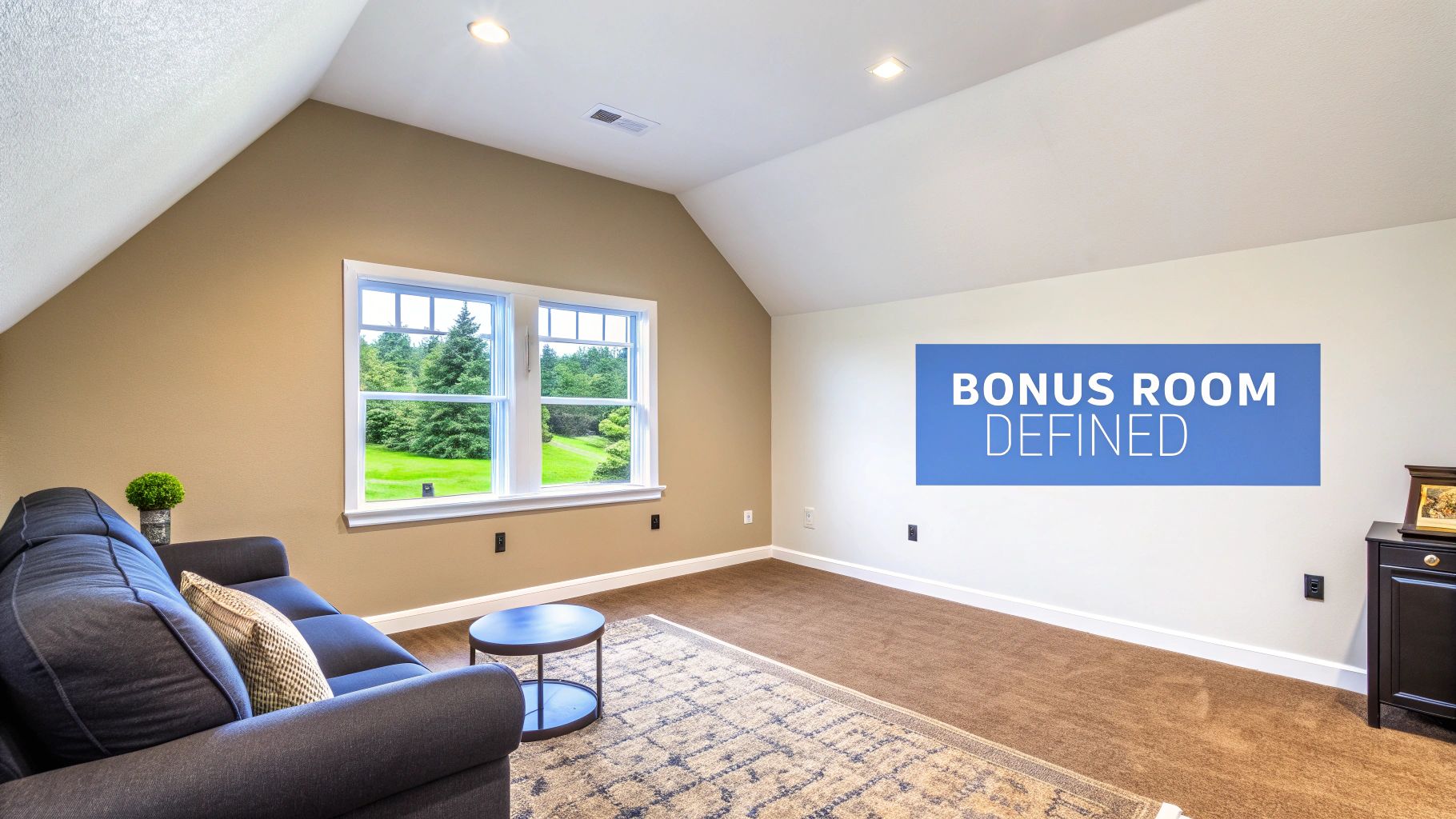
This idea isn't exactly new. The term started popping up around 1991 as a smart way to give families more versatile living areas without the rigid rules of a traditional room. It’s truly ‘bonus’ square footage that can easily become a home office, a kids' playroom, or a media center, which is why it's such a hot feature in many homes today.
What Makes It Different from a Bedroom?
So, what really separates a bonus room from a bedroom? It all comes down to a few key technicalities. A bedroom has a clear, legally defined identity, while a bonus room's identity is shaped by what you decide to do with it.
Here’s a quick comparison to see the main differences at a glance.
Bonus Room vs. Bedroom At a Glance
Characteristic | Bonus Room | Standard Bedroom |
|---|---|---|
Closet | Typically does not have one | Required by most building codes |
Egress Window | May or may not have one | Required for safety |
Ceiling Height | Can have sloped or lower ceilings | Must meet minimum height requirements |
Official Use | Flexible (office, gym, den, playroom) | Primarily for sleeping |
Appraisal Value | Adds value as finished square footage | Adds value specifically as a bedroom |
Understanding these distinctions is a huge help when you're looking at a home's layout. If you’re just getting into home design, our guide on what a floor plan is and how it guides home design can show you how these different rooms are drawn up.
For anyone buying a new home in Maryland communities like White Marsh or Edgewood, a bonus room is a golden opportunity to put your stamp on the house right from the start. I go a step further than just showing you an empty space; I help you envision a future home gym, a craft room, or a cozy family den. Using my hands-on service and unique proprietary visualization tools, we can play with different flooring, countertops, cabinets, and tile to bring that dream space to life.
Imagining the Possibilities for Your Flex Space
Alright, this is where the fun really begins. Think of your bonus room as a blank canvas and you're the artist. This isn't just some glorified storage closet—it's your chance to add a space that truly fits how your family lives and what you love to do. At its core, a bonus room is meant to be one of those functional spaces that make life easier.
So, what could your bonus room become? Let's dive into a few practical examples to get the wheels turning.
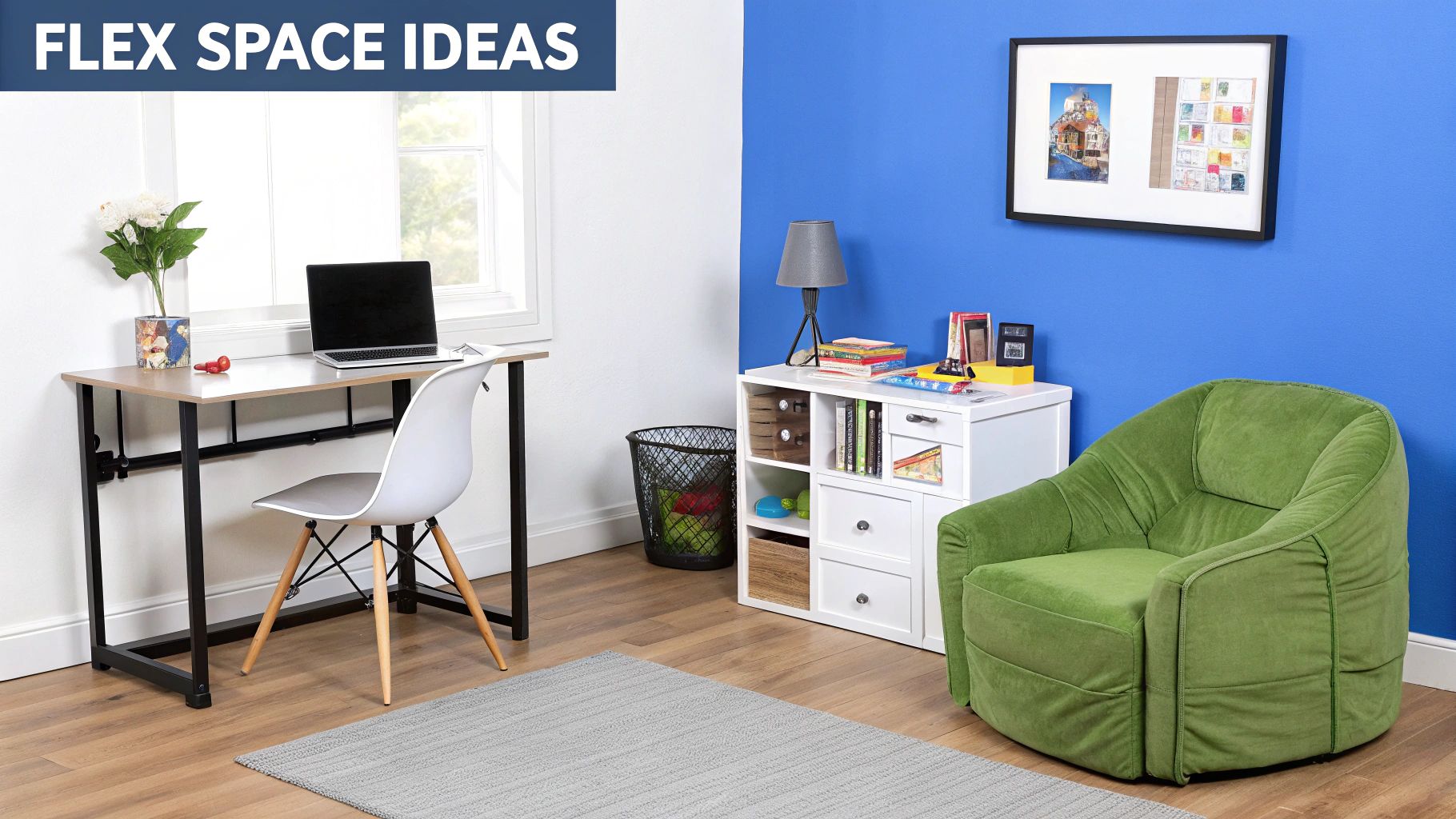
From a Home Theater to a Quiet Reading Nook
The best use for a bonus room is one that either solves a problem or makes a dream come true. Do you desperately need a dedicated spot to work, or are you craving a place for the whole family to kick back and relax together?
Cozy Home Theater: Picture this: plush recliners, a massive screen, and blackout curtains. It’s the perfect hideaway for family movie nights without turning your main living room into a cinema. For example, you could install surround sound speakers in the walls and choose dark, sound-absorbing carpet to complete the experience. If you're heading this direction, check out our guide on home entertainment room design made easy for more pro tips.
Productive Home Office: With so many of us working from home now, having a separate office is a total game-changer. A solid desk, a good ergonomic chair, and great lighting can create a quiet zone that keeps you focused and productive. Consider adding built-in shelves to keep your work organized and out of sight.
Vibrant Playroom: Give your kids a space that’s all theirs! Think bright colors, soft flooring like carpet tiles, and clever storage bins to keep the toy chaos contained. It keeps the clutter out of your living areas and gives them a place to let their imaginations run wild.
Personal Fitness Studio: Why bother with a gym membership? A bonus room is the perfect spot for a home gym. For instance, you could put down durable rubber flooring, hang a few mirrors on one wall, and bring in your favorite equipment—whether that’s a yoga mat, a set of weights, or a stationary bike.
Craft Rooms, Game Lounges, and More
Your flex space can also be fine-tuned for a specific hobby or passion, creating a personal retreat right inside your own home.
A bonus room isn’t just extra square footage; it's possibility. It's the room that adapts to your life, whether you need a space for work, play, or relaxation. This versatility is what makes it one of the most valuable features in a modern home.
Dedicated Craft Room: Are you a painter, sewer, or scrapbooker? Imagine a room with a huge work table, amazing task lighting, and all the shelving you need to keep your supplies organized. For example, a pegboard wall is a practical way to hang tools and keep them within arm's reach.
Ultimate Game Room: This can be a haven for everyone. Set up a big screen for video games, throw in a pool or foosball table, or carve out a cozy corner with a table just for board game nights with family and friends.
Quiet Reading Nook or Library: For all the bookworms out there, you can transform the space with floor-to-ceiling bookshelves and a ridiculously comfy armchair. Add a soft rug and a stylish floor lamp to create the perfect escape to curl up with a good book.
Luxurious Walk-In Closet: If you've always dreamed of having more closet space, a bonus room can become an incredible dressing room with custom shelving, drawers, and beautiful lighting to showcase your wardrobe.
Honestly, these ideas are just a starting point. In communities all over Baltimore County and Harford County, I help my clients see these possibilities not just as daydreams, but as totally achievable projects. Using my proprietary visualization tools, we can play around with different flooring, cabinet styles, and countertop selections to design a bonus room that feels like it was built just for you.
How a Bonus Room Increases Your Home's Value
Let's talk about the bottom line. Beyond giving you a cool new space to enjoy, a bonus room is just a smart money move. That extra finished square footage isn't just for show—it directly pumps up your home's appraisal and resale value.
Think of it this way: when an appraiser walks through your home, they're counting up the usable, finished living space. A well-built bonus room gets added right into that tally, instantly boosting your home's worth on paper. You’re not just tacking on a room; you're adding functional, desirable square footage that today's buyers are actively searching for.
The Financial Impact of a Flex Space
In a crowded real estate market, a bonus room can be your secret weapon. It gives your home a serious edge over other listings that don't have that extra, adaptable area. That advantage often means your home spends a lot less time on the market.
It's not just about selling faster, either. A well-designed bonus room is one of the most reliable home upgrades that increase value, making your property much more attractive when it's time to sell.
The numbers don't lie. Across the U.S., a bonus room can tack on anywhere from $10,000 to $30,000 to a home's value. Here in Maryland, in communities like White Marsh and Edgewood where home prices often hover around $400,000, that’s a significant return. It's no surprise that homes with these versatile spaces can sell 20-30% faster—buyers are hungry for that multi-use potential. For a deeper dive, check out the insights on the financial returns of a bonus room on remodelworks.com.
Why Buyers Love Bonus Rooms
A bonus room makes your home appeal to a much wider audience because everyone sees something different. That broad appeal is a massive asset when you decide to sell.
Just think about who might walk through your door:
Growing Families: They immediately see a perfect playroom or a quiet spot for homework.
Remote Professionals: It's a dedicated home office, away from the chaos of the main living area.
Fitness Buffs: They're already picturing their home gym, saving them a commute and membership fees.
Creatives and Hobbyists: It’s an art studio, a music room, or the library they've always dreamed of.
A bonus room is more than just square footage; it’s a promise of possibility. It allows potential buyers to instantly picture how the home will adapt to their specific needs, making it feel like their own before they even make an offer.
For my clients in Baltimore County and Harford County, I don't just show them a house with an extra room. I offer proprietary visualization tools that bring that empty space to life. We can play around with different flooring, countertops, and cabinet selections, so you can design your bonus room to be the perfect space for your family from day one.
Where Do You Usually Find a Bonus Room?
So, where are these versatile extra spaces typically located? While a bonus room could theoretically be anywhere, a few go-to spots have become the standard for good reason. Knowing the usual suspects can help you spot the potential in a floor plan.
The hands-down favorite location is the space directly above the garage. It's a brilliant way to add a ton of square footage without expanding the home's actual foundation, which helps keep costs down. This spot is also perfect for things that generate a bit of noise—think home gyms, a dedicated kids' playroom, or even a teenager's band practice. It keeps the racket contained and away from the main living areas.
Beyond the Garage
While the space over the garage is king, it's far from the only game in town. You'll find bonus rooms tucked into all sorts of clever nooks.
Converted Attics: An attic with enough headroom is basically a bonus room waiting to happen. Once it's properly insulated, drywalled, and floored, it transforms into a cozy, secluded getaway. It's an ideal spot for a quiet home office or a peaceful reading nook.
Second-Floor Lofts: You'll often see open loft areas at the top of the stairs that are practically begging to be used as a flexible space. These are fantastic for a second, more casual family room, a hangout for teens, or a homework zone that still feels connected to the rest of the house.
Finished Basements: A finished basement often pulls double duty as a massive bonus room, offering a wide-open canvas for entertainment. If you're thinking about finishing a lower level, you'll want to check out these top basement finishing design ideas to really make the most of it.
How Location Dictates Use
Where your bonus room is located naturally nudges it toward certain functions. A loft space just off the bedrooms is a natural fit for a nursery or a quiet sitting area. That room over the garage, on the other hand, offers the privacy and sound separation you need for a booming home theater.
A little history: The bonus room concept really took off in the U.S. back in the early 1990s as a solution to the noise that came with popular open-plan living. Today, around 60% of them are found over garages, in attics, or in basements to make the most of the structure. In a hot market like Maryland, adding a 300-square-foot bonus room can boost a new home's livable area by 10%. You can learn more about the evolution of bonus rooms on wikipedia.org.
No matter where your bonus room is, getting the comfort right is key. This means proper insulation and, ideally, its own HVAC zone to keep it comfortable all year. When I'm working with my clients in White Marsh and Harford County, we always spend time on details like flooring and window placement because they have a huge impact on how the room feels and functions. Using my visualization tools, we can play with different options and see exactly how to create a space that's not just beautiful, but perfectly suited to your life.
Key Design Tips for Your Dream Space
So, you've got this great idea for a bonus room. Awesome! But before you get lost in paint swatches and furniture catalogs, let's talk about the practical details. Getting the foundational stuff right is what separates a so-so space from the room everyone fights over.
Thinking through these practical details now saves a ton of headaches later. After all, a cozy media room isn't so cozy if it’s freezing in the winter, and a craft room isn't very inspiring if you're always searching for an outlet.
Lighting and Electrical Needs
Let’s start with light and power, because how you use the room completely changes what you'll need. A home office, for instance, needs bright, clear task lighting so you’re not squinting at your screen all day. A home theater, on the other hand, is all about creating that cinematic mood with dimmable, ambient light.
Think carefully about where you'll need outlets. It sounds simple, but it’s a game-changer.
Home Gym: You'll want outlets strategically placed for your treadmill, elliptical, and a TV to watch while you sweat.
Home Office: Plan for a power strip's worth of outlets near your desk for the computer, monitors, printer, and phone chargers. You can never have too many.
Craft Room: What about power for a sewing machine, a hot glue gun, or specialized lighting right over your workspace?
This is where the room's location really comes into play.
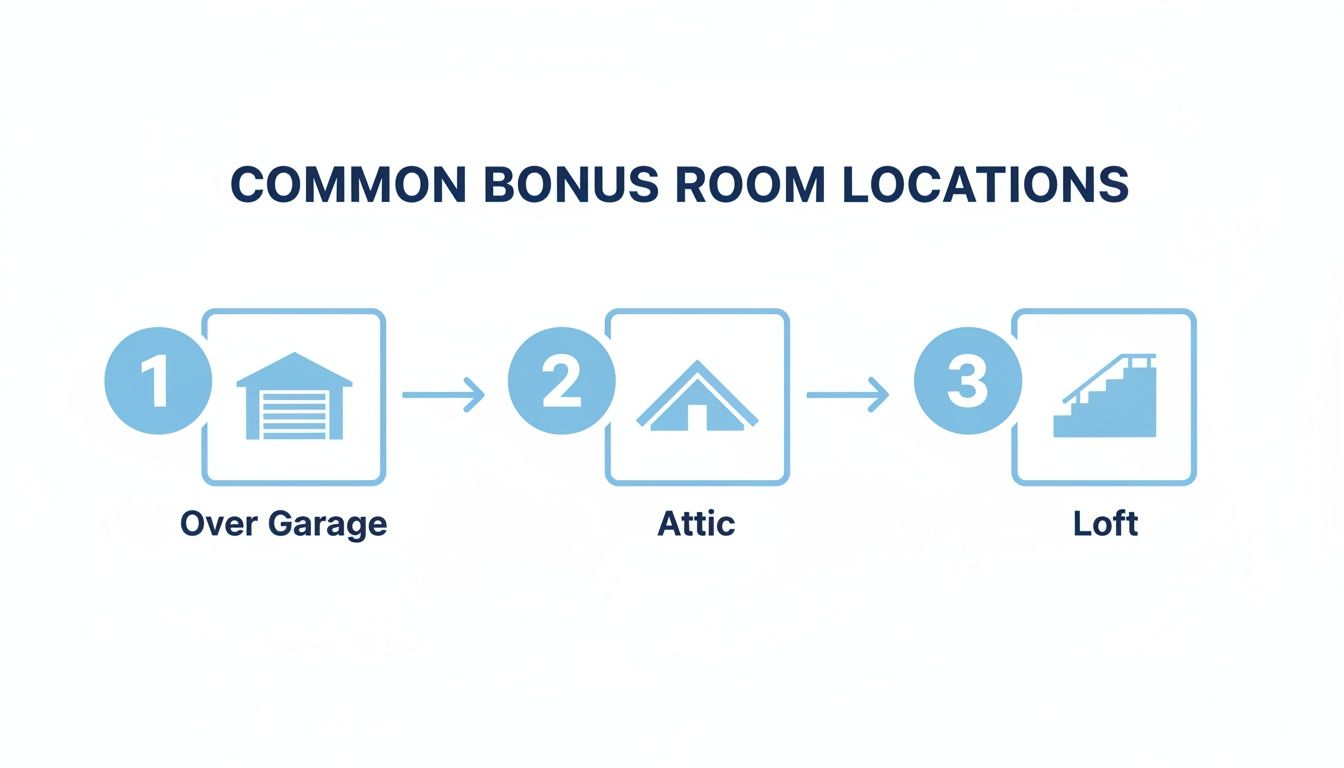
As you can see, tucking a bonus room over the garage or in the attic is a popular move, but these spots often come with their own unique lighting and wiring puzzles to solve.
Climate Control and Soundproofing
Next up: comfort. Let's be honest, bonus rooms—especially those over a garage—can be notorious for wild temperature swings. To avoid a space that’s an oven in July and an icebox in January, you have to nail the insulation and make sure your HVAC system can handle the extra load.
Sound is another big one. If your dream is a killer home theater or a space for band practice, good soundproofing is non-negotiable. It keeps the sound in and the rest of the house peaceful. The same goes for a home office; you need to block out household noise to stay focused. For a deep dive, you can learn more about how to soundproof a room for total peace and quiet right here on our blog.
Planning the unseen elements—like wiring, insulation, and sound control—is just as important as choosing the paint color. Getting these right from the start saves headaches and creates a space you'll truly love to live in.
When you're choosing a new home in a community like White Marsh or Edgewood, we can plan for all of this from day one. I give my clients access to some really cool visualization tools that let you play with different flooring, countertops, cabinets, and other finishes. It's all part of my hands-on approach to designing a bonus room that’s perfect for your family, right from the blueprint.
Bring Your Vision to Life with a Personal Touch
Turning an idea into a real, livable space is where all the fun begins. Whether you're in the market for a new home or just daydreaming about your current one, it’s the small details that make a room feel like it was made just for you.
It's one thing to picture a cozy home office, but it's a whole other ballgame to confidently pick out the perfect flooring, cabinets, and countertops that truly nail the vibe you're going for.
My approach is all about taking the guesswork out of these big decisions. While the builder I represent provides high-quality homes, I go a step further—offering my clients unique proprietary visualization tools, hands-on service, and access to visualizers that help you bring your dream space to life. I provide a hands-on experience so you can feel completely sure about your customization choices, especially when it comes to that awesome new bonus room.
See Your Selections in Real-Time
Forget squinting at tiny samples and hoping for the best. With my unique visualization tools, you can see exactly how your choices for flooring, cabinets, and countertops come together in your actual space—before you commit to anything.
This means you get to play designer. You can experiment with different styles and find a combination that just feels right. Go ahead and compare that dark, moody hardwood for a cinematic home theater against a bright, tough vinyl for a kid-proof playroom, all right from your computer.
A home should be a direct reflection of your family’s personality and lifestyle. My goal is to give you the tools and support to make confident design choices, ensuring the final result is a space you’ll love for years to come.
Your Partner in Maryland Home Customization
If you're searching for a new home in fantastic Maryland communities like White Marsh, Edgewood, or anywhere across Baltimore County and Harford County, I can help you find a floor plan with the bonus room you've been dreaming of. From there, we'll walk through every step of making it your own.
Together, we’ll do more than just pick out finishes. We’ll create a space that truly works for your family. Ready to start seeing what your future home could look like? Let’s connect and explore what’s possible.
Answering Your Top Bonus Room Questions
When you start diving into floor plans, a few questions about bonus rooms always seem to surface. Let's clear those up so you can feel confident about designing a space that works perfectly for you and your family.
What’s the Real Difference Between a Bonus Room and a Bedroom?
It all boils down to local building codes. For a room to be legally called a bedroom, it generally needs two things: a closet and a proper egress window (one large enough to escape through in an emergency).
A bonus room doesn't have to check those specific boxes. That's the whole point—it's flexible! It still counts toward your home's total finished square footage, which is great for your property value, but it can't be listed as an official bedroom unless it meets those strict requirements.
Does a Bonus Room Have to Be Over the Garage?
Nope, not at all! That's just a really common and clever way to capture otherwise unused space. Placing it over the garage is a popular, budget-friendly choice, but a bonus room can pop up anywhere you have a pocket of undefined potential.
We often see them as converted attics or as airy lofts overlooking a great room. The defining feature isn't where it is, but what it is: a blank canvas waiting for your ideas.
Can I Put a Bathroom in My Bonus Room?
Yes, you absolutely can, and it’s a brilliant move! Adding a full or half bath, or even a small kitchenette, can completely transform the space. It's what turns a simple bonus room into a private guest suite, a comfortable in-law apartment, or the ultimate entertainment hub.
When you're choosing a new home in a community like White Marsh or Edgewood, we can plan for plumbing and electrical from the very beginning. This makes the whole process smooth and ensures the new features feel like they were always meant to be there. My unique visualization tools can even help you see exactly how it will all look.
Ready to design a home with the perfect bonus room for your family? I provide the hands-on service and proprietary visualization tools to help you create a space that’s truly your own. Let’s start bringing your vision to life today.
Comments