

How to Choose Shower Tile for a Look You'll Love

When you’re picking out shower tile, it’s easy to get swept up in all the beautiful designs. But the real secret to a shower you'll love for years is finding that perfect sweet spot between durability and your personal style.
I always tell my clients to think about the practical stuff first—like what a tile is made of and how much care it needs. Once you have that figured out, you can focus on the fun part: the aesthetics. This way, you know your stunning new shower is built to last.
Start with a Clear Vision for Your Shower
Before you even walk into our design center, take a moment to think about your bathroom and how you actually use it. This goes way beyond just picking a color; it’s about making sure the tile you choose can handle your daily life. A little bit of planning now will save you a ton of headaches and second-guessing later on.
The ultimate goal is to craft a space that feels like your own little getaway, whether you're rushing to get ready for work in White Marsh or unwinding after a long day in your Edgewood home. I work hands-on with my clients, using unique proprietary visualization tools to bring your ideas to life so you can see exactly how it will look before committing.
Key Questions to Ask Yourself
To help narrow down the seemingly endless options, let's start with a few simple questions about your routine and what you envision for the space:
Who is this shower for? A primary suite shower that’s your personal oasis has totally different requirements than a high-traffic family bathroom that has to withstand constant splashes and kids. For example, a sleek marble might be perfect for an adult-only space, but for a busy kid's bathroom, a durable porcelain tile is a much more practical choice.
How much cleaning are you really willing to do? Be honest with yourself. Are you the type who enjoys keeping things sparkling, or do you need something that looks great with minimal effort? Small mosaic tiles look fantastic but have lots of grout lines to clean, whereas large-format tiles mean less scrubbing.
What’s the overall vibe you’re going for? Are you picturing a sleek, modern spa-like retreat, or is a warm, cozy, and traditional bathroom more your speed? A glossy, large-format tile creates a modern feel, while a natural stone-look tile can give you that rustic, cozy vibe.
Your answers are the key to unlocking the right materials. If low maintenance is your number one priority, you'll probably find yourself drawn to porcelain. If it's all about creating a luxurious escape, natural stone might be calling your name.
For an even deeper dive into the nitty-gritty of materials and finishes, check out our comprehensive guide on how to choose shower tile. And if you're just looking for some great visual inspiration to get the ideas flowing, you’ll want to see our post on the 10 best bathroom tile ideas.
Picking the Right Tile Material
The material you choose is really the heart and soul of your shower's design. It dictates not just the look and feel, but also how it holds up over the years. Think of it as the foundation—get this right, and everything else falls into place beautifully.
So, let's dive into the most common options you'll encounter and figure out which one fits your home and lifestyle.
The Heavy Hitters: Ceramic and Porcelain
You really can't go wrong with porcelain. It’s the undisputed champion in the bathroom for a reason. Because it's fired at a higher temperature, it’s incredibly dense and durable. This makes it a fantastic, low-maintenance choice for a busy family bathroom in a place like White Marsh, Maryland, where you need something that can handle daily wear and tear without a fuss.
Ceramic is another go-to, and it's often a bit easier on the wallet. The biggest advantage of ceramic is the sheer variety. You’ll find an endless array of colors, patterns, and sizes, which gives you a ton of creative freedom. For example, you can find ceramic subway tiles in every color of the rainbow to create a fun, personalized shower wall. Just keep in mind that it's slightly less dense than porcelain, so many people prefer it for shower walls rather than the floor.
Expanding Your Options: Natural Stone and Glass
If you're aiming for that high-end, spa-like retreat, natural stone is hard to beat. Materials like marble, travertine, or slate bring an organic, one-of-a-kind beauty to a space. The trade-off? They're porous and need to be sealed regularly to protect them from water and stains. It’s a commitment, but the payoff is stunning.
Glass tiles are your secret weapon for making a shower feel bright and modern. They reflect light beautifully, making small spaces feel bigger. While you probably wouldn't tile an entire shower with them, they make for incredible accent strips or feature walls. For instance, a vertical stripe of iridescent blue glass tiles can mimic a waterfall and become a beautiful focal point.
From my experience, the biggest mistake people make is choosing a tile on looks alone. You have to think about your life five years from now. A beautiful, high-maintenance marble might seem great today, but will you still love sealing it on a Saturday morning? Sometimes, the "set it and forget it" peace of mind you get from porcelain is worth its weight in gold.
To make things a little easier, here’s a quick-glance table comparing these popular choices.
Shower Tile Material At a Glance
Material | Durability | Water Resistance | Maintenance Level | Best For |
|---|---|---|---|---|
Porcelain | Excellent | Excellent (Less than 0.5%) | Low | Floors, walls, high-traffic family showers |
Ceramic | Very Good | Good (Over 0.5%) | Low | Shower walls, decorative accents |
Natural Stone | Good (can scratch) | Poor (without sealing) | High | Luxury showers, feature walls, spa-like designs |
Glass | Good (can chip) | Excellent | Low to Medium | Accent tiles, mosaics, modern designs |
This table gives you a solid starting point. It helps you see the practical trade-offs between that gorgeous look you want and the daily reality of living with it.
The massive popularity of ceramic and porcelain isn't just a coincidence. The global ceramic tiles market was valued at a staggering USD 226.41 billion in 2025, with residential projects leading the charge. Why? Their incredibly low water absorption rates—often under 3% for ceramic and less than 0.5% for porcelain—make them far superior to unsealed natural stone in damp environments. This drastically cuts down the risk of mold and mildew, which is a huge deal in any shower.
This simple flowchart can help you map out your first few decisions.
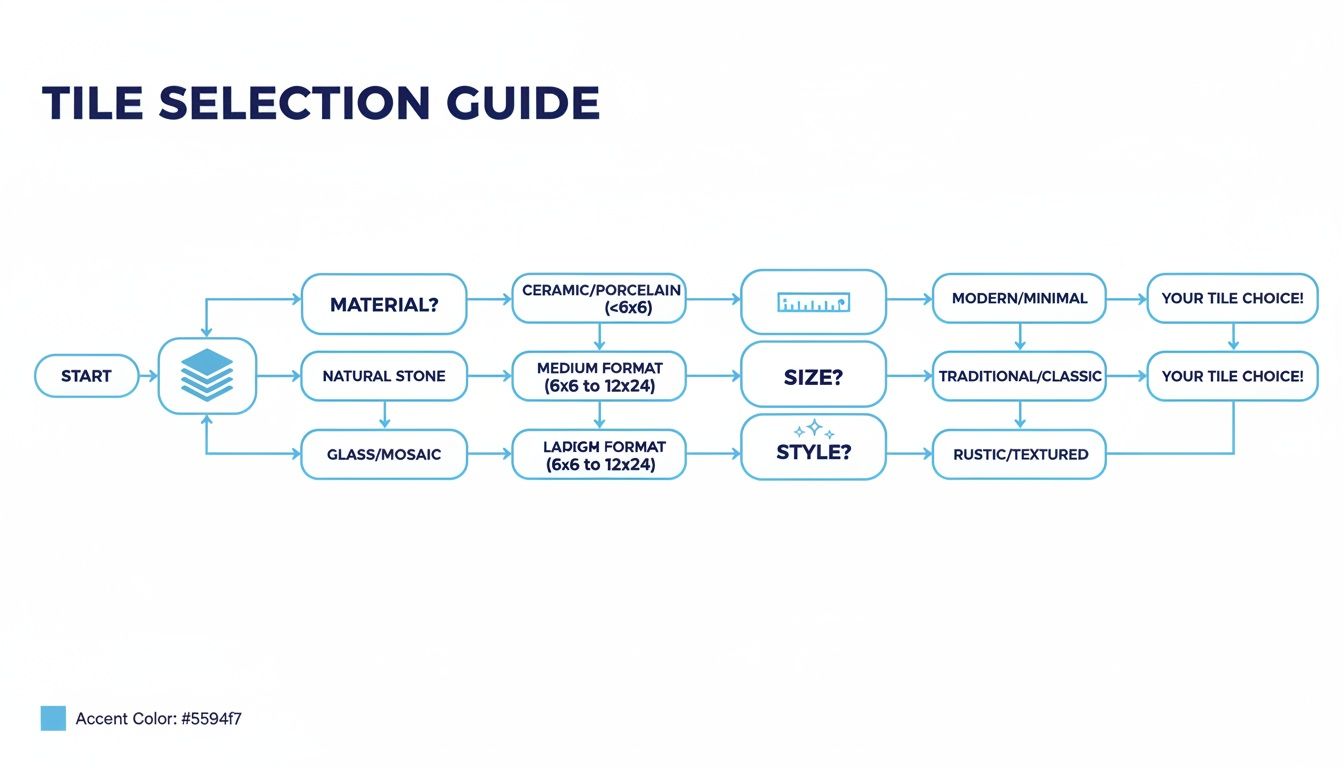
As you can see, the material is the first major fork in the road, influencing everything that comes after. To get a broader view, it's also helpful to understand the best materials for a bathroom renovation's flooring and walls to ensure your whole space works together. And if you're thinking bigger picture, you might want to check out our guide on choosing flooring for your new home for tips on creating a cohesive look throughout.
How Tile Size and Grout Can Make or Break Your Design
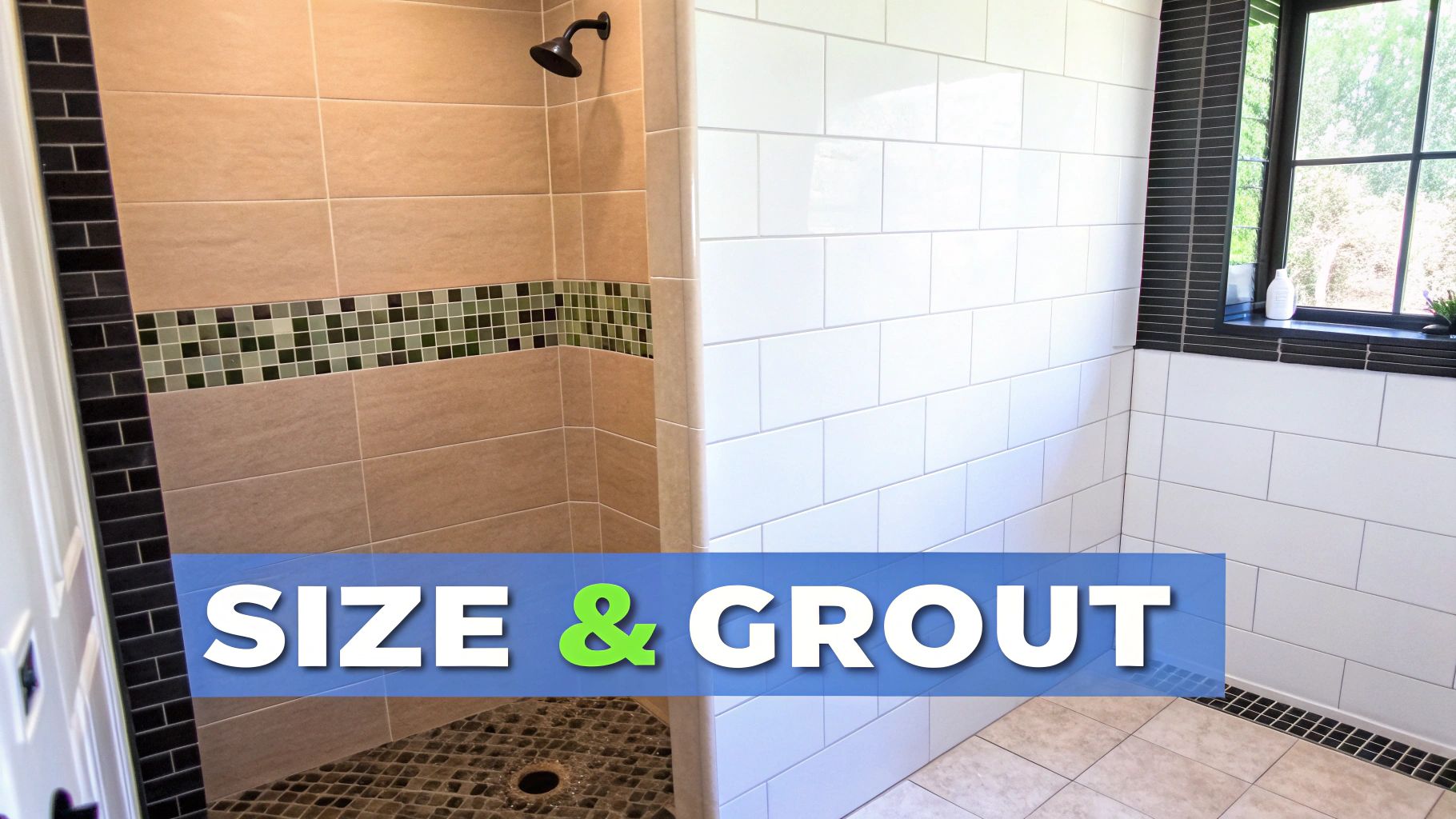
Alright, you've picked out the perfect material for your shower walls. What's next? The size of the tile. This is a detail that clients often underestimate, but it dramatically changes the feel of the shower and, believe me, how much time you'll spend cleaning it.
Lately, so many of my clients in Baltimore County and Harford County have been going for large-format tiles. We’re talking tiles that are 12x24 inches or even bigger. The appeal is obvious: with fewer grout lines, you get this incredibly clean, seamless look that makes the whole shower feel more spacious and modern. It’s a win-win, really—high-end style and less scrubbing.
But don't count out the small guys. Smaller tiles, like a classic 3x6 inch subway or a detailed mosaic, bring a completely different vibe. They introduce texture and pattern, giving your shower a timeless charm that’s hard to replicate. The trade-off, of course, is more grout, which means a little more upkeep to keep it looking pristine.
Let’s Talk About Grout
Grout isn't just the filler between your tiles; it's a design element in its own right. The color you pick can either make the tile pattern disappear into a single, cohesive surface or make every single tile stand out.
Here’s how I break it down for people:
To Blend In: If you use a grout that’s a close color match to your tile—for example, a light gray grout with light gray porcelain tile—you create a very uniform, almost monolithic look. This is a fantastic trick for making a smaller bathroom feel bigger and giving it a calm, spa-like atmosphere.
To Stand Out: Going with a contrasting color—think dark grout with a light tile—is how you get that bold, graphic look. The classic white subway tile with black grout is a perfect example. It highlights the shape of the tile and the pattern you’ve chosen, instantly adding personality.
Ultimately, it just boils down to the style you're going for. A serene retreat often calls for matching grout, while a bathroom with a more vintage or industrial edge really comes alive with that pop of contrast.
Here's a pro-tip I always share: when in doubt, go with a mid-tone gray or beige grout. It’s the perfect compromise. It gives the tiles just enough definition without being jarring, and it’s an absolute champion at hiding dirt—something bright white grout can't do.
Grout Isn’t Just About Color
The type of grout you choose is just as important, especially in a shower. While standard cement-based grout gets the job done, epoxy grout is what I recommend for any wet area. It's a total game-changer.
Because epoxy grout is non-porous, it naturally resists stains, moisture, and mildew without ever needing to be sealed. Yes, it costs a little more upfront, but the peace of mind and low maintenance are worth every penny. It’s the best way to ensure your beautiful new tile stays looking that way for years.
When you’re figuring out how to choose shower tile, never gloss over these details. The relationship between tile size and grout choice truly defines the look and longevity of your shower. For an even deeper dive, check out our guide on how to choose grout color for a flawless tile finish.
Balancing Beauty with Everyday Performance
It’s easy to get swept away by a tile's good looks, but how it holds up day-to-day is what really matters in the long run. This is especially true for the shower floor, where safety simply can't be an afterthought. A stunning shower is great, but a safe one is essential.
You're going to hear a few technical terms thrown around, so let's cut through the jargon. For the floor, the big one is slip resistance. This is officially measured by a tile's DCOF rating, which stands for Dynamic Coefficient of Friction. All that really means is it's a number that tells you how grippy a tile is when wet.
For any area that’s going to see water, especially a shower floor, you need a tile with a DCOF rating of 0.42 or higher. That’s the industry standard for preventing slips and falls. It’s also the reason you see so many smaller tiles or those with a matte, textured finish on shower floors—they offer far more traction than a large, glossy tile ever could.
Why Water Absorption Matters
Besides grip, the next most important performance factor is the tile's water absorption rate. This is where you really start to see the practical differences between materials like porcelain and ceramic. It all comes down to density.
Porcelain is the undisputed champion here. Because it’s fired at such high temperatures, it becomes incredibly dense and has a water absorption rate of less than 0.5%. In a wet environment like a shower, that density is a huge win. It means the tile is highly resistant to water damage, staining, and the dreaded mildew. It's a big reason why we see it perform so well in Maryland homes.
The durability stats tell a compelling story. The global market for ceramic and porcelain is expected to reach USD 845.80 billion by 2034, largely because people want materials that last. Porcelain's super-dense body can handle 50% more impact than standard ceramic and shows 40% less breakage in high-moisture lab tests. If you want maximum safety, a tile with a wet DCOF of 0.6+ can prevent up to 80% of slips. Plus, homes with these kinds of smart bath upgrades often see appraisal values jump by about 7%. You can read the full research on tile market trends.
A tile's finish can make all the difference. A glossy, polished tile might look stunning on the walls, reflecting light and making the space feel bright. But on the floor, that same finish becomes a slipping hazard. Always prioritize a matte or textured finish for the shower floor for peace of mind.
Picking a tile with the right performance specs isn't about giving up on style—it's about making a smart investment. When you balance the look you love with these practical factors, you end up with a shower that's not just beautiful, but also safe and built to last. For more tips on keeping your bathroom protected, check out our other articles on effective moisture control strategies.
Bringing Your Vision to Life
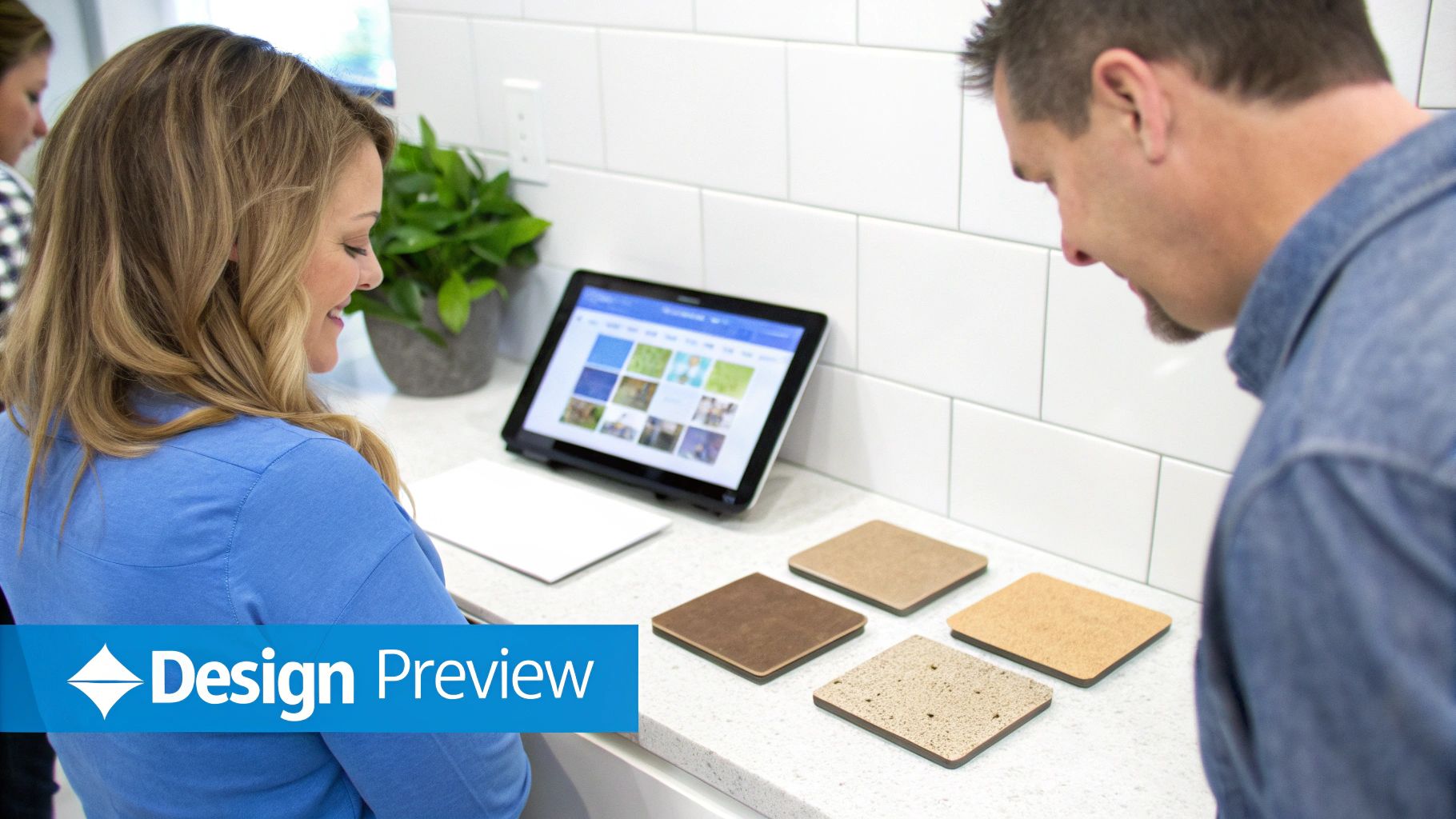
Alright, you’ve waded through the world of materials, sizes, and performance ratings. Now for the fun part—seeing all those ideas finally click together. This is where I go a step further for my clients, and honestly, it’s my favorite stage of any project. My entire goal is to take the guesswork and stress out of making these major design decisions.
We’ve all been there, staring at a tiny sample board, trying to picture how a single 4x4-inch square will translate to an entire shower wall. It’s tough. That’s exactly why I offer my clients unique proprietary visualization tools that help you bring your dream space to life digitally before we ever touch the thin-set.
See Your Selections in Real Time
Instead of just crossing your fingers, we can actually play around with the design. Curious if that bold mosaic accent clashes with the classic subway tile? Wondering if a darker grout will make the pattern pop or just look too busy? We can see it on-screen in seconds.
This hands-on service means you can:
Mix and match different tile combos for your shower walls and floor.
Experiment with patterns, whether it’s a classic herringbone or a modern vertical stack.
Swap out grout colors with a single click to see how it changes the whole vibe.
This process lets you become the designer and feel 100% confident in your choices before the first tile is ever laid. No more hoping for the best—you’ll know you love it because you've already seen it.
My promise to you is a seamless and genuinely enjoyable customization process. It’s not just about getting a high-quality home; it’s about creating a home that reflects you. That’s why I’m personally there to guide you every step of the way.
Creating a Cohesive Bathroom Design
Picking the perfect shower tile is a huge milestone, but it's still just one piece of the puzzle. The real magic happens when your tile works in harmony with everything else. I'll help you pair your shower selections with the perfect vanity, countertops, and even paint colors to create a cohesive and beautifully finished bathroom.
If you’re ready to start designing your dream home in communities like White Marsh, Edgewood, or anywhere in Baltimore County and Harford County, I’d love to chat. Let's create a space that you'll absolutely adore for years to come.
Answering Your Lingering Shower Tile Questions
After we’ve gone through all the big-picture stuff, there are always a few specific questions that come up time and time again in the design center. These are the details that really fine-tune the final look and feel of your shower. Let's walk through the most common ones I hear, so you can feel totally confident in your choices.
What's Genuinely the Best Tile for a Low-Maintenance Shower?
If you want the easiest possible shower to live with, porcelain tile is the undisputed champion. No question. Its surface is incredibly dense and practically waterproof, absorbing less than 0.5% moisture. That built-in resistance means it naturally shrugs off stains, mildew, and bacteria without you having to do much at all.
For the ultimate low-effort setup, my go-to recommendation is always large-format porcelain tiles paired with an epoxy grout. You end up with way fewer grout lines to scrub, and the grout itself is engineered to resist stains and mold. It’s the perfect combination for anyone who’d rather be doing literally anything other than deep-cleaning the bathroom.
Should My Shower Floor Tile Match the Wall Tile?
Not necessarily! In fact, for safety reasons, it’s often better if they don’t. The absolute number one priority for a shower floor is slip resistance. You need a tile with good grip, which usually points you toward smaller tiles (all those extra grout lines add a ton of traction) or a tile with a noticeable matte or textured finish.
Your shower walls, on the other hand, don't have those strict safety demands. This opens up your options to larger, glossier, or polished tiles that are a breeze to wipe down. While you can definitely use the same tile on both the floor and walls—as long as it has a solid slip-resistance rating (a DCOF of 0.42 or higher)—many of my Maryland clients choose to mix it up for both practical and aesthetic reasons. A classic combo is pairing a simple, large-format wall tile with a gorgeous, grippy mosaic on the floor.
Here's my best advice: Think of the floor and walls as two separate choices that need to complement each other. Start by prioritizing safety and texture on the floor. Once that’s locked in, let your creativity run wild on the walls. This approach guarantees a shower that's as safe as it is stunning.
How in the World Do I Pick a Grout Color?
It might seem like a tiny detail, but grout color has a massive impact on the finished look. What you choose really boils down to the kind of vibe you're going for.
To Make It Blend In: If you want the tile itself to be the main event, pick a grout color that’s a close match. This creates a really clean, seamless look that can make a smaller bathroom feel more spacious and calm.
To Make It Pop: Want to show off the cool shape of your tile? Go with a contrasting grout color. The perfect example is that classic black or dark gray grout with white subway tile—it creates an instant graphic pattern that really catches the eye.
The Happy Medium: A mid-tone gray or beige is often the safest bet. It gives just enough contrast to define the tile pattern without being too loud, and it’s a whole lot better at hiding daily grime than a bright white grout ever will be.
Can I Actually Use Natural Stone Like Marble in a Shower?
You absolutely can, and it looks incredible. But—and this is a big but—it comes with a serious commitment to maintenance. Natural stone is porous by nature, so it has to be sealed (usually once a year) to protect it from water damage, stains, and soap scum.
It’s also worth knowing that some stones, especially marble, can be etched by acidic products. This isn't just harsh cleaners; we're talking about some common shampoos and body washes. While the luxurious, high-end look is undeniable, you have to be ready to care for it properly.
For homeowners in Baltimore County or Harford County who love that look but can't stomach the upkeep, the good news is there are some truly amazing porcelain tiles out there that mimic natural stone flawlessly, giving you the best of both worlds.
At Customize Your Home, my clients get to personalize their homes by picking their own flooring, countertops, cabinets, and tile. I go a step further by offering unique visualization tools and hands-on service to help bring your dream space to life. If you're ready to build a home that is truly yours in one of our Maryland communities, I’m here to help you get started. Visit us at Customize Your Home to see what's possible.
Comments