

How to Upgrade Electrical Panel: A Homeowner's Clear Guide

Think of your electrical panel as the heart of your home's entire electrical system. It's the central hub that pumps power out to every single room, light, and appliance. But like any heart, it can get overworked, especially if it's an older model trying to keep up with the demands of modern life. Spotting the warning signs that your panel is struggling is the first step to making sure your home is safe, functional, and ready for whatever you throw at it.
When you upgrade your panel, you're essentially swapping out that old, tired circuit breaker box for a new one with a higher amperage capacity. This isn't a DIY job—it requires a licensed electrician to safely kill the power, install the new panel, and meticulously reconnect all of your home's circuits. The whole point is to safely support your modern electrical needs and put a stop to dangerous overloads. For example, if your home was built before the 1990s, you're likely working with a 100-amp panel. That was plenty for that era, but today? Not so much. Between our high-draw kitchen appliances, countless screens, smart home gadgets, and maybe even an EV charger in the garage, those older panels are often pushed way past their limits.
Signs It’s Time for a Panel Upgrade
You don't need to be an electrician to see the red flags. Your house will give you clues that it needs a helping hand. It's all about being in tune with your home's little quirks and knowing which ones are serious.
Telltale Signs of an Overloaded Panel
Keep an eye (and an ear) out for these common issues. They're your home's way of telling you something's wrong.
Flickering or Dimming Lights: A classic example is when you're running the microwave and the kitchen lights dim for a second. That's a classic symptom of an electrical system that's straining under the load.
Frequently Tripped Breakers: A breaker's job is to trip and prevent an overload—that’s a good thing. But if you find yourself constantly trekking to the basement to reset the breaker for your home office every time the printer starts up, it's a dead giveaway that the circuit, and maybe the whole panel, just can't keep up.
A Buzzing or Crackling Sound: Your electrical panel should be completely silent. If you hear any humming, buzzing, or crackling, that’s a serious red flag. It could point to a bad connection or a failing breaker that needs immediate, professional attention.
Warmth or a Burning Smell: Go put your hand on your panel. It should never feel warm to the touch. If it does, or if you catch a faint whiff of burning plastic, it could mean a dangerous overload is happening right now.
A constantly tripping breaker isn't just an annoyance; it's a critical safety feature doing its job. Ignoring it is like ignoring a smoke detector. It's your home's way of telling you that the electrical demand is exceeding the system's capacity, creating a potential fire hazard.
This is a problem we're seeing more and more as people embrace modern tech. Upgrading an electrical panel is one of the smartest moves you can make, especially for families in Maryland and across the U.S. jumping into electric vehicles and all-electric living.
The good news is that modern homes are built to handle this from the start. In the homes I help my clients build in communities like White Marsh and Edgewood, a powerful 200-amp electrical panel comes standard. We do this because we know you want the freedom to add that gourmet kitchen, a future hot tub, or an EV charger without ever second-guessing if your electrical system can handle it. It's just part of providing a truly hands-on service. For more ways to keep your home running smoothly, check out our guide on creating an ultimate monthly home maintenance list.
Planning Your Panel Upgrade Project
So, you’ve seen the warning signs and know an upgrade is in your future. Don't sweat it. Planning this project is a lot more straightforward than you might think. With the right approach, you can turn what feels like a chore into a smart investment for a more capable, future-ready home.
The first move is always figuring out what size panel your home actually needs. It's like choosing an engine for a car—you need enough power for the daily commute, plus a little extra in reserve for hauling a heavy load. It's all about matching the panel's amperage to your family's real-world electrical demands.
This decision tree can help you connect the dots between common electrical quirks and the need for a beefier system.
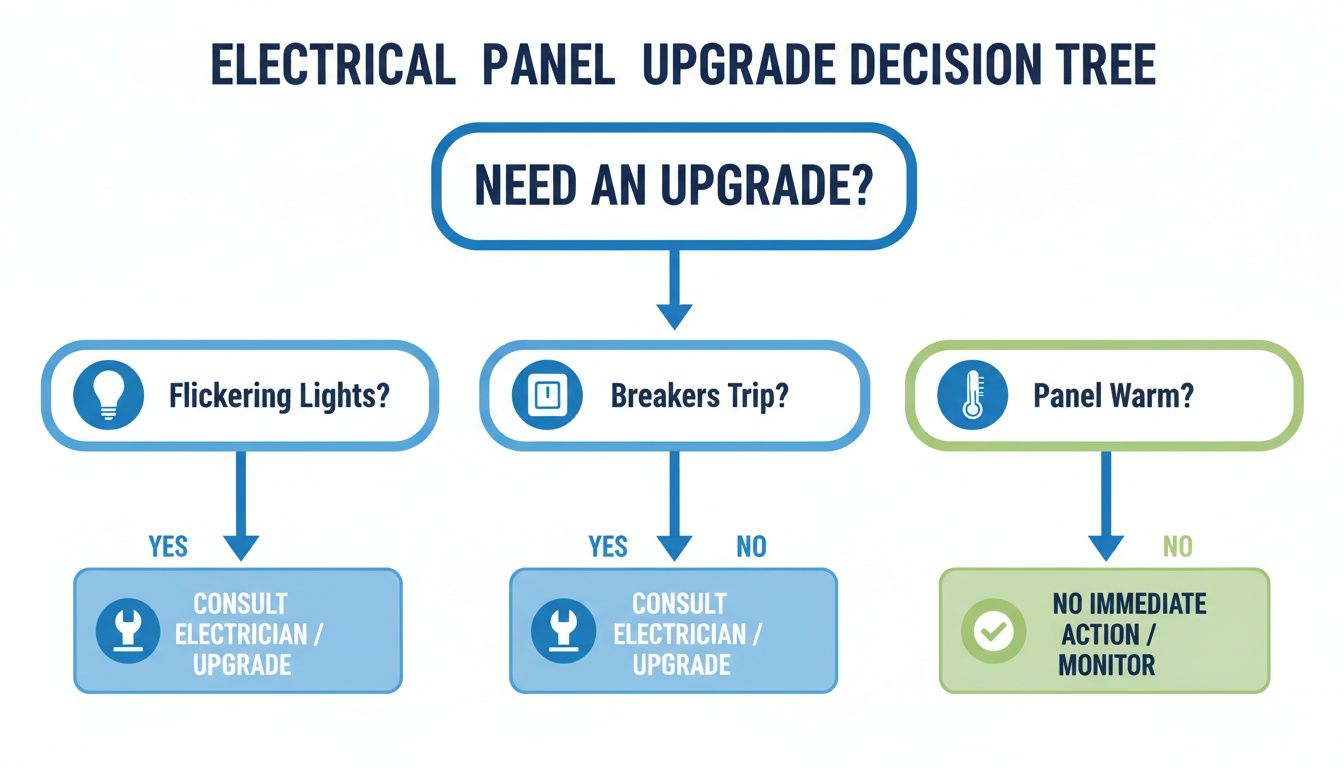
The bottom line is simple: if your lights are flickering or breakers are tripping, your panel is screaming for help. Those are clear signs that it’s overloaded and it’s time to size up.
Choosing the Right Panel Size
Let's talk about amperage. Sizing your new panel correctly is the most critical decision you'll make in this process, as it dictates what your home can handle both now and down the road.
Choosing the right electrical panel is about balancing current needs with future ambitions. A panel that’s too small will just lead to the same problems you're trying to solve, while over-speccing can be an unnecessary expense.
Choosing the Right Electrical Panel Size
Panel Size (Amps) | Best For | Supports Common Add-ons Like... |
|---|---|---|
100A | Smaller, older homes with gas appliances and no major electrical demands. | Basic appliances, but little room for EV chargers or hot tubs. |
200A | The modern standard for most single-family homes. | Central A/C, electric range, hot tub, and a Level 2 EV charger. |
400A | Very large homes or properties with significant power needs. | Multiple HVAC units, a pool, a workshop, and dual EV chargers. |
The 200A panel is really the sweet spot and has become the new standard for a reason. It's what we install in the homes we build because it provides plenty of power for the average family to live comfortably while leaving room for future additions. For example, a client in White Marsh, Maryland, who wants a hot tub and an electric car in the garage, absolutely needs a 200A service to run everything smoothly. Anything less just won't cut it.
Finding a Licensed Electrician and Getting Quotes
Let me be clear: this is not a weekend DIY project. Upgrading an electrical panel involves shutting off power from the utility and working with service entrance cables that are always live. It’s a job strictly for a licensed and insured professional.
Start by getting at least three quotes from electricians in your area, whether you're in Baltimore County or Harford County.
A good quote is more than just a number at the bottom of a page. It should be an itemized list that breaks down the costs, so you know exactly what you're paying for:
The new panel and all circuit breakers
Labor charges
Permit fees from your local jurisdiction
Any extra materials needed, like new wiring or an upgraded meter base
Don’t just jump on the lowest bid. I’ve seen that go wrong too many times. Look for a contractor who communicates well, has solid reviews, and gives you a detailed plan. If you want to dive deeper into the technical side of things, check out this great resource on Mastering the Electrical Panel Board.
The Importance of Permits
In Maryland, just like almost everywhere else, a panel upgrade requires a building permit. This isn't optional red tape; it’s a critical step that ensures the work is performed to the latest safety codes.
Your electrician is responsible for pulling the permit. If any contractor tells you that you can "save a few bucks" by skipping it, show them the door. That is a massive red flag. Unpermitted electrical work can void your homeowner's insurance and create huge headaches when you try to sell your home.
The permit process also includes a final inspection by a county official after the job is done. This is your third-party guarantee that the installation is safe, sound, and up to code. To get a better handle on this, take a look at our guide on what a building permit is and why it's so important for homeowners.
Taking the time to plan your panel upgrade properly is the key to a smooth and successful project. It's an investment that pays you back every day with reliable, safe power.
What to Expect on Installation Day
So you’ve done all the homework, picked the right panel, and found a great electrician. Now it's time for the main event: installation day. It can feel a little nerve-wracking knowing the power to your entire house is about to be cut, but a professional installation is a surprisingly smooth operation.
Think of it less as a major home renovation and more as a single, focused day dedicated to a massive safety and capability boost for your home.
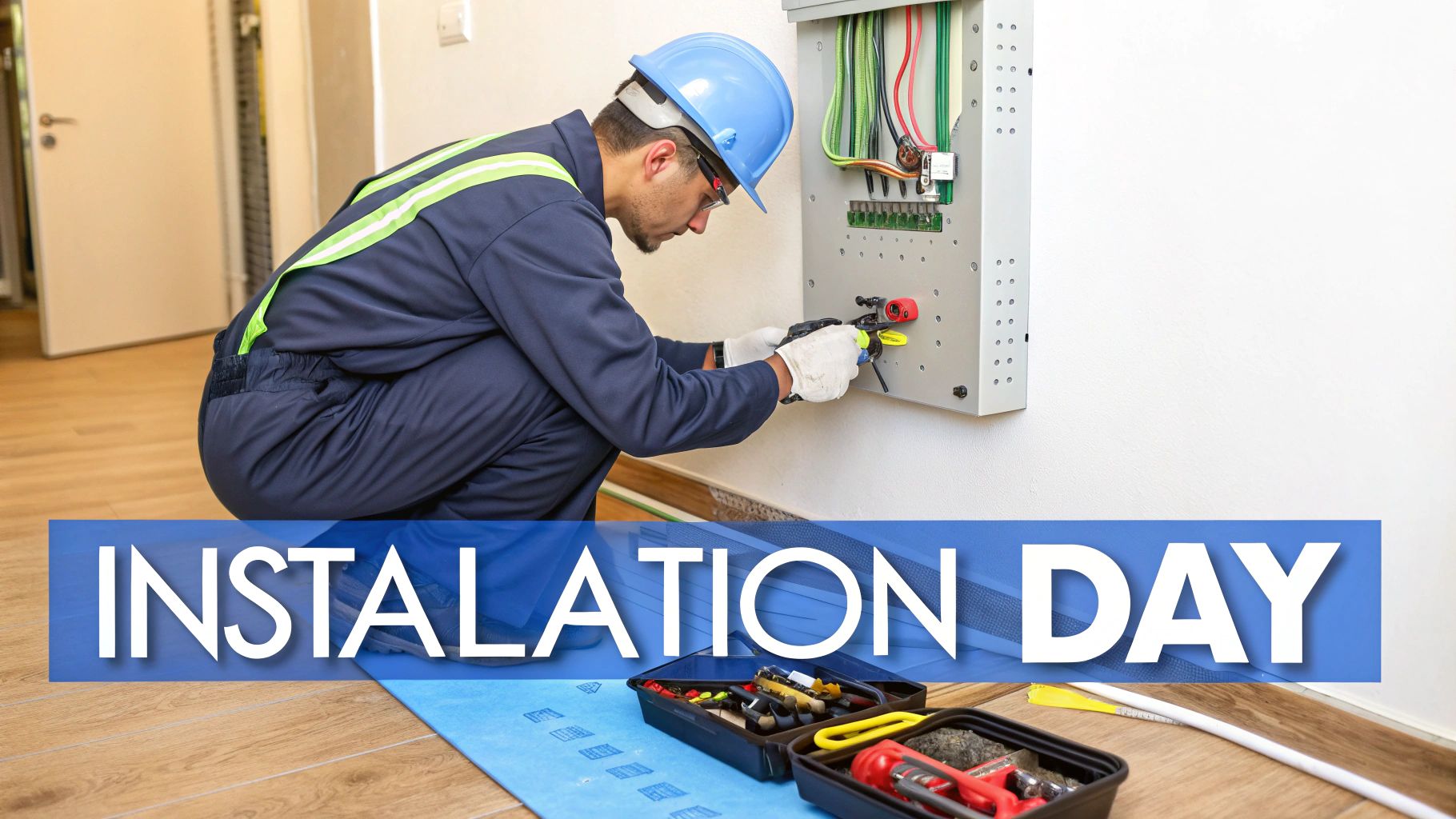
From the moment the electrician arrives to when they flip the new main breaker, the whole thing usually takes about 4 to 8 hours. Of course, this can shift depending on how complex your home's wiring is, but it’s a solid window to plan your day around.
The Key Steps of the Installation
Your electrician will follow a careful, methodical game plan to make sure everything is done safely and by the book. It’s a well-rehearsed procedure that any good electrician has down to a science.
The Power Shut-Off: First thing's first. The electrician coordinates with the utility company to kill the power to your home at the meter. This is non-negotiable, as it ensures the main service lines they'll be handling are completely dead and safe to work on.
Removing the Old Panel: With the power safely off, they’ll get to work disconnecting every circuit, popping off the old cover, and pulling the old panel right off the wall. This is actually a great chance for the electrician to get a good look at the existing wiring and spot any hidden issues.
Mounting the New Panel: Next, your shiny new panel gets mounted securely in place. If the wall needs any minor adjustments to fit the new box, they’ll handle that right then and there.
Connecting and Organizing Circuits: Here’s where the real detail work happens. The electrician will carefully feed all the existing circuit wires into the new panel and connect each one to a brand-new breaker. A true pro doesn't just connect wires; they take the time to clean up the wiring and label every single breaker clearly. No more guessing games about what switch controls the kitchen outlets versus the upstairs bedrooms.
This detailed labeling is a small touch that makes a world of difference. When we build homes, we make sure the panel is not just powerful but also perfectly organized and easy for homeowners to understand from day one. An upgraded panel should bring clarity, not more confusion.
Don’t be alarmed when your house goes completely silent. The temporary power outage is a necessary part of the process. Use it as a rare opportunity for a digital detox—or just make sure your power banks are fully charged!
How to Prepare for the Big Day
A little bit of prep work on your end can make the day go even smoother for everyone. Since you know you’ll be without power for several hours, it’s smart to plan ahead.
I always recommend putting together a simple "no-power kit" the night before:
Charged Power Banks: Keep your phones and other essential small devices juiced up.
Flashlights or Headlamps: Even in the daytime, some rooms can get pretty dark without lights.
Snacks and Drinks: Have non-perishable food and some water ready so you don’t need to open the fridge. Every time you open it, you let the cold out!
Offline Entertainment: Download a few movies to a tablet or grab that book you've been meaning to read.
It's also a good idea to shut down and unplug sensitive electronics like computers, gaming consoles, and TVs before the electrician arrives. While the power-down is controlled, it's just good practice to protect your expensive gear from any potential hiccups. If your panel upgrade is part of a larger project, understanding the roles of different pros can be a huge help; you can learn more about why you might need a general contractor for those bigger jobs.
The Final Inspection and Power-Up
Once the last wire is connected and every breaker is snapped into place, the job still isn't quite finished. In most places, like Baltimore County and Harford County, a final inspection from a local building official is required before the job can be officially signed off. Your electrician will handle scheduling this to make sure the work is 100% compliant with all local safety codes.
After the inspector gives the green light (which can sometimes happen the same day, depending on local rules), the utility company gets the go-ahead to restore power. Your electrician will then power everything back on, test each circuit to ensure it's working properly, and give you a grand tour of your new, neatly labeled panel.
That moment when the lights all come back on, knowing your home is officially safer and ready for the future, is a fantastic feeling.
The Cost of Upgrading an Electrical Panel
Let's get right to it: the big question everyone asks is, "So, what's this actually going to cost me?" No one likes a surprise bill, and when you're talking about something as critical as your home's electrical heart, you need to know the numbers. The final price tag isn't a single item—it's more like a recipe with a few key ingredients.
The cost can swing a bit depending on the house, but for a standard upgrade here in Maryland—say, moving from an old 100-amp panel to a modern 200-amp system—you're generally looking at a range of $1,800 to $3,200. This is a solid ballpark for most of the installations we see around Baltimore County and Harford County.
So, what pushes the price to the lower or higher end of that range? It really boils down to the specifics of your home and the job itself.
What Goes Into the Final Cost
When an electrician hands you an estimate, it’s not just one lump sum. It's a combination of several moving parts that make up the total.
The Panel and Breakers: The hardware is your first major cost. A 200-amp panel loaded with brand new circuit breakers is naturally going to cost more than a smaller 150-amp one. Plus, modern electrical codes now require special breakers like AFCI (arc-fault) and GFCI (ground-fault) for many areas of your home. These add a layer of safety, but also a bit to the material cost.
Labor: This is usually the biggest variable. An experienced, licensed electrician's time is valuable. A clean, simple swap in an open, accessible basement is going to be quicker and less expensive than a complicated job that involves rerouting main lines or cramming into a tight, finished wall.
Permit Fees: Any legitimate panel upgrade requires a permit from your city or county. This isn’t optional—it’s what gets a certified inspector to sign off on the work, ensuring it’s done safely and to code. Think of it as cheap insurance.
The "While We're In There" Stuff: Sometimes, opening things up reveals other issues. The main service cable coming from the street might be frayed and undersized, or the meter base on the outside of your house could be rusted and outdated. These kinds of "surprises" can add to the scope and, of course, the cost.
The real value of an electrical panel upgrade goes far beyond the initial cost. It’s an investment in your family's safety, your home's functionality, and its future resale value. A modern, capable panel is a huge selling point for buyers.
Why Safety Is the Biggest Return on Investment
This kind of project is about so much more than just being able to run your air fryer and a space heater at the same time. It’s about safety, plain and simple.
The National Fire Protection Association reports that electrical problems are behind roughly 51,000 house fires in the U.S. every year. That's a sobering number, and it highlights why old 100-amp panels just can’t safely keep up with the demands of a modern home. For Maryland families looking to add things like a hot tub, a shop full of tools, or an EV charger in their garage, this upgrade isn't a luxury—it's a necessity that brings total peace of mind.
In our homes, we’ve made this simple by including an upgraded electrical panel as a standard feature. We believe you should have that safety and capacity from day one, without having to worry about the extra cost or the hassle of coordinating it later. It's all part of our hands-on approach. My goal is to help you build a space that’s not just beautiful but is also safe, functional, and truly ready for whatever comes next. A strong electrical system is the foundation for all of it.
Future-Proof Your Home from the Start
We’ve spent a lot of time talking about the nuts and bolts of upgrading an electrical panel in an existing house, which is a fantastic, often necessary, investment. But what if you could just sidestep that whole process? What if you could build a home with an electrical system designed for tomorrow, right from day one?
That's the real magic of building a new home, where you get to customize key features to fit your life.
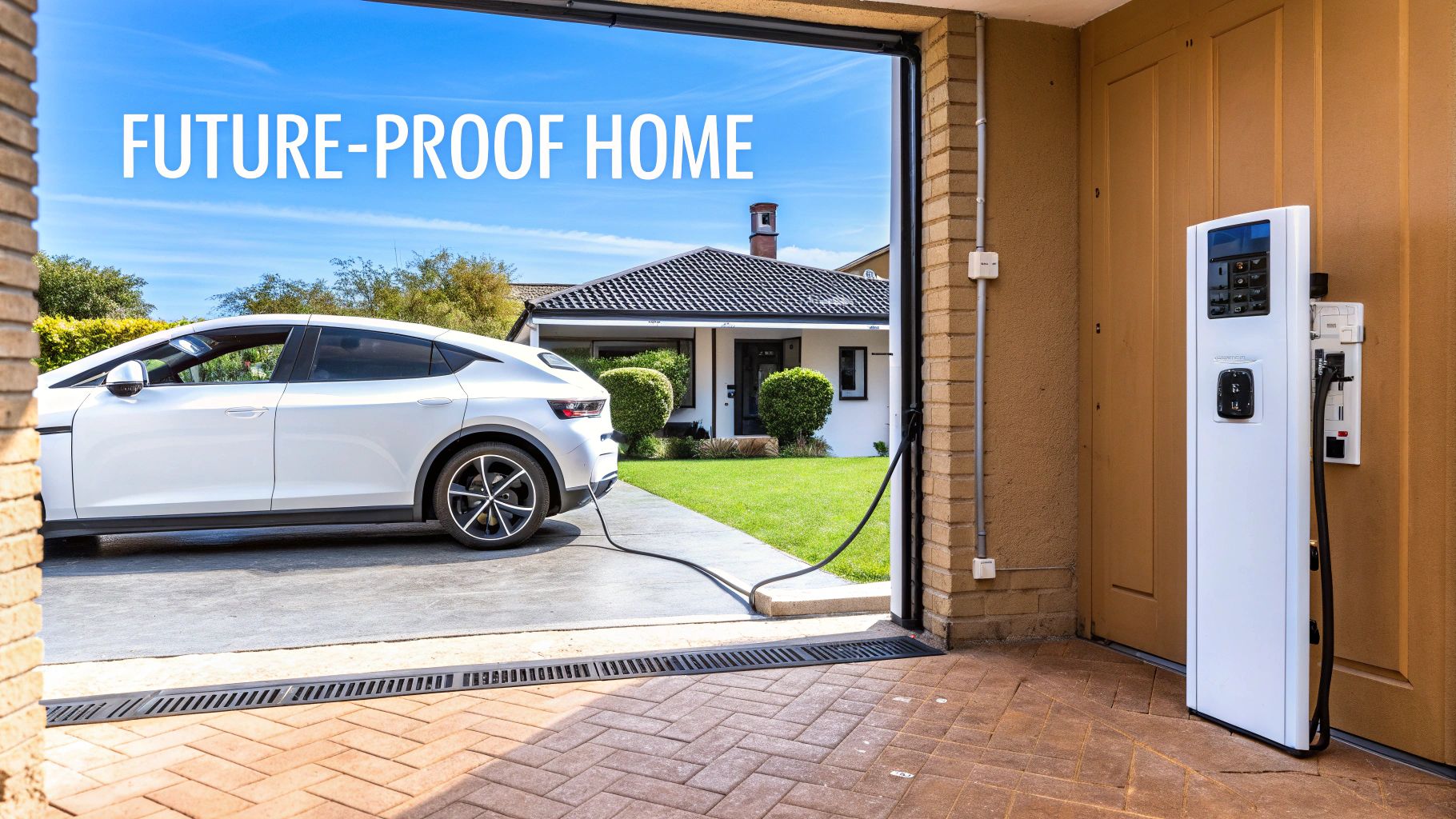
Starting fresh gives you the chance to design a home that fits your life perfectly, with a powerful electrical system ready to handle anything you can dream of.
The Power of a Standard 200-Amp Panel
In the homes I build for my clients, a powerful 200-amp electrical panel isn't an "upgrade"—it's our starting point. It’s standard. We bake this robust capacity into every single home because let's face it, modern families in Maryland have modern power needs. Life today is packed with high-draw appliances, smart home gadgets, and, of course, the ever-growing shift to electric vehicles.
This powerful foundation is where your real customization journey begins. You're not just picking out paint colors; you’re building a lifestyle, and your home’s power grid needs to be ready for it.
Having a 200-amp service from the get-go means you never have to ask, "Can my house handle this?" The answer is always yes. It’s about giving you peace of mind and unlimited potential from the moment I hand you the keys.
This approach completely eliminates the headache and future expense of a massive electrical overhaul. You can confidently choose that gorgeous double oven for your dream kitchen or plan for a hot tub out back without ever worrying if you're pushing your system to its limits.
Designing a Home Without Electrical Limits
Imagine the freedom of designing your perfect space without constraints. My role isn’t just to build a high-quality house; I provide a hands-on service, using unique visualization tools that let you see your dream space on-screen before we even break ground.
When you're exploring all your options, the last thing on your mind should be electrical capacity.
Kitchen Customization: Go ahead and pick out that high-end induction cooktop, the built-in espresso machine, and the wine fridge. With a 200A panel as standard, your electrical system is ready.
Bathroom Finishes: Dreaming of a spa-like retreat with heated floors and a steam shower? The power is already there for you.
Outdoor Living: Planning a backyard oasis in White Marsh or Edgewood with a heated pool or extensive landscape lighting? Your panel can support it all.
Thinking ahead like this is especially important as more families go electric. Installing a Level 2 EV charger becomes a simple task, not a complex project that demands a whole new panel. An electrical panel upgrade is a smart investment that can significantly increase property value, making sure your home is ready for whatever comes next.
Building in Your Dream Community
We build these future-ready homes in fantastic communities across Maryland, including White Marsh, Edgewood, Baltimore County, and Harford County. By making a 200-amp panel our standard, we ensure your new home isn't just a beautiful structure but a high-performance machine built for your life.
You get to focus on the fun stuff—picking out the perfect flooring, stunning countertops, and custom cabinets—while I take care of the heavy lifting and foundational elements that make it all possible.
With our hands-on service and advanced visualization tools, you can see exactly how your choices will look and feel, creating a home that is truly yours. It’s all about meshing your vision with a solid, reliable infrastructure. And when you're ready to add more advanced features down the line, you'll find your home is already prepared. For more on that, check out our guide to home smart tech in a new build.
If you’re thinking about building a new home and want to make sure it’s equipped for today and tomorrow, let’s talk. I can show you how we make customization easy and how starting with the right electrical foundation opens up a world of possibilities.
Got Questions About Upgrading Your Electrical Panel?
Even with a solid plan, a few questions are bound to pop up. And that's a good thing! When you're dealing with your home's electrical nervous system, you should feel 100% confident in the decisions you're making.
Let's walk through some of the questions I hear all the time from homeowners. Getting these answers sorted out will give you the peace of mind to move forward.
Can I Upgrade My Electrical Panel Myself?
I get this question constantly, and my answer is always the same: please don't. I'm all for the DIY spirit—I love seeing homeowners take on projects—but this is one for the pros, no question about it.
Upgrading your panel is one of the most high-stakes jobs you can do in a house. You're working with the main service line coming in from the street, which is live and carries enough voltage to be lethal, even if you’ve shut off the main breaker. It's just not worth the risk.
On top of the danger, places like Baltimore County and Harford County require all this work to be done under a permit by a licensed electrician. They also require a final inspection to make sure everything is up to code. For the safety of your home and your family, this is a job you have to hand off to a qualified professional.
How Long Does a New Electrical Panel Last?
A brand-new, professionally installed panel is a long-term investment. You can expect it to last a good 20 to 30 years, sometimes even longer. The big metal box itself is tough as nails, but it's the circuit breakers inside that can wear out over the years, especially if they trip a lot.
But the real question isn't just about how long the parts will last—it's about whether the panel can keep up with your life. A 25-year-old panel might still function, but it almost certainly wasn't designed for the world we live in now.
That’s why thinking ahead is so crucial. By installing a panel with plenty of extra capacity, you're not just solving today's problem; you're future-proofing your home. In the homes I build for my clients, a robust 200-amp panel comes standard. It ensures that as technology changes over the next few decades, your home will be ready for it without another massive overhaul.
Will a New Panel Lower My Electricity Bill?
A new panel isn't going to magically chop your electricity bill in half, not directly anyway. It’s not like swapping out old single-pane windows for new energy-efficient ones. But it absolutely plays a role in your home's overall efficiency.
Think of it this way: an old, overloaded panel can struggle, run hot, and waste energy just trying to do its job. A modern panel delivers clean, stable power, letting all your appliances run smoothly and efficiently, just like they were designed to.
The real savings come from what the new panel unlocks. It’s the foundation that lets you install the big-ticket, high-efficiency systems that make a real dent in your utility costs, such as:
Heat pump HVAC systems
Heat pump water heaters
Level 2 EV chargers
Without the right panel, you can't even consider these money-saving upgrades. So, the panel itself is the first, essential step.
Does an Electrical Panel Upgrade Increase Home Value?
You bet it does. An updated electrical system is a huge selling point in the real estate market. It immediately tells a potential buyer that the house is safe, has been properly maintained, and is ready for modern demands.
Imagine a family looking at a home in a community like White Marsh or Edgewood. If they see a brand-new 200-amp panel, they know they can move in and immediately install an EV charger for their car or set up a home workshop without a second thought. It removes a major unknown and a potential $3,000+ expense from their list of worries. It's an investment that pays you back in both safety and real, tangible market value.
At Customize Your Home, we build homes that are ready for your life, right from the start. A powerful, future-ready electrical panel isn't an upgrade; it's a standard feature. If you’re thinking about building a home in Maryland that truly fits your needs, let's talk. I offer a hands-on approach and unique visualization tools to help bring your vision to life. You can explore your options and get started at https://www.customizeyourhome.com.
Comments