

New Construction vs Existing Home in Maryland

When it comes to buying a home in Maryland, one of the first big questions you'll face is whether to go with a brand-new build or an existing home. It's a fun decision to have! For a lot of buyers, it boils down to a simple trade-off. New construction gives you that fresh, personalized, move-in-ready experience, while an existing home often comes with established neighborhood charm and a quicker move-in timeline.
Your final decision really hangs on what you value most: the freedom to create a modern space that’s all you, or the unique character that only comes with a home that's already part of a community. Let's explore what each path looks like so you can feel great about your choice.
New Build or Resale Home The Big Maryland Decision
Choosing a home is a massive decision, and right now in Maryland, the "new vs. existing" debate is a big one. This isn't just about four walls and a roof; it’s about the kind of life you want to live. Whether you're house hunting in White Marsh, Edgewood, or anywhere across Baltimore County, Harford County, or Prince George's County, getting a handle on the key differences is the first step to feeling good about your choice.
An existing home—what we call a "resale"—has a history. Someone has lived there before, the trees are grown, and the neighborhood has a settled-in feel. On the flip side, a new construction home is your blank canvas. No one has ever lived there, it's built with the latest materials, and it meets today's energy standards. This is where you get to call the shots on everything from flooring and countertops to cabinets and tile, making the space truly yours from the get-go. For example, you can pick durable, waterproof LVP flooring that stands up to kids and pets, or choose the exact quartz countertop you saw on your favorite design show.
If you want to dive deeper into the process, check out our guide to new construction homes in Maryland.
At a Glance New Construction vs Existing Home
To make things a little easier, let's break down the major differences at a glance. This table gives you a quick snapshot to help frame your thinking.
Factor | New Construction Home | Existing (Resale) Home |
|---|---|---|
Customization | High level of personalization (finishes, layout) | Limited to renovations after purchase |
Move-In Timeline | Longer or similar to Resale, typically 6-12+ months or as fast as 30 days | Faster, usually 30-60 days after offer |
Maintenance | Low initial maintenance, everything is new | Potential for immediate repairs and updates |
Energy Efficiency | High, built to modern codes | Varies widely, often less efficient |
Neighborhood | New or developing communities | Established, mature neighborhoods |
Warranty | Typically includes a builder's warranty | Usually sold "as-is," relies on inspections |
As you can see, there’s a clear give-and-take. One path offers a faster move, while the other is about creating a personalized home with long-term peace of mind.
Ultimately, the best choice really comes down to what matters most to you and your family. Is it the quick move-in of a resale, or is it the long-term value and peace of mind that comes with a brand-new, personalized home? While the builder I represent provides high-quality homes, I go a step further—offering my clients unique proprietary visualization tools, hands-on service, and access to visualizers that help you bring your dream space to life.
Comparing the True Costs Beyond the Sale Price
When you're trying to decide between a new build and an existing home, the sticker price is really just the beginning of the story. The true financial picture only comes into focus when you look at what it costs to own the home over the years. It's a common myth that a brand-new home is always going to be the more expensive choice, but that's just not the reality anymore.
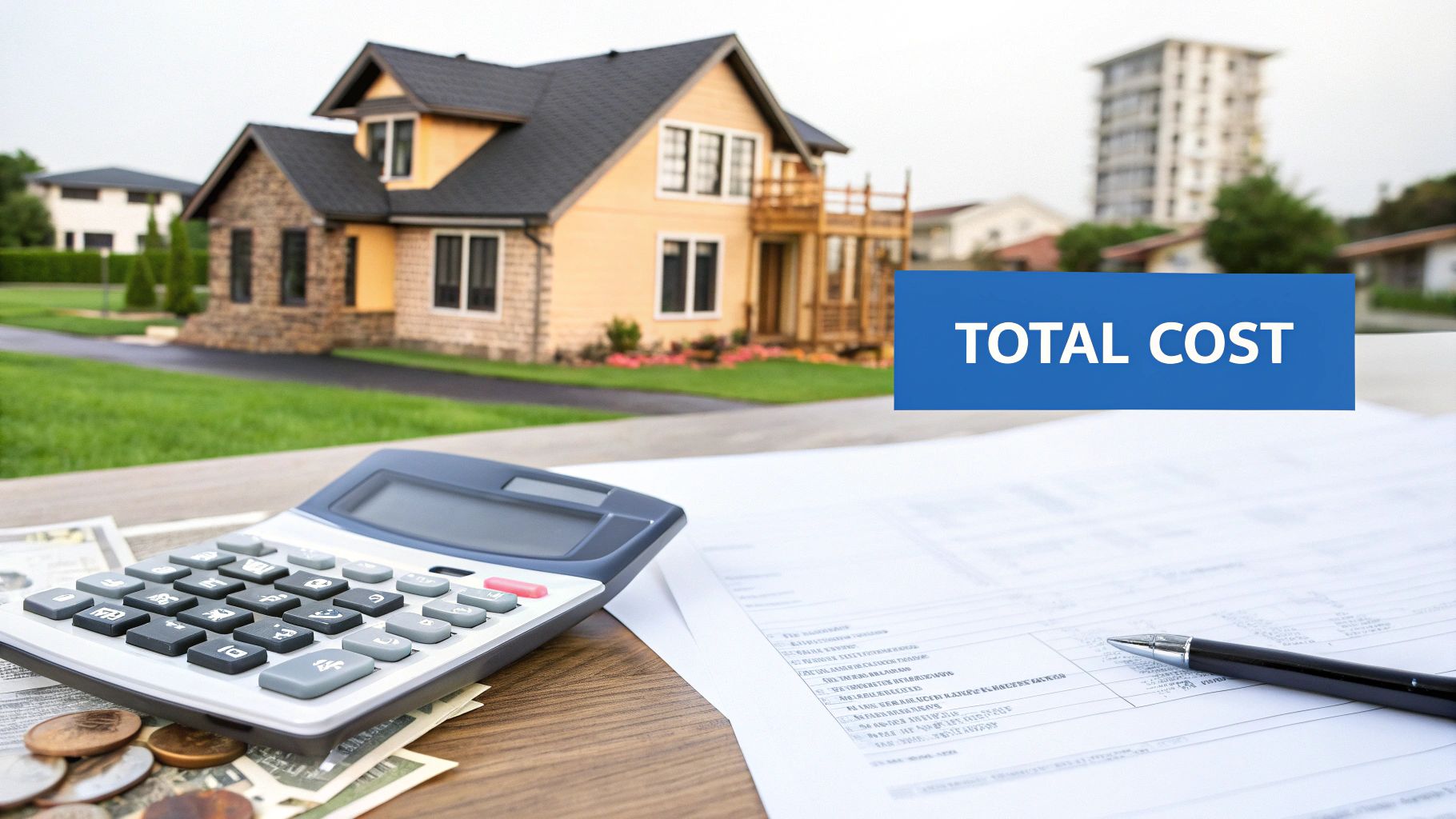
The market has done a bit of a flip-flop. For years, new homes came with a pretty steep premium—between 2010 and 2019, they typically cost about $66,000 more than existing homes. But that gap has shrunk in a big way, dropping to an average of just $24,800 recently. Builders have gotten smarter about meeting buyer needs, and the resale market is tight.
This shift alone makes a new home a much more competitive option right out of the gate. And that’s before you even consider the builder incentives that can knock down your closing costs or help buy down your interest rate.
The Hidden Costs of Existing Homes
That charming older home in a beautiful, established neighborhood in Baltimore County or Harford County might have an attractive price tag, but it can also come with a long list of expenses you don't see at first glance. These "hidden costs" can sneak up on you and turn a great deal into a real financial headache.
Think about it: when you buy a resale home, you're also buying the age and wear-and-tear of every single one of its major systems. The inspection might come back looking pretty clean, but it can't tell you the exact day that 15-year-old water heater is going to call it quits or when the AC will die during a Maryland heatwave.
Here are a few of the usual suspects you might face with an older home:
Immediate Repairs: Little things flagged during the inspection, like a minor plumbing leak or some quirky wiring, suddenly become your problem to fix. For example, replacing a few faulty outlets might seem small, but the costs add up.
Big-Ticket Replacements: Major components have an expiration date. An asphalt shingle roof typically lasts 20-25 years; if the one you're buying is 18 years old, you need to budget for a replacement that can cost upwards of $10,000.
Energy Inefficiency: Older homes are notorious for drafty windows, subpar insulation, and aging appliances, all of which lead to much higher monthly utility bills.
Renovation Budget: If that kitchen is straight out of the 90s, you'll have to factor in the cost of a remodel just to make the space feel like it’s yours.
A lower purchase price looks great on paper, but it’s so important to budget for the unknown. A smart rule of thumb for an older home is to set aside 1-3% of its purchase price every year for maintenance and those inevitable surprise repairs.
The Financial Peace of Mind with New Construction
Now, let's look at the other side of the coin: a new construction home. The initial price might be similar to a resale, but the financial predictability you get for the first several years is a massive win. Everything—from the foundation under your feet to the shingles over your head—is brand new.
This means you can move in and actually relax, without a looming to-do list of expensive projects. All your major systems and appliances are covered by manufacturer warranties, and the entire structure is protected by a comprehensive builder's warranty. It’s a kind of peace of mind that lets you enjoy your home instead of worrying about what might break next. For a clearer picture of what's involved financially, check out our guide on understanding closing costs for a new home.
With our homes, you're the one choosing your finishes—the flooring, countertops, cabinets, and more—before the drywall even goes up. This way, your home feels like you from day one, and you can forget about living through a messy and costly renovation. My clients especially love using my proprietary visualization tools to see their choices come to life, which ensures the final result is exactly what they’ve been dreaming of, no surprises or regrets. It’s all about creating your perfect home without the financial drama.
Personalization Versus Built-In Character
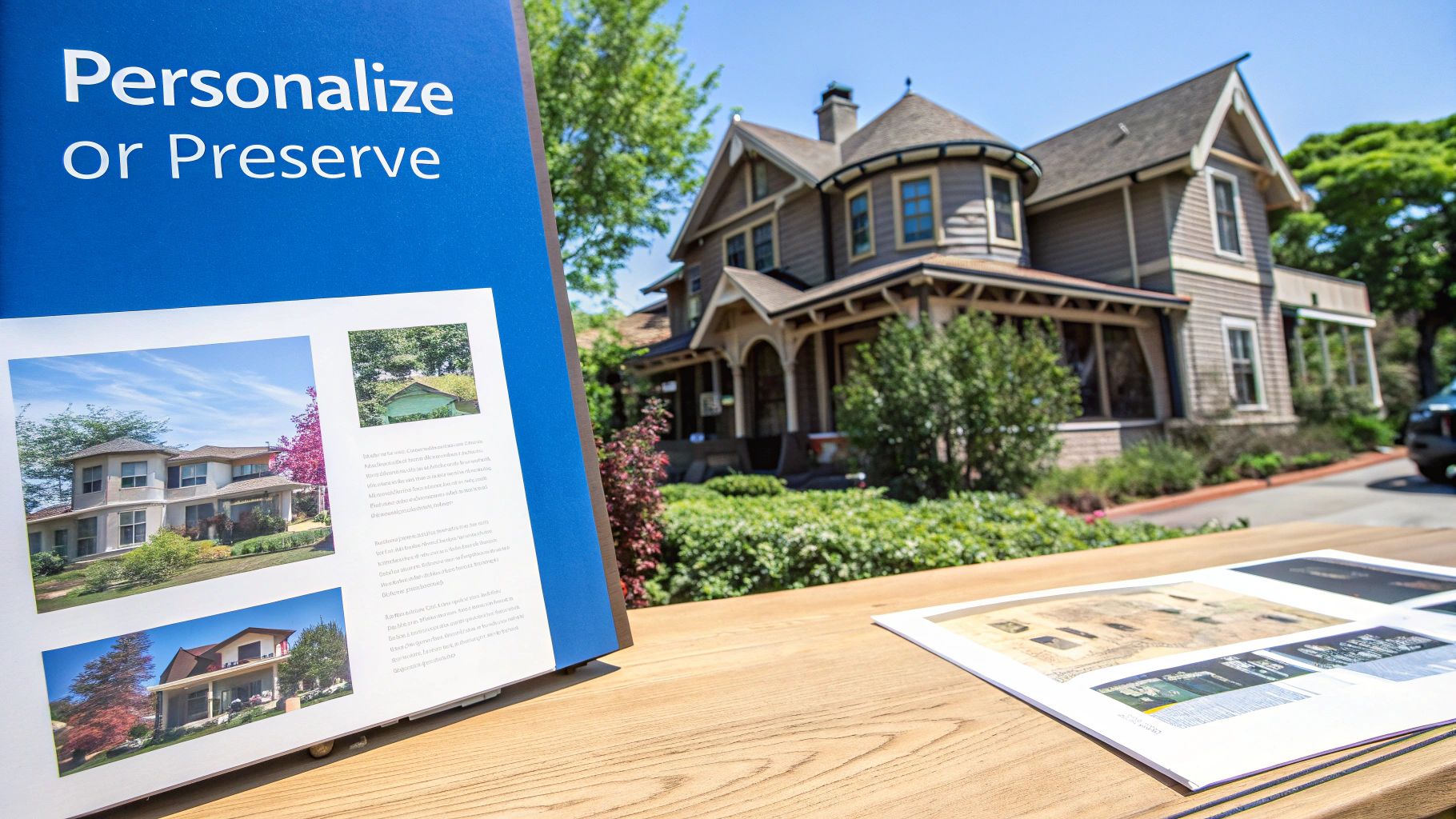
When you're trying to decide between a new build and an existing home, this is where the fun really starts. It really boils down to a single choice: do you want to create a space that’s 100% you from the get-go, or would you rather fall for a home that already has its own story? Both paths get you a set of keys, but the journey to making it feel like your home couldn't be more different.
An older home has that built-in charm. Picture a classic colonial in a quiet White Marsh neighborhood—it might have original hardwood floors, quirky built-in bookshelves, and a massive old oak tree in the backyard. You just can't replicate those kinds of details. They give a house a sense of history and warmth from the day you move in.
Of course, that character also comes with the design choices of every single person who lived there before you. If their vision doesn't quite line up with yours—say, a dated kitchen or a less-than-ideal bathroom layout—your only move is to renovate. And while HGTV makes it look like a weekend project, living through a remodel is a mess of dust, disruption, and a budget that often balloons beyond what you planned for.
Crafting Your Home from the Ground Up
This is where building a new home really shines. Instead of moving into someone else's style, you get to be the designer. From the moment you decide to build, you're in the driver's seat, making the calls on the details that will shape your daily life.
Think about walking into a design center with the freedom to pick out everything. When you build with us, you aren't just buying a property; you're creating your own personal sanctuary. You get to choose:
The perfect flooring that works with your furniture and your lifestyle.
Countertops and cabinets to build your dream kitchen, whether it's sleek and modern or warm and traditional.
Tile and fixtures for a bathroom that feels like a spa retreat.
This goes way beyond just picking colors. It’s about weaving your personality into the very bones of the house. For a closer look at this exciting process, our guide on how to customize your dream home is packed with inspiration. All this upfront personalization means that when you get the keys, your home is already a perfect reflection of you—no renovations necessary.
What I love most is helping my clients through this process. I go a step further than most builders by offering unique proprietary visualization tools. These visualizers let you see how your selections for flooring, cabinets, and countertops will look together in your actual floor plan, taking the guesswork and anxiety out of the design phase.
The Trade-Offs In Action
Let's break this down with a practical example for a buyer in Harford County.
Scenario 1: The Existing HomeYou find a lovely 1980s house in a mature neighborhood. You love the big trees and the community pool. But inside, the kitchen has laminate countertops and oak cabinets that just aren't your style. To get the bright, open kitchen you've been dreaming of, you’re staring down a $30,000+ renovation. That project will take at least six weeks, and your home will be a construction zone the whole time.
Scenario 2: The New Construction HomeYou decide to build in a new community in Edgewood, with a price tag similar to the existing home. During the build, you work with our design team to pick out gorgeous quartz countertops, modern white shaker cabinets, and stylish luxury vinyl plank flooring—all wrapped into your initial budget. On move-in day, your dream kitchen is done and waiting for you.
Ultimately, the choice comes down to the kind of experience you want. Do you enjoy the challenge and potential of a renovation project? Or do you prefer the seamless, stress-free process of designing a home that’s perfectly you from day one? With our hands-on service, we make that personalization process exciting and clear, ensuring your new home in Maryland is everything you’ve envisioned.
What to Expect with Maintenance and Energy Savings
It’s easy to focus on the sticker price, but one of the biggest factors in the new vs. existing home debate is the long-term cost of just living there. Every home needs upkeep, but the amount of money and mental energy you’ll pour into maintenance can be drastically different.
With a new home, you get a completely fresh start. Everything is brand new and under warranty—the roof, the windows, the HVAC system, the kitchen appliances. This means your monthly expenses are predictable, and you're not bracing for a surprise repair bill every time the wind blows.
Think about it: moving into a new home in one of our communities in White Marsh or Edgewood means your first few years are spent enjoying the space, not stressing about a furnace dying in the middle of a Maryland winter. That peace of mind is priceless.
Cracking the Code on Energy Efficiency and Lower Bills
Beyond avoiding big repair bills, there’s the daily reality of your utility costs. New homes are built to meet today's strict energy codes, and that’s a feature that puts money back in your pocket every single month.
Modern building standards mean your new home has features like:
Superior Insulation: We're talking high-performance insulation in the walls and attic that keeps your home cozy in the winter and cool in the summer, giving your HVAC system a much-needed break.
High-Efficiency Windows: Gone are the days of drafty, single-pane glass. Modern dual-pane windows are engineered to stop heat transfer in its tracks.
Efficient Systems: Your furnace, AC unit, and water heater are all designed to be lean energy-sippers compared to models from even a decade ago.
An older home might have character, but it could also come with single-pane windows, barely-there insulation, and an ancient HVAC system that chugs energy. The difference on your BGE bill between an efficient new build and a drafty older home can easily be hundreds of dollars a year.
If you're looking for more ways to maximize your home's performance, we put together a guide with our top 10 essential home energy efficiency tips for 2025.
The Real Maintenance Burden of an Existing Home
When you're looking at a resale home in Baltimore County or Harford County, you have to go in with your eyes wide open. A home inspection is a must, but it can’t see the future. Understanding the hidden issues is key; learning about the challenges of selling a house that needs repairs can give you a good idea of what problems often lurk under the surface.
Here's a quick mental checklist to run through as you tour older properties:
HVAC System: How old is the furnace and AC? If they’re over 10-15 years old, you’re on borrowed time. A full replacement can cost thousands.
Roof: When was it last replaced? A new roof is a massive expense, so you need to know if you have a solid decade of life left in it.
Appliances: Check the dates on the water heater, dishwasher, and other major appliances. Having to replace several at once can be a huge, unexpected financial hit.
Windows and Doors: Are they original? Old, leaky windows are one of the biggest culprits of energy loss.
A resale home might look like a deal on paper, but these future expenses can quickly eat up any savings. A new build, on the other hand, offers a low-maintenance lifestyle from day one, letting you focus on what really matters—making your new house a home.
Finding a Neighborhood That Fits Your Lifestyle
A home is so much more than four walls and a roof. Where you live dictates your daily rhythm, your weekend plans, and even the friends you make. The choice between a new build and an existing home plays a huge role in the kind of community you'll become a part of.
When you buy an existing home, you’re usually buying into a well-established neighborhood. Picture it: streets lined with huge, mature trees, a charming jumble of architectural styles from different decades, and a distinct character that’s been built over time. If a quiet, settled vibe is what you’re after, this can be a massive draw.
The Buzz of a New Community
New construction, on the other hand, puts you right in the middle of a growing, modern community. These neighborhoods are planned from the ground up, often with amenities designed to bring everyone together. Instead of an older community pool, you might find a brand-new one with a clubhouse, walking trails snaking through open green spaces, and shiny new parks perfect for the kids.
This creates a really interesting social scene. In a new community, pretty much everyone is the "new kid on the block." You’re all starting fresh together, which makes it incredibly easy to connect with your neighbors and build friendships right away. We see this firsthand all the time in our communities in White Marsh, Edgewood, and across Baltimore County and Harford County.
The real magic of a new community is the built-in lifestyle. You're not just getting a house; you're getting walking trails, playgrounds, and community centers right outside your door. It completely changes how you live.
Location, Location, Location in Maryland
Let's be real—convenience is everything. New communities are often built in strategic locations that offer a great balance: a quiet, residential feel but with quick access to the places you need to go. Take our new home communities in Prince George's County and around the Baltimore metro area; they're designed with today's commutes in mind.
Think about the practical perks:
Modern Infrastructure: You’ll be driving on new roads with straightforward access to major routes like I-95 or the Baltimore Beltway.
Nearby Amenities: These areas tend to be magnets for new development, so new shopping centers, grocery stores, and restaurants are often just around the corner.
Future Growth: Getting in early in a developing area often means your property value stands a good chance of growing as the community around you fills out.
It's also worth noting the bigger picture. The U.S. housing market has been dealing with a major supply shortage for years, which affects everything. As of 2024, the country was short about 3.8 million homes because we simply haven't built enough. This shortage keeps prices for both new and existing homes high and limits options for buyers everywhere. You can find more details on this national housing supply issue at NAHB.org.
Ultimately, picking a neighborhood is a gut decision. An established area has a certain charm and history you can't replicate. But a new community offers the excitement of watching things grow, modern perks, and a unique chance to form strong bonds with neighbors who are on the exact same adventure as you.
How to Make the Right Choice for You
Choosing between a new build and an existing home isn't about which one is "better." It's about finding the right fit for your life, right now. The best path for you really boils down to your personal priorities, your budget, and what you imagine your life as a homeowner will look like.
To help you get some clarity on this huge decision, let's walk through a few key questions. Answering them honestly will point you in the direction that makes the most sense for you and your family.
What Is Your Tolerance for Surprises?
First off, let’s be real about your comfort level with unexpected projects and costs. Are you the kind of person who enjoys a good DIY challenge and has a healthy savings account ready for those "just in case" repairs? If the idea of a kitchen gut job or a surprise roof replacement feels like a manageable project, an existing home could be a fantastic match.
On the other hand, if you're looking for predictability and true peace of mind, a new construction home is probably more your speed. When everything is brand new and covered by a warranty, you can move in, unpack, and just live in your space without that nagging worry of what might break next.
How Important Is Personalization from Day One?
Next up, how much do you care about making a space truly yours? Does the thought of choosing every single detail—from the flooring to the kitchen backsplash—before you even move in get you excited? That's one of the biggest draws of building new. We let buyers customize their homes by getting to pick their flooring, countertops, cabinets, tile, and more, which makes the process incredibly rewarding.
But if you appreciate the built-in character and charm of an older home and don't mind living with someone else's style choices (or are happy to tackle renovations down the road), a resale property could be perfect. It’s really the difference between starting with a blank canvas versus adapting a space that already has a history.
For my clients, the ability to customize is a game-changer. I go a step further than other builders by offering proprietary visualization tools that let you see your design choices in your future home. This hands-on service provides incredible clarity and confidence, ensuring the final result is exactly what you dreamed of.
A Final Checklist for Your Decision
Still on the fence? Let's simplify the new construction vs. existing home debate with a final checklist to see where you land.
You might be a great fit for a NEW home if:
You want to pick your own finishes and design a personalized space from the get-go.
You'd prefer a low-maintenance lifestyle without surprise repair bills popping up.
Energy efficiency and lower utility bills are a big deal for you.
The idea of a modern, amenity-rich community in areas like White Marsh, Edgewood, Baltimore County, Harford County, or Prince George's County sounds exciting.
You might be a great fit for an EXISTING home if:
You need to move fast, like within 30-60 days (you can achieve this with new construction homes in most cases as well).
You love the unique character of established neighborhoods with mature trees.
You genuinely enjoy home improvement projects and have a budget set aside for them.
If a new, personalized home sounds like the right path for you, let's connect. Together, we can explore new homes in Maryland and design a space that's a perfect reflection of you.
Frequently Asked Questions
When you're weighing a new build against an existing home, a lot of questions pop up. It’s a huge decision! Let's walk through some of the most common things we hear from buyers right here in Maryland.
Are New Homes a Better Value Per Square Foot?
This one surprises a lot of people, but in today's market, the answer is often a resounding yes. Even if the sticker price on a new construction home looks a bit higher, you're frequently getting more house for your dollar.
Let's look at the numbers. Recent data from the second quarter of 2024 revealed that new builds were actually more affordable on a square-foot basis. New construction homes clocked in at $218.66 per square foot, while existing homes were a bit pricier at $226.56 per square foot. That's a 3.6% discount for new home buyers. Builders achieve this by working efficiently at a large scale, which means they can pass those savings along to you—a huge win for growing families who need that extra space.
How Long Does It Take to Move In?
The timeline is probably the clearest difference between your two options. If you're in a hurry, an existing home is usually your speediest path to getting the keys. Once your offer is accepted, you’re usually looking at a 30 to 60-day wait before you can start unpacking.
Building a new home is more of a marathon than a sprint. It's a journey that typically takes anywhere from six to twelve months or as fast as 30 days, depending on things like permit approvals and the complexity of the build. But that extra time is what allows you to make the home truly yours, picking out everything from the flooring to the kitchen cabinets. For anyone on a tighter schedule, we also have quick move-in homes that are almost finished, giving you that brand-new feel without the long wait.
What Warranties Come with a New Construction Home?
This is a huge perk for new builds and a major source of peace of mind. You're not just getting a single warranty; you're getting a whole package of protection.
Typically, this comprehensive coverage breaks down like this:
A one-year warranty that covers all the little things, like workmanship and materials (think paint, drywall, and fixtures).
A ten-year structural warranty that covers the very foundation and frame of your house.
You just don’t get that kind of safety net with an older home. At best, you might get a limited, one-year home warranty from a third-party company, and even that isn't a given. It's a massive difference that makes those first few years of homeownership much more predictable and a lot less stressful.
We believe the new construction experience should feel exciting and personal, not overwhelming. With my hands-on approach and unique visualization tools, we can design your perfect space in communities all over Maryland, including White Marsh, Edgewood, Baltimore County, Harford County, and Prince George's County. If you're ready to see what a home built just for you looks like, visit us online and let's get started on bringing your dream space to life.
Comments