

What Is a Certificate of Occupancy in Maryland

You’re so close to the finish line. After months of watching your new home take shape, you’ve picked out the perfect flooring, the countertops are gleaming, and the cabinets are exactly what you dreamed of. Before you can pop the champagne and start moving boxes, there's one last, absolutely critical piece of paper you need: the Certificate of Occupancy, or CO.
Think of it as the official green light from your local government. It's the document that says your home isn't just a building anymore—it's a safe, sound, and fully approved place to live.
Your Home’s Final Report Card
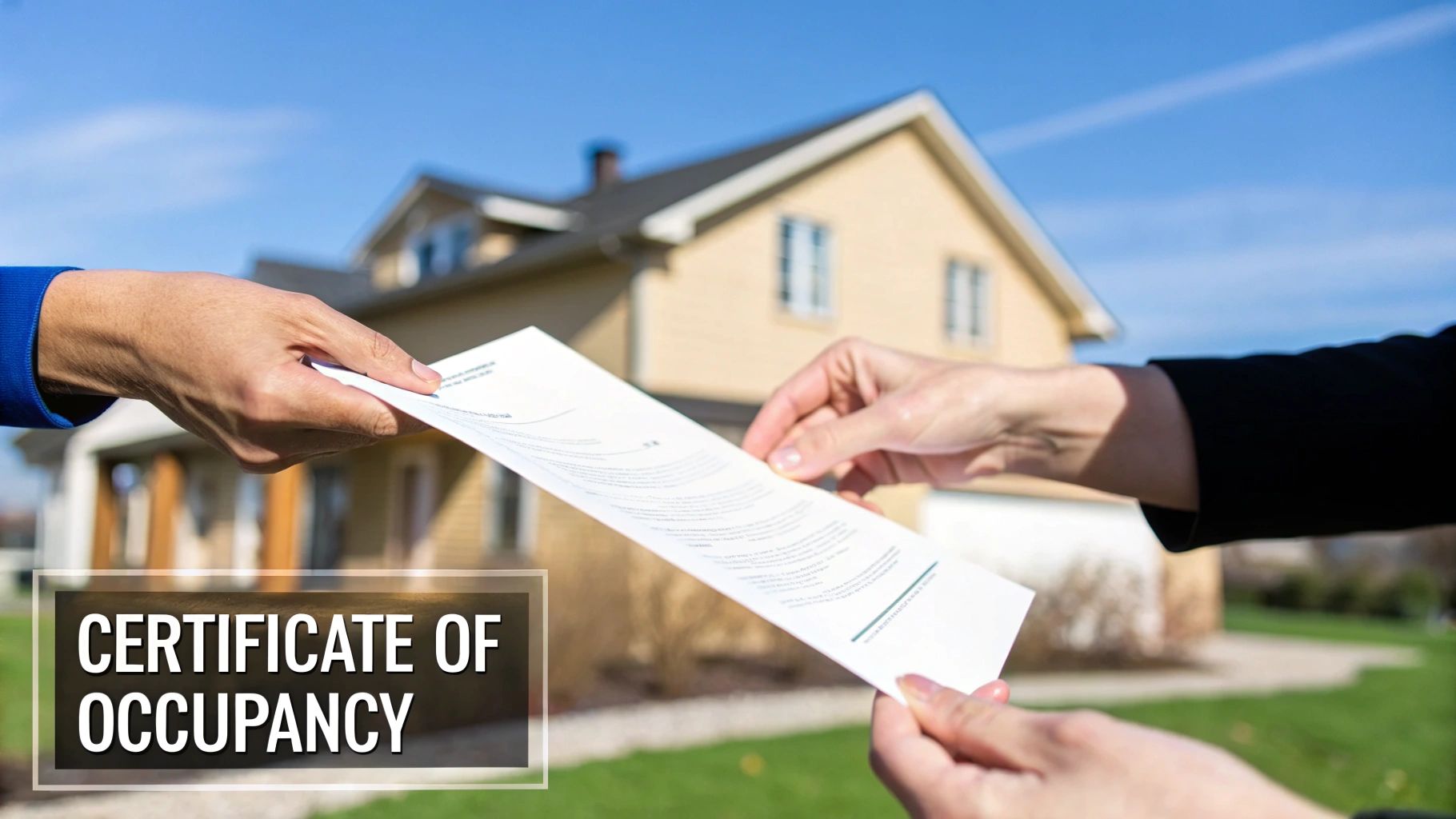
Imagine your new house just had to pass its final exams. The Certificate of Occupancy is the official diploma proving it passed with flying colors. This document is only issued by your local building authority—whether that's in Baltimore County or Harford County—after a whole series of rigorous inspections are completed and signed off on.
This isn't just bureaucratic red tape. The CO is your ultimate assurance that every single part of your home meets strict, non-negotiable building codes and safety regulations. Inspectors pore over everything, from the foundation's integrity and the electrical wiring to the plumbing systems and fire safety features.
Put simply, without this certificate, you legally cannot live in the house.
Why It’s Absolutely Essential
Beyond just being a legal requirement, the CO is a cornerstone of the whole home-buying process. Here’s a quick breakdown of what it means for you:
For a quick reference, here’s a look at why this piece of paper carries so much weight.
Certificate of Occupancy at a Glance
Aspect | What It Means for You |
|---|---|
Legal Requirement | You cannot legally move into your new home without a valid CO. |
Safety Assurance | Confirms the house meets all local building and safety codes. |
Mortgage Finalization | Your lender won't release the final funds to the builder until the CO is issued. |
Homeowner's Insurance | Insurance companies require a CO before they’ll issue a policy on the property. |
Utility Connections | Many utility providers won't turn on water, gas, or electricity without it. |
As you can see, the CO is the key that unlocks the final stages of making your new house your home.
The Ripple Effect of the CO
The importance of the Certificate of Occupancy ripples through every final step of your home-buying journey.
Finalizing Your Mortgage: Your lender has a massive financial stake in your home. They won't release that final, substantial payment on your construction loan without a valid CO. It’s their official proof that the asset they’re financing is complete, safe, and legally habitable. For example, if you have a $400,000 loan, the bank holds onto the last big portion until they see that certificate.
Securing Homeowner’s Insurance: In the same way, insurance companies need to know the home is built to code before they’ll cover it. A CO demonstrates that the property isn't an undue risk, allowing them to issue a policy. Trying to insure a home without a CO is like trying to get car insurance for a vehicle with no safety inspection—it's just not going to happen.
Connecting Utilities: You can’t live in a house without lights, water, or heat. In many jurisdictions, utility companies won't even schedule the final hookup for services like electricity or gas until a CO is officially on file with the municipality.
This process is a global standard for a reason—it’s all about consumer protection. Here in the United States, the system is especially thorough, ensuring new constructions meet strict safety and zoning rules before anyone can call them home. If you're curious, you can often explore public datasets from local governments to see how municipalities track these certificates to keep their communities safe.
Why This Document Matters So Much
Among the mountain of paperwork you'll sign at closing, the Certificate of Occupancy (CO) might seem like just one more page. But trust me, it's one of the most important documents you'll receive. It's much more than a formality; think of it as the ultimate seal of approval for your new home.
This single certificate is your guarantee of safety, your legal right to live in the house, and the key to finalizing your financing. Let's break down why this piece of paper is such a big deal.
Your Peace of Mind on Safety
First and foremost, a CO is all about your safety. It’s official proof that your home has passed a whole series of tough inspections, covering everything from the foundation right up to the roof.
An inspector has walked through the property and personally signed off on the critical systems. They've confirmed the electrical wiring is safe and won't be a fire hazard, the plumbing is solid and leak-free, and the overall structure is built to last. It’s your assurance that all the important stuff hidden behind the drywall and under the floors has gotten a professional thumbs-up.
The Legal Green Light to Move In
Legally speaking, a house isn't a home until it has a CO. Moving in without one can land you in some serious hot water. Local governments in places like Baltimore County and Harford County can hit you with hefty fines or even an eviction notice.
Simply put, the Certificate of Occupancy is your official permission slip from the government to live in the building. Without it, you're essentially trespassing on what's still considered a construction site, no matter how finished it looks.
This isn't a step you can skip. The CO is what officially transforms the property from a job site into your legal residence.
The Key to Your Financing
From a financial perspective, the CO is what unlocks the final doors to your home purchase. Every lender and insurer involved in the process is waiting on this one document.
Mortgage Lenders: Your bank won’t release the final loan payment to the builder until they see a valid CO. It’s their proof that the house they’re lending you money for is a complete, safe, and legally recognized asset.
Insurance Companies: You can’t get a homeowner's insurance policy without a CO. An insurer needs to know the property is built to code and isn't a huge risk before they'll agree to cover it. No insurance means no loan—it's a complete standstill.
Basically, the money doesn't flow until the CO is in hand. My job is to make sure every detail, from the countertops you picked out to the tile in the master bath, is installed perfectly to meet code. That way, getting the final CO is a smooth and exciting final step toward getting the keys to your new home.
The Journey to Getting Your CO
Ever wondered how a buzzing construction site with piles of lumber and concrete actually becomes a home you can legally and safely live in? The secret is the Certificate of Occupancy (CO). Getting this document isn't a single event but a carefully orchestrated journey that starts long before the final coat of paint goes on the walls.
It all begins with the building permit. Before a single shovel hits the dirt, your builder has to submit detailed plans to the local government for approval. Think of the permit as the official starting gun for the whole project. If you want to dive deeper into this first crucial step, we have a whole guide on what a building permit is and why it matters for homeowners.
Once the permit is issued, it kicks off a series of inspections that happen at key milestones during construction. These are like progress reports where a city or county inspector comes out to personally sign off on the work, making sure everything is done to code.
The Big Inspection Checkpoints
The road to getting that final CO is paved with multiple, very specific inspections. Each one focuses on a different system in your home, ensuring it’s installed correctly and safely before it gets hidden behind drywall and flooring.
Here are the usual suspects on the inspection list:
Foundation Inspection: Happens right after the footings are dug and the concrete is poured. This confirms your home is starting on a solid, structurally sound base.
Framing Inspection: Once the "skeleton" of the house is up, the inspector checks the lumber, beams, and overall structure. It's the last chance to see the bones of the home before they're covered.
Plumbing and Electrical Rough-In: This is a big one. Before any walls are closed up, an inspector needs to see that all the wiring, pipes, and vents are placed correctly and meet strict safety standards.
Final Inspection: The grand finale. The inspector does a top-to-bottom walkthrough to make sure everything is finished, functional, and safe—from the handrails on the stairs to the smoke detectors and even those beautiful countertops you picked out.
For anyone navigating a new build, knowing the ins and outs is a huge advantage. You can find more detail on the practical steps of how to get an occupancy permit to get a broader perspective.
From Paperwork to Keys in Hand
It's easy to take for granted now, but the organized system of issuing and tracking COs is a relatively modern safeguard for homeowners. Some local governments, for instance, only started systematically numbering and digitally tracking these certificates back in the 1980s. This shift really highlights just how critical this piece of paper is for keeping a standardized record of every new home's safety and legal status.
This image really breaks down why that whole journey is so vital for your peace of mind—and your wallet.
As you can see, every step builds on the last to create a home that’s secure from the ground up. This is where I come in. I manage this entire inspection gauntlet for you, making sure every detail is handled. My proprietary visualization tools even let you see your custom choices, like cabinets and tile, come to life digitally, so we can ensure the final product not only looks exactly how you want but also sails through that all-important final inspection.
What Inspectors Look For During Final Checks
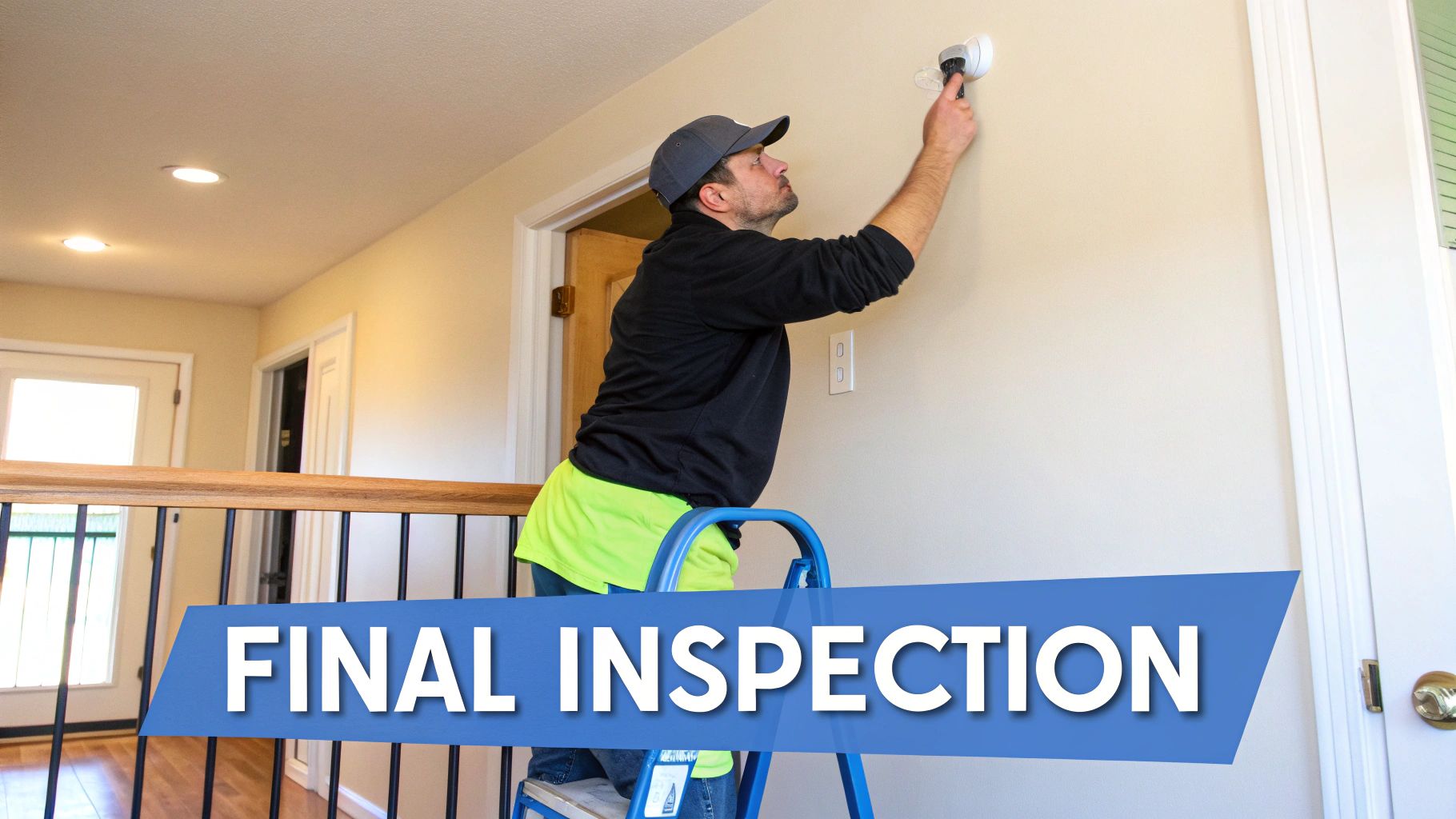
The final inspection is the moment of truth. Before your home can get that coveted Certificate of Occupancy, a municipal inspector—whether from Baltimore County, Harford County, or your local jurisdiction—will perform a meticulous, top-to-bottom walkthrough. They’re there to ensure every last detail is safe, functional, and built to code.
Think of it as the ultimate quality control check, but for your house. The inspector isn’t just taking a quick look; they come armed with a comprehensive checklist to verify that all the work is done right and any notes from previous inspections have been handled. Their job is to officially sign off that your new home is a safe and healthy place to live.
Core Systems and Safety Features
During this final check, the inspector’s attention is laser-focused on the things that directly impact your safety and the home's basic functions. While the full list is long, they zero in on a few critical areas that absolutely must be perfect before giving their approval.
Here’s a look at what’s at the top of their list:
Life Safety Systems: This is non-negotiable. They’ll test every single smoke and carbon monoxide detector to make sure they work, are interconnected, and are properly placed in bedrooms, hallways, and other required areas.
Safe Egress: In an emergency, you need to get out fast. Inspectors check that all doors and windows (especially in bedrooms) open smoothly and provide a clear exit path. They’ll also yank on handrails and guardrails on stairs and balconies to confirm they're secure and built to the correct height.
Electrical Systems: They’ll randomly test light switches and outlets, make sure all cover plates are installed, and verify that the life-saving GFCI (ground-fault circuit interrupter) outlets in kitchens and bathrooms are working correctly to prevent shocks.
Plumbing and HVAC: The inspector will turn on faucets and flush toilets to check for leaks and proper function. They’ll also make sure your heating and cooling systems are running safely and efficiently.
Final Finishes and Structural Details
It’s not all about the guts of the house, though. The inspector also makes sure all the finishing touches are up to snuff. This includes checking that your address numbers are clearly visible from the street for emergency responders and ensuring that outdoor structures like decks or porches are properly supported and safe to use.
This whole detailed process is typically managed by the builder or a general contractor, who works to get everything lined up perfectly for the inspector. If you want to learn more about the person steering the ship, check out our guide on what a general contractor is and why you need one.
To give you a clearer picture, here’s a breakdown of the key areas an inspector will review before they can issue that final CO.
Final Inspection Checklist Highlights
System/Area | What's Being Checked | Why It Matters |
|---|---|---|
Plumbing | No leaks, proper drainage, hot water works, toilets flush correctly. | Prevents water damage, mold growth, and ensures basic sanitation. |
Electrical | GFCI outlets function, all switches and outlets work, cover plates are installed, panel is labeled. | Protects against electrical shock, fire hazards, and ensures convenience. |
HVAC | Heating and cooling systems turn on and operate safely, proper ventilation. | Guarantees a comfortable and healthy living environment with good air quality. |
Life Safety | Smoke/CO detectors are functional and interconnected, fire-blocking is in place. | Provides early warning in case of fire or gas leaks, which is critical for survival. |
Egress | Windows and doors open easily, stairs have proper handrails, clear exit paths. | Ensures you can escape quickly and safely during an emergency. |
Structural | Decks and porches are secure, guardrails are stable, foundation is clear of debris. | Confirms the home's structural integrity and the safety of its attached features. |
Exterior | Proper grading for drainage, address numbers are visible. | Prevents water from pooling around the foundation and helps emergency services find you. |
Passing this final inspection is more than just a bureaucratic step—it’s the official confirmation that your new home is ready for you.
An inspector’s final sign-off isn’t just about checking boxes; it’s a professional certification that the home is a secure place. It validates all the hard work that went into building it and all the care you took in choosing your finishes.
My hands-on service is all about making sure every one of these details—from the flooring you picked out to the placement of every last outlet—is perfect long before the inspector shows up. This proactive approach helps the final inspection go off without a hitch, getting you the keys to your beautifully customized and officially certified new home that much faster.
Navigating the CO Process in Maryland
While the idea behind a Certificate of Occupancy is the same everywhere—proving a house is safe—the actual steps to get one can feel like learning a new language in every town. The general process in Maryland is fairly standard, but the small differences between jurisdictions like Baltimore County and Harford County are where having a local expert really pays off.
Each county has its own permitting office, its own timeline, and its own unique set of requirements. Knowing these local rules inside and out is the key to a smooth closing, and it’s what keeps your move-in date on track.
Local Rules in Our Communities
For anyone buying a new home in our communities, just knowing where to look for this information is a huge head start. The whole process, from the first building permit to that final CO, is managed by the county's permits and inspections department.
Here are the direct resources for the main areas we build in:
Baltimore County: The Department of Permits, Approvals and Inspections (PAI) runs the show here. You can dig into their requirements and even search for permits on the official Baltimore County Certificate of Occupancy page. This is the department that signs off on homes in communities like White Marsh.
Harford County: Here, it’s the Department of Inspections, Licenses and Permits that manages building services. They lay out all the guidelines builders need to follow. If you're buying in an area like Edgewood, you can learn more on the Harford County Building Services site.
Ultimately, these are the folks who have the final say on whether a home is ready for you and your family.
Think of it this way: I'm the one who gets the home ready for its final exam, making sure every single detail is perfect. The county inspector is the proctor who grades the test and hands out the diploma—your CO.
My job is to take all these local complexities off your plate. I know the specific submission quirks, the key inspectors, and the common hang-ups in both Baltimore and Harford counties. This hands-on knowledge means you don't have to waste your time deciphering government websites or stressing about paperwork.
You can focus on the fun stuff, like using my proprietary visualization tools to see how your flooring and countertop picks will look in your new space. Let me handle the red tape so you can focus on planning your move.
Get Ready for Your Move-In Day
Getting the Certificate of Occupancy is a huge milestone. It’s the official green light that transforms a construction site into a home—your home. It means every I has been dotted and every T crossed on safety and building codes. Honestly, it's the moment we've been working toward since we first broke ground.
My goal is always to make this final step feel less like an inspection and more like a celebration. When we build a house with care from the foundation up, getting that CO is just a formality before I can hand you the keys. It’s all about a smooth, stress-free finish to your home-buying journey.
Turning the House into Your Home
With that CO officially in hand, the real fun begins! It's time to start moving in and finally making the space yours.
To keep the chaos to a minimum, a good plan is essential. Using something like an ultimate moving house checklist can be a lifesaver for remembering all those little things—like setting up utilities or forwarding your mail—that are easy to forget in the excitement.
The Certificate of Occupancy isn't just a piece of paper; it’s your ticket to start a new chapter. It signifies that your journey through construction is complete and your life in your new home is just beginning.
While the builder I represent provides high-quality homes, I go a step further—offering my clients unique proprietary visualization tools, hands-on service, and access to visualizers that help you bring your dream space to life. My clients get to customize their homes by picking their flooring, countertops, cabinets, tile, and more, so your home feels just right from the moment you walk in.
Ready to find a home where every detail is handled with care, right down to that final certificate? Let's talk. We build in the beautiful communities of White Marsh, Edgewood, and across Baltimore County and Harford County. Let's bring your vision to life.
Common Questions About Certificates of Occupancy
As your move-in day gets closer, a few last-minute questions about the Certificate of Occupancy are bound to pop up. It’s the final hurdle before you get the keys, so it's totally normal to have some things on your mind. Let's tackle some of the most common ones I hear from buyers.
Can I Move Boxes in Before the CO Is Issued?
I know how tempting it is to get a head start, but the answer here is a hard no. Until that CO is signed, sealed, and delivered, the house is legally a construction site.
Moving your stuff in early creates a mess of liability issues for both you and your builder. Even worse, an inspector could see it as an obstruction and delay the final sign-off. Best to just wait for the green light.
What Is a Temporary Certificate of Occupancy?
Every now and then, a house is completely finished and safe on the inside, but minor outside jobs are held up—think landscaping in winter or a final driveway topcoat delayed by rain. When this happens, the county might issue a Temporary Certificate of Occupancy (TCO).
A TCO is basically a short-term permission slip, often good for about 90 days, that says you can move in while the builder wraps up those last non-safety items. It’s a practical workaround that doesn’t put you at risk.
How Long Does a CO Take After the Final Inspection?
Once the home passes its final inspection with flying colors, the finish line is in sight. Getting the official certificate in hand is usually pretty quick.
Depending on how busy the local municipality is in places like Baltimore County or Harford County, it can take anywhere from a few business days to about a week.
Having a solid grasp of the CO process gives you real peace of mind, kind of like knowing exactly what your new home warranty covers. For a deep dive into that, check out our simple guide on what home warranty coverage includes.
While the builder I represent provides high-quality homes, I go a step further—offering my clients unique proprietary visualization tools, hands-on service, and access to visualizers that help you bring your dream space to life. We let buyers customize their homes by getting to pick their flooring, countertops, cabinets, tile, and more. If you’re looking for a beautiful, customizable home in White Marsh, Edgewood, or the greater Maryland area, let’s bring your vision to life. Visit us at https://www.customizeyourhome.com.
Comments