

What is a Crawl Space? A Friendly Guide to Your Home's Foundation

Ever wonder what's going on in that shallow space under your first floor? That's the crawl space, and it's basically a mini-basement—too short to stand in, but incredibly important. Its main job is to lift your house off the damp ground while creating a protected area for all the critical guts of your home, like plumbing, wiring, and ductwork.
Your Home’s Hidden Foundation
Think of a crawl space as the unsung hero of your home. It’s the essential buffer zone between your comfortable living area and the cold, damp earth below. This design became popular because it’s both practical and cost-effective. For example, in places with tricky soil, like parts of Baltimore County and Harford County, digging a full basement just isn't a great idea, making a crawl space a really smart alternative.
This type of foundation really took off in the mid-20th century. A crawl space is typically an unfinished area, with building codes usually requiring a height of just 18 to 24 inches—enough for a person to literally crawl in and access utilities. By the 1950s and 60s, it was a standard feature in many new single-family homes, offering a simple and effective foundation.
What Does a Crawl Space Actually Do?
So, what’s this space doing for your home day in and day out? It’s constantly performing three crucial jobs that keep your house standing and your life comfortable.
Support: First and foremost, it’s the structural base holding up your entire house. It distributes the massive weight of your home evenly across the foundation footings.
Access: It’s a lifesaver for technicians. Imagine a pipe bursts under your kitchen. With a crawl space, a plumber can get in and fix it without having to tear up your beautiful new flooring.
Utilities: It’s the perfect place to neatly house the essential arteries of your home—pipes, electrical wiring, and air ducts—keeping them safe from the outside elements.
This diagram breaks down how these three elements come together.
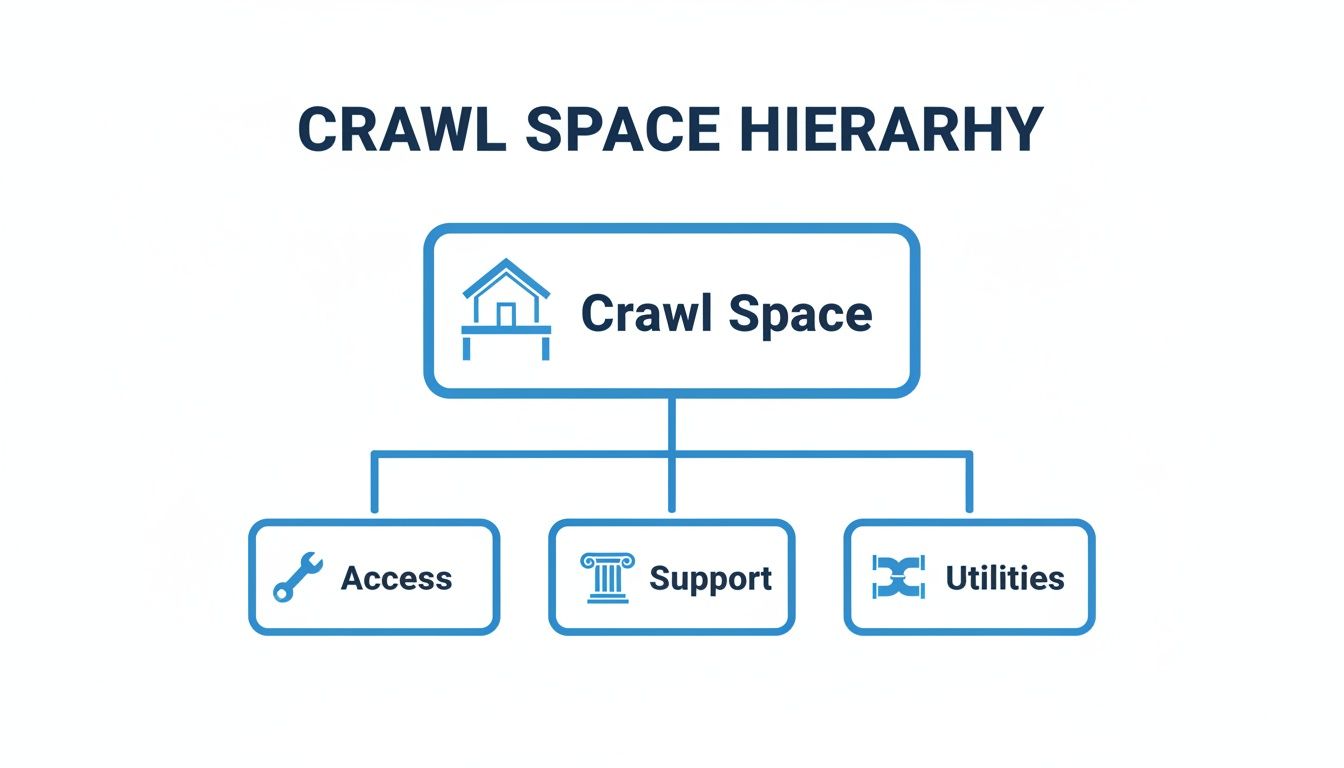
As you can see, each function is tied together, proving just how central the crawl space is to your home's overall health. Getting a handle on your foundation is a big part of being a homeowner, just like understanding the build process from the ground up. For more on that, check out our guide to the new home construction process.
Vented vs. Unvented Crawl Spaces: What's the Difference?
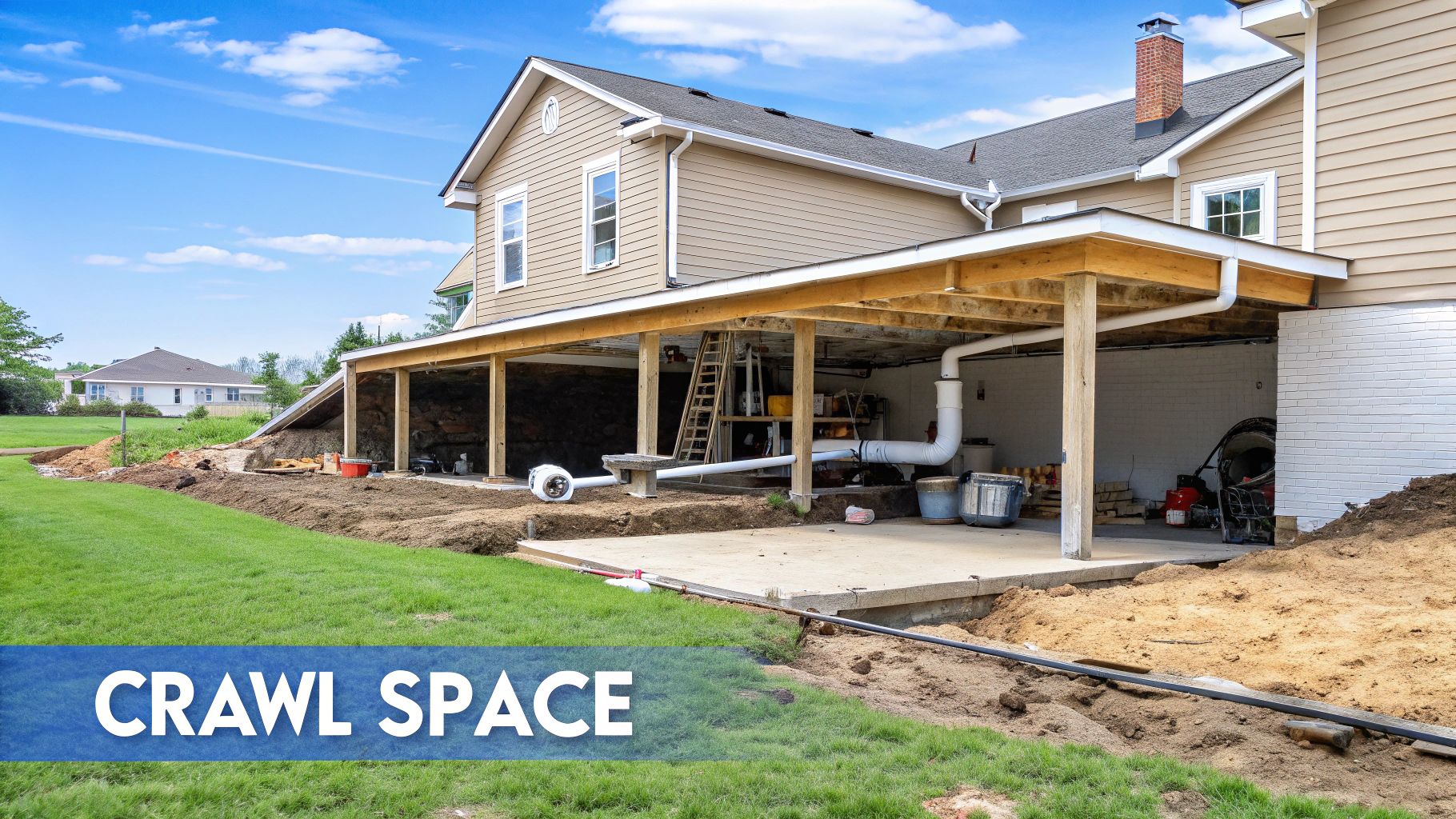
Not all crawl spaces are built the same, and the distinction between the two main types is a game-changer for your home's health. For decades, the go-to design was the vented crawl space. The thinking was pretty straightforward: cut vents into the foundation walls to let fresh air circulate and dry everything out.
Seems logical, right? Well, in practice, it often backfires spectacularly, especially in humid climates like we have here in Maryland.
During those hot, sticky summers in places like White Marsh and Edgewood, these vents become an open invitation for heavy, moisture-packed air to come right in. Instead of drying out the crawl space, they make it soggier.
This warm, damp air then collides with the cooler surfaces under your home—your pipes, ductwork, and floor joists—and condensation forms. It’s the same thing that happens when a glass of iced tea "sweats" on a porch in July. All that moisture creates a perfect breeding ground for musty smells, mold, and wood rot, which can seriously compromise your home's structure and tank your indoor air quality.
The Smarter, Modern Approach: Unvented Crawl Spaces
This brings us to the far better solution used in modern construction: the unvented, or encapsulated, crawl space. The strategy here is the complete opposite. Instead of trying to air it out, you seal it off entirely from the outside world and the damp ground beneath it.
Encapsulation involves a few critical steps:
Sealing the Vents: First thing's first—all those old foundation vents are sealed up for good. No more humid air getting in.
Laying a Vapor Barrier: Next, a heavy-duty plastic liner (the vapor barrier) is installed across the entire dirt floor and run up the foundation walls. Think of it as a high-tech raincoat for your foundation, blocking ground moisture from ever entering the space.
Conditioning the Air: Finally, the crawl space is treated like a part of your home. This usually means either introducing a small amount of conditioned air from your HVAC system or installing a dedicated dehumidifier to keep the humidity under control.
By turning your crawl space into a clean, dry, semi-conditioned area, you're basically extending your home's protective bubble. This move doesn't just protect your home's bones; it also guards those beautiful hardwood floors and custom cabinets you picked out from the warping and damage that moisture can cause.
This isn't just a new fad; it's a shift based on solid research. Study after study has shown that sealed crawl spaces are drastically better at controlling moisture and preventing mold. These findings were so conclusive that they actually helped rewrite building codes, cementing the unvented design as the superior standard for new homes.
This approach also makes your home more energy-efficient. To learn more, check out our guide on 10 essential home energy efficiency tips.
Common Crawl Space Problems You Can Spot
Even the best-built homes need a regular check-up, and your crawl space is one of the most critical spots to keep an eye on. Since it's out of sight and out of mind, small issues can quietly snowball into massive, expensive headaches.
The good news? You can be your home's first line of defense. Think of yourself as a home detective. You don’t need any special gear to spot the most common red flags—in fact, the clues often show up inside your house long before you ever need to peek underneath.
Moisture and Musty Odors
If there's one arch-nemesis for a crawl space, it's moisture. Have you noticed a persistent musty or earthy smell hanging around, especially on your first floor? That's a huge sign that there’s too much humidity trapped down below. That damp air naturally rises and circulates right into your living space.
This constant dampness is basically an open invitation for mold and mildew to move in. For a deep dive into tackling this, check out this guide on crawl space mold remediation. Catching these smells early can save you from serious air quality problems down the road.
A damp crawl space isn't just unpleasant; it's a structural risk. Over time, moisture will rot wooden joists and subflooring, weakening the very bones of your home.
Pests and Unwanted Guests
To a pest, a dark, damp, and sheltered crawl space looks like a five-star resort. Rodents, insects, and especially termites are drawn to these conditions like a moth to a flame. For example, if you're hearing strange scratching sounds under the floor or seeing more bugs inside than usual, your crawl space is the likely culprit.
These critters aren't just annoying; they can cause serious damage. Termites can chew through structural wood without you ever knowing, while rodents can tear up insulation and gnaw on wiring. Keeping your crawl space dry and sealed is the best way to hang up a permanent "No Vacancy" sign.
Signs of Structural Strain
Sometimes, your home itself will scream for help when the foundation is in trouble. Keep an eye out for these classic tell-tale signs:
Bouncy or Sagging Floors: Does the floor feel spongy or uneven when you walk across it? This could mean the support joists in the crawl space are failing from rot or pest damage.
Cracks in Interior Walls: New cracks showing up around door and window frames often point to the foundation shifting or settling unevenly.
Sticking Doors or Windows: When doors suddenly start jamming or windows become a struggle to open, it's another clue that the structure below might be compromised.
Crawl spaces simply have more durability challenges and shorter lifespans than slab foundations if they're neglected. This is especially true in humid climates where unchecked moisture leads to disaster. In high-humidity states, a shocking 25% of homes with crawl spaces show signs of wood rot within 20 years, which also rolls out the welcome mat for termites.
Recognizing these structural red flags is crucial, as they hint at problems much deeper than what you see on the surface. If you're dealing with a larger underground space, our guide on basement finishing design ideas also touches on some of these important structural considerations.
Your Essential Crawl Space Maintenance Checklist
Spotting the warning signs of a failing crawl space is one thing, but preventing those problems from ever taking root is the real goal. A little bit of proactive maintenance makes a world of difference in protecting your home’s structure, keeping your indoor air clean, and stopping your energy bills from creeping up.
It’s just like getting an oil change for your car—a simple, routine task that helps you avoid a massive, expensive breakdown down the road. By breaking down the checklist by season, you can easily stay ahead of a crawl space's biggest enemies: moisture, pests, and simple neglect.
Your Seasonal Maintenance Plan
A healthy crawl space doesn't need your constant attention, just a few consistent check-ins throughout the year. Here's a simple seasonal guide to keep that space under your home in prime condition, making sure the beautiful house you've customized stays that way from the ground up.
Spring (March-May): The Rainy Season Check
After the heavy spring rains we often see in Maryland, it’s the perfect time to do a quick inspection.
Look for Water: Grab a good flashlight and safely peek into your crawl space after a big storm. You're looking for any puddles, damp spots on the foundation walls, or dark, tell-tale stains on the wooden supports. Any of these mean water is getting in.
Check Gutters and Downspouts: This is a big one. Take a walk around your house and make sure all your gutters are clear of leaves and the downspouts are funneling water at least five to ten feet away from your foundation. If water is pooling right next to your house, you can bet it's trying to get into your crawl space.
Summer (June-August): Humidity and Pest Patrol
Warm, humid air is public enemy number one during the summer months.
Monitor Humidity: If you have an unvented, encapsulated crawl space, double-check that your dehumidifier is running properly. A musty smell drifting upstairs is often the first sign that humidity levels are way too high down below.
Seal Entry Points: Do a quick hunt for any new cracks or gaps in the foundation where pests could be getting in. For instance, a little bit of caulk around a new pipe can be a surprisingly effective defense against unwanted critters.
Fall (September-November): Foundation and Insulation Inspection
As the weather starts to cool down, a couple of final checks can get your crawl space ready for winter.
Inspect for Cracks: Before the first frost, check the exterior foundation for any cracks that might have appeared over the summer. Sealing small cracks now prevents water from getting in, freezing, and turning them into much bigger problems.
Check Insulation: Take a look at the insulation under your floors. Is it sagging, damp, or looking like a critter's nesting material? If so, it’s not doing its job, and you'll definitely feel it with cold floors this winter.
Winter (December-February): A Time to Rest
If you've done your seasonal checks, winter should be pretty quiet for your crawl space. The main thing to remember is to close your crawl space vents (if you have them) to keep frigid air out and help prevent your pipes from freezing. This is just one small part of keeping your home in tip-top shape. For a more complete guide, check out your ultimate monthly home maintenance list.
How a Healthy Crawl Space Protects Your Home
Think of your crawl space as the unsung hero of your home. It’s not just a dusty void under the floorboards; it’s the foundation that directly impacts your home's health, your family's comfort, and the longevity of all those beautiful finishes you so carefully selected.
Let’s be honest, when you daydream about your perfect home, you’re probably picturing the gleaming countertops or the rich hardwood floors, right? Well, a healthy crawl space is what keeps that dream from turning into a nightmare.
Imagine you just installed those gorgeous, wide-plank oak floors. A damp, neglected crawl space will silently send a constant stream of moisture upward, causing those pristine boards to warp, buckle, and cup. It’s a slow-motion disaster happening right under your feet, and it can ruin your investment.
A dry, properly sealed crawl space acts as a shield, stopping that ground moisture cold. This is what ensures your custom design choices—from the flooring to the kitchen cabinets—stay stable and look fantastic for years to come.
Breathing Easier in Your Own Home
It’s not just about protecting wood and tile. A healthy crawl space is absolutely critical for your family's well-being. Here’s a startling fact: up to 50% of the air you breathe inside your house actually comes up from the crawl space.
This happens because of a natural airflow pattern called the "stack effect," where air from the lowest level of your home is pulled up into the main living areas. If your crawl space is damp and musty, that air is loaded with mold spores, dust mites, and other allergens. Every time your HVAC system clicks on, it's circulating that contaminated air throughout your home.
Keeping the crawl space dry and clean isn't just about preventing rot. It's one of the most effective ways to improve your home's indoor air quality, meaning less dust, fewer allergens, and a fresher, healthier environment for your family.
A Foundation for Customization and Confidence
Whether you’re looking at homes in communities like White Marsh or Edgewood, knowing you have a solid, dry foundation provides priceless peace of mind. It frees you up to invest confidently in the high-quality finishes you’ve always wanted without worrying about them being ruined from below.
When you know your home is built right from the ground up, you can focus on the fun part—making it truly yours. That’s where my hands-on approach and proprietary visualization tools come into play. I help you see exactly how your choices in flooring, cabinets, and tile will come together, ensuring every detail is just right.
Ready to design a home where every element, seen and unseen, is built for lasting quality? Let's connect and explore how we can bring your vision to life in a beautiful, healthy home in Baltimore County or Harford County.
Let's Find Your Perfect Home in Maryland
Really getting to know a house, from the foundation all the way up, is the first step toward making it a home you absolutely love. When you know every part of it is solid—even the often-forgotten crawl space—you can get down to the fun stuff, like making the space truly yours.
Are you ready to find a place where you get to pick out your own countertops, choose the perfect flooring, and obsess over every finish? That's what I help with. I specialize in guiding homebuyers to find their spot in amazing Maryland communities like White Marsh, Edgewood, and all over Baltimore and Harford Counties. It’s never just about finding a house; it's about creating a home that feels like you.
A great home isn’t just about the beautiful things you see. It's about the peace of mind you get from knowing it’s built right, from the foundation to the roof.
I take a really hands-on approach with my clients and even offer some exclusive visualization tools to help you picture your dream home. Think about it: you could be comparing cabinet styles or testing out flooring options in a virtual model of your future living room.
Let’s chat today and start exploring what’s out there. Together, we can find a home that’s perfect for you, right down to the last detail. Your dream space is waiting.
Your Crawl Space Questions, Answered
Over the years, I've heard just about every question you can imagine when it comes to crawl spaces. Let's tackle a few of the most common ones I hear from homebuyers. Getting a handle on what's under your home is the first step to protecting your investment.
Can I Actually Use My Crawl Space for Storage?
This is the big one, and the answer is a classic "it depends." If you're dealing with an old-school, vented crawl space with a dirt floor, the answer is a hard no. It's a damp, musty, and critter-friendly zone. Anything you put down there is asking to get ruined by mold and moisture.
Now, if you have a modern, encapsulated crawl space, you're in a whole different ballgame. These are sealed, clean, and dry environments. Think of it as a mini-storage unit right under your house. It’s a great spot for stashing seasonal items like holiday decorations or outdoor gear, as long as they're in sealed plastic totes.
How Often Should I Really Be Checking on My Crawl Space?
You don't need to move in down there, but you can't just ignore it either. A good rhythm is to give it a solid look-over twice a year. I always recommend doing one check in the spring after all the rain has passed, and another in the fall before the cold weather hits.
What are you looking for? Anything that seems out of place: signs of water, unwanted pests, or torn-up insulation. Spotting a small problem early—like a little leak or a tear in the vapor barrier—is a quick fix that can save you from a massive, wallet-draining headache down the road.
So, is a Crawl Space Better Than a Basement?
"Better" is all about context. It really comes down to the home's location, the local climate, and what you need from your space. Here in Maryland, especially across Baltimore County or Harford County, the soil and high water tables can make digging a full basement a very expensive and potentially risky proposition. A crawl space is often the more practical, cost-effective solution that gets the home up and away from ground moisture.
A basement gives you that extra living space, for sure. But a well-kept, modern crawl space gives you fantastic access to your home's guts—plumbing, HVAC—and solid stability, without the constant worry of a major flood that can plague basements in our region.
At the end of the day, an encapsulated crawl space delivers many of the same benefits as a basement—keeping the home dry, stable, and protected—for a fraction of the upfront cost.
I believe that a great home starts from the ground up. When you understand what's under your feet, you can move forward with confidence and focus on all the details that truly make a house your own. While the builder I represent provides high-quality homes, I go a step further—offering my clients unique proprietary visualization tools, hands-on service, and access to visualizers that help you bring your dream space to life. Ready to pick the perfect flooring, countertops, and cabinets? Let's connect at https://www.customizeyourhome.com.
Comments