

What Is a Home Appraisal? A Guide for Today's Homebuyer

So, you're on the journey to buying a home, and you keep hearing the word "appraisal." What exactly is it?
Think of a home appraisal as an expert's impartial opinion on what a house is actually worth. It’s not a random guess or a Zillow estimate; it's a detailed, in-person analysis conducted by a licensed professional to figure out a property's fair market value. It’s a super important step that gives everyone, especially your lender, peace of mind.
Understanding the Home Appraisal

Let's break it down with a simple example. Imagine you’re buying a rare collectible. Before you hand over the cash, you'd probably want a third-party expert to verify it's the real deal and worth the asking price, right? A home appraisal works the same way, but the person most interested in the result is your mortgage lender.
Lenders need to be sure that the massive loan they're about to give you is a sound financial bet. The appraisal provides that security, confirming that the house is worth at least what you’re borrowing. It prevents a risky situation where the bank lends you $350,000 for a home in White Marsh, Maryland, that’s really only worth $320,000. It's a critical safety measure that protects everyone involved.
For a quick overview of what an appraisal entails, check out this table.
Home Appraisal at a Glance
Component | Description |
|---|---|
Who | A state-licensed, third-party appraiser. |
What | An unbiased, professional opinion of a property's fair market value. |
When | During the mortgage process, after your offer is accepted. |
Why | To ensure the home's value supports the loan amount. |
This table sums it up, but let's look a little closer at the "why."
Who Is Involved and What Is the Goal
The process is pretty straightforward. You've got the buyer, the seller, the lender, and the appraiser. The key here is that the appraiser is a totally independent party. They have no skin in the game, so their only job is to deliver an honest, fact-based assessment of the home’s value.
The core purpose boils down to a few simple things:
Protect the Lender: First and foremost, the appraisal confirms the property is solid collateral for the loan.
Protect You, the Buyer: It's also a reality check, giving you confidence that you aren't paying more than the home is worth.
Validate the Sale Price: It acts as a final check to ensure the price you and the seller agreed on is reasonable in the current market.
This step is standard procedure when you get a mortgage. And while it might sound like other evaluations, it's very different from a home inspection. It's also distinct from a property survey, which defines the boundaries of your land. If you're curious about that, you can learn more about a property survey in our complete homebuyer guide.
At the end of the day, a home appraisal is an essential piece of the puzzle. It brings clarity and security to what is likely one of the biggest financial decisions you’ll ever make.
Why an Appraisal Is Your Financial Safety Net
A home appraisal isn't just another hoop to jump through for the bank; it's one of the most important safeguards in the entire home-buying process. Think of it as an expert, unbiased opinion that protects your biggest financial investment.
For you as the buyer, it’s the ultimate reality check, confirming that the price you agreed to pay is actually what the home is worth. For the lender, it’s proof that they’re not loaning out more money than the property can secure. And for the seller, it validates their asking price with hard data. It creates a foundation of trust for the whole deal.
Making Sure You're Paying a Fair Price
Let's say you've found the perfect spot in White Marsh, Maryland. You’ve used our visualization tools to design your dream kitchen with those gorgeous quartz countertops and wide-plank hardwood floors you've always wanted. An appraisal is what confirms those beautiful, high-end choices translate into real, measurable market value.
An appraisal is your defense against overpaying. It makes sure the contract price is grounded in reality, preventing you from starting your homeownership journey "underwater"—owing more than the house is worth.
This impartial valuation is your financial guardrail. A licensed appraiser, who has no skin in the game, provides an unbiased estimate based on cold, hard facts: the home's location, size, condition, and features. They don't just pull a number out of thin air; they dig into recent sales data of similar nearby homes to justify the value. In fact, you can see these kinds of market shifts yourself by looking at historical data. The U.S. Census Bureau tracks these trends over decades—it's fascinating to explore these historical housing value trends on Census.gov and see how much things have changed.
Setting You Up for Long-Term Financial Health
The appraisal's job doesn't end at the closing table. That initial value it establishes becomes the starting line for your home's entire financial future. It's the baseline from which all your future equity will grow.
Thinking about the long game is smart. For example, knowing your home's official appraised value is useful down the road if you want to get a home equity line of credit (HELOC) or refinance your mortgage. Understanding things like the potential home sale capital gains tax you might face years down the road when you decide to sell is part of being a savvy homeowner.
Ultimately, a good appraisal does more than just get the deal done. It gives you confidence that your new home in Baltimore County or Harford County is a solid, sound investment that will serve you well for years to come.
The Home Appraisal Process from Start to Finish
So, what really goes on during a home appraisal? It might feel a bit like a black box, but it’s actually a pretty logical series of steps designed to be as objective as possible.
Once your offer is accepted and the mortgage process is chugging along, your lender gets the ball rolling. They’re the ones who order the appraisal from a licensed, third-party pro. This is key—it keeps everything impartial. As the buyer, you'll typically pay for this service, and the fee is usually wrapped into your closing costs.
The On-Site Visit
The first big step you’ll see is the appraiser actually showing up at the property. This isn't a home inspection where they're checking every light switch. Instead, they're on a mission to gather hard data that affects the home's value. This visit usually only takes an hour or two.
Here’s what they're up to:
Getting the lay of the land: They’ll measure the exterior to confirm the home's total square footage, also known as its gross living area (GLA).
Doing a full walk-through: The appraiser will count every room, get a feel for the floor plan, and take note of the condition of things like walls, floors, and ceilings.
Noting the good stuff: They're looking for quality features and any upgrades you've made. For example, they'll note the premium flooring, new kitchen countertops, or that fancy tile you picked out for the bathroom.
Checking out the exterior: They’ll assess the home’s curb appeal, check the condition of the roof and siding, and document outdoor features like a deck, patio, or garage.
This part of the process brings the buyer, lender, and seller into the same loop, making sure the deal is based on a solid, verified value.
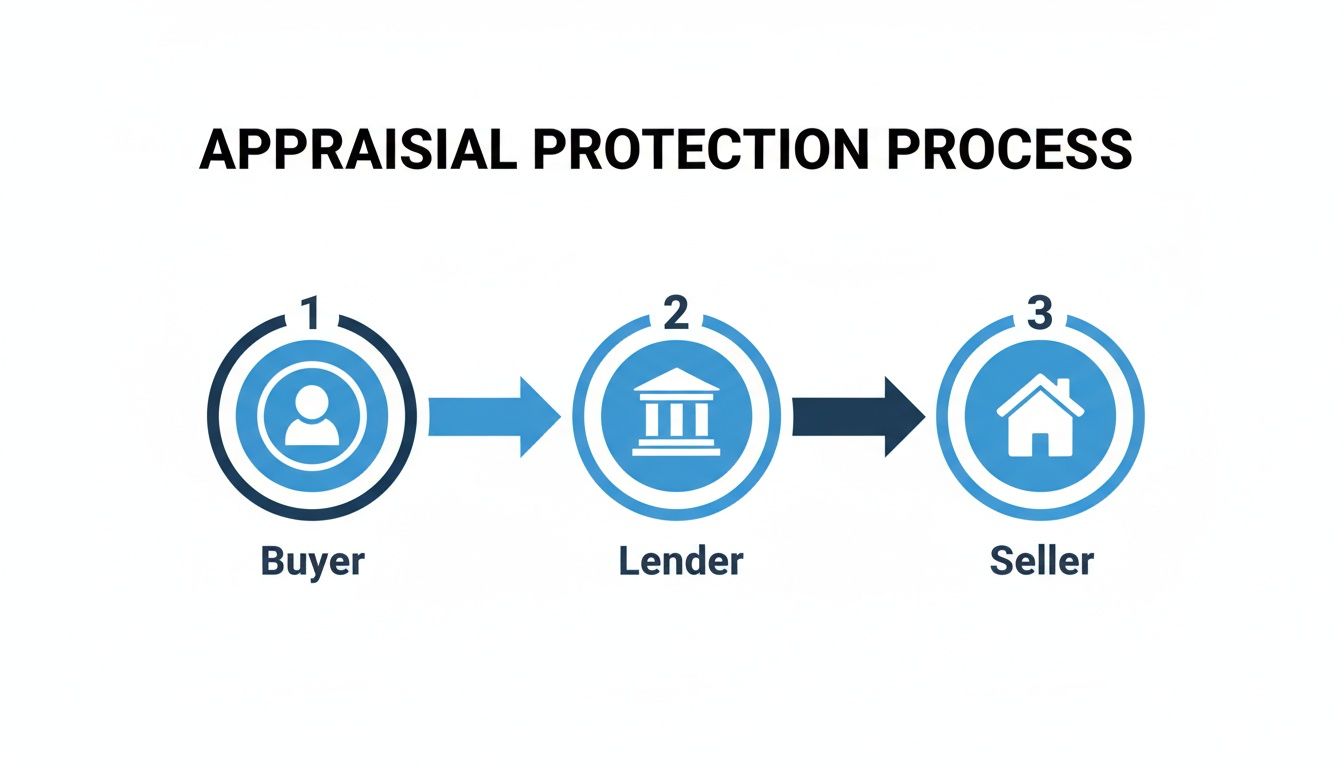
As you can see, the appraisal is the critical link that protects everyone involved and makes sure the transaction is fair.
Behind the Scenes: Research and Reporting
After the appraiser leaves, the real homework begins. They take all the notes and measurements from the visit and start comparing the property to other recent sales in the neighborhood.
This is where true local expertise really shines. An appraiser digs up "comps"—that's industry slang for comparable homes that have sold nearby, preferably within the last six months. They’re looking for homes in the same neighborhood, whether that's Edgewood or another part of Harford County, that are as similar as possible.
They then make adjustments. For instance, if the home you're buying has a brand-new, top-of-the-line kitchen but a comparable home that sold down the street had a dated one, the appraiser adjusts the value of your property upward. With so many moving parts, using a simple home buying checklist template can be a lifesaver for keeping track of where you are in the process.
Finally, all this data gets compiled into a comprehensive report. It’s a detailed document complete with photos, property sketches, and a full breakdown of how they landed on that final number. The appraiser sends this report to your lender, who will then share a copy with you. From the day it's ordered to the moment you get the report, the whole thing usually takes about one to two weeks.
Key Factors That Influence Your Home's Value

So, what exactly are appraisers looking for when they walk through a home? It's not just a quick glance. They're piecing together a puzzle, combining hard facts with their professional eye to figure out what a buyer would realistically pay for the home right now.
At the heart of it all is comparison. An appraiser’s main job is to find "comps"—that's industry-speak for similar homes in your neighborhood that have sold recently, usually within the last six to twelve months. They dig through public records to find the closest matches, creating a solid baseline for your home's value. This method has been the standard for decades, charting the market's wild ride from the 1970s suburban boom all the way to today.
The Core Value Drivers
Let's start with the big stuff. These are the foundational elements that carry the most weight and set the initial benchmark for your property's worth.
Location, Location, Location: It’s a cliché for a reason. Being in a great school district or close to parks and amenities in places like Baltimore County or Harford County really does move the needle.
Square Footage: Size matters. The total livable space, or Gross Living Area (GLA), is a huge factor. Generally, more room equals more value.
Bedrooms and Bathrooms: This is a simple numbers game. The appraiser will count every bedroom and bath (full and half) and compare it directly to the comps.
Where Your Personal Touches Shine
Okay, beyond the basic stats, the appraiser zooms in on the quality and condition of your home. This is where all your hard work and design choices can really pay off, turning a standard house into something special.
A thoughtfully updated kitchen in a White Marsh home can command a much higher value than a dated one in a similar property nearby. Appraisers recognize and reward modern, desirable features that align with what today's buyers want.
The quality of the construction and any recent upgrades get put under the microscope. Did you opt for durable hardwood floors instead of basic carpet? Are the kitchen countertops a high-quality quartz? These details add real, tangible value.
Energy-efficient features are another big win. Modern appliances and windows don't just save on utility bills; they boost your appraisal. You can actually check out our guide on top energy-efficient home features to see what gives you the most bang for your buck.
Finally, the overall flow and layout of the home make a difference. An open floor plan that feels bright and connected is almost always valued more than a choppy, closed-off layout from a bygone era. If you’re hungry for more ideas, there are plenty of smart ways to increase home appraisal value. Focusing on the right upgrades ensures your home puts its best foot forward when the appraiser comes knocking.
How to Handle the Appraisal Results
That email with the appraisal report attached? It can definitely make your heart skip a beat. After all the searching, the offers, and the planning, this one document plays a huge role in what happens next.
The good news is, it's not as complicated as it seems. The results really only fall into one of three buckets, and we'll walk through what each one means for you.
The best-case scenario, and the most common one, is when the house appraises for exactly the sale price. This is the green light everyone was hoping for. It tells the lender that you're not overpaying, and your loan can proceed smoothly to the closing table. Time for a sigh of relief.
Understanding Different Appraisal Outcomes
Now and then, you get an even better surprise: the appraisal comes in higher than what you agreed to pay. Talk about a great start to homeownership!
This means you have instant equity. Let's say you're buying a home for $375,000, but the appraiser values it at $385,000. You've just locked in $10,000 of equity before you even make your first mortgage payment. It’s like getting a financial head start on day one.
But what if the news isn't what you hoped for? What happens when the appraisal comes in lower than the sale price? This situation is called an "appraisal gap," and while it can feel like a major setback, it’s a problem with a solution. Don't panic. You have options.
An appraisal gap isn't a deal-killer. It’s simply a fork in the road that requires a calm conversation and a clear strategy to move forward.
Navigating an Appraisal Gap
If you find yourself with a gap between the contract price and the appraised value, here are the three most common paths forward:
The Seller Comes Down: You can go back to the seller with the report and renegotiate. Often, a motivated seller would rather lower the price to the appraised value than see the deal fall apart and have to put the house back on the market.
You Challenge the Report: Sometimes, appraisers make mistakes. If you and your agent feel they overlooked a key feature, missed a recent upgrade, or used poor comparable sales, you can formally ask for a "Reconsideration of Value" with better data.
You Cover the Difference: If the seller won't budge and the appraisal stands, you can choose to pay the difference out of pocket. The bank will only lend up to the appraised value, so you’d have to bring extra cash to closing to bridge that gap.
Working through these negotiations is where having a good team in your corner really matters. We’ve seen it all and can help you figure out the best move. It's also a good reminder of how different pieces of the financial puzzle fit together, from your down payment to other funds you've set aside. For a refresher on that, our guide on what is an earnest money deposit can be a big help.
Bringing Your Vision to Life
Getting a handle on the home appraisal process is a huge step toward buying a home with confidence. Think of it as a reality check that makes sure your investment is solid, which is especially important when you’re customizing a home to be exactly what you want. A good appraisal confirms that all those beautiful, high-quality finishes you've picked out are adding real, tangible value to your property from the moment you get the keys.
My goal isn't just to help you find a house—it's to help you create a space that feels like it was made just for you. That’s why I take a hands-on approach, giving my clients access to some really cool proprietary visualization tools so you can see your dream come to life before making any final calls.
See It Before You Build It
The best part of a new home is making it your own. We give buyers the power to pick out the features that really matter to them. And with our visualizer tools, you're not just guessing—you can see exactly how your choices will look together in your future home.
Flooring: Want to see the difference between warm hardwoods and sleek luxury vinyl? You can test out all the options.
Countertops: Compare dozens of stunning quartz and granite selections to find the perfect centerpiece for your kitchen.
Cabinets: Cycle through different styles and colors until you find the perfect match for your design vibe.
Tile: Play around with different patterns to design the perfect backsplash or a spa-like bathroom surround.
These selections are about more than just looks; they're about building equity right from the start.
Ready to find and design your perfect home in White Marsh, Edgewood, or anywhere in the greater Baltimore County and Harford County? Let's connect and start turning that vision into a reality.
Got Questions About Appraisals? We’ve Got Answers.
Still have a few things you're wondering about? Don't worry, that's completely normal. Appraisals can seem a bit mysterious, so let's clear up some of the most common questions we get.
How Is an Appraisal Different From a Home Inspection?
This is a great question, and it's one that trips up a lot of people! The easiest way to think about it is like this: an appraisal is about the value of the home, while an inspection is all about its condition.
An appraiser's main goal is to figure out the home's fair market value for the bank. They're asking, "What's this property worth in today's market?" To answer that, they'll look at things like recent home sales in the neighborhood, the home's location, and its overall features.
A home inspector, on the other hand, is like a doctor for the house. They pop the hood, so to speak, checking everything from the plumbing and electrical systems to the roof and foundation. They’re there to answer the question, "Is anything broken or in need of repair?"
What’s the Price Tag on an Appraisal and Who Foots the Bill?
It's almost always the homebuyer who pays for the appraisal. You can expect the cost to land somewhere between $300 and $600, though it can be higher for larger or more complex properties. This fee is typically paid upfront or bundled into your closing costs.
While nobody loves an extra expense, this one is crucial. The lender is the one who orders the appraisal, and they use a licensed, third-party professional to ensure the final number is 100% impartial. It's a safeguard that protects everyone involved—you, the buyer, and the lender—by making sure the loan amount aligns with the home's actual value.
Can I Pick My Own Appraiser?
Nope, you can’t. Federal regulations are pretty strict on this to avoid any conflicts of interest. The lender is required to order the appraisal through an independent firm or what's called an Appraisal Management Company (AMC).
This rule is in place to guarantee the appraiser has zero personal or financial connection to the deal. Think of it as a checks-and-balances system. The good news is that while you can't choose the person, you are legally entitled to get a full copy of the final appraisal report for your own records.
How Do My Customizations Affect the Appraisal Value?
This is where the fun stuff comes in! Your personal selections can absolutely give your home's value a nice boost. High-quality finishes and thoughtful upgrades are things appraisers definitely notice and factor into their calculations.
For instance, opting for premium quartz countertops instead of standard laminate, or choosing beautiful luxury vinyl plank flooring over basic carpet, adds real, tangible value. These aren't just cosmetic choices; they're investments in the home's quality.
To make sure you get full credit for your choices, we always give the appraiser a detailed list of every single upgrade you've selected. This spec sheet helps them make a true apples-to-apples comparison when looking at your stunning new home in a community like White Marsh or Edgewood.
At Customize Your Home, my mission is to provide more than just a house; I offer a partnership. With unique visualization tools and hands-on service, I help you select the perfect flooring, countertops, and cabinets to create a space that’s truly yours. Ready to start designing your dream home in Maryland? Visit us at customizeyourhome.com to learn more.
Comments