

What is a variance in zoning and how it works

Ever look around a neighborhood and spot a house that doesn't quite seem to follow the same rules as its neighbors? Maybe it's a little closer to the street or has a fence that's a bit taller. The secret behind that is often something called a zoning variance.
Think of your town's zoning code as the official rulebook for development. It dictates things like how far homes must be from the property line, how tall they can be, and what you can build where. A zoning variance is basically official permission to bend one of those rules for your specific property.
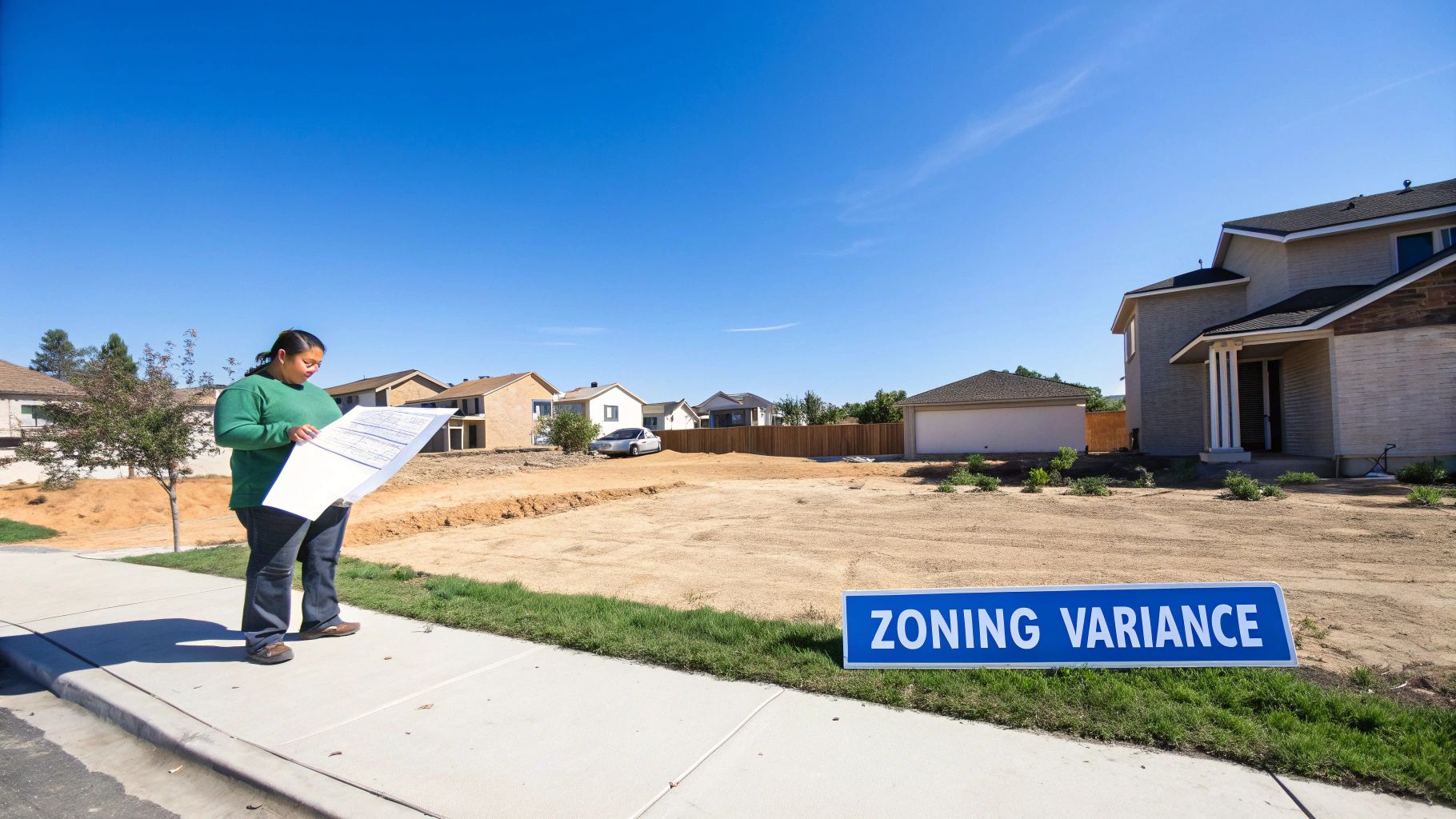
What a Zoning Variance Actually Is
Imagine you buy a board game, but one of the pieces is slightly misshapen, so it doesn't fit in the designated spot. A variance is like the game maker giving you a special pass to place that one piece just a little differently so you can still play. It’s not about changing the rules for everyone, just making a fair adjustment for your unique situation.
In the real world, a variance provides a necessary exception when your property has some sort of physical limitation—like a strange shape, a steep slope, or a protected natural feature—that makes it impossible to follow the standard code without creating an unfair hardship.
Zoning boards typically grant these on a case-by-case basis after a public hearing. They want to see that the problem isn't self-created and that you have a legitimate obstacle to overcome. For a good look at how a municipality handles this process, you can see how the city of Modesto, California, defines variances.
To put it simply, a variance is a solution for a specific problem, not a loophole to get what you want. The table below breaks it down.
Zoning Variance at a Glance
Concept | What It Is (A Solution For...) | What It Is NOT (A Way To...) |
|---|---|---|
Purpose | Overcoming a unique physical hardship on a property (e.g., steep slope, odd lot shape). | Gaining a personal benefit or preference (e.g., getting a better view). |
Scope | A minor adjustment to a specific dimensional rule (e.g., setback, height). | Changing the fundamental use of the property (e.g., building a store in a residential zone). |
Justification | Proving that the zoning rule, as applied to your lot, is uniquely unfair or unreasonable. | Arguing that the zoning rule is inconvenient or that you just don't like it. |
In short, a variance helps ensure the rules are applied fairly when a property has a legitimate, pre-existing issue.
A Real-World Example of Needing a Variance
Let's say you're planning a project at your home in White Marsh, Maryland, and want to add a detached garage. The local zoning code is crystal clear: all accessory structures must be at least 10 feet from the side property line.
But there's a problem. Your lot has a massive, beautiful old oak tree on one side that’s protected by a local ordinance. You can't remove it. Because of the tree's location, the only practical spot to build your garage puts it just eight feet from the property line.
A zoning variance addresses a genuine hardship that prevents you from reasonably using your property, not a personal preference. It ensures fairness when a one-size-fits-all rule doesn’t work for your specific lot.
In this situation, you're not just trying to get away with something. The tree creates a genuine hardship. You'd apply for a 2-foot area variance, asking for a small exception to the 10-foot rule. This is a perfect example of what variances are designed for—solving real-world problems that the general rulebook couldn't anticipate.
The Two Key Types of Zoning Variances
When you're trying to bend the local zoning rules, not all requests are the same. Variances generally fall into two main buckets, and knowing the difference is crucial for figuring out what you can realistically ask for—and actually get.
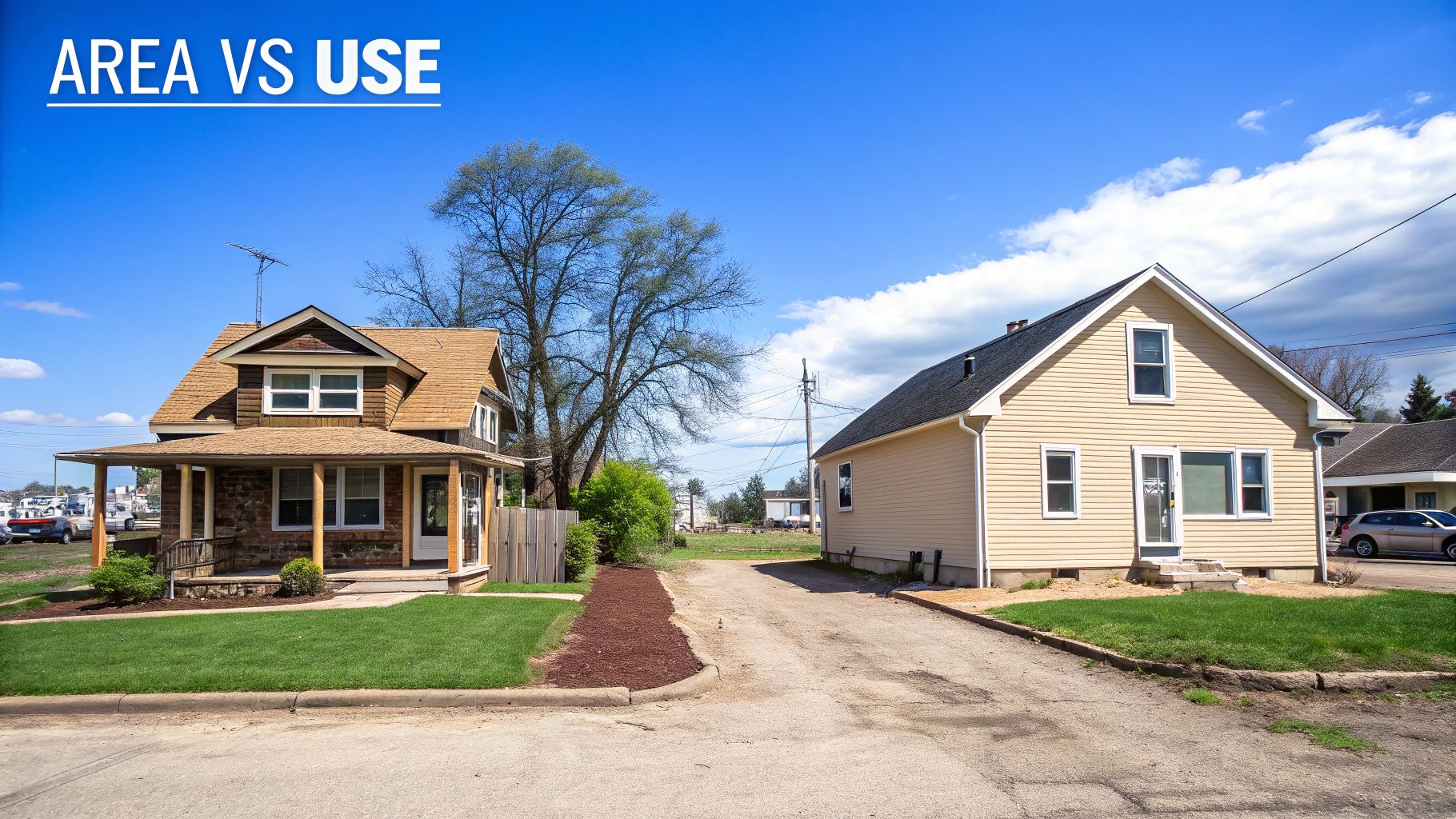
Area Variances
An area variance is the one most homeowners run into. Think of it as asking for permission to tweak the physical rules for your lot—the "where" and "how big" of your project.
You’re not changing what your property is used for, just how you use the space. Some classic examples include:
Setbacks: You need to build your new garage a little closer to the property line than the rules technically allow.
Building Height: Your dream home design is a foot or two taller than the maximum height for your neighborhood.
Lot Coverage: The beautiful new deck you want to build would push you just over the percentage of your lot you're allowed to cover.
Let's say you're in a Harford County community on an oddly shaped lot. If your planned screened-in porch can't meet the standard rear setback, an area variance is exactly what you'd apply for.
Use Variances
Now, a use variance is a whole different beast. This is the big one. You're asking for permission to use your property for something that’s flat-out not allowed in your zoning district. This isn't just about fudging a few feet here or there; it’s about changing the fundamental character of your property.
A perfect example is a homeowner in a strictly residential zone who wants to open a small coffee shop or a daycare right out of their house.
Because a request like this can completely change the feel of a neighborhood, use variances are notoriously hard to win. Approval rates can be below 20% in many jurisdictions, and some states don't even allow them at all. You have to prove a significant hardship, which you can learn more about in this deep dive on variance standards and hardships.
Thankfully, for most home projects, you'll almost always be dealing with the much more common (and achievable) area variance.
Real-World Scenarios Where You Might Need a Variance
So, what does this look like on the ground? It's one thing to talk about rules and regulations, but let's get into some real-life situations where a homeowner might need to ask for a little flexibility. This isn't about bending the rules for no reason; it's about finding a sensible path forward when your property has its own unique quirks.
Picture this: you're finally ready to build that two-story addition you've been dreaming of for your home in a community like White Marsh, Maryland. The problem? The local code has a strict height limit of 30 feet, but your architect’s design hits 31.5 feet at the roof's peak. A variance is exactly what you'd need to ask for that minor adjustment.
Common Setback and Hardship Examples
Another classic example revolves around setbacks—that mandatory buffer zone between your house and your property lines.
Imagine a homeowner in Edgewood, Maryland, has a tricky corner lot with a steep, unbuildable slope running along one side. This physical "hardship" makes it impossible to place their new garage anywhere but a few feet into the side setback. Without a variance, they couldn't build a garage at all, which is a perfect example of an unreasonable burden caused by the land itself.
Here are a few other common situations where a variance comes into play:
Building a Deck: Your backyard is unusually shallow, and building a deck of any useful size is impossible while staying outside the standard 20-foot rear setback.
Adding a Screened Porch: The only spot that makes sense for your new porch is on the side of the house, but it would poke a few feet into the required side yard setback.
Preserving Natural Features: A gorgeous, mature oak tree—one you'd never want to cut down—is sitting right where your new driveway needs to go. You might need a variance to shift the driveway slightly closer to the property line to save the tree.
The common thread here is always a unique, existing condition of the property that makes sticking to the black-and-white rules a genuine hardship.
Getting a handle on these scenarios is a huge first step. For more tips on navigating the new home process, take a look at our essential do's and don'ts for new homes in Maryland.
How to Navigate the Variance Approval Process
So, you've figured out you need a variance. What now? It’s time to jump into the approval process. I know it can sound a bit daunting, but it's really just a series of logical steps that places like Baltimore County or Harford County use to be fair to everyone involved—you and your neighbors.
The whole thing kicks off when you prepare and submit a formal application to your local zoning board. Think of this application as more than just paperwork; it’s your chance to tell the story of your property. You need to clearly lay out why the variance is absolutely necessary and explain the specific hardship that makes following the standard rules impossible. This is where you bring in the pros—your case will be much stronger with professional site plans, photos, and any other evidence you can gather.
Preparing for Your Public Hearing
Once your application is in and has been reviewed, the next major milestone is the public hearing. This is your moment to present your case to the zoning board and field any questions they might have. Your neighbors will also have a chance to weigh in, either to support your project or to raise concerns.
Navigating the approval process takes time and involves a few key stages: submitting the application, paying fees (which can run anywhere from $1,500 to $5,000 in many areas), officially notifying your neighbors, and attending the public hearing. All in all, you can usually expect a decision within 60 to 90 days.

As you can see, whether you're planning a deck, a new garage, or a full-blown home addition, the journey from identifying the need to getting that official stamp of approval follows a pretty similar path.
At the end of the day, a thoroughly prepared and well-documented application is your single best asset. Getting familiar with the ins and outs of permits within the custom home building process can make your variance request go a lot more smoothly.
And for a full rundown of what to expect from start to finish, be sure to check out our detailed guide on the buyer's journey for new homes in Maryland.
See Your Project Before We Even Break Ground
Let's be honest, trying to make sense of zoning rules and permit applications is where the fun of a home project can screech to a halt. It's confusing, and that's where having an expert in your corner really matters. I personally guide my clients through every one of these tricky steps in communities all over White Marsh and Edgewood, Maryland.
But I offer something more than just paperwork support. While the builder I represent provides high-quality homes, I go a step further—offering my clients unique proprietary visualization tools, hands-on service, and access to visualizers that help you bring your dream space to life. Think about it: you can virtually walk through your future kitchen or see exactly how that new garage will look with the setback variance. This technology takes all the guesswork out of the equation and gives you total confidence in the plan.
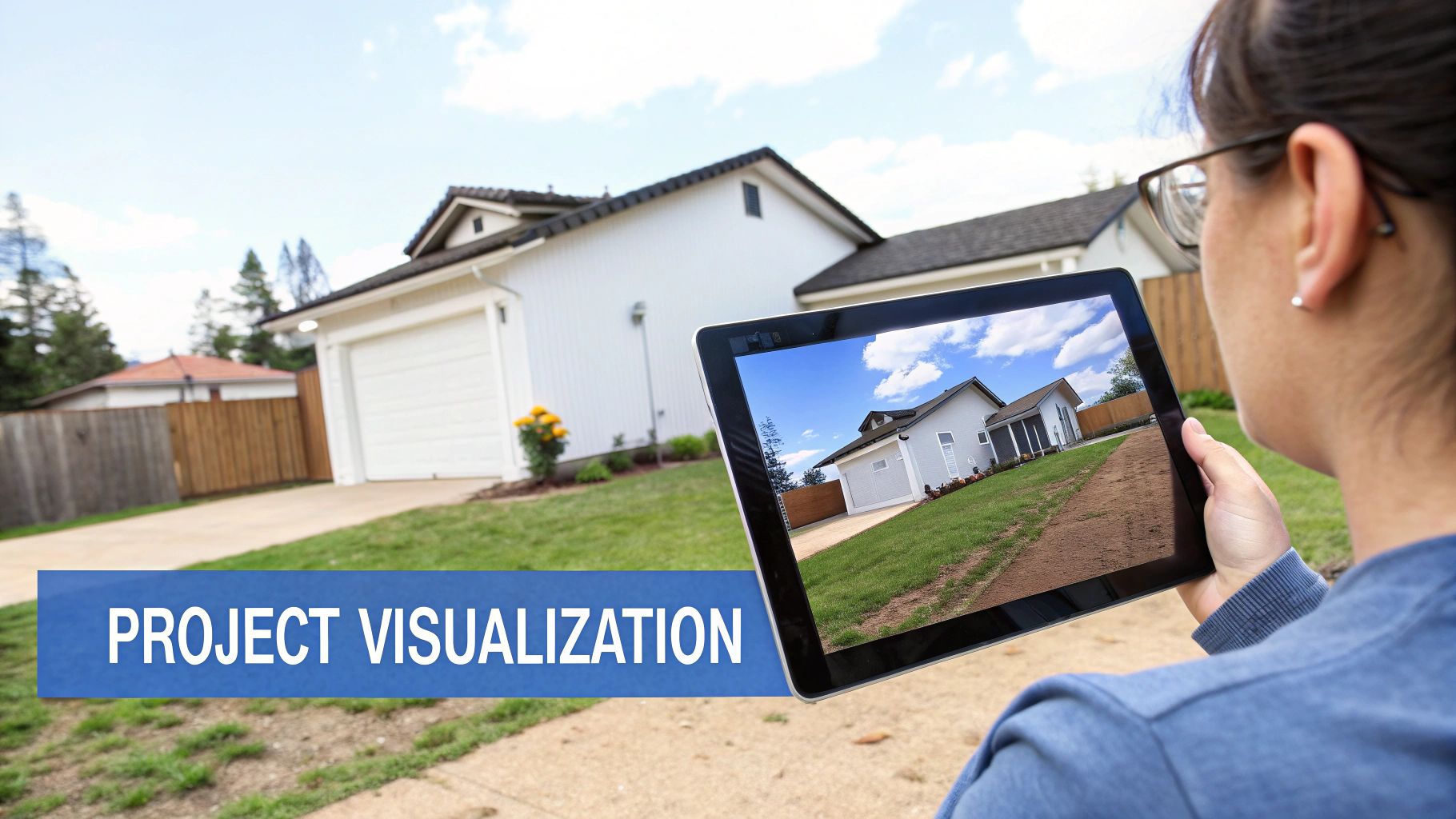
From Dream to Detailed Plan
You should be focused on the exciting stuff—choosing the perfect flooring, countertops, cabinets, and tile that will make your house a home. Let me handle the red tape and complexities behind the scenes. My job is to make this process not just manageable, but genuinely enjoyable for you.
My hands-on service and access to proprietary visualizers help you turn your dream into a detailed plan, ensuring the final result is exactly what you envisioned.
If you’re ready to see what your home in Baltimore County or Harford County could become, let’s talk. A great first step is to play around with our home customization visualizer tools and start bringing your ideas to life today.
Common Questions About Zoning Variances
We’ve dug into the nuts and bolts of zoning variances, but I know it's a lot to take in. You've probably still got a few questions percolating. Let's tackle some of the most common ones I hear from homeowners so you can head into this process with your eyes wide open.
How Long Does It Take to Get a Zoning Variance Approved?
This is definitely not a rush job. Getting a variance is a lesson in patience, as the timeline really depends on your local government’s backlog and hearing schedule.
As a rule of thumb, you should probably bank on it taking anywhere from two to four months. That’s from the moment you hand in your application to the day you get a final decision. That window accounts for the staff review, public notifications, and the hearing itself, so be sure to factor that wait time into your project schedule from day one.
Is Approval Guaranteed If I Have a Legitimate Hardship?
I wish I could say yes, but approval is never a sure thing, even with what seems like a slam-dunk case. At the end of the day, the decision is in the hands of the local zoning board.
They have to perform a tricky balancing act: weighing your unique hardship against the impact your project could have on the neighborhood. A thorough, well-documented application with professional site plans goes a long way, but the board always has the final word.
Think of it this way: a variance is permission to break a rule because of a special circumstance. A permit, on the other hand, is the green light saying your plans already follow all the existing rules. You almost always have to win the variance before you can even think about applying for permits.
Can My Neighbors Block My Variance Request?
While your neighbors can’t single-handedly veto your request, their voices are incredibly influential. Zoning boards listen very carefully to community feedback.
If several neighbors show up to the hearing with valid concerns—worries about their privacy, losing sunlight, or potential impacts on property values—it can absolutely sway the board's decision. This is why I always suggest chatting with your immediate neighbors about your plans ahead of time. Getting them on board (or at least addressing their concerns) can make the public hearing go a whole lot smoother.
If you have more questions about the homebuying and building journey, check out our helpful guide to frequently asked questions about new homes in Maryland.
At Customize Your Home, I provide the hands-on service and proprietary visualization tools needed to simplify these complexities. While I handle the details, you can focus on the fun part—choosing the flooring, countertops, and cabinets that bring your dream space to life in communities across White Marsh, Edgewood, Baltimore County, and Harford County. Ready to see what's possible? Visit us at https://www.customizeyourhome.com to get started.
Comments