

10 Practical Walk In Closet Organization Tips for Your Dream Home

Welcome! That beautiful walk-in closet in your new home is a canvas of possibilities, a space that should bring you joy and calm, not stress and clutter. But let's be honest, it's easy for even the grandest closet to become a 'stuff' zone where things go to get lost. The secret to a serene and functional wardrobe isn't just about having more space, it’s about smart, personalized walk in closet organization.
Great design starts with a vision for how you want to live. Just as my clients in Baltimore County and Harford County carefully select their flooring and countertops to reflect their style, organizing your closet is a personal journey that blends aesthetics with everyday practicality. We’re here to help you get started on that journey.
This guide is packed with 10 creative and actionable ideas that go beyond simple tidying. We'll explore systems that cater to different personalities and wardrobes, from the minimalist to the fashion enthusiast. Let's transform your closet from a chaotic catch-all into one of your favorite, most functional rooms in the house. When you're ready to find a new home in Maryland with the perfect closet to organize, I'm here to help you visualize and create your dream space.
1. Color-Blocking Organization System
Transform your walk-in closet into a high-end boutique with a color-blocking organization system. This visual method involves arranging your clothes by color, creating a harmonious and aesthetically pleasing rainbow effect that makes getting dressed feel like a luxury experience. Instead of hunting for a specific shirt, you can instantly spot it within its color family, saving you precious time during your morning routine. A practical example would be grouping all your blue shirts together, from navy to sky blue, making it effortless to grab the right shade for your outfit.
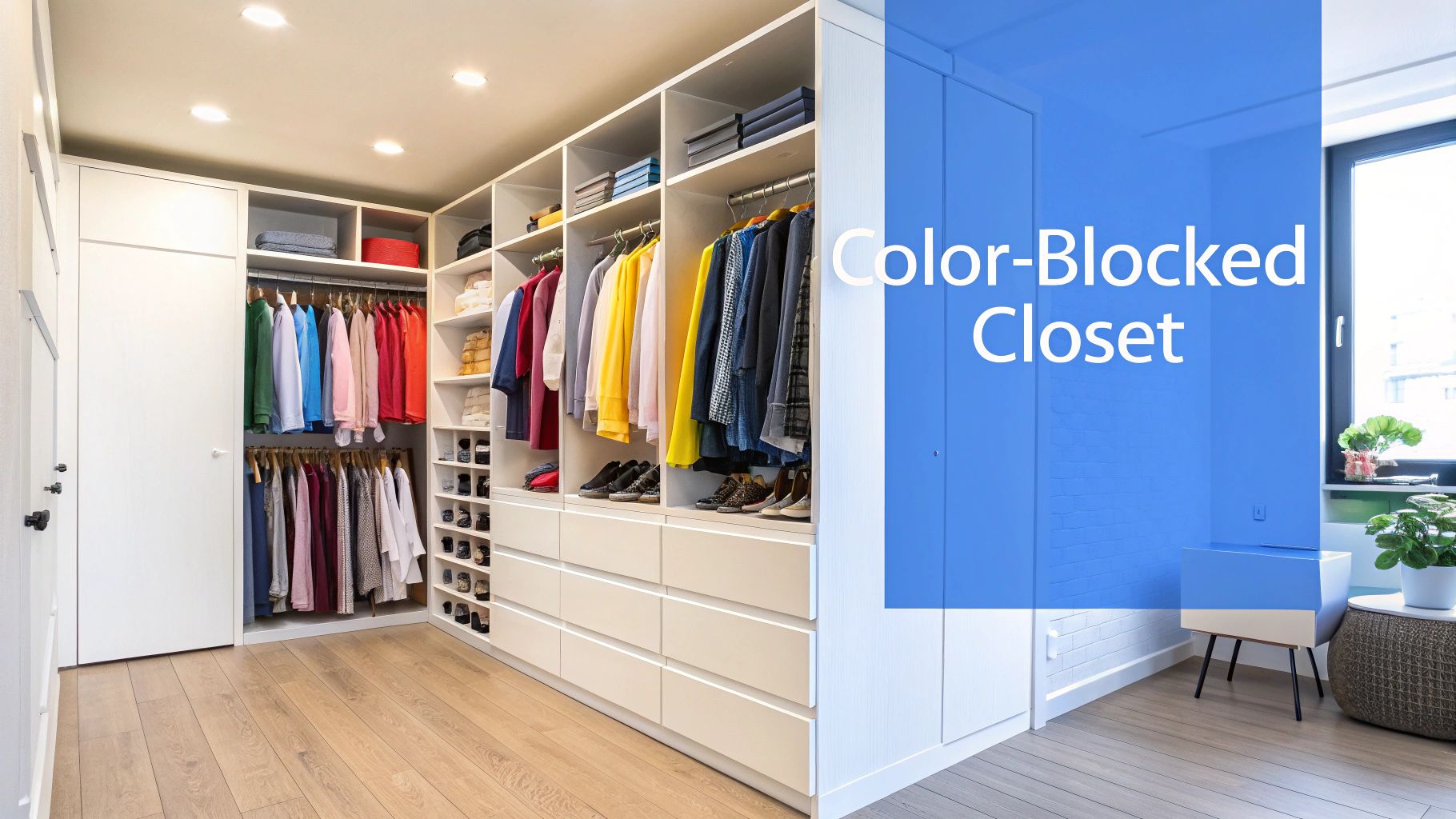
Popularized by organization experts like Marie Kondo, this system is a game-changer for anyone who values both form and function in their walk in closet organization. It not only looks stunning but also simplifies outfit coordination. By seeing all your blue tops or black pants together, you can quickly mix and match pieces to create the perfect look.
How to Implement Color-Blocking
Getting started is easier than it looks. Follow these simple steps to bring this system to life:
Start with Neutrals: Begin by grouping your core neutral colors like black, white, gray, and navy. These often form the foundation of a wardrobe and are a great starting point.
Group by Color Family: Move on to brighter hues, grouping similar shades together. For example, place all your pinks together, from light blush to vibrant fuchsia.
Use Matching Hangers: For a truly cohesive and polished look, invest in a set of matching hangers. This small detail elevates the entire space and removes visual clutter.
Pro Tip: For an extra layer of order, arrange items from light to dark within each color section. This creates a beautiful gradient effect that is incredibly satisfying to look at.
This method is perfect for visual thinkers who want their closet to feel like a personalized, inspiring space. If you're ready to dive deeper into creating visual flow throughout your home, you can explore more about the principles of color harmony on Customize Your Home.
2. Vertical Hanging and Tiered Systems
Unlock the full potential of your closet by thinking vertically. A vertical hanging and tiered system maximizes your walk in closet organization by utilizing the often-wasted space between a single clothing rod and the floor. This approach involves installing double hanging rods, cascading hangers, and tiered shelving to effectively double or even triple your storage capacity without expanding the closet's footprint.
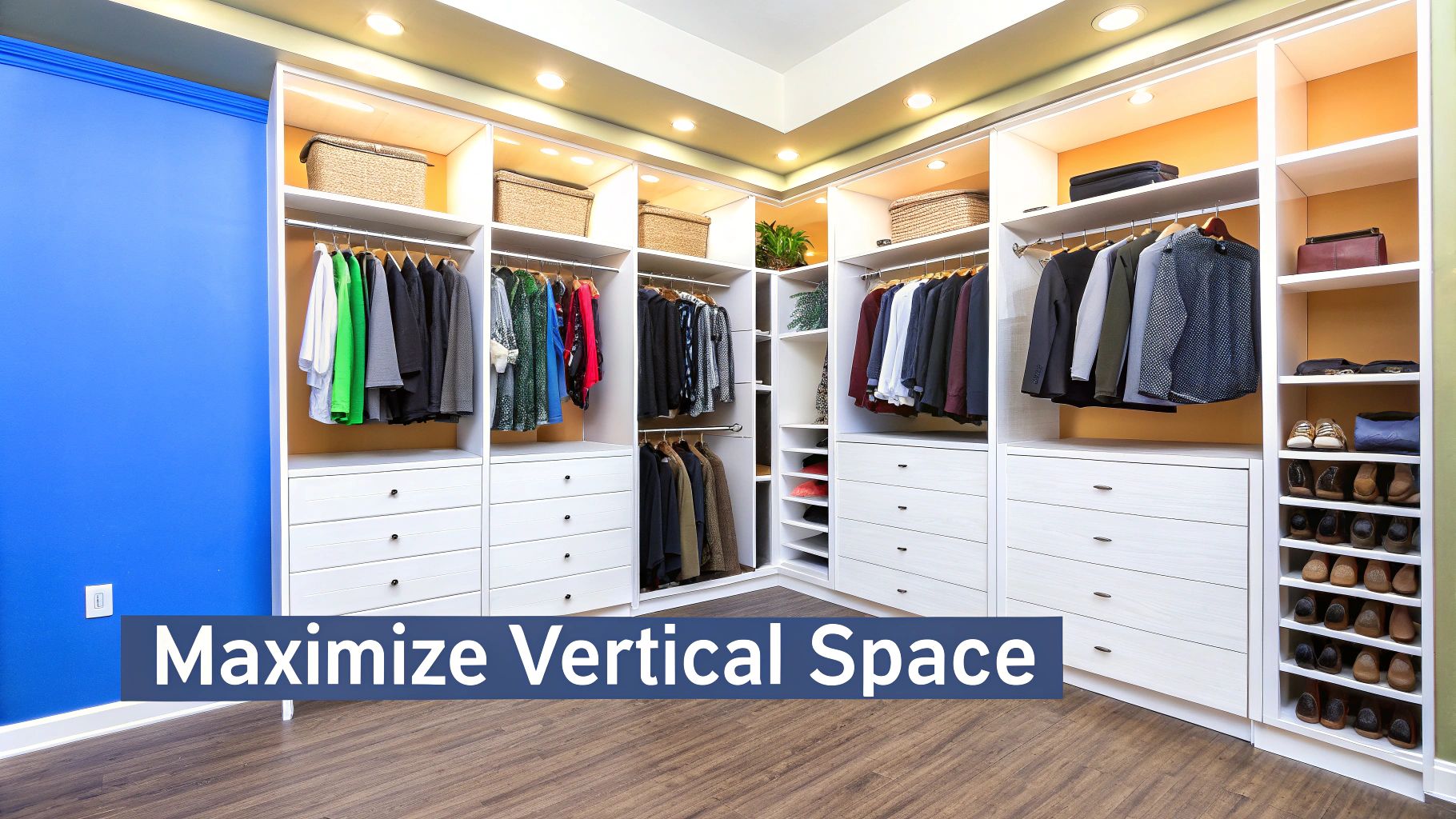
This space-saving strategy has been popularized by major brands like IKEA and California Closets, and championed by professional organizers like The Home Edit. It’s a game-changer for closets of all sizes, allowing you to create designated zones for different types of clothing. For instance, you can hang blouses on the top rod and coordinating skirts or pants on the bottom rod, making outfit selection incredibly efficient.
How to Implement Vertical Systems
Bringing this multi-level organization to your closet is a straightforward project. To effectively implement vertical hanging and tiered systems, consider exploring ideas for wardrobe hanging shelves for stylish closet organization and follow these key steps:
Install Double Rods: Add a second rod below your existing one. A good rule is to place the top rod around 80-82 inches from the floor and the bottom one around 40-42 inches.
Group by Length: Reserve single-rod areas for long items like dresses and coats. Use the double-rodded sections for shorter items like shirts, folded pants, and skirts.
Utilize Tiered Shelves: Incorporate tiered or stacked shelving units for folded sweaters, shoes, and bins, making use of every vertical inch. A simple example is placing a narrow, three-tier shoe rack on the floor under your hanging shirts.
Pro Tip: Invest in cascading or "wonder" hangers. These allow you to hang multiple garments on a single hanger, vertically layering them to save a surprising amount of rod space.
This method is ideal for anyone looking to maximize a smaller walk-in or simply create a hyper-organized space. If you're planning a full closet redesign, you can visualize different layouts with our home design software for beginners.
3. Category-Based Segmentation
Bring the logic of a well-organized department store into your home with a category-based segmentation system. This highly practical approach to walk in closet organization involves creating distinct zones for different types of apparel, such as workwear, casual outfits, activewear, and formal attire. By dedicating a specific spot for each category, you can streamline your routine and instantly find what you need for any occasion.
Championed by professional organizers and seen in guides from The Container Store, this method is perfect for those who think in terms of function and lifestyle. Instead of sifting through a sea of clothes, you can head directly to the "work" section for your office-ready blazer or the "activewear" zone for your gym shorts. It makes building outfits faster and maintaining order feel effortless. For example, you could designate one wall for professional attire and another for weekend and casual clothes.
How to Implement Category-Based Segmentation
Creating logical zones is simple once you define your needs. Follow these steps to get started:
Define Your Lifestyle Categories: Before moving anything, list out the main categories that make up your wardrobe. Common examples include work, weekend casual, fitness, formal/special occasion, and sleepwear.
Allocate Space Proportionally: Give the most space to the categories you wear most often. If your work attire takes up half your wardrobe, dedicate the most accessible, prime real estate to it.
Use Visual Dividers: Create clear boundaries between zones using hanging rod dividers, shelf labels, or even different colored bins for folded items. This visual separation is key to long-term success.
Pro Tip: Place your most frequently used categories at eye level and within easy reach. Seasonal or less-used items, like formal wear or heavy winter coats, can be stored on higher shelves or in less accessible areas.
This organizational method is ideal for anyone who wants a functional, no-fuss system that adapts to their daily life. If you're designing a space that truly reflects your lifestyle, from the closet to the kitchen, learn more about personalizing your new home at Customize Your Home.
4. Capsule Wardrobe Organization
Embrace a "less is more" philosophy with a capsule wardrobe organization system. This minimalist approach involves curating a small, versatile collection of high-quality, mix-and-match pieces that you absolutely love to wear. By focusing on quality over quantity, you eliminate closet clutter and decision fatigue, making your walk in closet organization a streamlined, stress-free experience.
Pioneered by figures like Courtney Carver with her "Project 333" challenge, this method is perfect for anyone seeking to simplify their life and style. A well-organized capsule wardrobe means every item has a purpose and can be combined to create numerous outfits. A practical example is having a classic trench coat that works with your work slacks, weekend jeans, and even over a dress. This intentional approach transforms your closet from a storage space into a highly functional and personal style hub.
How to Implement a Capsule Wardrobe
Creating your capsule is a rewarding process. Follow these steps to build a functional and stylish collection:
Assess Your Lifestyle: Start by considering your daily activities. Do you work in an office, from home, or have an active lifestyle? Your wardrobe should reflect what you actually do.
Choose a Neutral Base: Select 3-5 versatile neutral colors like black, navy, camel, or gray to form the foundation of your wardrobe. This ensures maximum compatibility between pieces.
Invest in Quality Basics: Add high-quality essentials such as a great pair of dark jeans, a classic white t-shirt, and a well-fitting blazer that will stand the test of time.
Add Personality Pieces: Incorporate 5-10 statement items like patterned blouses, a colorful scarf, or unique accessories to add variety and express your personal style.
Pro Tip: Document your capsule pieces with photos on your phone. This creates a digital lookbook, making it incredibly easy to plan outfits on the go without even opening your closet door.
This method is ideal for those who value efficiency and intentionality. If you're ready to create a home that truly reflects your streamlined vision, you can explore more about personalizing your space with our design tools and visualizers.
5. Drawer Divider and Fold-Based System
Maximize every inch of your drawers and shelves by adopting a drawer divider and fold-based system. This technique swaps traditional stacking for a method where clothes are folded to stand upright, making everything visible at a glance. It's a key strategy in high-end walk in closet organization that prevents you from forgetting about the clothes at the bottom of the pile, ensuring you use your entire wardrobe.
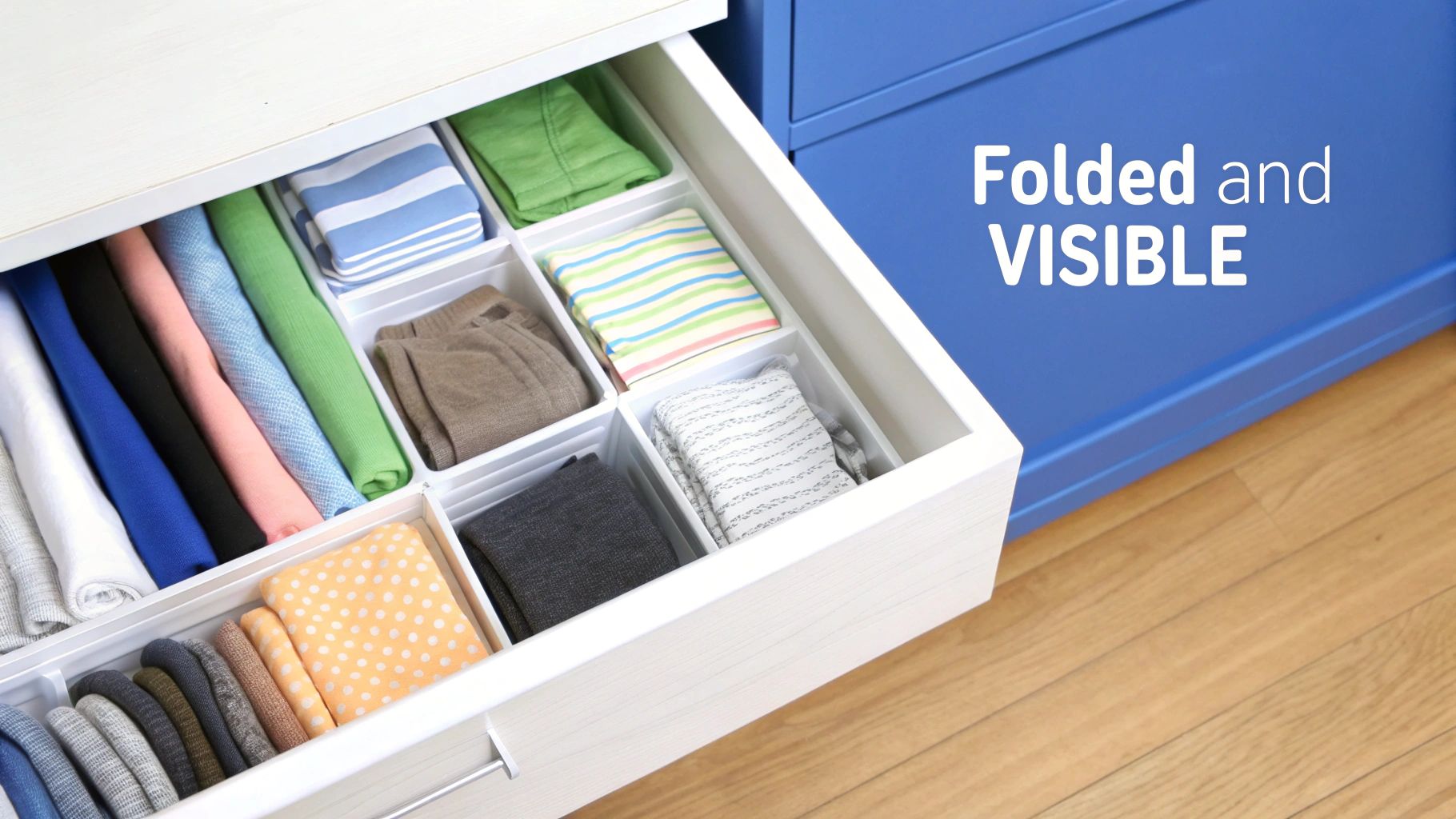
Popularized by Marie Kondo's revolutionary KonMari method, this system transforms cluttered drawers into neatly arranged, file-like compartments. Instead of digging through messy stacks, you can simply pull out exactly what you need without disturbing anything else. For example, instead of stacking t-shirts, you can file-fold them so you can see every graphic tee at once. This approach is perfect for organizing T-shirts, knitwear, underwear, and accessories, creating a clean, department store-like feel right in your home.
How to Implement a Fold-Based System
Getting your drawers in perfect order is a satisfying project. Follow these steps to get started:
Master the File Fold: Learn the KonMari vertical folding technique. Fold items into compact rectangles that can stand on their own, allowing you to "file" them in your drawers.
Invest in Dividers: Use adjustable drawer dividers or modular bins to create custom compartments for different types of clothing. This keeps everything in its designated spot.
Organize by Category: Group similar items together, such as short-sleeve shirts, long-sleeve shirts, or workout gear. Labeling bins can add another layer of clarity.
Pro Tip: Leave about 10% of empty space in each drawer. This prevents overstuffing and makes it effortless to slide items in and out without wrinkling or disrupting the entire row.
This method is ideal for those who want a hyper-organized and efficient closet where every single item has a home. If you love the idea of building a perfectly organized space from the ground up, you can explore how to select the right finishes and layouts for your dream home on our blog.
6. Seasonal Rotation Storage
Maximize your daily usable space by implementing a seasonal rotation system for your walk in closet organization. This practical approach involves storing off-season clothing outside your main closet, leaving only current, seasonally appropriate items readily accessible. Instead of digging through bulky sweaters in July, you’ll have a streamlined, curated selection that makes choosing an outfit effortless and clutter-free.
This method, long championed by professional organizers and brands like The Container Store, is fundamental to maintaining an orderly closet year-round. It prevents overcrowding and simplifies your daily routine by focusing your attention only on what you can actually wear right now. As a practical example, store your heavy winter coats and wool sweaters in vacuum-sealed bags under the bed during summer, and swap them with your lightweight sundresses and shorts.
How to Implement Seasonal Rotation
Creating an effective rotation system is straightforward with a little planning. Follow these steps to get started:
Gather and Sort: At the end of a season, gather all clothes you won't be wearing for the next few months. This is a great time to declutter anything you haven't worn.
Choose Smart Storage: Use clear, labeled bins so you can easily identify contents. Vacuum-sealed bags are fantastic for bulky items like winter coats and knitwear, drastically reducing the space they occupy.
Protect Your Items: Before storing, ensure every item is clean to prevent stains from setting and to deter pests. Adding cedar blocks or lavender sachets is a great natural way to keep moths away and fabrics fresh.
Pro Tip: Keep a digital inventory or snap a quick photo of the contents of each bin before sealing it. This saves you from having to rummage through everything when you're looking for one specific item later on.
This system is perfect for anyone with a diverse wardrobe that spans all four seasons. Ensuring your clothes are properly cleaned before storage is key, a process that can be streamlined with a well-organized space. You can discover more about creating an efficient and stylish laundry area by exploring how to design your laundry room on Customize Your Home.
7. Accessory and Detail Organization
Bring order to the chaos of smaller items with a dedicated system for your accessories. This approach focuses on creating designated homes for jewelry, scarves, belts, and handbags, ensuring these crucial details are visible, protected, and easy to grab. Instead of letting these items get lost in drawers or tangled on shelves, this method transforms them into a beautifully curated display, adding a touch of luxury to your walk in closet organization.
Inspired by high-end retailers and popular organizers like The Home Edit, a well-planned accessory station prevents damage and makes accessorizing effortless. By giving every item a proper place, from delicate necklaces to statement belts, you streamline your morning routine and rediscover pieces you forgot you owned. For a practical example, use a shallow drawer with velvet-lined dividers for sunglasses and watches, so they don't get scratched. This thoughtful organization highlights the finishing touches of your wardrobe.
How to Implement Accessory Organization
Creating a functional and stylish system for your details is straightforward. Follow these steps to get started:
Categorize and Conquer: Begin by grouping all your accessories by type. Put all belts in one pile, scarves in another, and sort jewelry into categories like necklaces, bracelets, and earrings.
Assign Designated Zones: Use specialized storage to create specific homes. Install hooks for scarves and handbags, use drawer dividers for belts and sunglasses, and place jewelry in tiered trays or lined boxes.
Utilize Vertical Space: Mount hooks, shallow shelves, or pegboards on unused wall space inside your closet. This is perfect for hanging necklaces, hats, and frequently used bags, keeping them untangled and within reach.
Pro Tip: For valuable or delicate jewelry, use velvet-lined trays or stackable boxes. This not only looks elegant but also prevents scratches and tarnishing, preserving your favorite pieces for years to come.
This organization method is essential for anyone with a collection of accessories, turning a potential mess into a stunning and practical feature of your closet. To learn more about creating functional and beautiful spaces, check out the various customization options for your home with Customize Your Home.
8. Activity-Based and Lifestyle Organization
Streamline your daily routine by organizing your walk-in closet based on your lifestyle and activities. Instead of sorting by item type, this method groups clothing by its intended use, such as work attire, gym clothes, or weekend wear. This practical approach to walk in closet organization ensures that when it's time to get ready for a specific occasion, everything you need is in one convenient, easy-to-find spot.
This system is championed by professional wardrobe consultants and busy parents who understand that time is a valuable commodity. Imagine having a dedicated "work from home" zone with your comfy-yet-professional tops, or a "date night" section with complete outfits ready to go. For a real-world example, you could put all your yoga pants, tank tops, and sports bras in one dedicated drawer or bin, so you can grab-and-go before a workout. It transforms your closet from a simple storage area into a functional hub tailored to your life.
How to Implement Activity-Based Organization
Getting your closet aligned with your schedule is straightforward. Follow these steps to create a system that works for you:
Identify Your Core Activities: Start by listing your top 3-5 most frequent activities, such as work, exercise, lounging, and social outings.
Allocate Space Proportionally: Dedicate the most accessible and largest sections of your closet to the activities you do most often. Your work clothes might take center stage, while seasonal or occasional wear can be stored higher up.
Create Outfit Zones: Group complete outfits together within each activity zone. For example, your gym section could have tanks, leggings, and sports bras all in one place.
Label Sections Clearly: Use simple, clear labels for each zone. This not only helps you stay organized but also allows family members to easily find what they need.
Pro Tip: Use distinct, matching hangers for each activity zone. For instance, use black hangers for your professional wardrobe and wooden hangers for your casual wear to create subtle visual cues that make finding items even faster.
This method is ideal for anyone with a busy, multi-faceted lifestyle who values efficiency over aesthetics alone. If you're designing a new home and want a closet that truly supports your daily rhythm, you can explore floor plans that offer the flexible spaces needed to create these personalized zones with Customize Your Home.
9. Inventory and Tracking System
Take your walk-in closet organization to a high-tech level with a digital inventory and tracking system. This modern approach involves creating a detailed catalog of your clothing and accessories using apps, spreadsheets, or even a simple photo gallery. By digitally logging each item, you can see everything you own at a glance, prevent duplicate purchases, and rediscover forgotten gems hiding in the back of your closet. It essentially turns your wardrobe into a searchable database, making outfit planning easier than ever.
This system has been widely adopted by fashion influencers and personal stylists who rely on apps like Stylebook to meticulously plan looks. It's the ultimate tool for strategic wardrobe management, allowing you to track how often you wear certain pieces and identify gaps in your collection. As a practical example, before buying a new pair of shoes, you can quickly check your app to see if you already own something similar, saving money and closet space. You can plan outfits for a trip without ever opening your closet door, ensuring you pack smart and stay stylish.
How to Implement a Closet Inventory System
Getting your digital closet set up is a rewarding project. Here’s how to get started:
Choose Your Tool: Decide if you want a dedicated app like Stylebook, a visual board on Pinterest, or a detailed spreadsheet. Apps often come with built-in features for outfit creation and packing lists.
Photograph Your Items: Take clear, consistent photos of every piece of clothing, shoe, and accessory. A plain white background works best to make items stand out.
Log the Details: For each item, record key details like color, brand, size, material, and purchase date. This data will help you make smarter shopping decisions in the future.
Pro Tip: Update your inventory monthly or seasonally. Take a few minutes to add new purchases and remove items you've donated or sold. This keeps your digital closet accurate and useful.
To truly master your closet's efficiency and maintain a well-organized wardrobe, implementing best practices for inventory management can be invaluable. If you're excited by the idea of using technology to streamline your space, you can discover more useful tools in our guide to the best home improvement apps for your projects.
10. Minimalist Capsule with Luxury Investment Pieces
Merge the discipline of minimalism with the thrill of high fashion by creating a capsule wardrobe anchored by luxury investment pieces. This hybrid approach to walk in closet organization focuses on a curated collection of high-quality, timeless basics that are elevated by a few carefully selected statement items. The result is an uncluttered closet that feels both practical and exceptionally chic, making everyday dressing an effortless and luxurious affair.
Inspired by the "less but better" philosophy seen in brands like The Row and COS, this system is perfect for those who appreciate quality over quantity. Instead of a closet overflowing with fleeting trends, you build a foundation of versatile essentials that can be mixed and matched endlessly. For example, a high-quality leather handbag can elevate a simple jeans-and-t-shirt outfit, making it instantly more polished. The addition of a luxury handbag, a classic trench coat, or a stunning pair of shoes then provides that perfect touch of personal style and sophistication.
How to Implement a Luxury Capsule
Building this elevated wardrobe is a strategic process. Follow these steps to get started:
Build Your Basics First: Start by acquiring high-quality versions of core staples like a crisp white t-shirt, dark-wash jeans, a classic blazer, and a versatile neutral sweater.
Invest Strategically: Plan your luxury purchases. Aim to add one timeless, high-quality piece per season that complements at least five of your existing basics.
Prioritize Protection: Use dedicated dust bags, quality hangers, and proper storage solutions to protect your investment pieces and keep them in pristine condition.
Pro Tip: When considering a luxury item, calculate its "cost-per-wear." A timeless designer coat you wear a hundred times is often a better investment than a trendy item you'll only wear once or twice.
This method offers a sustainable and stylish approach to walk in closet organization, creating a space that is both manageable and inspiring. By focusing on pieces you truly love, you can design a wardrobe that perfectly reflects your personal style.
Walk-In Closet: 10-System Comparison
Method | 🔄 Implementation Complexity | ⚡ Resource Requirements | ⭐ Expected Outcomes | 📊 Ideal Use Cases | 💡 Key Advantages / Tips |
|---|---|---|---|---|---|
Color-Blocking Organization System | Medium — time‑consuming initial setup for visual sorting | Low–Medium — hangers, space for visibility | ⭐⭐⭐⭐ — strong visual harmony; easier outfit coordination | Fashion-forward closets, social media photos, minimalist wardrobes | Start with neutrals; group similar shades; use matching hangers |
Vertical Hanging and Tiered Systems | High — requires installation or structural changes | High — hardware, shelving, possible pro installation | ⭐⭐⭐⭐ — maximizes capacity; keeps items accessible | Small closets, apartments, users needing more hanging space | Place heavy items low; add lighting; use sturdy hangers |
Category-Based Segmentation | Low–Medium — straightforward zoning but needs discipline | Low–Medium — dividers, labels, basic storage | ⭐⭐⭐ — intuitive access; easy to maintain when followed | Families, shared closets, those who prefer logical zones | Define categories by lifestyle; allocate space proportionally |
Capsule Wardrobe Organization | Medium — significant purging and planning upfront | Medium — time to curate; investment in quality pieces | ⭐⭐⭐⭐⭐ — minimizes decision fatigue; cohesive outfits | Minimalists, frequent travelers, those seeking simplicity | Choose 3–5 neutral bases; aim for 30–50 versatile pieces |
Drawer Divider and Fold-Based System | Medium — learning folding techniques and arranging dividers | Low–Medium — dividers, bins, possibly new drawers | ⭐⭐⭐⭐ — excellent visibility; protects delicate items | Drawers, small spaces, users preferring folded storage | Use KonMari vertical folds; uniform bins; label sections |
Seasonal Rotation Storage | Medium — requires schedule and periodic swaps | Low–Medium — storage bins, off‑season space, climate control | ⭐⭐⭐⭐ — frees closet space; reduces clutter | Distinct seasonal climates, small closets, collectors | Use clear labeled bins, photograph items, clean before storing |
Accessory and Detail Organization | Medium–High — planning for many small solutions | Medium–High — specialized organizers, display space | ⭐⭐⭐⭐ — protects valuables; increases outfit options | Accessory-heavy wardrobes, collectors, display-focused closets | Use velvet jewelry boxes, hooks at eye level, label sections |
Activity-Based and Lifestyle Organization | Medium — needs self‑assessment and outfitting | Low–Medium — labels, outfit grouping tools | ⭐⭐⭐ — fast outfit access for specific activities | Busy professionals, parents, people with varied routines | Identify top activities; pre-assemble complete outfits |
Inventory and Tracking System | High — time‑intensive initial cataloging and upkeep | Low–Medium — apps or spreadsheets, photos, storage | ⭐⭐⭐⭐ — prevents duplicates; enables remote outfit planning | Frequent shoppers, influencers, large wardrobes | Photograph all items; update monthly; tag outfits and locations |
Minimalist Capsule with Luxury Investment Pieces | Medium–High — curation plus selective high‑end sourcing | High — cost for quality/luxury pieces, protective storage | ⭐⭐⭐⭐ — elevated, cohesive style with longevity | Professionals seeking polished looks, sustainable shoppers | Build basics first; buy 1 luxury piece per season; track cost‑per‑wear |
Your Dream Home is More Than Just a Floor Plan
Transforming your walk-in closet from a cluttered catch-all into a curated, functional sanctuary is a powerful first step toward creating a home that truly serves you. We've explored a range of dynamic strategies, from the visual appeal of color-blocking and the efficiency of vertical hanging systems to the mindful simplicity of a capsule wardrobe. Each of these ideas, whether it's segmenting by category or implementing a seasonal rotation, is designed to bring order, peace, and efficiency to your daily routine.
The core takeaway is that effective walk in closet organization isn't about having a perfect, magazine-ready space overnight. It's about finding a system that aligns with your personal lifestyle and habits. Maybe the activity-based approach resonates most with your busy schedule, or perhaps the detailed organization of accessories is the game-changer you needed. The goal is to build a closet that makes getting dressed feel inspiring, not stressful.
Bringing Your Vision to Life
This journey of personalization is exactly what building a dream home is all about. An organized closet is a wonderful start, but it's just one part of creating a home that reflects your unique style and needs. That's our passion. We don't just build high-quality houses; we go a step further by helping you bring your vision to life within those walls.
Imagine stepping into a new home where every detail, from the flooring under your feet to the countertops in your kitchen, was chosen by you. We believe the process of buying a new home should be an experience in creativity and collaboration. Whether you're dreaming of a spa-like primary bathroom, a gourmet kitchen perfect for entertaining, or the ideal LVP flooring to tie it all together, we provide unique customization tools and hands-on support to make it happen. Our innovative visualizers let you experiment with a wide selection of flooring, cabinets, and fixtures before making a final decision, ensuring every choice feels right for you.
If you're looking for a new home in vibrant Maryland communities like White Marsh, Edgewood, or throughout Baltimore County, Harford County, and Prince George's County, we invite you to explore the difference that genuine personalization makes. Let us help you create a space that’s not just built for you, but designed by you.
The same attention to detail you apply to your walk in closet organization can be applied to your entire home. With Customize Your Home, you can select the finishes and features that perfectly match your style, creating a cohesive and personalized living space from the ground up. Explore your design options and start building your dream Maryland home today!
Comments