

New Home Construction Timeline Explained

So, you're thinking about building a new home? It's an incredible journey, and probably the first question on your mind is, "How long is this actually going to take?"
Under normal circumstances, you can expect the entire process for a typical single-family home to take somewhere between 5 to 7 months and 5 to 6 months for a townhome. Many times, there are quick move in homes available that have already been beautifully built that you can move-in as fast as 30 days with us. Of course, that's a general timeframe. Things like local permitting delays in Baltimore County, unexpected Maryland weather, or supply chain hiccups for materials like that perfect granite countertop you picked can definitely stretch things out.
How Long Does It Really Take to Build a New Home?
It's helpful to think of the home building process less like a sprint and more like a series of connected stages. Each phase has its own timeline and can only begin after the previous one is wrapped up and signed off on. For example, we can't start framing the walls until the concrete foundation is fully cured and has passed inspection. It’s a carefully choreographed dance involving planning, logistics, and a whole lot of skilled labor to turn a patch of dirt into your dream home.
Nationally, new construction is a big deal and something economists watch closely. The U.S. Census Bureau, for instance, tracks things like building permits and housing starts to get a pulse on the economy. But while those big-picture numbers are interesting, your personal timeline is what really matters, and it will be unique to your specific location and the home you've chosen in one of our beautiful Maryland communities.
To give you a better idea of how it all breaks down, here’s a quick overview of the major phases and what you can expect when building a home with us.
Quick Look at the Home Construction Timeline with us
This table maps out the core journey, but remember that the clock really starts ticking long before the first shovel of dirt is moved. Getting all the permits and finalizing your plans is a critical first step that sets the foundation (literally!) for everything else. For many builders, this timeline is significantly longer.
The initial stages are all about creating a solid, stable structure for your future home. This part of the process is absolutely crucial. The following image shows an estimate of timeline for an average builder.
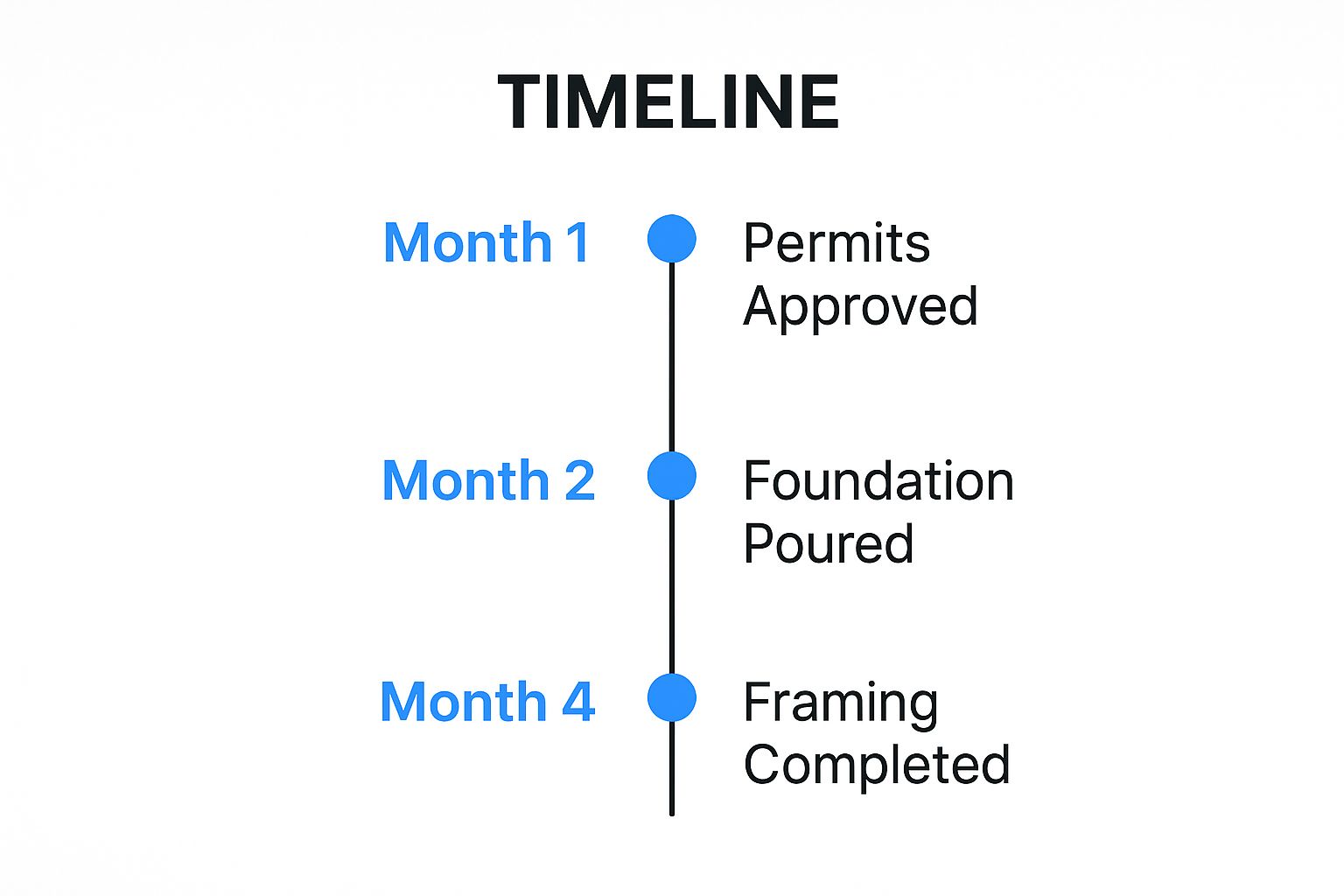
While this guide walks you through the typical from-the-ground-up process, I know some people are on a tighter schedule. If that's you, you might want to check out some information on quick move-in homes, which are often already underway or even finished.
My passion is helping people navigate this entire process, especially in wonderful Maryland communities like White Marsh and Edgewood. The builder we partner with delivers a fantastic home, but my role is to bring your personal vision to life. With my hands-on approach and exclusive customization tools like visualizers, we can transform that house into your home by helping you choose the perfect flooring, countertops, and cabinets.
My goal is to make the new home construction timeline feel less like a waiting game and more like an exciting creative adventure. Let's connect and start planning your journey home.
Preparing the Groundwork for Your Dream Home
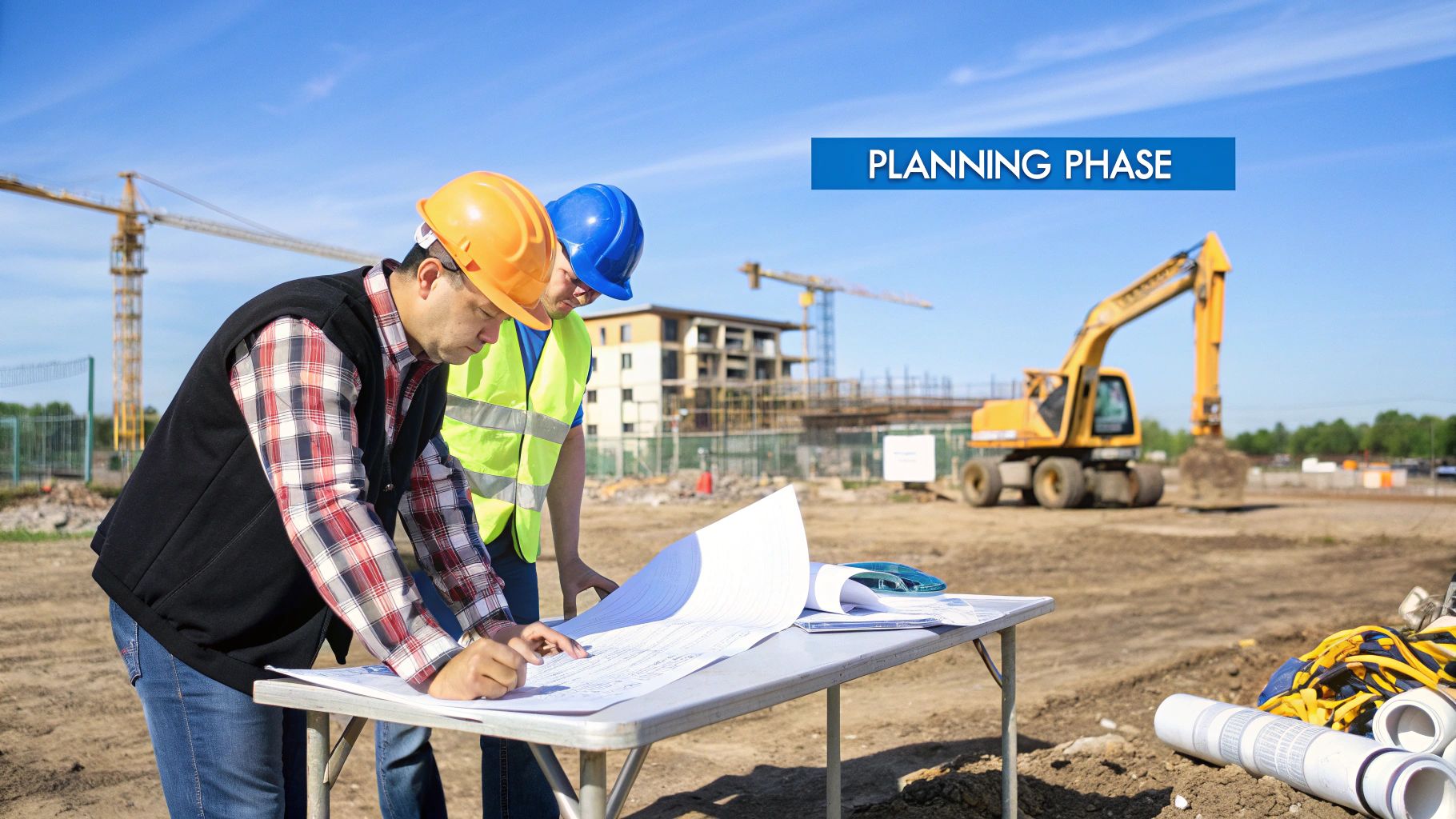
Before a single wall goes up, some of the most crucial work is already underway. Think of this as the artist prepping the canvas before starting a masterpiece. It's all about creating the perfect, solid base for everything else to come.
This is where your patch of land starts to look less like a random plot and more like a real home site. It involves a few key steps that might not look as exciting as framing, but they're absolutely vital for building a safe, stable house.
The Essential First Steps
The pre-construction and foundation phase is a whirlwind of activity. Here’s a quick look at what’s happening on the ground during this time:
Finalizing Plans and Permits: Before we even move a shovel of dirt, we lock in your final blueprints and get all the required permits from local authorities, whether it's in Baltimore County or Harford County. This makes sure every part of your home is built to code from the very beginning.
Site Preparation: The crew rolls in to clear the land of trees, rocks, or any other debris. Then they get to work excavating, digging out the footprint of your future home. For example, if your lot in Edgewood has a slight slope, this is where they'll level it perfectly for the foundation.
Pouring the Foundation: This is a huge milestone. We pour the concrete footings and foundation walls—the literal base that will support your entire home for decades.
A strong, level, and properly cured foundation isn't just important; it's non-negotiable. It’s the bedrock of your house, preventing major structural headaches down the road and protecting your investment.
Setting the Stage for Success
Once the foundation is set and cured, the site is officially ready for the next, much more visible, stage of construction. All this initial groundwork usually takes about 1 to 2 months, though things like weather and the local inspector's schedule can play a role. A few rainy days in spring can definitely cause a slight delay, so we always build a little buffer into the timeline.
This is also the perfect time for you to get all your own ducks in a row. To help you stay on top of everything, we put together a handy home buying checklist template to keep you organized.
While the builder I partner with is laser-focused on quality construction, my job is to add that personal touch. I give my clients exclusive access to customization tools, provide hands-on guidance, and offer visualizers to help you see your vision for things like kitchen cabinets and flooring come to life. It's all about making sure the house being built is truly your home.
Watching Your Home Take Shape
This is the part everyone gets excited about! After all that prep work underground, your home finally starts climbing skyward. It’s when you can walk through the rooms for the first time and really feel the space. Honestly, it’s the most satisfying stage of the whole journey.
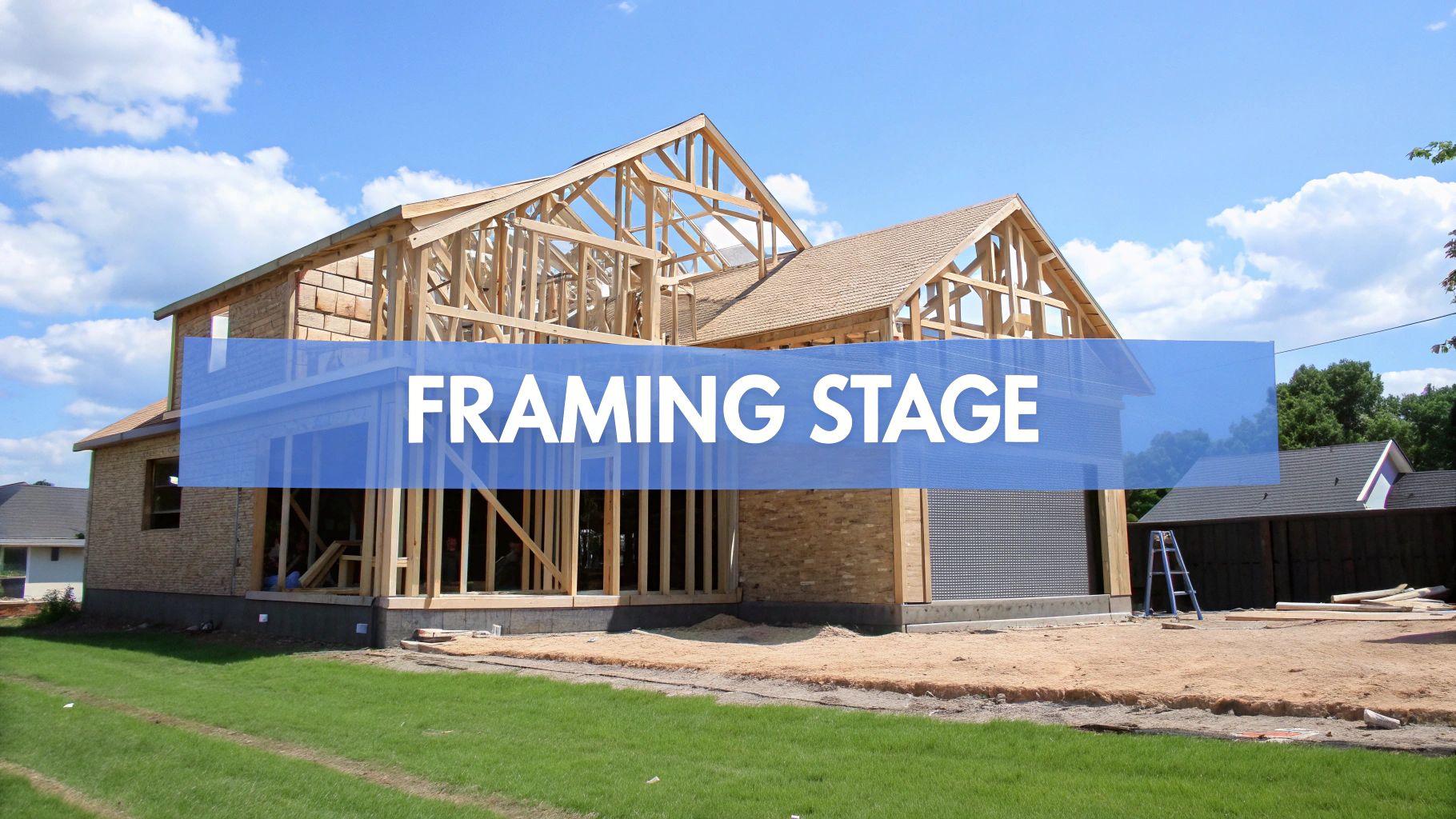
The first big step is framing. This is literally the skeleton of your home going up. Crews will build the floors, put up the walls, and frame out the roof. You’ll be shocked at how quickly it goes from a flat concrete slab to a structure that actually looks like a house, often in just a few weeks. It's a fantastic moment when you see the layout you picked on paper become a real, three-dimensional space.
From Skeleton to Secure Shell
Once the frame is standing, the next flurry of activity is all about getting the house "dried-in"—basically, making it a secure, weatherproof shell. Several things happen pretty much all at once:
Roofing: Shingles go on to keep the rain out.
Windows & Exterior Doors: These are installed, officially enclosing the home from the outside world.
Sheathing & Siding: A protective house wrap is put on, followed by the siding you chose (like durable vinyl or classic brick).
This is when the open frame turns into something that truly looks like the home you’ve been picturing. To see how those initial plans translate into this structure, check out our guide on how to read house blueprints. It’s a great way to connect the dots.
Installing Your Home's Central Nervous System
With the shell complete, the action moves inside for the "rough-ins." This is where all the guts of the house are installed—the hidden systems that make it run. Think of it as installing your home’s central nervous system and arteries. Plumbers run pipes for your kitchen and bathrooms, electricians snake wires through the walls for outlets and lights, and HVAC crews install all the ductwork for your heating and air conditioning.
Everything that happens behind the walls right now is incredibly important. Getting the plumbing, electrical, and HVAC systems right at this stage is absolutely critical for your home’s future comfort, safety, and efficiency.
You'll never see these pipes and wires again once the drywall goes up, but their proper installation is a hallmark of a quality build. This is where a great builder shines. My job is to complement their expertise by giving you the tools and hands-on help to perfectly plan all the visible parts—the light fixtures, flooring, and finishes that will eventually connect to these vital systems.
Bringing Your Vision to Life with Personal Touches
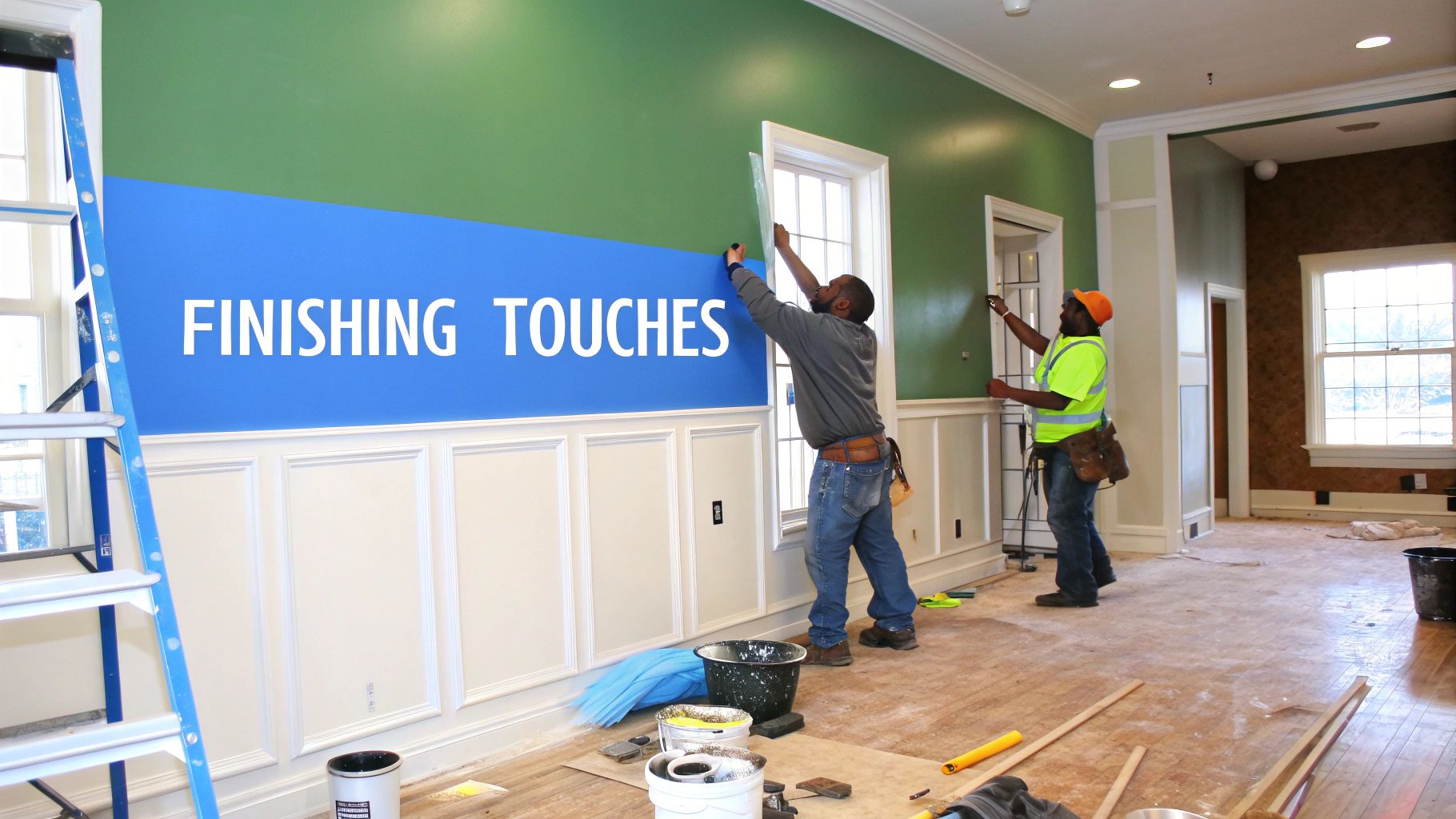
After the rough-ins are done and have passed inspection, things really start to get good. This is when the inside of your house finally starts looking less like a construction site and more like the home you've been picturing in your head.
The drywall goes up, hiding all the framing, pipes, and wires, and suddenly you have actual rooms with smooth, clean walls. It's a huge moment in the building timeline because it paves the way for all the design elements you've spent so much time choosing.
This entire phase is about personality. It’s where we swap out the blueprints and raw materials for your unique style, turning a solid structure into a space that’s undeniably you. Soon, those walls will be primed and painted in the colors you picked out, completely transforming the vibe of every room.
The Fun Part: Your Design Selections
Remember all those design decisions you made? Well, this is their time to shine. It's a carefully choreographed dance where each element is installed in a specific order, building on the last to create a stunning, finished look.
Here’s a glimpse of what you’ll see happening inside your new home in Baltimore County or Prince George's County:
Trim and Interior Doors: First, the carpenters come in to install all the baseboards, window casings, and interior doors. This step adds a layer of architectural detail that really defines each space.
Cabinetry and Countertops: Next, your kitchen and bathroom cabinets are put in place. After that, your countertops are measured and installed. This is a game-changer for the look and feel of those rooms!
Flooring Installation: Whether you went with rich hardwood, cozy carpeting, or sleek tile, the flooring goes in next, pulling the whole room's design together.
The real magic here is watching how your individual choices—that specific cabinet finish, the unique pattern in the countertop, the texture of the flooring—all start to talk to each other. This is also where I go a step further for my clients. I provide exclusive visualizer tools so we can see these combinations ahead of time. For example, you can see exactly how those white shaker cabinets will look next to the quartz countertop you love before they are even ordered. No guesswork, just confidence you’ll love the final product.
Adding the Finishing Touches
Once the big surfaces are in, it’s time for the final details that make a house a functional home. The electricians return to install your light fixtures, outlets, and switches, literally lighting up your world. The plumbers follow, setting the sinks, faucets, and toilets, bringing your kitchen and bathrooms to life.
This is also when we wire in the tech that makes modern life so much easier. A lot of my clients are blown away by the smart home capabilities that are now standard. You can dive deeper into what’s possible by checking out the builder's standard smart home features included with your new home.
All in all, the interior finishing stage can take anywhere from one to three months, depending on how big your home is and the complexity of your design choices. My job is to be your hands-on guide through this exciting process, making sure every selection is installed flawlessly. I'm here to ensure your vision for a dream home in communities like White Marsh or Edgewood becomes a beautiful reality.
So, What Happens When Things Don't Go to Plan?
Building a new home is one of the most exciting things you'll ever do, but it helps to go in with your eyes wide open. We always shoot for a perfectly smooth timeline, but let's be real—some things are just out of our hands. Having an honest chat about potential delays upfront helps you plan better and keeps the stress levels down.
I like to think of it like this: even the best sea captain can't control the weather. A week of non-stop Maryland rain can bring foundation work to a dead halt, and an unexpected freeze means the painters have to pack it up. These things have a ripple effect, pushing back everything that comes after.
Common Reasons for Delays
And it's not just Mother Nature stirring the pot. Supply chain headaches are a huge one. If your specific windows are stuck on a truck somewhere or that perfect appliance is back-ordered, it can create a domino effect, holding up all the work that depends on those items being installed.
Here are a few of the usual suspects we're always planning for:
Weather: This is the big one. Heavy rain, snow, or even brutal heat can stop outdoor work like pouring the foundation, framing, and roofing right in its tracks.
Material Hold-Ups: Sometimes a specific tile, a slab of granite, or even a certain type of lumber gets back-ordered. This can really slow down the interior finishing schedule.
Labor Gaps: It's not uncommon to hit a bottleneck waiting for a specialized pro, like a master electrician or a really skilled tile setter, to free up.
The secret isn't just hoping delays won't happen; it's building a solid plan for when they do. Our team is great at building buffer time into our schedules and we have fantastic relationships with our suppliers, which really helps soften the blow.
How We Work to Keep Your Project on Track
It's amazing how global trends can affect our local projects right here in Maryland. For instance, national construction cost inflation is sitting around 3.5%, and those pressures, mixed with labor shortages and supply chain snags, can definitely stretch out a timeline. You can read more about global construction cost trends at Turner & Townsend if you want to dive deeper.
While the builder I represent is second to none in quality, my job is to add that extra layer of personal, hands-on service. That means keeping you in the loop with clear, constant communication. If a delay pops up, you’ll hear it from me first, along with our game plan for how we’re adjusting to keep things moving.
My goal is to make sure that even if we hit a small bump in the road, your journey to a stunning new home in White Marsh or Edgewood feels as smooth and transparent as it can possibly be.
The Final Walk-Through and Getting Your Keys
You’re on the home stretch! This is the moment you’ve been waiting for through the entire new home construction timeline. With all the heavy lifting out of the way, the focus now shifts to the little details that will make your new house feel like home.
This last phase always starts with final inspections from the local building authorities. They’ll do one last sweep of the electrical, plumbing, and structural work to give their official seal of approval, confirming everything is safe and up to code. Once we get that green light, we can schedule your homeowner orientation—what most people call the final walk-through.
What to Expect During Your Walk-Through
Think of the walk-through as your first official tour of your finished home. But it's more than just a quick peek. It's a hands-on orientation where we'll show you how everything works, from the HVAC system and water shut-off valves to any smart home features you’ve included.
This is also your chance to create a "punch list." That's just the industry term for a list of minor touch-ups. It could be a tiny paint scuff on a wall, a cabinet door that doesn't quite close right, or a small scratch on a fixture. Don't be shy here—we want your home to be perfect.
Here’s a quick checklist of things to keep an eye out for:
Test Everything: Flip every light switch. Run all the faucets and flush the toilets. Test every appliance to make sure it runs properly.
Check Surfaces: Scan the walls, countertops, and floors for any scuffs, chips, or stray paint drips.
Open and Close: Make sure every single door and window opens, closes, and locks smoothly.
Inspect Cabinets: Open all the cabinets and drawers to ensure they glide just right.
Closing and Getting Your Keys
Once we've taken care of every last item on your punch list and you’re 100% happy, it’s closing time. This is the final legal step where you'll sign the last of the paperwork and officially take ownership.
Getting the keys to your new home is a huge milestone. It’s a moment worth celebrating, marking the end of the construction journey and the beginning of a whole new chapter for your family.
While the builder delivers a fantastic, high-quality home, my role is to make your experience even better. I offer my clients in communities like White Marsh and Edgewood a hands-on service to make sure this final step is as smooth and joyful as possible. I'm here for any last-minute questions and to ensure the home you walk into is truly the one you've always dreamed of. Let’s get you across that finish line.
We Get It, You've Got Questions
Building a brand new home is a massive undertaking, and it's totally normal for your head to be swimming with questions. This is a huge milestone! We want you to feel nothing but excitement and confidence from the moment we break ground to the day we hand you the keys.
Let's tackle a few of the questions we hear all the time.
What Usually Causes the Biggest Delays?
If there's one thing we can't control, it's the weather. It's hands-down the most common reason for unexpected delays, especially when we're pouring the foundation or putting up the frame. A week of non-stop rain can really throw a wrench in the schedule.
Beyond Mother Nature, snags in the supply chain for things like certain windows or specific appliances can also cause a hold-up. We're pretty proactive about this, though. We build buffer days into our timeline for minor issues and have solid relationships with our suppliers to keep things moving as smoothly as possible.
When Do I Get to Pick Out All the Fun Stuff?
This is where your vision really starts to come to life! You'll make most of your design selections—think flooring, countertops, cabinets, tile, and fixtures—very early on, usually before we even start building.
Why so early? It gives us plenty of time to get everything ordered and delivered so it's ready and waiting on-site the second our crews need it. For example, we'll order your kitchen cabinets well in advance so they don't hold up the countertop and appliance installation later on.
I’ll be your personal guide through this entire process. You will get to use my exclusive visualizer tools so you can play with different combinations and see exactly how your choices will look in your new space. It completely removes the guesswork and makes designing your home an absolute blast.
Here at Customize Your Home, we don't just help build houses; we help you create your dream home by choosing the finishes that reflect your style. We serve families in beautiful Maryland communities like White Marsh, Edgewood, and across Baltimore, Harford, and Prince George's Counties.
Ready to take the first step? Let’s build something amazing together. Find out more at https://www.customizeyourhome.com.
Comments