

Build vs Buy a House in Maryland: A Homeowner's Guide

When you're trying to decide whether to build vs. buy a house, it really boils down to what you value most. Are you looking for the speed and charm of an established neighborhood, or is your heart set on personalization and that "brand-new-everything" feeling?
Buying an existing home definitely gets you through the door faster. Building, on the other hand, lets you create a home that's been designed just for you. But there’s also a fantastic sweet spot right in the middle: the semi-custom home, which perfectly blends the best of both worlds.
Should You Build or Buy Your Next Maryland Home?
Let’s be honest, figuring out whether to build or buy is one of the biggest financial calls you'll ever make. For a lot of families, the thought of starting from scratch feels intimidating. At the same time, buying an existing home usually means settling for a layout that's "good enough" or bracing for a string of unexpected repairs. For example, you might love an older home's location but know the closed-off kitchen will drive you crazy.
This is exactly where the modern semi-custom approach really makes sense. Instead of getting tangled in endless decisions, our process lets you personalize the parts of your home that matter most, right from the start. You get all the excitement of picking out your own finishes without the headache of managing a massive, ground-up project from scratch.
Comparing Your Home Options
The route you take will shape everything from your final budget to how soon you can unpack. Buying an existing home in a popular Maryland spot like White Marsh or Edgewood might seem like the simplest option, but it often comes with a sting in the tail—hidden costs for renovations and updates.
On the flip side, building a semi-custom home gives you cost certainty and a space that feels like yours from the moment you get the keys.
The overview below gives you a clear, side-by-side look at what to expect when buying versus building a semi-custom home.

As you can see, the semi-custom option strikes a fantastic balance. It gives you a ton of design control without the sky-high costs and long, drawn-out timelines of other building projects. It’s truly an ideal way to get a personalized home in great communities across Baltimore County and Harford County.
To lay it all out even more clearly, here's a quick comparison of the two main paths.
Quick Look: Buy vs. Semi-Custom Build
This table breaks down the core differences to help you see which option aligns best with your goals, budget, and timeline.
Factor | Buying an Existing Home | Building a Semi-Custom Home |
|---|---|---|
Customization | Low to moderate. Changes happen after you buy. | High. You choose floors, cabinets, countertops, tile, etc. from curated options. |
Timeline | Fastest. Typically 30-60 days to close. | Moderate. A predictable, structured construction schedule. |
Initial Cost | Can be lower, but you must budget for repairs and updates. | Predictable. Costs are clear and outlined upfront. |
Convenience | High for move-in, but living through renovations is a hassle. | High. A streamlined process managed by one builder. |
Condition | Varies. You inherit old systems and potential hidden issues. | Excellent. Brand new everything, under warranty, and up to code. |
Ultimately, choosing the right path is about finding the best fit for your life right now.
The real magic of the semi-custom approach is that you get to make all the fun design decisions. While the builder I represent provides high-quality homes, I go a step further—offering my clients unique proprietary visualization tools, hands-on service, and access to visualizers that help you bring your dream space to life.
A Realistic Look at Homebuying Costs
Let's talk money. When you're wrestling with the decision to build vs buy a house, the financial side of things is almost always the tie-breaker. It's easy to get fixated on listing prices, but the true cost of owning a home runs much deeper, especially in hot markets like Baltimore County and Harford County.
When you buy an existing home, that sticker price is just the opening bid. You’ve got to factor in inspection fees, closing costs, and—this is the big one—the budget for immediate repairs and renovations. That charming older home might look like a steal until you realize the kitchen is a time capsule from the 80s and the HVAC system is breathing its last breath.
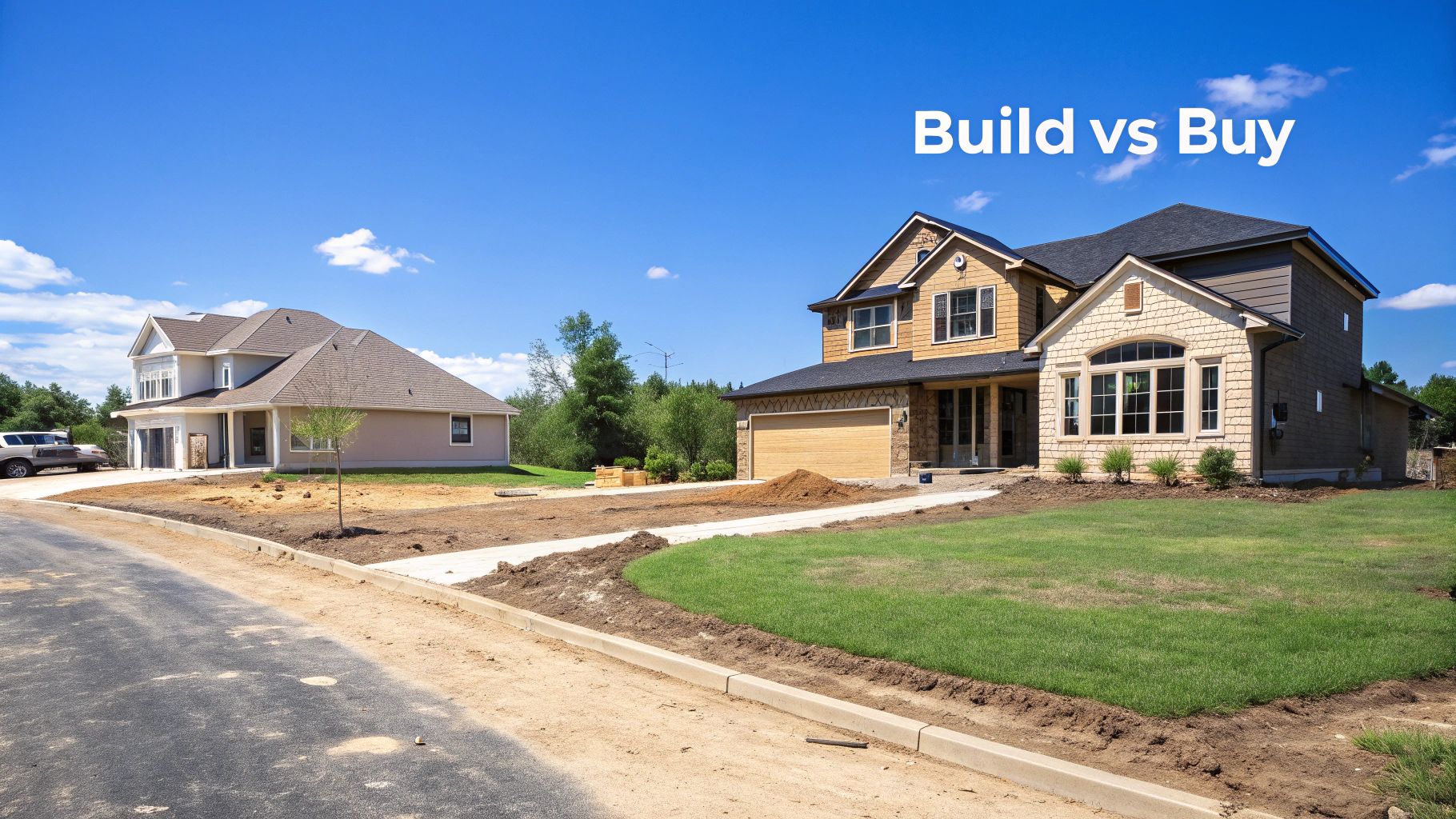
Uncovering the Hidden Costs
With an existing home, these "surprise" costs can pile up in a hurry. A new roof, updated windows, or an unexpected plumbing catastrophe can easily wipe out your savings. These are the bills you get hit with after closing, turning what should be a celebration into a stressful construction project.
Building a new home, on the other hand, has a totally different cost structure. The price is driven by the actual build—the lumber, the concrete, the labor—that brings your home to life.
The National Association of Home Builders recently reported that direct construction costs now account for a record 64.4% of a new home's final price. What this means is your money is going directly into the quality, materials, and modern features of the house itself. You can dig into the full cost breakdowns over at NAHB.org.
That kind of upfront clarity is a huge relief. You know exactly where every dollar is going, with no scary repair bills hiding around the corner.
A Practical Cost Comparison
Let’s run the numbers on a real-world scenario. Imagine you're looking at two options in White Marsh, Maryland:
Option 1: The Resale Home You find a solid older home listed for $400,000. It's in a great spot, but the kitchen is cramped and dated. A full gut-job to create the open-concept space you really want will cost at least $50,000. Suddenly, your total investment is $450,000, and you're stuck living in a dusty construction zone for weeks.
Option 2: The Semi-Custom New Build You decide to build a new home with us for $450,000. For that same price, you're picking out your dream cabinets, countertops, and flooring before the drywall is even up. You move into a home that's 100% you from day one, with zero renovation headaches.
In this case, the final price tag is identical, but the experience and the end result are worlds apart. Building new gives you a personalized, move-in-ready home without the chaos of a major renovation project.
Financing and Long-Term Value
The loan process also looks different for each path. Getting a traditional mortgage for an existing home is pretty straightforward. Financing a new build, however, usually requires a construction loan, which operates a bit differently. It's a critical piece of the puzzle, and our guide on home construction loan requirements can walk you through all the details.
Beyond the initial purchase, think about the long-term savings. New homes are built to today's strict energy codes, which means better insulation, high-efficiency windows, and modern HVAC systems. All of that translates directly into lower monthly utility bills, saving you real money for years. Plus, everything is brand new and under warranty, which is a kind of peace of mind you just can't put a price on.
Designing a Home That Is Truly Yours
When you get down to it, the whole build vs. buy a house debate often comes back to one big, exciting idea: creating a space that’s uniquely you. This is where the fun really begins. It’s the difference between moving into someone else’s dream and building your own.
For a lot of people, that level of personalization is the single biggest reason to build new. When you buy an existing house, especially an older one, your chance to make it your own doesn't start until after you’ve moved in. That usually means kicking off your life in a new home with messy, expensive renovations that turn your sanctuary into a full-blown construction zone.
The Renovation Reality of an Existing Home
Here’s a story I’ve seen play out time and time again here in Maryland. A family finds a beautiful older colonial in a great Baltimore County neighborhood. The location is perfect, but the kitchen is a cramped, dated relic from another era. They set aside a $40,000 budget for a remodel, ready to get started as soon as they close.
But then reality hits. The contractor opens up a wall and finds old wiring that’s not up to code—that's an unexpected $5,000 right there. The custom cabinets they fell in love with are on backorder for six weeks. Suddenly, their "quick" project has dragged on for nearly three months, and they’re making dinner on a hot plate in the dining room amidst a constant cloud of dust. Their final bill? Over $52,000.
That’s the risk you take with a resale home. You’re not just buying the house; you're inheriting a project with a budget and timeline that can quickly spiral out of control.
The Semi-Custom Advantage: You're in Control
Building with a semi-custom approach flips the script entirely. You get to be the designer from the very beginning, without any of the post-move-in chaos. You're not just picking a floor plan off a shelf; you’re making all the critical design decisions that define your home before the first nail is even hammered.
Flooring: Do you lean toward the timeless warmth and durability of wood laminate, or does the practicality of modern luxury vinyl plank fit your life better?
Countertops: Are you picturing sleek, clean quartz or the one-of-a-kind patterns of natural granite?
Cabinets: Is your style a crisp, white shaker, or are you ready to make a statement with something bold and contemporary?
Tile: From a show-stopping kitchen backsplash to spa-like bathroom floors, you choose the look and feel.
This whole process gets rid of the guesswork and the renovation nightmares. Your home is built exactly to your taste, ready for you to love from the moment you walk through the door. If you need help finding the right team for this, our guide on how to choose a home builder is a great place to start.
The best part of this process is seeing all your choices come together. While most builders let you pick finishes, I take it a step further. I give my clients access to proprietary visualization tools so they can see exactly how their selections will look in their actual home.
Bringing Your Vision to Life
It's one thing to look at a pile of samples, but it's another thing entirely to picture how they'll all work together in a finished room. That’s why I provide access to powerful visualizers that take the uncertainty out of the equation. You can digitally pair different countertop styles with cabinet colors or see how a flooring choice will flow through your open-concept living space.
Visualizing your ideas is so important when you're designing from scratch. You can even explore advanced top architectural rendering software to model your concepts in incredible detail. These tools give you the confidence to lock in your design choices, ensuring the home you get is the home you dreamed of—no surprises, no regrets, and absolutely no need to call a demolition crew.
Finding the Perfect Maryland Location
You've heard it a million times: in real estate, it’s all about location, location, location. And it's true. Where you put down roots affects everything—your commute, your kids' schools, your weekend hangouts. When it comes to the build vs. buy a house debate, your choice dramatically shapes your location options, especially right here in Maryland.
If you go the resale route, you're typically looking at established neighborhoods. Sure, they have a certain charm with those big, old trees and a settled-in vibe. But they also come with aging infrastructure and, the real kicker, next to no inventory. You could easily find yourself in a frantic bidding war for the one house that comes up in your target school district, forcing you to settle on a layout or condition that’s far from ideal.
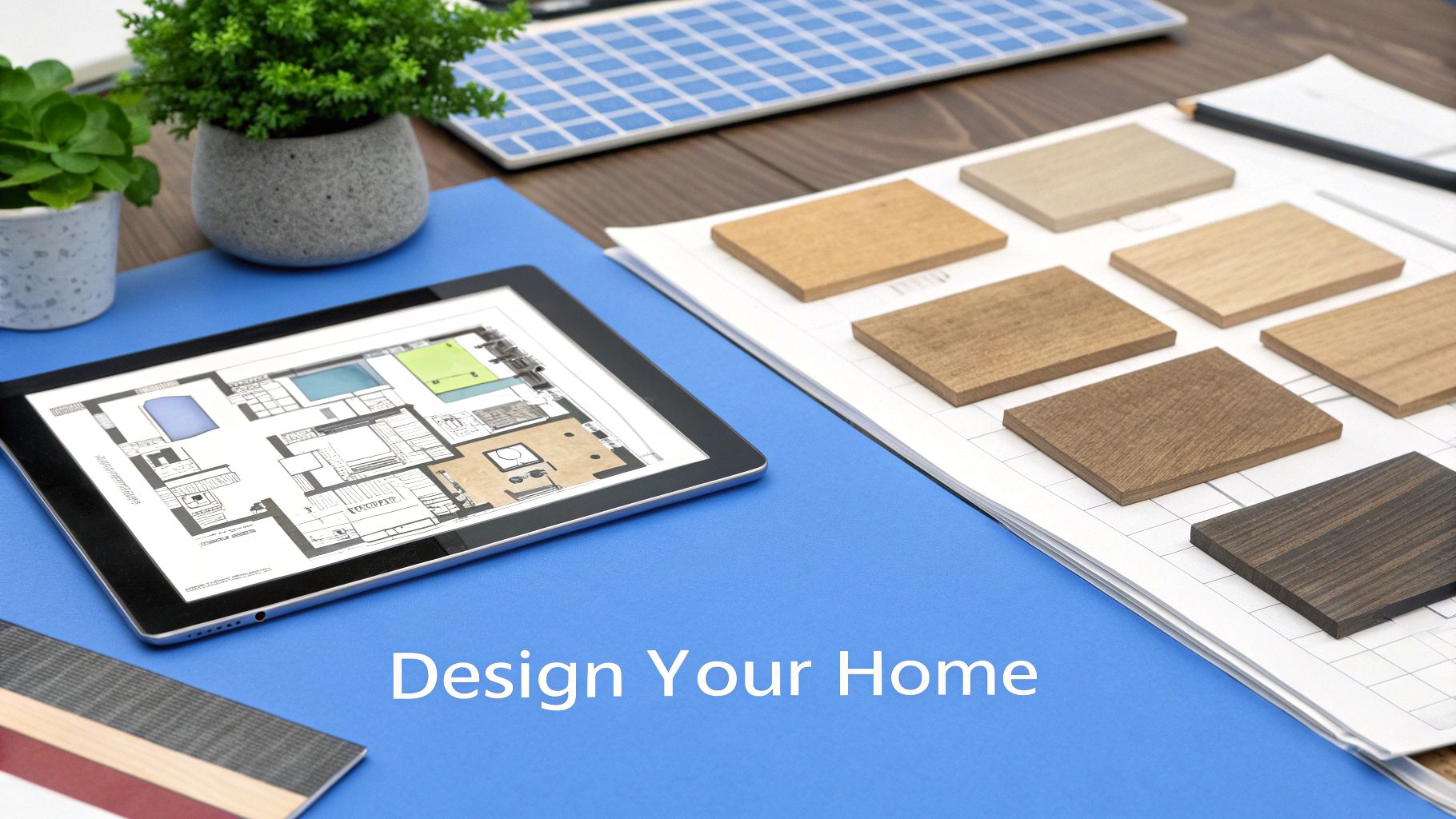
Established Neighborhood vs. New Community
Let's be real: the current market is tough for buyers. With inventories for existing homes scraping historic lows across the U.S., the competition is fierce. This turns the house hunt into a real grind, particularly in desirable spots across Baltimore County and Harford County.
Building new with us, on the other hand, completely changes the game. Instead of scrapping over a few resale listings, you get to pick a fantastic spot in one of our thoughtfully designed communities in prime areas like White Marsh, Maryland and Edgewood, Maryland.
The Perks of a New Development
Choosing to build in a new community is about more than just a brand-new house; it's about stepping into a modern, convenient lifestyle. Here’s a practical example:
Modern Amenities: Imagine your weekends spent at the community clubhouse pool, taking evening walks on maintained trails, or watching your kids play at a brand-new playground—all just steps from your front door.
A Built-in Community: There's a unique energy when everyone is new to the neighborhood. It makes it so much easier to connect, and neighbors often become fast friends.
Future Growth: These communities are planned for growth, which is great news for your property value as new shops, restaurants, and services pop up around you.
Building in a new community really offers the best of both worlds: a pristine, personalized home in a location with a bright future. You get the confidence of modern infrastructure without the headaches and unknowns of an older neighborhood.
Of course, finding the right lot also means getting a handle on local regulations. Our guide on what a zoning ordinance is and how it affects your home is a great place to start learning the basics.
Ultimately, it all boils down to what matters most to you. Are you drawn to the predictable character of an older neighborhood, or do you crave the fresh start and modern conveniences of a new development? When you build, you aren't just getting a house—you’re getting a home designed for how you live today, in a community built for tomorrow. Researching specific Maryland locations like Baltimore can give you a better feel for the local market and help steer your decision. I’m here to show you the amazing communities we’re building in across Harford and Baltimore Counties and use my hands-on approach to help you find the perfect place to bring your vision to life.
Comparing Homebuying Timelines
When you're weighing whether to build vs buy a house, the timeline is often the deciding factor. Let's be honest: if your lease is up next month or a job relocation has you on a tight deadline, buying an existing home is hands-down the fastest way to get keys in your hand.
Once you have an accepted offer on a resale home, things move fast. The typical sprint from contract to closing takes about 30 to 60 days. That month or two is a flurry of activity—home inspections, the appraisal, and locking in your mortgage. Before you know it, you're at the settlement table with a pen in your hand, ready to move.
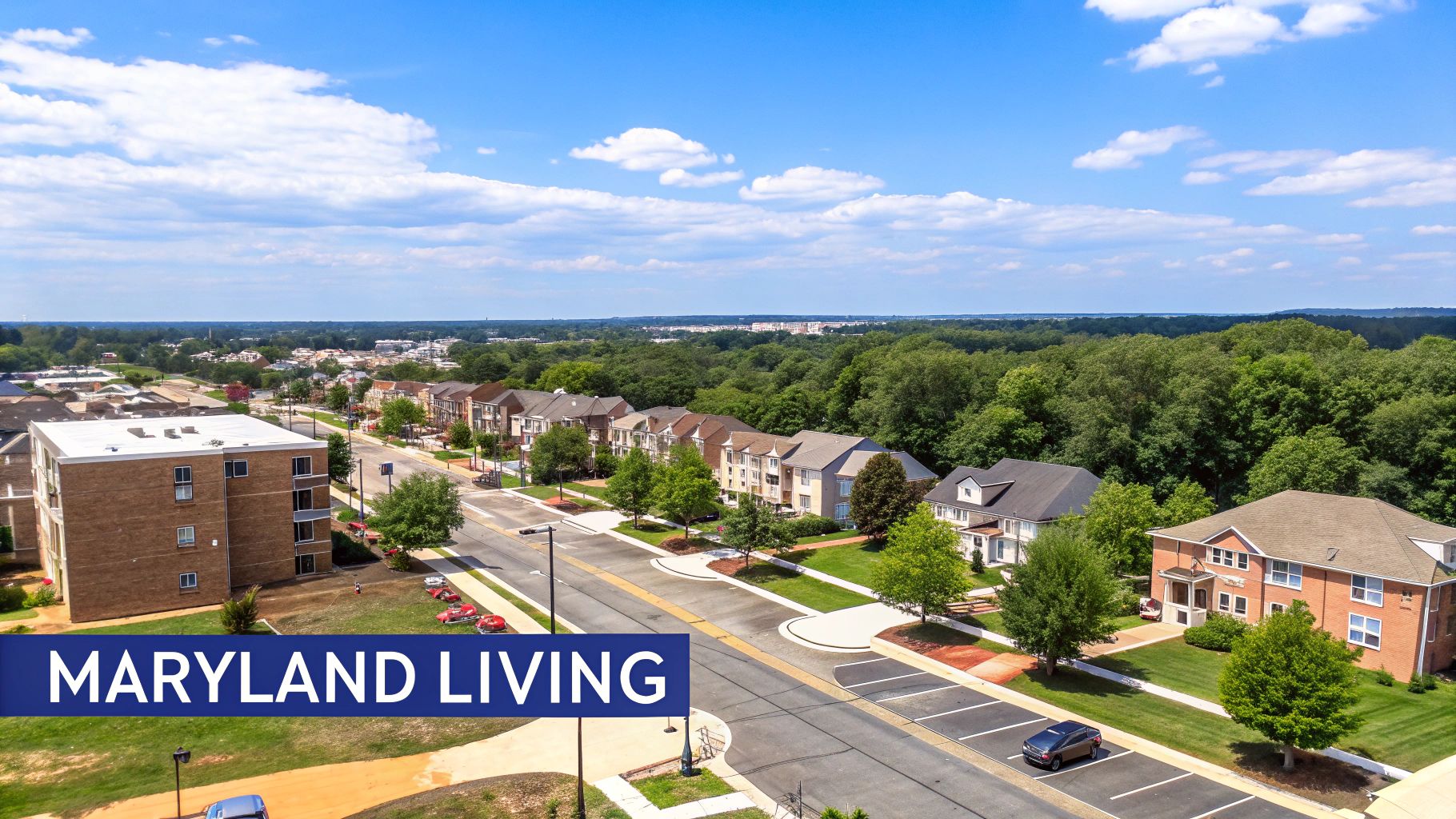
The Hidden Time Costs of Buying Resale
But the clock doesn't always stop at closing. Many buyers run headfirst into a "hidden" timeline that kicks off the moment they unpack the first box: renovations. That quick 45-day closing can easily morph into another three months of living in chaos while contractors rip out shag carpet, gut a 1980s bathroom, or tackle a full kitchen remodel.
This is the classic trade-off for getting into a house quickly. You move in fast, but it could take weeks or even months of dust and disruption before the house truly feels like it’s yours. This surprise construction phase can be just as draining as the house hunt itself.
The Structured Timeline of a New Build
Building a semi-custom home is definitely a longer journey, but it’s a much more predictable and transparent one. You aren't just racing to a finish line; you're intentionally bringing a vision to life, piece by piece. The entire project is broken down into clear, manageable stages, so you always know exactly what’s happening and what's coming next.
Our process generally follows this path:
Foundation and Framing: Your blueprint finally starts to look like a house.
Mechanicals and Insulation: We install the guts of the home—plumbing, electrical, and HVAC.
Drywall and Interior Finishes: The walls go up, and all your design selections, from cabinets to countertops and flooring, are installed.
Final Touches and Walkthrough: We handle all the last details and then walk through the finished home with you to make sure everything is perfect.
You can get a closer look at what each stage involves in our guide on the new home construction timeline explained.
The biggest difference in my process is the hands-on service and constant communication. I believe the wait should be exciting, not stressful. Through regular updates and access to our visualization tools, you're an active collaborator in your home's creation, watching it come together step by step.
While buying an existing home in a place like White Marsh or Edgewood gets you in the door faster, building new gives you a predictable, personalized process with no surprise renovation projects waiting for you. It really comes down to choosing between immediate occupancy in a house that's "good enough for now," or embarking on a slightly longer, collaborative journey to a home that’s perfect from day one.
So, How Do You Choose?
Alright, we’ve laid it all out. The big question—build or buy—doesn’t have a one-size-fits-all answer. It never does. The right move isn’t about some universal truth; it's about what fits your life, your family, and where you see yourself in the future.
This is the part where you take a step back and really think about what matters most. We've talked through the money, the creative control, the locations, and the timelines. Now, let’s see how that all stacks up against your personal checklist.
A Quick Gut-Check
Grab a piece of paper or just think through these points. Be honest with yourself.
The Money: Do you want a fixed, predictable cost from the start? Or are you okay with buying a place and then figuring out a separate, possibly unpredictable, budget for renovations later?
The Clock: Do you need keys in hand within the next 60 days? Or do you have the breathing room to enjoy a well-managed building process and get exactly what you want?
The 'You' Factor: Is it a dealbreaker to not have a say in everything from the countertops to the closet layout? Or are you perfectly happy to find a great house and make its existing style your own?
The Location: Have you fallen in love with a specific, established neighborhood? Or does the idea of a brand-new community with modern perks in a place like White Marsh, Maryland or Edgewood, Maryland sound exciting?
Your answers here will probably make the path forward a lot clearer. If you’re all about a quick move-in and a classic neighborhood vibe, buying an existing home is likely your best bet. But if your heart is set on total personalization and a home that’s 100% new and worry-free, then building is calling your name.
A Path That Blends the Best of Both
The way we build homes is designed to find that perfect middle ground. Our semi-custom process gives you all the joy of making a space your own, but without the dust and drama of renovating an older house. It’s simply a smarter way to get that dream home.
Of course, we can't ignore the bigger picture. The economy and interest rates play a huge role in the build vs. buy equation. While some forecasts suggest slower home price growth for a bit, the long-term demand for new construction remains incredibly strong. You can dig into the current U.S. housing market outlook to get a better sense of these trends.
My job is to be more than just someone who facilitates a sale; it's to be your guide. I take a hands-on approach and give my clients access to visualization tools you won't find anywhere else. You get to see your tile, cabinet, and color choices come to life on screen, so you can be absolutely confident that the home we build is the one you’ve been picturing all along.
If you're thinking about building in Harford County, Maryland or Baltimore County, Maryland, let's talk. We can explore your ideas and start mapping out the journey to your perfect home, together.
Answering Your Final Questions
It’s completely normal to have a few last-minute questions circling your mind when you’re on the brink of a decision this big. Let's tackle some of the most common ones that come up for Maryland homebuyers, so you can move forward with total confidence.
Is Building Actually Cheaper Than Buying in Maryland?
That's the million-dollar question, isn't it? On paper, an existing home in Baltimore County or Harford County might look like a bargain. But that sticker price is just the beginning.
For example, you could be staring down a $10,000 bill for a new roof, another $8,000 for an HVAC system, and a kitchen renovation that easily tops $25,000. Those "hidden" costs add up fast.
With our semi-custom builds, you get a clear, all-in price. Everything is brand-new and backed by a solid warranty. When you compare the true, long-term cost of an older home plus all the necessary fixes, building often comes out ahead.
What Does "Semi-Custom" Really Mean for Me?
Forget those cookie-cutter design packages. Here, "semi-custom" means you get to be the designer. You’re in the driver’s seat, choosing the exact flooring you love, the perfect countertops, and the specific cabinet styles and colors that match your vision. You'll even pick out all the tile for the kitchen backsplash and bathroom showers.
The real magic happens when you see it all come together. I use my own proprietary visualization tools that let you play with these options on-screen. You can mix and match finishes and see exactly how they’ll look in your home before you commit. It’s the perfect mix of creative freedom without the overwhelming stress of a more complex build.
This process takes the guesswork out of design, making sure the home we create feels like yours from the moment you get the keys.
What's the Single Biggest Perk of a New Build?
Honestly? It's the peace of mind. There is nothing quite like knowing that everything in your home is brand-new and under warranty. You won't spend your first winter wondering if the furnace is going to make it through the next cold snap.
Plus, our homes are built to the latest energy codes, which means your utility bills will be lower right from the start. You're also getting a floor plan designed for how people actually live today—open, bright, and with smart storage, things you just don't find in most older homes. It's a true fresh start.
How Do I Start the Process in White Marsh, Maryland or Edgewood, Maryland?
It all begins with a simple, no-pressure chat. Just reach out, and we can talk through your budget, what you're hoping for in a new home, and your ideal timeline. I can show you the floor plans and communities we have available.
I'll also give you a personal tour of the visualization tools I use to help my clients. My goal is just to give you the information you need to decide if this is the right path for you and your family. Let's schedule a call and see what's possible.
Ready to explore a home that’s built just for you? At Customize Your Home, I combine hands-on service with unique proprietary visualization tools to make your vision a reality. Let’s connect and start building your dream home in Maryland. https://www.customizeyourhome.com
Comments